Published: 26 March 2026. The English Chronicle Desk. The English Chronicle Online.
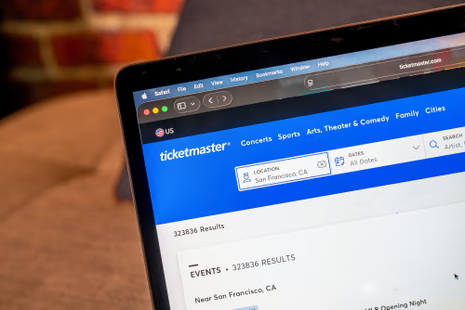
The global ticketing giant Ticketmaster has recently faced intense scrutiny over its handling of consumer costs. Following a significant wave of new regulations designed to ban surprise charges, the company stopped its previous practice. It no longer adds the extra few dollars that once appeared at the very end of transactions. This specific charge was known as the order processing fee and served as a major revenue source. The platform sells hundreds of millions of tickets every single year to fans across the entire globe. However, recent documents suggest that the company found new ways to maintain its high profit margins. While Ticketmaster eliminated the processing fee to comply with rules, it simply increased other Ticketmaster fees elsewhere.
Internal documents obtained by investigators show a strategic shift in how these costs are now applied. The company reportedly raised the cost of different service charges in a number of its venues. This move was intended to ensure that the massive corporation did not lose any total revenue. In one specific email to a venue in Arizona, the company was remarkably blunt about this change. They wrote that they must adjust other charges to offset the loss of processing revenue. The venue then eliminated a six dollar processing fee but raised the service fee by two dollars. This shift allowed the company to keep collecting money while technically following the new transparency laws.

These emails were part of a formal contract obtained through a series of public records requests. Investigators looked at agreements for twenty six publicly owned venues located all around the United States. These locations range from small town theatres to massive stadiums like the famous Rose Bowl in Pasadena. Nearly all of these contracts originally described an order processing fee that is no longer allowed. At least eight venues amended their contracts to raise other charges following the all-in pricing rules. This suggests a widespread pattern of shifting costs rather than actually reducing the burden on consumers. Former regulators suggest that rolling an illegal fee into another charge could violate federal trade rules.
John Newman is a former economist who once worked for the Federal Trade Commission in Washington. He reviewed the memos and called the behavior of the company potentially concerning for legal reasons. Simply getting rid of one specific fee might not be enough to satisfy the new regulations. He suggested that the company may still be charging the fee by disguising it as something else. That type of behavior can run afoul of the strict rules against misrepresenting consumer costs. The Federal Trade Commission rule against such practices officially took effect in May of last year. Ticketmaster did not respond to detailed questions about how it specifically responded to these new pricing regulations.
The company did release a general statement regarding its current compliance with the federal pricing laws. They stated that tickets on their website have displayed the full price upfront since May 2025. They also claimed to provide clear explanations of all charges during the entire online purchase process. Furthermore, they maintain a dedicated information page to help customers understand where their money is going. This comes as Live Nation Entertainment faces a massive antitrust trial over its alleged industry monopoly. Much of that legal case focuses on whether the company uses exclusive contracts to stifle competition. If competition is limited, consumers have very few choices but to pay whatever the company demands.
The Department of Justice reached a settlement with the company shortly after the trial began. This deal drew immediate criticism from several lawmakers who felt the settlement was far too weak. A coalition of more than thirty states chose to continue their own litigation against the firm. Live Nation Entertainment has consistently denied that it operates as an illegal monopoly in the market. The Biden administration first announced a major crackdown on junk fees back in October of 2022. The phrase was used to describe excessive charges like hotel resort fees and ticket service fees. This initiative was a central part of the political appeal to many working class voters.
President Biden previously noted that these small fees matter deeply to folks in average American homes. He argued that while the wealthy might not notice, most families feel the financial sting. Executives at Live Nation Entertainment took notice of these comments and responded during their earnings calls. The chief financial officer argued that Ticketmaster was unfairly lumped into the conversation about junk fees. He explained that most of the money from these charges actually goes back to the venues. He claimed it was a mistake to think these service charges were just arbitrary add-ons. Despite these public claims, the company moved to protect its interests through its private venue contracts.
Documents show that at least eighteen venue agreements gave the company the right to renegotiate fees. They wanted to ensure the company remained reasonably compensated if any specific charges were ever banned. This meant that even if regulators removed a fee, the contract allowed for revenue recovery. Ticketmaster operates as a volume business that relies on millions of small transactions to generate profit. Last year, the company earned significant fees on over three hundred million tickets sold to fans. This high volume resulted in about three billion dollars in total revenue for the massive firm. Even a couple of dollars added to each order creates a massive pool of money.
In the summer of 2023, the company attended a high profile White House roundtable event. Along with other tech firms, they agreed to begin showing the total price of tickets upfront. This was intended to prevent fans from being surprised by huge costs at the checkout screen. While it was a step toward transparency, it did not include a pledge to lower prices. President Biden still called the agreement a win for consumers at the time of the announcement. Soon after, state lawmakers in California passed their own legislation to ban hidden and deceptive fees. That law required all mandatory charges to be included in the advertised price of a service.
By the time that law took effect, Ticketmaster was already changing its agreements with California venues. They wrote letters to multiple locations stating they were scrapping the old order processing fee model. However, they also informed the city of Sacramento that their ticket retention rate would soon increase. Instead of earning three dollars and forty five cents, they would now earn four dollars. A nearly identical letter was sent to the city of Cerritos regarding a local performing arts venue. These documents show how the company maintained its profits while appearing to follow the new law. This demonstrates the limits of transparency laws when dealing with such a dominant market player.

Experts like John Kwoka suggest that in a competitive market, consumers would simply go elsewhere. They would choose a ticketing provider that offers lower Ticketmaster fees or better overall value. However, this company is the exclusive vendor for roughly eighty percent of major venues in America. This means that fans are often held hostage because there are no other places to buy. If a fan wants to see their favorite artist, they must use the authorized platform. This lack of choice allows the company to simply shift which pocket they are taking from. Other states like Colorado and Virginia have since followed California by passing similar pricing laws.
The Federal Trade Commission also proposed a national rule to implement all-in pricing for everyone. When this regulation was formally issued, the company publicly stated its support for the new mandate. They claimed to be leading the industry by adopting these transparent pricing models at their festivals. By the time the federal rule took effect, they had already quietly raised other service charges. Records show that venues in Florida and Georgia increased their ticket fees to offset the changes. One arena in Chicago raised its fees by over two percent to cover the difference. Florida State University also saw a three percent increase in ticket fees during this period.
The federal rule is technically more restrictive than the original law passed in the state of California. While it does not set a hard limit on costs, it forbids companies from misrepresenting them. Businesses must be honest and transparent about exactly what a consumer is paying for at checkout. Former attorneys for the commission say these rules are about ending the era of obscure charges. They argue that terms like processing fees are often made up to hide the true cost. Ultimately, the government will decide if these new practices comply with the spirit of the law. The ongoing legal battles will likely determine the future of how we pay for live music.
Related News:
 Oprah enjoys Meghan’s jam on English muffins
 From Lego to Pokémon: How Adults Are Driving UK Toy Market Growth
 Reeves Faces Setback as Labour May Miss Homes Target
 Virgin Trains Moves Closer to Challenging Eurostar Monopoly
 Kate Winslet to Narrate Film Highlighting King’s Environmental Mission
 Trump’s UK Ambassador Urges North Sea Drilling to Strengthen US Ties
 Ryanair Chief UK Economy ‘Doomed’ Under Labour
 ABF May Split Primark from Food Division Amid Tough Market
 Top Christmas Books Reads: Classics to Cozy Romcoms
 M&S Profits More Than Halve After Cyber-Attack
 Tony Blair think tank warns Rachel Reeves must cut taxes if manifesto broken
 Pauline Collins, Beloved ‘Shirley Valentine’ Star, Dies at 85
 Earl of Yarmouth Faces £1.3m Legal Bill Over Family Estate
 Millionaires group urge Reeves to introduce wealth tax to ‘lift kids out of poverty’
 VAR Must Rein Its Neck In to Save Football’s Spirit
 New laws to bolster UK’s defences against cyber attacks on NHS, transport and energy
 Skims Eyes Global Expansion After Reaching $5 Billion Value
 Pop Stars Call on UK Government to Cap Resale Prices for Fans
 Global markets drop amid tech sell-off and China slowdown
 SS Rajamouli Announces ‘Varanasi,’ a Mythic Time-Travel Epic
 Canada Passes Carney’s First Budget in Tight Parliamentary Vote
 Tom Cruise Receives Honorary Oscar, Celebrates Cinema
 Eminem Takes Legal Aim at Australian ‘Swim Shady’ Brand
 The Lasting Legacy of Seven: Crime, Morality, and Urban Decay
 PM Highlights UK Business at G20 in South Africa
 Director Michael Caton-Jones Reflects on Career and Beginnings
 Mossmorran Plant Closure Hits Cowdenbeath Hard
 India’s Labour Law Overhaul Sparks Fierce Debate
 Starmer Says Labour’s Economic Plan Needs Years to Deliver
 Virgin Media Fined £23.8m Over Telecare Safety Failures
 Rusty Bond-Era Aston Martin Restored to £1m Glory
 Pavarotti statue frozen in Italian ice rink sparks backlash
 Rising Water Bills Lift Troubled Thames Back to Profit
 Tesla Warns UK That Weak EV Rules Could Threaten Sales
 FTSE 100 Hits 10,000: UK Market Celebrates Record Year
 UK House Prices Fall Sharply at Year-End, Nationwide Reports
 Wessex Water chiefs receive £50,000 extra despite government bonus ban
 Canada-China trade gains momentum in new strategic partnership
MPs warn AI financial risks threaten UK stability
Canada-China trade gains momentum in new strategic partnership
MPs warn AI financial risks threaten UK stability
 MPs warn AI financial risks threaten UK stability
 B&M and The Works Struggle During Christmas Trading
 ‘A long time coming’: US table tennis finds its moment
 US Dollar Hits Four-Year Low Amid Market Turmoil
 Amazon mistakenly signals new global layoffs to employees
 Labour Must Revive High Streets to Avoid Election Collapse
 Households in England Face Rising Water Bills in April
 UK needs new factory to reach 1.3m car target, says industry chief
 UK New Car Discounts Near £6,000 as Prices Are Slashed
 Study Finds One in Seven England Takeaways Are Dark Kitchens
 Julia Donaldson Reveals New Character and Title for Third Gruffalo Book
 Telstra AI jobs cuts as automation drive expands
 BT Names New Openreach Chief Amid Major Fibre Expansion
 AI fears hit UK wealth and comparison sites
 UK Housing Market Shows Early Recovery Signs
 Top 10 Must-See Films Arriving This February
 UK economy struggles as growth stalls at 0.1% in late 2025
 He Was Once a Teen ‘Superstar’. Why Did James Van Der Beek Need Help to Pay His Medical Bills?
 Royal Mail Blames Poor Weather and Sickness for Delayed Deliveries
 British Steel wins Turkey rail boost
 Gordon Ramsay’s Stressful New Netflix Series Shines
 Glencore Approves $2bn Payout Despite Profit Slump
 The Chinese AI App Sending Hollywood Into a Panic
 Live Nation Sees Strong Ticket Sales as Monopoly Lawsuit Looms
 UK Job Vacancies Hit Five-Year Pandemic Low
 UK Youth Unemployment Surges Amid Tax Changes
 Strong Rebound for UK Housing Market Sees 6% More Homes
 HSBC Signals Overhaul Nearing Completion Despite Profit Drop
 Engie UK Power Networks Deal Seals £10.5bn Buy
 Reeves Must Back Defence Plan or Face Dismissal, Says Unite Chief
 Netflix Drops Bid for Warner Bros, Clearing Way for Paramount Takeover
 Switching Energy Deal Can Save £200 as Price Cap Falls
 UK house prices rise as market steadies
 Oil Prices Surge Above $100 Amid Iran War
 Revealed: UK AI Push Faces Phantom Investment Claims
 Abramovich Chelsea Sale Cash Faces Jersey Probe
 Tesla Enters British Energy Market Following Ofgem Approval
 UK Pushes NHS and MoD to Buy British Tech
 UniCredit’s Bold Move to Reshape European Banking
 UK Wage Growth Slows as Jobs Market Holds Firm
 Charity Watchdog Takes Control of Learning Disability Care Home