Published: March 27, 2026. The English Chronicle Desk.
The English Chronicle Online — Independent, Insightful, Global.
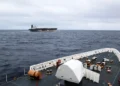
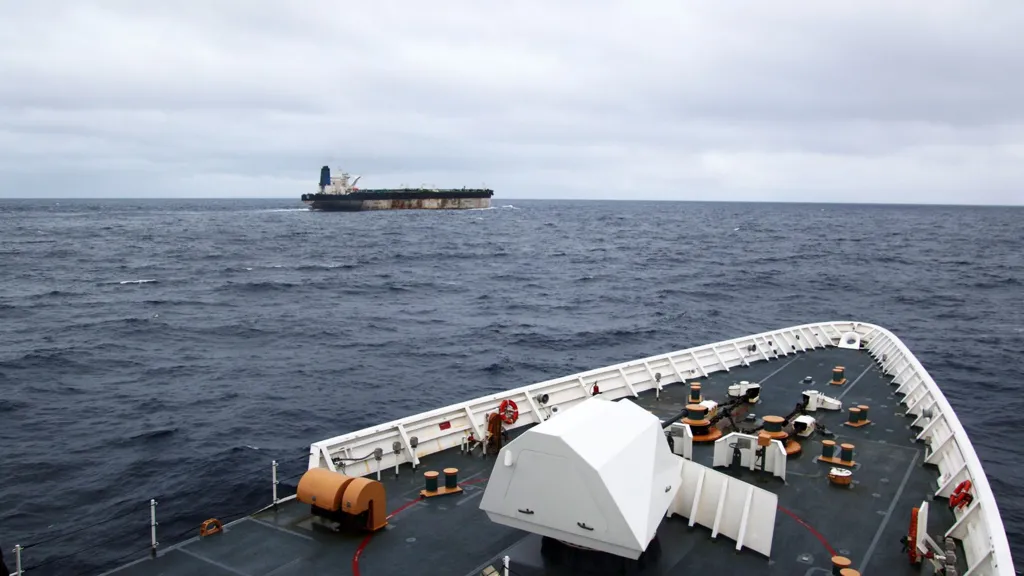
The British government has announced a significant escalation in its maritime strategy, declaring that the Royal Navy and specialist law enforcement units are now fully prepared to board and seize tankers belonging to Russia’s notorious shadow fleet. Defence Secretary John Healey confirmed that the military has been granted formal approval to intervene against sanctioned vessels transiting through United Kingdom waters, specifically targeting the aging and often uninsured tankers that Moscow uses to bypass international oil embargoes. This move represents a transition from passive monitoring and diplomatic pressure to active physical interdiction, marking one of the boldest attempts by a Western power to dismantle the logistics network funding the ongoing conflict in Ukraine.

Speaking on the sidelines of the Joint Expeditionary Force summit in Helsinki, Secretary Healey emphasized that the legal and operational foundations for these maneuvers have been meticulously finalized over the recent months. He explained that while a legal basis for such actions was identified by government lawyers as early as January, the final authorization required a period of intensive training and strategic coordination with northern European allies. The decision to move forward now is seen as a direct signal to the Kremlin that the era of maritime impunity for its “ghost ships” is coming to a close. According to official estimates, approximately 75% of Russia’s crude oil is transported via this shadow network, which consists of hundreds of vessels operating under opaque ownership and often flying flags of convenience to mask their origins.
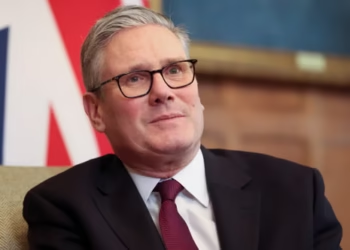
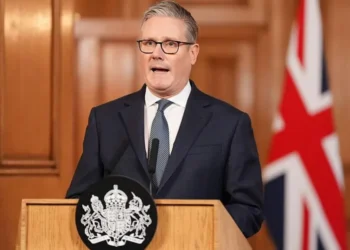
The Prime Minister, Sir Keir Starmer, echoed this resolve, stating that the UK would no longer permit sanctioned tankers to use the English Channel and other territorial waters as a safe corridor for “dirty profits.” He noted that the recent volatility in global energy markets, partially driven by tensions in the Middle East, has emboldened President Vladimir Putin to seek higher revenues through these illicit channels. By authorizing the Royal Navy to intercept these ships, the British government intends to force operators into taking significantly longer and more expensive routes or risk the total loss of their cargo and vessels. The Prime Minister underscored that the primary objective is to starve the Russian war machine of the financial resources necessary to sustain its campaign in Ukraine, while simultaneously protecting British sovereignty.
Operationally, the task of boarding these vessels will fall to elite units, potentially including the Royal Marines and the Special Boat Service, depending on the level of resistance anticipated. Military planners have spent weeks running through various scenarios, including the possibility of boarding tankers that refuse to surrender or those equipped with advanced surveillance technology designed to evade capture. Each operation will be preceded by a rigorous evaluation involving law enforcement, military specialists, and energy market analysts to ensure that every intervention is both legally sound and strategically justified. Once a vessel is detained, the government has signaled that criminal proceedings could be brought against the owners, operators, and crew for breaches of UK sanctions legislation.
This shift in policy follows a series of successful joint operations with international partners. Earlier this year, British forces provided critical support to a United States-led mission to seize the oil tanker Marinera in the North Atlantic. More recently, the French navy intercepted a suspected shadow fleet vessel in the Mediterranean with the assistance of British tracking data. These precedents have emboldened the UK to take a leading role within the Joint Expeditionary Force, a coalition of ten northern European nations dedicated to maritime security. Several members of this alliance, including Finland, Sweden, and Estonia, have already conducted their own operations against illegal tankers in the Baltic Sea, creating a unified front against Russian efforts to circumvent economic restrictions.

The environmental risks posed by the shadow fleet have also been a driving factor in the government’s decision. Many of the tankers in this fleet are more than fifteen years old and lack standard Protection and Indemnity insurance, making them a “ticking time bomb” for potential ecological disasters. A major spill in the English Channel, one of the world’s busiest shipping lanes, would have catastrophic consequences for marine ecosystems and coastal economies. By intercepting these “decrepit” ships, as Downing Street described them, the UK aims to mitigate the risk of mechanical failures or structural collapses that could lead to widespread pollution. The dual focus on national security and environmental protection has garnered broad support within Whitehall, despite the inherent risks of military escalation.
Moscow has reacted to these developments with predictable hostility, with senior Russian officials previously warning that any direct action against their tankers could be viewed as an act of “western piracy.” There have been suggestions from the Kremlin that the Russian Navy might be deployed to escort shadow fleet vessels through international waters to deter seizures. Despite these threats, the UK government maintains that its actions are firmly rooted in the Sanctions and Money Laundering Act of 2018 and international maritime law regarding stateless or falsely flagged vessels. The escalation marks a definitive new chapter in the economic war against the Russian state, as the high seas become the latest front in the effort to bring an end to the conflict in Ukraine.
Related News:
 UK Must Act with Courage and Clarity on Israel-Palestine Conflict, Says Foreign Affairs Committee Report
 Starmer and Trump to Meet in Scotland Amid Growing Gaza Ceasefire Pressure
 MPs Call on UK Government to Delay Biometric Visa Checks for Gaza Students Amid Humanitarian Crisis
 Radioactive Leak at UK’s Nuclear Warhead Base Sparks Outcry Over Safety and Secrecy
 Mutual Inconvenience: Why Alaska Was Chosen for the Trump-Putin Summit on Ukraine
 “I Don’t Expect to Live a Normal Life”: How a Leeds Teenager Became the Target of a Chinese Bounty
 Ministers Accused of Defamation Over Palestine Action Ban and Mass Arrests
 Is the UK Ready to Put Boots on the Ground in Ukraine? Assessing Military Capacity and Challenges
 Protests Expected as Israeli Arms Firms Join Global Defence Trade Fair in London
 UK Home Office to Launch French Beach Signage to Warn Asylum Seekers of Risks
 UK Immigration Figures: Separating Facts from Perceptions
 Far-Right Rally in London Draws Record Crowds Amid Clashes with Police
 Thousands Gather in London to Protest Donald Trump’s Second UK State Visit
 Trump Urges UK to “Call Out the Military” to Secure Borders Amid State Visit
Trump’s UN Speech Criticises London and UK Policies, Draws Far-Right Attention
Trump Urges UK to “Call Out the Military” to Secure Borders Amid State Visit
Trump’s UN Speech Criticises London and UK Policies, Draws Far-Right Attention
 UK Fighter Jet Purchase Could Breach Nuclear Treaty, Warns CND
 A Third of EU Citizens in UK Report Discrimination by Public Bodies Post-Brexit
 Jailed Georgian Opposition Leaders Warn UK of Iranian Links to Ruling Party
 Russia repeatedly targets UK military satellites, warns Space Command chief
 Pro-Palestine March to Proceed in London Despite Calls to Cancel After Manchester Attack
 UK Universities Warn Students Ahead of 7 October Pro-Palestine Protests
Starmer Considers Stricter Measures on Pro-Palestinian Protest Chants
UK Universities Warn Students Ahead of 7 October Pro-Palestine Protests
Starmer Considers Stricter Measures on Pro-Palestinian Protest Chants
 Public Trust in SNP Hits Historic Low Amid NHS Concerns
 Tony Blair Met Jeffrey Epstein at Downing Street in 2002
 Johnson Suggests Mandelson Linked to China Spy Controversy
 Witness statements reveal the CPS China spy row collapse in the UK
 Large scale Chinese spying in UK sparks political storm
 Nigel Farage Calls Vladimir Putin ‘A Very Bad Dude’
 Rachel Reeves signals welfare reform ahead of key budget
 Kosovo agrees to host Britain’s refused asylum seekers
 Plaid Cymru Triumphs in Caerphilly, Ending Labour Century-Long Hold
 Rachel Reeves to lead UK trade push in Saudi Arabia amid rights debate
 British Woman in Iran ‘Losing Hope’ Amid Ongoing Detention
 Johnson Approved China’s London ‘Super-Embassy’ in 2018
 BBC Journalist Held and Interrogated in Vietnam
 BBC director-general and news chief resign amid bias row
 New review urges UK to repatriate Shamima Begum, others from Syria
 Rama Rebukes Mahmood for Targeting Albanian Families
 Russian Vessel Used Lasers on RAF Pilots, UK Claims
 Britain Demands Israel Reverse Ban on Aid Groups
 US Africa aid remarks spark anger after leaked State email
 Starmer China visit raises human rights pressure on Beijing
 Emails Show Epstein Funded Mandelson’s Husband After Jail
 Cory Bernardi joins One Nation for SA election
 Starmer Condemns ‘Depraved’ Russian Strikes on Ukraine
 Russia Trolls Savage ‘Finished’ Keir Starmer After Mandelson Scandal Explodes
 Starmer Weighs Fast-Tracking Defence Boost
 Trump Warns Over Chagos Islands Deal
 Trump and Chagos Deal Rift Over Iran Strikes
 How Much Could Andrew’s Arrest Hurt the Royal Family?
 Andrew Mountbatten-Windsor Arrest After FBI Radar
 UK Has Not Given US Permission to Use RAF Bases for Iran Strikes
 US Trade Deficit Hits Fresh High Despite Trump’s Tariffs
 Australian PM Says Former Prince Andrew Has Suffered ‘Extraordinary Fall’ but That Won’t Prompt Republic Referendum
 Farage Chagos Islands Row Sparks Fury
 Tories Would Scrap ‘Debt Trap’ of High‑Interest Student Loans, Says Kemi Badenoch
 Trump Tariffs Threat Spark UK and EU Alarm
 Town Vigil Marks Four Years of Ukraine War
 New Zealand Backs Removing Andrew From Royal Line of Succession
 MPs Backed by Phillipson as She Defends Student Loan Change; Average Repayments to Rise by £8 a Month
 Green Party Triumphs in Gorton and Denton By‑Election
 UK Allows US Base Use Amid Iran Tensions
 Starmer Speaks to Trump After UK Joins Defensive Operation
 UK Will Allow US to Use Bases to Strike Iranian Missile Sites, PM Says
 Cooper: Joining US Strikes on Iran ‘Not in Britain’s Interest’
 Sarwar Rejects Father’s Tribute to Iran’s Supreme Leader
 Muslim Group Wants Mosques to Be Used as Polling Stations Ahead of UK Elections
 Trump Rebukes Starmer Over Iran Strikes Row
 Manchester Students Mourn Ayatollah Amid Protest
 Minister Meets Crews Who Will ‘Take Out’ Iranian Drones
 UK Prepares Aircraft Carrier for Middle East Crisis
 UK–US Tensions Ease as Starmer and Trump Hold First Call Since Iran Row
 Iran War Puts Trump at Political Risk Amid Rising Prices
 Gordon Brown urges court for crimes against children
 Yvette Cooper: UK Must Follow Principles, Not US Pressure
 Fox News Cut In Over Trump King Charles Claim
 UK Wage Growth Slows as Jobs Market Holds Firm
 UK Doubles Steel Tariffs to 50% to Protect Domestic Plants
 UK Minister Denies Iran Missile Threat to Britain
 UK Forecast to See Biggest Growth Hit from Iran War