Published: 01 April 2026. The English Chronicle Desk. The English Chronicle Online.
The legal landscape surrounding public demonstrations in Britain faced a significant moment this Wednesday afternoon. Two of the most influential figures in the UK Palestine solidarity movement were found guilty. Ben Jamal and Chris Nineham appeared before a judge at the Westminster Magistrates Court today. They faced charges related to the breach of specific conditions during a large-scale protest. The event in question took place in central London on the eighteenth of January last year. This demonstration was part of a long series of marches held since late October twenty-twenty-three. The court proceedings drew significant attention from activists and politicians across the United Kingdom today.
Ben Jamal serves as the director for the prominent Palestine Solidarity Campaign organization currently. Chris Nineham holds the position of vice-chair for the well-known Stop the War Coalition. Both men were accused of failing to comply with police orders during the January march. These orders were issued under the Public Order Act to manage the large London crowds. Judge Sternberg delivered a firm verdict following a trial that lasted several days this week. He stated that the police conditions imposed on the march were entirely lawful and necessary. The judge concluded that both defendants were fully aware of the restrictions placed upon them.

The verdict included a conviction for Ben Jamal on two counts of criminal incitement. These charges related to a speech he delivered to the crowds during the January demonstration. Judge Sternberg ruled that his words constituted a clear inducement to breach the police lines. The judge noted that the speech encouraged protesters to ignore the specific boundaries set earlier. He emphasized that fundamental protest rights in Britain are not absolute under the current law. Public safety requirements often necessitate the imposition of strict conditions on large walking street marches. The court gallery was packed with supporters who listened intently to the final judicial summary.
The January demonstration marked one of the most contentious moments in recent British protest history. Over seventy individuals were arrested during the course of that single afternoon in central London. The Metropolitan Police have faced intense scrutiny regarding their tactical decisions during the specific event. Legal experts and various members of Parliament have since called for a formal independent inquiry. They describe the policing methods used that day as being particularly repressive and heavy-handed indeed. Several trade union leaders joined the chorus of voices demanding more accountability from the force. This criticism follows a long period of relatively peaceful cooperation between organizers and the police.
Previous marches following the October seven attacks had generally proceeded without any major violent incidents. Relations between the Palestine Solidarity Campaign and the Metropolitan Police were once considered quite cordial. Organizers had expressed a desire to conclude their march near the BBC Portland Place headquarters. They intended to voice their public frustration regarding the broadcaster’s coverage of the Gaza conflict. This specific location had been utilized for two previous protests without any significant public order issues. Campaigners claimed that the police initially agreed to this route before changing their mind later. They alleged that the force imposed an unprecedented exclusion zone at the very last minute.
The Metropolitan Police defended their actions by citing the cumulative impact on local London communities. Officers stated that the planned route passed very close to several active Jewish community synagogues. They expressed concerns that the protest might cause significant alarm to residents in the area. The force believed there was a coordinated effort by some to breach the set conditions. Police commanders argued that the exclusion zone was a necessary measure to maintain public order. This decision became a focal point of the legal arguments presented during the recent trial. The tension between the right to march and community safety remains a sensitive issue.
Controversy also surrounded letters sent to the Metropolitan Police regarding their initial official public reports. Some critics alleged the force misrepresented the actions of several high-profile political figures that day. Former Labour leader Jeremy Corbyn was mentioned in reports regarding a breach of police lines. John McDonnell was also reportedly involved in the movement through the restricted central London zones. Video footage later appeared to show officers waving the politicians through the police cordons safely. Protesters carrying flowers were allegedly accused of using force to move through the restricted areas. These discrepancies fueled the public debate regarding the accuracy of the police accounts provided later.
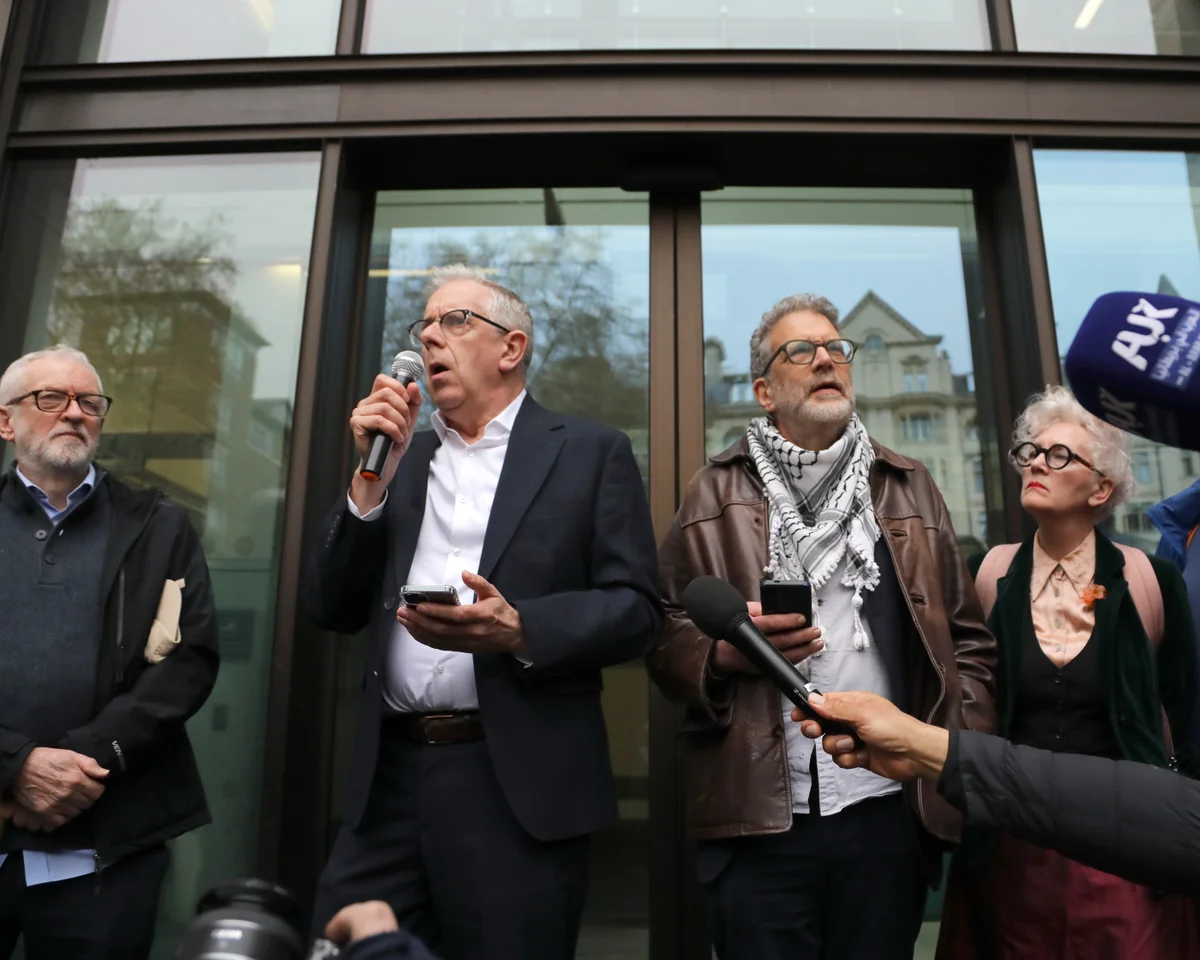
A large crowd of dedicated supporters gathered outside the Westminster court building early this morning. They carried banners and chanted slogans in support of the two veteran British activist leaders. The public gallery inside the courtroom was completely filled with allies of the two defendants. Jeremy Corbyn sat among the supporters to witness the delivery of the judge’s final verdict. The atmosphere remained tense but respectful as the court proceedings reached their ultimate legal conclusion. Many activists expressed deep disappointment with the guilty verdicts handed down by the presiding judge. They viewed the convictions as a potential threat to future freedom of assembly rights.

The legal teams for Jamal and Nineham argued that the police conditions were disproportionate overall. They suggested that the restrictions hampered the ability of the group to protest effectively today. Lawyers claimed that the sudden change in the march route caused confusion among the participants. The defense maintained that the leaders acted in good faith during a very fluid situation. However, the prosecution argued that the law must be upheld to ensure general public safety. They presented evidence that the organizers were warned repeatedly about the specific boundary restrictions. The judge ultimately found the prosecution’s arguments more compelling than the defense’s legal claims.
This conviction could have lasting implications for how major protests are organized in the United Kingdom. Groups may now face even stricter scrutiny when planning routes through sensitive parts of London. The ruling reinforces the power of the Metropolitan Police to set and enforce march conditions. It also highlights the personal legal risks faced by those who lead large social movements. Some observers worry that such convictions might deter people from taking part in future demonstrations. Others argue that clear rules are essential for maintaining peace in a very diverse city. The debate over the balance of rights continues to resonate across the British Isles.
The Palestine Solidarity Campaign has vowed to continue its advocacy work despite these recent legal setbacks. They maintain that their cause remains urgent and requires a strong presence on London’s streets. Chris Nineham stated that the movement would not be silenced by the court’s recent decision. Both men remain prominent figures who command significant respect within their respective political organizations today. The English Chronicle will continue to monitor any potential appeals following this landmark judicial ruling. For now, the verdict stands as a firm reminder of the current legal boundaries. The intersection of international conflict and domestic law remains a complex and challenging territory.
Related News:
 Protest Rights Under Threat Across England and Wales
 Three Palestine Action hunger strike protesters end protest after contract reversal
 ‘One in, one out’ scheme failing torture survivors, charity warns
 Calls Grow for King Charles to Apologise for Crown’s Role in Slavery
 Labour Attacks Reform Candidate Over Tommy Robinson Backing
 Thousands Protest Iran Strikes Outside US Embassy London
 US Bombers Arrive at RAF Base Amid Rising Iran Tensions
 UK Prepares Aircraft Carrier for Middle East Crisis
 Ukraine war briefing: Zelenskyy offers help to Saudi Crown prince on combatting Iranian drones
 US lawmaker urges Sarah Ferguson to testify over Epstein ties
 UN Warns Israeli Death Penalty Bill Could Be a War Crime
 Peterborough Mosques Tighten Security After Attack
 Reeves Faces Setback as Labour May Miss Homes Target
 Kate Winslet to Narrate Film Highlighting King’s Environmental Mission
 Trump’s UK Ambassador Urges North Sea Drilling to Strengthen US Ties
 French Taxi Driver Cleared in David Lammy Theft Case After Fare Dispute
 UK Bans Fake Numbers: Scammers Lose Their Trick
 M&S Profits More Than Halve After Cyber-Attack
 Kent village told to remove flags before Christmas lights go up
 Patients to Test Health at Home to Ease NHS Winter Pressure
 Palace May Restore Hyphen to Andrew Mountbatten-Windsor’s Name
 Millionaires group urge Reeves to introduce wealth tax to ‘lift kids out of poverty’
 Shouting Works Best to Deter Gulls, UK Study Finds
 Reeves rejects £1bn plea for NHS redundancy payouts
 Northern Lights may illuminate UK skies this week
 PM Condemns Leaks, Vows Loyalty to Ministers and Stability
 Major Rent Reform Ends No-Fault Evictions in England
 Criminal Gangs Pose as Truckers to Hijack UK Supply Chains
 Stroke Patient Mistaken for Drunk, Care Delayed
 Van Dwellers Face Eviction After Park Misuse Sparks Outcry
 Royal Navy Shadows Russian Warships Entering the Channel
 Inside the Helpline Protecting Missing Children in the UK
 Boots Showstopper Beauty Bundle Outshines Many Advent Calendars This Holiday Season
 PlayStation PS5 Deals Hit Lowest Prices Ahead of Black Friday
 Five-Year-Old Dies After Rare Tonsil Surgery Complication
 Starmer Says Labour’s Economic Plan Needs Years to Deliver
 UK unemployment rises to four-year high of 5.1% before budget
 Wiltshire Police Use Lasso to Catch Rampaging Village Goat
 Children to Receive Home Vaccines as England Acts
 Cambridge College Faces Backlash Over Private School Recruitment
 Celebrity Campaign Highlights SMA Screening Failures
 Bereaved Fathers Gain New Paternity Leave Rights in UK
 Woman Jailed for Life After Killing E-Bike Rider in Tragic Mistaken Identity Case
 UK Ministers Drop Foreign Student Targets for Global Education Push
 No Gas Boiler Ban as UK Warm Homes Plan Backs Heat Pumps
 Shinzo Abe’s killer receives life sentence in Japan
 Police response times face strict new national limits
 Devon hosts first high-density hydro power system
 Pornhub blocks new UK users over age checks dispute
 UK New Car Discounts Near £6,000 as Prices Are Slashed
 Pneumonia Surge Pushes England Emergency Cases Higher
 Send spending gap leaves deprived areas behind
 Farage to Name Jenrick as Reform Chancellor Pick
 ‘I Would Scream in My Sleep’: Alawite Women from Syria Tell of Kidnap and Rape
 Civil Service Pay: Union Urges Ministers to End ‘Barking Mad’ Limits
 Antonia Romeo appointment sparks criticism
 Farage Chagos Islands Row Sparks Fury
 UK Job Vacancies Hit Five-Year Pandemic Low
 UK Youth Unemployment Surges Amid Tax Changes
 Reform UK targets workers’ rights repeal
 Half of Britons Avoid GP When Ill, Survey Reveals Growing Concern
 Strong Rebound for UK Housing Market Sees 6% More Homes
 Russian Trade Routed Through British Islands Exposed
 Mandelson Arrest: Met Apologises to Hoyle
 Rolling Hills and Heritage: A Car-Free Break in Leicestershire
 Switching Energy Deal Can Save £200 as Price Cap Falls
 Mother Says ‘I Hugged My Daughter’s Killer’ as They Cried Together in Prison
 Insulin Evidence in Letby Trial Under Scrutiny After Expert’s GMC Probe Emerges
 Trump rebukes Starmer over Iran strikes
 Iran-Iraq border airstrikes spark new tensions
 Gen Z Binge Drinking Surges in Early 20s
 BBC Charter Reform Sparks Independence Battle
 UK Oil and Gas Supplies Reassured Amid Middle East Concerns
 ‘We can’t go back’: mother of six-year-old cancer survivor fears UK visa changes
 Palantir NHS Contract Sparks Fears Over Data Power
 Yvette Cooper: UK Must Follow Principles, Not US Pressure
 Charity Watchdog Takes Control of Learning Disability Care Home
 Australia Imposes Sudden Travel Ban on Iranian Visitors
 Keir Starmer Vows Strong Action Against Online Tech Giants
 MP Outrage Grows as Travelodge Boss Misses Key Safety Talk