Published: 11 April 2026 .The English Chronicle Desk .The English Chronicle Online
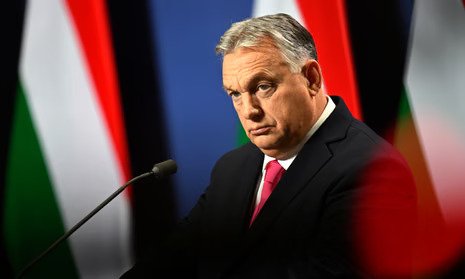
Hungary stands at a political crossroads as a high-stakes election transforms into the most serious challenge yet for long-serving populist prime minister Viktor Orbán, whose 16-year rule is now under intense pressure from a resurgent opposition, deepening corruption allegations, and growing public dissatisfaction.
What began as a routine electoral cycle has evolved into a national reckoning over governance, democratic standards, and Hungary’s future direction in Europe. At the centre of the storm is a wave of public anger sparked by revelations of extraordinary wealth accumulated by individuals close to Orbán’s inner circle, contrasted sharply with declining living standards for many ordinary citizens.
One of the most striking symbols of this divide emerged through drone footage showing an expansive estate in northern Hungary linked to the prime minister’s family environment. The property, with its landscaped gardens, private swimming pool, and underground facilities, quickly became a talking point across the country. Even more unusual was the presence of zebras roaming nearby land owned by a close associate of Orbán’s long-time ally and Hungary’s wealthiest businessman, Lőrinc Mészáros. The surreal imagery spread rapidly online and was soon adopted as a symbol of perceived elite excess and systemic corruption.

For opposition figures and anti-government protesters, the zebras became more than an internet curiosity. They evolved into a metaphor for what critics describe as an entrenched system of patronage, where political loyalty and economic privilege are tightly interwoven. Demonstrations in recent months have featured zebra imagery on placards, toys, and digital campaigns, reinforcing the idea that corruption has become normalised within Hungary’s political structure.
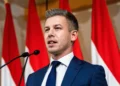
As public frustration has grown, so too has the momentum behind a newly energised opposition movement led by Péter Magyar, a former insider within Orbán’s political sphere. Magyar’s rapid rise has reshaped the political landscape, with polling suggesting his Tisza party has overtaken the ruling Fidesz party in several key surveys. His message has focused heavily on tackling corruption, restoring institutional independence, and rebuilding Hungary’s relationship with European partners.
Magyar’s emergence has disrupted a political system that for years appeared firmly consolidated. Since returning to power in 2010, Orbán’s government has implemented sweeping constitutional and legal reforms that critics argue have weakened checks and balances. Changes to electoral rules, increased government influence over the media landscape, and restructuring of judicial institutions have all contributed to accusations that Hungary has drifted away from liberal democratic norms.
Supporters of the government, however, argue that Orbán has strengthened national sovereignty and protected Hungary from external political pressures. The prime minister has consistently framed his leadership as a defence against what he describes as harmful influence from Brussels, particularly on issues such as migration, cultural policy, and the war in Ukraine.
This message has become increasingly prominent during the election campaign. Government-backed messaging has emphasised national security concerns, warning that opposition leadership could draw Hungary more deeply into geopolitical conflict or lead to uncontrolled migration. Large-scale advertising campaigns across the country have portrayed Péter Magyar as aligned with foreign interests, a narrative his supporters strongly reject.
Economic concerns have also played a central role in shaping voter sentiment. Following years of relative stability, Hungary has faced rising inflation, stagnating wages, and increasing pressure on public services. These conditions have fuelled dissatisfaction among middle- and lower-income voters who feel left behind by the country’s political elite.
At the same time, allegations of corruption have gained renewed attention. Investigative reporting and public debate have focused on how state contracts and public funds are distributed, with critics arguing that a network of business allies has benefited disproportionately during Orbán’s tenure. While supporters dismiss these claims as politically motivated, the issue has become central to the opposition’s campaign strategy.
Péter Magyar’s campaign has also benefited from broader shifts in Hungarian society. Younger voters and urban populations have increasingly expressed support for reform-oriented politics, while rural areas remain more divided. The opposition has framed the election as a defining moment for Hungary’s democratic future, arguing that the country must choose between continued centralised rule and a return to institutional balance within the European Union framework.
The international dimension of Hungary’s political trajectory has further intensified the election’s significance. Orbán’s government has cultivated relationships with several right-wing political movements across Europe and the United States, presenting Hungary as a model of conservative governance. High-profile endorsements from international political figures have reinforced this positioning, while also deepening divisions within the European Union over Hungary’s role.
Recent diplomatic attention, including visits by senior international political figures, has underscored Hungary’s strategic importance despite its relatively small economic size within the EU. However, critics argue that these relationships have also contributed to Hungary’s growing isolation within European institutions.
As election day approaches, uncertainty dominates the political atmosphere. While some polling suggests an opposition advantage, analysts caution that Hungary’s political system, combined with undecided voters and overseas ballots, could still produce a different outcome. Allegations of electoral manipulation and concerns over media imbalance have further complicated expectations.
On the streets, public opinion remains deeply divided. Some voters express hope that change will bring greater transparency and improved public services. Others fear that a shift in power could lead to instability or unwanted policy changes, particularly regarding Hungary’s position on the Ukraine conflict and migration policy.
In smaller towns and rural communities, these concerns are often expressed in personal and emotional terms. Many older voters emphasise security and continuity, while younger citizens tend to focus on opportunity, governance reform, and alignment with broader European values.

Regardless of the outcome, political analysts suggest that Hungary is entering a period of long-term transformation. Even if power changes hands, the institutional and structural changes implemented over the past decade and a half will not be easily reversed. The country’s media landscape, judicial system, and administrative structures have been deeply reshaped, meaning any new government would face a prolonged process of reform and reconstruction.
As Hungary prepares to vote, the election is widely seen as more than a contest between two parties. It represents a broader debate over national identity, democratic standards, and the country’s future within Europe. For Orbán, it is the most serious electoral challenge of his political career. For the opposition, it is a rare opportunity to redefine Hungary’s political direction after years of consolidation under a single dominant party.
Whatever the result, the vote is expected to mark the beginning of a new and uncertain chapter in Hungarian politics, with consequences that could extend far beyond the country’s borders.
Related News:
 China-critical UK academics face ‘extremely heavy’ pressure from Beijing
 US Justice Department Files Lawsuit Against California Over Partisan Voting Maps
 Trump Deploys DHS to Charlotte in Major Arrest Operation
 Congress Approves Release of Epstein Files, Trump Expected to Sign
 Texas Governor Faces Lawsuit From CAIR
 Chinese & Japanese Boats Clash Near Disputed Islands
 Putin Meets US Envoy Amid Key Ukraine Peace Talks
 EU weighs response amid Greenland tariff crisis with Trump
 EU Says US Ties Have Suffered ‘Big Blow’ After Greenland Crisis
 UK and EU Signal Fresh Push for Defence Cooperation Talks
 Thousands Protest ICE Operations in Nationwide US Day of Action
 Sydney Protest Clash Triggers Police Probe
 Queensland Protest Laws Spark Free Speech Backlash
 China Approves ‘Ethnic Unity’ Law Requiring Minorities to Learn Mandarin
 Italian Town Buys Mussolini Villa to Keep Away Fascist Fans
 Report Says Pezzullo Acted ‘Recklessly’ in Dealings
 ‘Free at Last’: French Teachers Released as Iran Exchanges ‘State Hostages’ for Legal Concessions
 Trump Administration Dismisses 17 Immigration Judges, Sparking Debate Over Judicial Independence
 French Taxi Driver Cleared in David Lammy Theft Case After Fare Dispute
 Just Stop Oil Protesters Convicted Amid Climate Defence Row
 BBC to Apologise Over Edited Trump Speech Amid Backlash
 Britain deploys RAF specialists to assist Belgium with drone threats
 Trump Urges Herzog to Grant Netanyahu Full Pardon
 Major Rent Reform Ends No-Fault Evictions in England
 Peers Flood Assisted Dying Bill with 942 Amendments
 Greene Pushes Epstein Files Amid Trump Fallout
 December Run-Off in Chile as Election Produces No Winner
 Canada Passes Carney’s First Budget in Tight Parliamentary Vote
 Shadow Fleet at Sea: Europe’s Battle Against Illicit Oil Shipping
 Pentagon Officials in Ukraine to Discuss War End
 Venezuela Threatens Nobel Winner Machado with Fugitive Status
 Georgians Defy Government Crackdown After Year of Protests
 US National Guard Member Killed in DC Shooting
 ICC to Rule on Duterte’s Provisional Release
 Tokyo court rules Japan’s same-sex marriage ban constitutional
 EU plans $105bn Ukraine aid using frozen Russian assets
 Russia losses Ukraine war peace talks intensify amid rising deaths
 Albanese Opens Door to Bondi Royal Commission Amid Rising Pressure
 Trump Escalates Minnesota Immigration Surge Amid Rising Tensions
 Iran Protesters Defy Crackdown as Violent Clashes Intensify
 Plans to Limit Jury Trials Face Retreat After Mounting Opposition
 Trump Threatens Strong Action If Iran Executes Protesters
 Machado Trump medal gesture reshapes Venezuela power struggle
 Andrew Hastie Emerges as Leadership Rival to Ley
 Starmer China visit raises human rights pressure on Beijing
 Israel Moves to Bar MSF From Gaza Operations
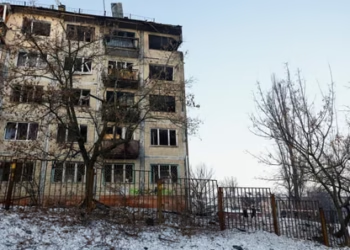 Thousands Left Without Heating in Ukraine Amid Russia Strikes
 Trump Praises ‘Terrific’ Petro After White House Talks
 Australia’s Opposition Coalition Reunites After Rift
 Portugal Election Delivers Socialist Win as Far Right Surges
 Tarique Rahman’s Rise Toward Bangladesh’s Top Job
 Australian Families Leave Syrian Camp for Home
 Macron Rebuked in Franco-German Defence Row
 Trump Attacks UK-California Energy Pact
 Nine Arrested in France Over Death of Far‑Right Student
 Civil Service Pay: Union Urges Ministers to End ‘Barking Mad’ Limits
 Trump and Chagos Deal Rift Over Iran Strikes
 Andrew Arrest Sparks Republic Debate in Australia
 Global corruption crisis: Who Washington shields
 Farage Chagos Islands Row Sparks Fury
 Trump Speech Sparks Intense Debate Across Divided America
 Has Europe truly learned from the failures of 2022?
 Trump Faces Questions Over Iran Conflict Plan
 Herzog Asio meeting sparks security storm
 Macron Finds ‘Freedom Fries’ Redemption in Iran Crisis
 Finland Plans to Lift Decades‑Old Ban on Hosting Nuclear Weapons
 Pete Hegseth Iran War Remarks Spark Alarm
 Trump Pressures Congress Over Save America Act
 Iranian Football Squad Asylum Drama Shocks Australia
 Ukraine War Becomes Flashpoint in Hungarian Election
 Eswatini Deal Sparks Global Outcry Over US Deportations
 Yvette Cooper: UK Must Follow Principles, Not US Pressure
 Trump Iran War Stance Hardens as Conflict Widens
 Trump Nato threats expose Iran strategy vacuum
 Philippines energy emergency sparks coal power surge
 Trump Iran Plan Faces Doubts Amid Renewed Tensions
 Trump Facing Backlash from Epstein Survivors Over Files
 Israel Enacts Death Penalty Law for Palestinians Following 12-Hour Debate
 ‘The Soul of Spain’: Politicians Clash Over Renewed Push to Move Picasso’s Guernica
 The Prediction Prohibition: White House Staff Barred from Betting on Political Markets