
Published: 17 April 2026. The English Chronicle Desk. The English Chronicle Online.
The political landscape in Westminster has been shaken by recent revelations regarding Peter Mandelson. New reports indicate that his security vetting process faced significant hurdles from the very start. Officials within the Foreign Office reportedly overruled a formal recommendation to deny him clearance. This decision allowed the former politician to assume his high-profile role as the Washington ambassador. The revelation has sparked a fierce debate about integrity within the current British government. Many citizens now question the transparency of the appointment process for such vital diplomatic roles. The initial investigation suggests that security experts expressed serious concerns during the background check phase. These professionals handle the developed vetting process which is the highest level of UK clearance. Such checks are designed to protect the nation from potential risks and internal vulnerabilities. The Foreign Office apparently decided that the diplomatic appointment was too important to be stalled. This unusual move has placed the Prime Minister under intense pressure from all political sides.
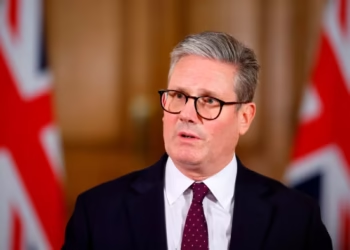
Keir Starmer had already publicly announced the choice of Mandelson for the American diplomatic post. This announcement created a difficult situation for civil servants working within the Foreign Office. They faced a choice between following security advice or supporting a major government decision. Documents now show that officials utilized a rarely invoked authority to bypass the standard rules. This override ensured that the appointment could proceed without further delay or public embarrassment then. The public remained unaware of these internal disagreements for more than a year of time. Intense scrutiny followed the appointment but the specific vetting failure stayed hidden from the press. Only recently did the government release over one hundred pages of highly redacted official documents. These papers were intended to clarify the situation but instead they raised more difficult questions. Downing Street issued a formal statement on Thursday night to address the growing media storm. The spokesperson confirmed that security officials had indeed recommended against granting the necessary security clearance.

The statement clarified that the Prime Minister was not informed of this specific security warning. Responsibility for the final decision rests solely with the Foreign Commonwealth and Development Office leadership. This defense suggests a significant breakdown in communication between major departments and the central government. Starmer is reportedly furious that such vital information was kept from his personal office desk. He has now ordered an immediate internal investigation to establish the facts of the case. This inquiry will look into why the vetting recommendation was disregarded by senior department officials. The Prime Minister intends to update the House of Commons once the full truth emerges. Opposition leaders have reacted with predictable anger and calls for total transparency from the top. Kemi Badenoch stated that the Prime Minister must take full responsibility for any parliamentary deception. Ed Davey suggested that misleading the British people should result in a high-level political resignation. The political stakes for the current administration have reached a critical and dangerous turning point.
Further documents regarding the vetting process are expected to be released to the public shortly. However there are reports that some officials want to withhold certain sensitive internal briefing papers. This potential move could lead to a confrontation with the Intelligence and Security Committee members. Withholding information might violate a previous parliamentary motion regarding the transparency of this specific case. The government previously promised to share all relevant papers linked to the Lord Mandelson appointment. Any attempt to hide the truth could be seen as a breach of parliamentary protocol. The Downing Street spokesperson insisted that the government remains fully committed to complying with law. They noted that some redactions might be necessary to protect sensitive national security interests today. Such claims are often viewed with skepticism by those seeking full accountability from the state. The fact that an ambassador failed a background check remains a highly shocking revelation. It suggests that the vetting system might be vulnerable to political pressure from the top.
The revelation raises serious questions about the personal judgment of the Prime Minister in this matter. Starmer had previously assured the public that the vetting process was thorough and entirely independent. He claimed that the security services gave the former ambassador full clearance for the role. These comments now appear to be at odds with the reality of the situation. It remains unclear who specifically within the Foreign Office authorized the controversial security override decision. Sir Olly Robbins was the permanent secretary at the department during this specific period of time. David Lammy served as the Foreign Secretary before moving to his current deputy prime minister role. Both individuals may face questions about their involvement in the clearance of the new ambassador. The former chief of staff Morgan McSweeney might also be asked for his personal account. McSweeney resigned earlier this year following controversy surrounding his role in the initial appointment process. His associates claim he had no knowledge of the specific outcome of the vetting check.
The decision to override the security experts was made just weeks before the February arrival. Mandelson eventually took up his post in Washington despite the hidden warnings from the experts. He was later sacked after his relationship with a convicted sex offender became public knowledge. This subsequent scandal added a layer of retrospective validation to the initial security concerns raised. Ministers are now facing questions about whether they were fully transparent with the British public. The timeline of events suggests a pattern of managing information to avoid a political crisis. During a press conference in Hastings Starmer defended the integrity of the entire vetting system. He stated that intensive exercises were carried out to ensure the suitability of the candidate. He also mentioned that both due diligence and vetting might need to be looked at. This comment now seems to blame a process that his own officials had bypassed. The disconnect between public statements and internal actions has created a significant credibility gap now.

Following the dismissal of the ambassador in September the level of parliamentary scrutiny increased rapidly. Yvette Cooper and Sir Olly Robbins wrote to the Foreign Affairs Select Committee in September. Their letter claimed that the vetting was conducted to the usual high standards of policy. It stated that the process concluded with clearance being granted before the official start date. This letter omitted the crucial detail that the security services had initially rejected the application. By providing only a partial truth the officials may have misled the members of parliament. The standard practice is for government departments to follow the advice of security vetting teams. Overriding such a recommendation is a move reserved for only the most exceptional circumstances imaginable. The reasons why the security team rejected Mandelson are currently a matter of intense speculation. Many wonder if his past associations were the primary cause for the initial negative report. The lack of clarity continues to fuel rumors and distrust within the halls of Westminster.
The fallout from this investigation is likely to continue for several weeks or even months. The government must now prove that it values national security over political convenience and optics. Trust in the diplomatic service is essential for maintaining strong international relations with global allies. If the vetting process can be ignored for political friends the system loses its meaning. The public deserves to know how such a significant failure was allowed to happen here. Accountability will be the key theme as more documents are provided to the oversight committees. The English Chronicle will continue to follow this developing story as more facts are revealed. This case serves as a reminder of the delicate balance between politics and national safety. For now the government remains in a defensive posture as it attempts to manage damage. The coming days will determine if the Prime Minister can move past this growing scandal. Integrity remains the most valuable currency in the world of modern British and global politics.
Related News:
 Reeves Faces Setback as Labour May Miss Homes Target
 Kate Winslet to Narrate Film Highlighting King’s Environmental Mission
 Trump’s UK Ambassador Urges North Sea Drilling to Strengthen US Ties
 UK Bans Fake Numbers: Scammers Lose Their Trick
 M&S Profits More Than Halve After Cyber-Attack
 Patients to Test Health at Home to Ease NHS Winter Pressure
 Millionaires group urge Reeves to introduce wealth tax to ‘lift kids out of poverty’
 Reeves rejects £1bn plea for NHS redundancy payouts
 Northern Lights may illuminate UK skies this week
 PM Condemns Leaks, Vows Loyalty to Ministers and Stability
 Major Rent Reform Ends No-Fault Evictions in England
 Stroke Patient Mistaken for Drunk, Care Delayed
 Inside the Helpline Protecting Missing Children in the UK
 Boots Showstopper Beauty Bundle Outshines Many Advent Calendars This Holiday Season
 PlayStation PS5 Deals Hit Lowest Prices Ahead of Black Friday
 Five-Year-Old Dies After Rare Tonsil Surgery Complication
 Starmer Says Labour’s Economic Plan Needs Years to Deliver
 UK unemployment rises to four-year high of 5.1% before budget
 Wiltshire Police Use Lasso to Catch Rampaging Village Goat
 Coasting Drinks: The Trend Redefining Alcohol Enjoyment This New Year
 Rising Hate Crimes Threaten Safety on UK Public Transport
 Starmer Faces Parliamentary Battles Over UK-EU ‘Reset’ Plan
 Met Police Vetting Failures Let Serial Rapists Remain
 Google Employee Claims Redundancy After Harassment Report
 Fatal Bolton Taxi Crash Claims Three Teens and Driver
 ScottishPower Tops List of Worst UK Energy Suppliers
 Judi Dench Champions Fight to Save London’s Green Spaces
 Crowborough Camp Welcomes First Asylum Seekers
 BBC Funding Crisis: Tim Davie Warns of Jeopardy Ahead
 Artificial intelligence will cost jobs, admits Liz Kendall
 Older Women Vanish from BBC Screens, Review Confirms Bias
 Streeting moves on doctor pay to end strike dispute
 Send spending gap leaves deprived areas behind
 Hidden Crisis: Domestic Abuse Suicide Toll in UK
 UK Unemployment Rate Climbs to 5.2% Peak
 BBC World Cup Presenting Duties Shared Among Trio
 Wales Approves Assisted Dying Bill Consent
 CPS Updates Guidance on Honour-Based and Dowry Abuse
 Asylum Seekers to Work After Year-Long Wait
 Inquiry into HMRC child benefit errors launched by NAO
 Rising Costs Force Families to Rethink Days Out
 Scott Mills Sacked by BBC Over Personal Conduct Claims
 Palantir Boss Defends NHS Deal Amid Government Break Clause
 Relationship with Trump may be beyond repair, Starmer warned
 UK Government Poised to Revive Stalled Hillsborough Law
 Trump Starts $166bn Tariff Refund Process
 Prominent Voices Challenge Palestine Action Ban
 Heritage at Risk: Britain’s Endangered Landmarks
 Starmer Survives Mandelson Rebellion
 New AI Tool To Target Obesity Risk And Transform NHS Care
 Greens Face Internal Row Over Antisemitism Claims
 Met Officers Probed Over Al Fayed Abuse Allegations
 Labour Members Doubt Starmer Future as Burnham Leads Poll
 Reform UK Faces Crisis as Newly Elected Councillors Resign
 Starmer Strikes Back as 100 MPs Sign Support Pledge
 UK Firms Freeze Spending as Iran Conflict Bites
 Rugby Legend Scott Hastings Dies Aged 61
 Reeves to Fast-Track Clean Energy Amid Iran Crisis
 The Battle for Wembley Sparking Unprecedented Legal Warfare
 Record Spending Highlights Growing Crisis In National Health Service
 Secret Role of UK Security Services in Troubles Amnesty Law
 Tube Strike Brings Capital to a Standstill Over Shift Disputes
 BP Stands Firm on Amanda Blanc Amid Boardroom Storm
 Teaching Machines Right From Wrong in the Digital Age
 UK House Prices Drop For Third Month Due To War Fears
 The Hidden Crisis Eroding Trust in British Communities
 Deepfake Abuse on X Sparks Safety Concerns for Dissidents
 Stolen Mobiles Could Soon Become Useless Bricks
 Clean Air Initiatives Spark Major Fall in London Hospital Admissions
 United Kingdom Politics Worse Now Than Before Brexit, Warns MP
 Russian Tanker Captain Remanded in UK Court After Channel Seizure
 Shocking Zoo Incident Sparks Attempted Murder Probe
 The Hybrid School Revolution Defying the Social Media Ban
 UK Care Crisis: Row Explodes Over New Visa Settlement Rules
 Sainsbury’s Boss Optimistic As Grocery Inflation Eases
 NHS Urges Investigation For Irregular Periods
 US Airman Avoids British Court in Indecent Exposure Case
 Farage Warns Sky News Following Financial Inquiry
 Ann Widdecombe, Formidable Political Figure, Dies at 78
 UK Schools Struggle as Classrooms Top 40C