Published: 18 August 2025. The English Chronicle Desk
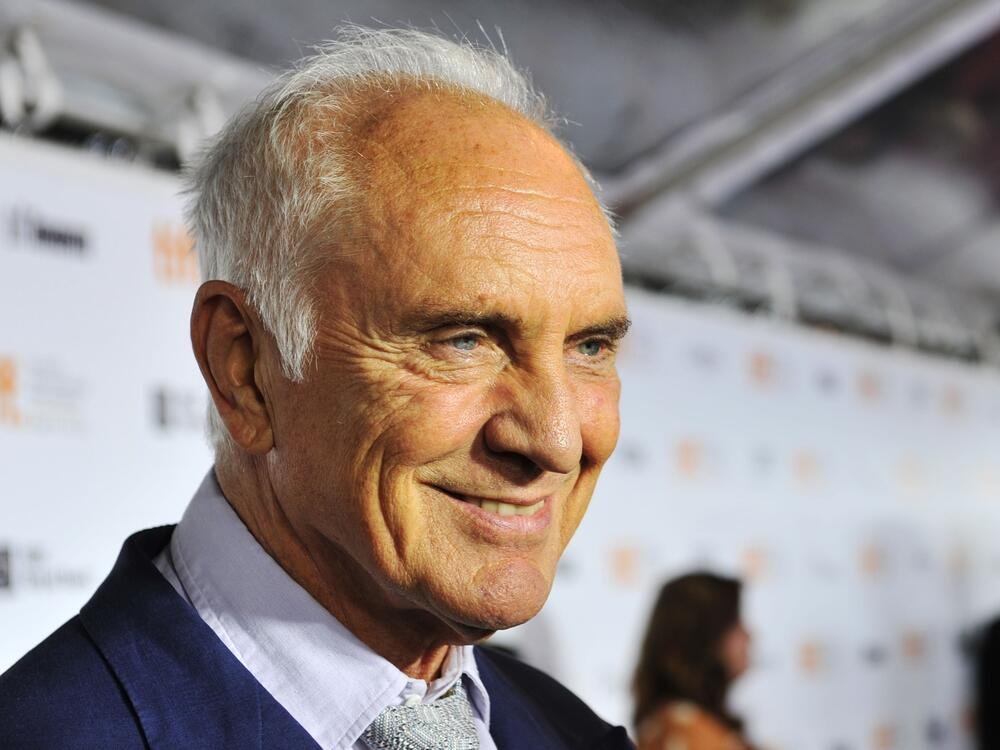
Terence Stamp, the British screen icon whose striking looks and magnetic presence made him one of the defining actors of the 1960s and whose later career included unforgettable performances in blockbusters such as Superman and arthouse triumphs like Billy Budd and The Adventures of Priscilla, Queen of the Desert, has died at the age of 87. His passing was confirmed by his representatives, though no cause of death has yet been disclosed.
In a statement, Stamp’s family paid tribute to the actor’s enduring legacy: “He leaves behind an extraordinary body of work, both as an actor and as a writer, that will continue to touch and inspire people for years to come.”
Stamp’s career spanned more than six decades, a journey that mirrored the changing face of British cinema itself. Rising to prominence during the “Swinging Sixties,” his name became synonymous with a new generation of actors who challenged traditional notions of British screen acting. Known for his haunting silences, piercing eyes, and a face critics often described as sculptural, he was praised for his ability to embody both innocence and menace with equal conviction.

Born in Stepney, East London, in 1938, Stamp was the son of a tugboat worker and a homemaker. His working-class roots made him something of an outsider in a British film industry still dominated by those of privileged backgrounds. Early in life, he dabbled in advertising and hospital work before finally pursuing acting, despite school counselors steering him toward bricklaying and other “secure” professions. He would later recall that his mother, an avid filmgoer, encouraged his ambitions, while his father, hardened by the trauma of war, struggled to understand them.
Stamp’s breakout came at the age of 24 in Billy Budd (1962), adapted from Herman Melville’s novella. His performance as the angelic yet doomed sailor was hailed by critics, who admired his youthful grace and intensity. His portrayal earned him an Academy Award nomination and a Golden Globe for Most Promising Newcomer, instantly cementing him as one of the brightest talents in British film.
Throughout the 1960s, Stamp became a fixture of international cinema, taking on roles that showcased his versatility and striking screen presence. But fame was accompanied by turbulence. Following a difficult romantic breakup in 1969, he retreated from the spotlight, moving to an ashram in India and embracing a spiritual life. He later explained that the exile was not just personal but professional: despite being in his early thirties, he found himself overlooked for roles, with casting directors searching for a “younger version of Terence Stamp.” The rejection, he admitted, was both humiliating and transformative.
His fortunes changed dramatically when a telegram arrived in India offering him a part in Richard Donner’s Superman films. The note, as Stamp recounted in his memoir, carried the irresistible hook: “YOU HAVE SCENES WITH MARLON BRANDO.” Returning to the screen, he delivered one of his most famous performances as General Zod, the ruthless Kryptonian villain. His line — “Kneel before Zod” — remains one of cinema’s most enduring catchphrases and secured his place in pop culture history.
Stamp never allowed himself to be confined to one kind of role. In 1994, he stunned audiences with his performance as Bernadette, a transgender woman on a road trip through the Australian outback, in The Adventures of Priscilla, Queen of the Desert. Initially greeted with surprise, his portrayal was praised for its humanity and emotional depth, with critics such as Roger Ebert commending him for transcending the shock of casting. The film went on to win an Academy Award for Best Costume Design and is considered a landmark in queer cinema.

In addition to his acting career, Stamp was also a writer, penning memoirs that reflected his complex life, from his East London childhood to his encounters with Hollywood legends. In The Ocean Fell into the Drop, he recalled being captivated as a boy by Cary Grant in The Bishop’s Wife. Learning that Grant had himself risen from a working-class background in Bristol gave the young Stamp hope that his own dreams were attainable.
Over the course of more than 60 films, Stamp worked with some of the biggest names in cinema while carving out a path uniquely his own. Whether playing a youthful idealist, a tormented loner, or a larger-than-life villain, he brought a singular energy to the screen. His career was as much about reinvention as it was about endurance, showing a willingness to take risks and step into roles that defied convention.
Terence Stamp is survived not just by his family but by a legacy of performances that continue to resonate across generations. To many, he will always be the face of 1960s British cinema: brooding, magnetic, and impossible to ignore. To others, he will forever be General Zod, the villain who demanded that the world kneel before him. Yet at the heart of his work was a restless spirit — an actor who resisted being defined, and whose artistry will endure far beyond his years.
Related News:
 Fabio Wardley stuns Joseph Parker to earn Usyk title shot
 Top Christmas Books Reads: Classics to Cozy Romcoms
 I’m a Celebrity 2025 line-up revealed: Osbourne joins
 UK Must Act with Courage and Clarity on Israel-Palestine Conflict, Says Foreign Affairs Committee Report
 Unseen Killers of the Deep Inside the UK Lab Uncovering the Silent Deaths of Sea Creatures
 Gen Z Embraces the Big, Bold ‘Fake’ Indian Wedding Party Trend
 MPs Call on UK Government to Delay Biometric Visa Checks for Gaza Students Amid Humanitarian Crisis
 Jack Osbourne Breaks Silence with Heartfelt Tribute Following Ozzy Osbourne’s Funeral
 Trump Pushes for Peace: Plans Surprise Meeting with Putin and Zelensky to End Ukraine War
 Radioactive Leak at UK’s Nuclear Warhead Base Sparks Outcry Over Safety and Secrecy
 Mutual Inconvenience: Why Alaska Was Chosen for the Trump-Putin Summit on Ukraine
 Russell T Davies Warns of Declining UK Gay Rights Amid Rise of Reform UK and Trump Influence
 Where Is Prince William and Kate Middleton’s New House? Inside the Historic Lodge Set to Become Their ‘Forever Home’
 FIFA Eyes Biennial Club World Cup from 2029, Plans Possible Expansion
 EuroMillions Record-Breaking £210m Jackpot Won by Lucky Lottery Ticket Holder
 Millie Bobby Brown and Jake Bongiovi Begin Parenthood Through Adoption
 Kneecap Pushes Forward with European Tour Despite Hungary Ban and Canceled Gigs
 British Couple Among 16 Killed in Lisbon Funicular Tragedy
 Protests Expected as Israeli Arms Firms Join Global Defence Trade Fair in London
 Madeleine McCann Case: German Woman at Centre of Hit-and-Run Theory Speaks Out
 Serbia Humiliated 0-5 by England in World Cup Qualifier
 Thousands Gather in London to Protest Donald Trump’s Second UK State Visit
 Trump Urges UK to “Call Out the Military” to Secure Borders Amid State Visit
 British AI Startup Outshines Human Forecasters in Global Prediction Contest
 Watchdog, Cornflakes and Courage: Remembering John Stapleton, a Broadcaster Who Did It All
 Liverpool Vs outhampton Set for Carabao Cup Clash at Anfield
 Dawson’s Creek” Cast Reunites for Special Broadway Benefit to Support James Van Der Beek
Trump’s UN Speech Criticises London and UK Policies, Draws Far-Right Attention
Dawson’s Creek” Cast Reunites for Special Broadway Benefit to Support James Van Der Beek
Trump’s UN Speech Criticises London and UK Policies, Draws Far-Right Attention
 UK Fighter Jet Purchase Could Breach Nuclear Treaty, Warns CND
 Actor Noel Clarke Arrested at London Home Amid Ongoing Investigation
 Patricia Crowther, Known as UK’s Oldest Witch, Dies Aged 97
 A Third of EU Citizens in UK Report Discrimination by Public Bodies Post-Brexit
 Jailed Georgian Opposition Leaders Warn UK of Iranian Links to Ruling Party
 Russia repeatedly targets UK military satellites, warns Space Command chief
 Pro-Palestine March to Proceed in London Despite Calls to Cancel After Manchester Attack
 Jilly Cooper: The Bonkbuster Queen Who Redefined Romantic Fiction
 UK Universities Warn Students Ahead of 7 October Pro-Palestine Protests
 Celebrity Traitors First Look: A Star-Studded Highland Adventure That Hooks from the Start
 Who is Ruth Codd? All about the Irish actress on Celebrity Traitors
 Public Trust in SNP Hits Historic Low Amid NHS Concerns
 Cooper Unveils £4m Cyber Plan Against Russian Hackers
 Strictly Celebs Starstruck as Cynthia Erivo Shines
 Tuchel Criticises ‘Silent Wembley’ After England Win
 Alan Davies Criticises England Flag Displays and Patriotism
 Johnson Suggests Mandelson Linked to China Spy Controversy
 Kane’s Double Seals England’s World Cup Qualification
 D’Angelo: Neo-Soul’s Radical Genius and Lasting Legacy
 Witness statements reveal the CPS China spy row collapse in the UK
 Nigel Farage Calls Vladimir Putin ‘A Very Bad Dude’
 China warns UK over delayed London mega embassy decision
 Rachel Reeves signals welfare reform ahead of key budget
 Barnes Inspires Newcastle to Champions League Triumph Over Benfica
 Kosovo agrees to host Britain’s refused asylum seekers
 Dave Ball: The Unsung Genius Behind Soft Cell’s Bold Sound
 British Airways suspends podcast sponsorship after controversial interview
 Rachel Reeves to lead UK trade push in Saudi Arabia amid rights debate
 British Woman in Iran ‘Losing Hope’ Amid Ongoing Detention
 Prunella Scales: From Fawlty Towers Icon to Beloved Canal Explorer
 Johnson Approved China’s London ‘Super-Embassy’ in 2018
 BBC Journalist Held and Interrogated in Vietnam
 Charlie Kaufman: They told me Being John Malkovich would never get made
 The Line of Beauty, Almeida review: A wild, witty ride through Thatcher-era high society
 Hollywood Is an Industry of Looney Tunes Pretending to Be Normal
 Trump Speaks on Prince Andrew’s Royal Scandal Fallout
 UPS Cargo Plane Crash in Kentucky Kills Seven
 Just Stop Oil Protesters Convicted Amid Climate Defence Row
 Oprah enjoys Meghan’s jam on English muffins
 Pauline Collins, Beloved ‘Shirley Valentine’ Star, Dies at 85
 Tension and Turmoil at Aston Villa v Maccabi Match
 Lando Norris Dominates Brazil GP to Strengthen F1 Title Bid
 VAR Must Rein Its Neck In to Save Football’s Spirit
 Ronaldo Confirms Final World Cup and Plans Retirement
 David Szalay’s ‘Flesh’ Wins 2025 Booker Prize
 Pop Stars Call on UK Government to Cap Resale Prices for Fans
 New review urges UK to repatriate Shamima Begum, others from Syria
 Pokémon to open world’s first theme park in Japan next year
 Rama Rebukes Mahmood for Targeting Albanian Families
 Russian Vessel Used Lasers on RAF Pilots, UK Claims
 TikTok Star Jessie Yendle Mocked by KFC
 Reggae Legend Jimmy Cliff Dies at 81