Published: 27 September 2025. The English Chronicle Desk. The English Chronicle Online
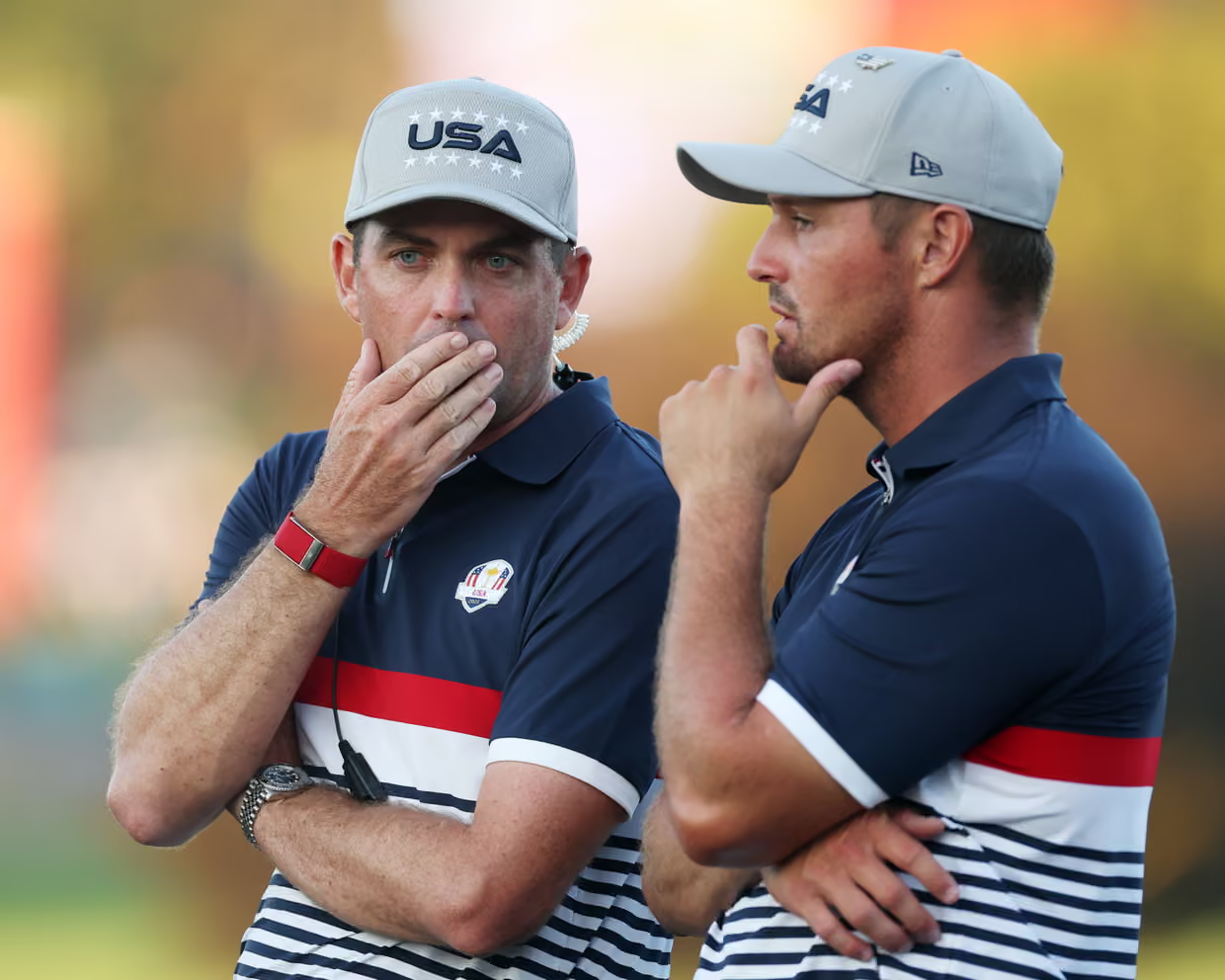
Keegan Bradley, captain of the United States Ryder Cup team, finds himself in the eye of a storm after a challenging opening day at Bethpage Black left his side trailing Europe by a significant margin. Despite widespread criticism over his selection strategy and questions about player compatibility, Bradley has vowed to stand firm, insisting his plan remains intact even as pressure mounts from fans, pundits, and within the golf world itself.
Europe asserted its dominance early on Friday, sweeping both sessions to build a commanding 5 ½ to 2 ½ lead. The American side, playing on home soil, struggled in the foursomes format, raising doubts over the captain’s controversial pairings. One decision in particular drew raised eyebrows: Bradley’s choice to reunite Collin Morikawa and Harris English, despite analytics strongly suggesting otherwise. According to respected site Data Golf, the duo ranked an astonishing 132nd among potential American combinations in terms of compatibility. Their performance did little to silence doubters, as they slumped to a 5&4 defeat at the hands of Rory McIlroy and Tommy Fleetwood.

Rather than altering course, Bradley doubled down on his belief in the pair, announcing that Morikawa and English will return for Saturday’s morning foursomes—and, strikingly, against the same European opponents who had dismantled them the day before. For many, it is a move that smacks of stubbornness. Yet for Bradley, it is a matter of trust and loyalty. “We’re really comfortable with our plan,” he said with calm defiance. “We’re really comfortable with those two players. Excited by who they are playing tomorrow. It will be an exciting match and we’re sticking to our plan. We’re not going to panic. We’re not going to panic and make those sort of mistakes. We’re going to stick to what we know.”
The captain’s explanation hinted at an oft-discussed theme surrounding American Ryder Cup teams: the influence of player emotions and egos. He revealed that Morikawa and English themselves had lobbied for a chance at redemption after their disappointment on Friday morning. “They were really bummed out that they lost their match today,” Bradley said. “They were eager to get back out on the course and that’s why we did that.” It was a telling remark, suggesting that morale and psychological factors weighed heavily in his decision-making, even at the expense of raw numbers.
Bradley’s approach to pairings has not been limited to Morikawa and English. He has also opted to keep Russell Henley alongside world number one Scottie Scheffler, despite their heavy defeat to Ludvig Åberg and Matt Fitzpatrick. On Saturday morning, Henley and Scheffler will take on Robert MacIntyre and Viktor Hovland, while Åberg and Fitzpatrick—retained by European captain Luke Donald after their impressive victory—will lead off against Bryson DeChambeau and Cameron Young. In the final matchup, Europe’s Jon Rahm and Tyrrell Hatton, both in formidable form, will square off with Xander Schauffele and Patrick Cantlay, two of America’s most dependable performers on paper.
Europe’s consistency has been one of the defining features of Ryder Cups in recent memory, and Donald has wasted little time in reinforcing that approach. His decision to retain the same successful partnerships from Friday’s 3-1 foursomes win reflects both confidence and tactical prudence. “The only one thing that people remember is who is the winner on Sunday,” Donald reminded reporters. “That is our goal and that continues to be our goal. I am very excited and proud of the team, how they dug in there. It’s a tough environment out there. The crowd was loud and like we expected.”
Indeed, the Bethpage galleries lived up to their reputation on Friday, with loud, partisan support creating a cauldron-like atmosphere. Yet if the raucous environment was designed to unsettle the Europeans, it seemed instead to galvanize them. McIlroy, in particular, thrived under pressure, producing some of his best golf while also attracting the ire of home fans. Footage circulated on social media purporting to show the Northern Irishman gesturing towards American spectators on the 11th hole during the afternoon session. While the images were inconclusive, they underscored the level of intensity surrounding the match. Donald, for his part, claimed no knowledge of the incident but praised McIlroy’s resilience amid persistent heckling.
For the Americans, the issues run deeper than crowd dynamics. Their putting struggles on Bethpage’s lightning-quick greens were glaring on day one. Misjudged pace, missed reads, and a lack of confidence plagued several pairings. Observers noted that course officials may well speed up the greens further for Saturday’s matches, potentially compounding the pressure. Bradley, however, preached calmness. “When you try too hard in golf, you don’t play as well,” he remarked. “We go out tomorrow, we get back into our process. We have a whole different mindset. We are playing from behind.”
The captain’s rhetoric of process and patience is admirable, but critics argue it borders on tone-deaf when paired with inflexible strategy. The Ryder Cup has historically punished captains who refused to adapt, and many fear Bradley risks falling into that trap. Still, his unwavering stance reflects a desire to project stability at a time when panic could easily set in.

For Europe, the challenge now lies in maintaining momentum while avoiding complacency. Their 5 ½ to 2 ½ advantage is commanding but not insurmountable, especially given the unpredictability of Ryder Cup weekends. As Donald acknowledged, “This is far from over.”
The coming sessions will be decisive. If Europe extends their lead on Saturday morning, the pressure on Bradley and his team will reach boiling point. If the Americans rally, his stubborn loyalty may yet be recast as shrewd foresight. For now, however, the story of the Ryder Cup’s opening act is one of contrasting fortunes: Europe united, clinical, and unfazed; the United States unsettled, divided, and struggling to rediscover their identity under a captain determined to hold his nerve.
Related News:
 Predicted Leicester Line-ups Reflect Cifuentes’ Tactical Plans Ahead of New Season
 Lionesses Return in Glory with an Open-Top Parade, Spark National Pride and Rewrite the Future of Women’s Football
 Central London Gears Up for Lionesses’ Victory Parade as Thousands Prepare to Celebrate Historic Women’s Euros Win
 London Set to Honour Euro 2025 Champions as Lionesses Take Victory Parade Through the Capital
 Rangers Boss Russell Martin Launches Blistering Critique After Disappointing Draw with Motherwell
 Ngumoha Shines Bright as Liverpool’s Future Looks Fiercely Promising
 Minute’s Silence for Diogo Jota Abruptly Ended After Wembley Tribute Disrupted
 Premier League Supercomputer Predicts Tough Season for Man Utd Amid Three-Team Title Battle
 Diogo Jota’s Empty Seat at Liverpool: A Symbol of Grief, Inspiration, and Duty
 Aston Villa Under Pressure as Newcastle Take on Hosts in Premier League Opener
 Isaac Price Shines as West Brom Clinch 3-2 Victory at Wrexham’s Championship Return
 Tottenham Make Three Changes as Spurs Prepare to Host Burnley in Premier League Opener
 FIFA Eyes Biennial Club World Cup from 2029, Plans Possible Expansion
 European Football: Atlético Madrid Stumble at Espanyol as Vitinha Secures PSG Win
 Leeds Mark Premier League Return with Gritty Win Over Everton
 Arsenal Move to Secure Eberechi Eze, Outpacing Tottenham
 Mateta’s Strike Gives Crystal Palace First-Leg Edge in Conference Playoff
 British Paralympians Accused of Disrespect After Turning Backs During Israeli Anthem
 Ruby Tui Emerges as the BBC Rugby Pundit Fans Never Knew They Needed
 Grimsby Stun Manchester United in Dramatic Penalty Shootout
 Club Brugge Crush Ten-Man Rangers to Deepen Russell Martin’s Crisis
 Guardiola Admits City ‘Forgot to Play’ After Shock Defeat to Brighton
 Morgan MacRae: From 17 Minutes Dead to Returning to Rugby in Six Weeks
 Serbia Humiliated 0-5 by England in World Cup Qualifier
 Fábio Carvalho’s Last-Minute Heroics Deny Chelsea Victory at Brentford
 Tottenham Cruise to 3-0 Victory Over 10-Man West Ham in London Derby
 Terence Crawford Shocks Canelo Álvarez to Claim Undisputed Super-Middleweight Crown
 Guardiola Faces Criticism for Defensive Approach in Manchester City’s Clash with Arsenal
 England Must Stay True to Their Style Ahead of Women’s Rugby World Cup Final: Lessons from 1991
Liverpool Vs outhampton Set for Carabao Cup Clash at Anfield
England Must Stay True to Their Style Ahead of Women’s Rugby World Cup Final: Lessons from 1991
Liverpool Vs outhampton Set for Carabao Cup Clash at Anfield
 Chelsea Survive Lincoln City Scare to Advance in Carabao Cup
 Aston Villa Edge Bologna as Europa League Campaign Kicks Off
 Tottenham Salvage Point with Stoppage-Time Palhinha Strike Against Wolves
 Arsenal VS Newcastle Hearts with Dramatic Late Turnaround at St James’ Park
 Aston Villa Fight Back to End Winless Run with Convincing Victory over Fulham
 Tragic Death Strikes Half-Marathon in Stoke-on-Trent: Runner Dies Shortly After Crossing Finish Line
 Postecoglou Stands Firm Amid Mounting Forest Fan Frustration
 Tuchel Criticises ‘Silent Wembley’ After England Win
 Kane’s Double Seals England’s World Cup Qualification
 Ronaldo’s Record Not Enough as Hungary Hold Portugal
 Fulham vs Arsenal Trossard Strike Sends Gunners Three Points Clear
 Ange Postecoglou’s Naivety Premier League Misadventure Ends
 Arsenal vs Atlético Madrid,Gyökeres Double Secures 4-0 Champions League Victory
 Barnes Inspires Newcastle to Champions League Triumph Over Benfica
 Gibbs-White Inspires Forest to Thrilling Win Over Porto
 Go Ahead Eagles Shock Aston Villa as Buendía Misses Late Penalty
 Aaronson and Rodon Punish West Ham as Leeds Claim Victory
 Manchester United triumph as Mbeumo brace seals thrilling win
 Fabio Wardley stuns Joseph Parker to earn Usyk title shot
 Tottenham shine at Everton but Frank wary of title push
 Brentford Dominate Grimsby in Carabao Cup, Collins Seals 5-0 Triumph
 Lecomte Shines as Fulham Edge Wycombe in Nervy Carabao Cup Win
 Sarr Double Sinks Young Liverpool in Carabao Cup
 Nwaneri and Saka Secure Arsenal Win Over Brighton
 Woltemade Hot Streak Fires Newcastle Past Spurs
 Salah & Gravenberch Lead Liverpool to Win Against Villa
 Dyche Criticises Corner Decision as Forest Draw with United
Caicedo Shines as Chelsea Edge Spurs in Chaotic Derby
Dyche Criticises Corner Decision as Forest Draw with United
Caicedo Shines as Chelsea Edge Spurs in Chaotic Derby
 Granit Xhaka Rescue Earns Everton Draw at Sunderland
 Liverpool Edge Real Madrid 1-0 in Champions League Thriller
 Burn and Joelinton Head Newcastle to Victory Over Bilbao
 Foden shines as Man City dismantle Dortmund in dominant display
 Garnacho Spares Chelsea From Shock Champions League Loss in Baku
 Tension and Turmoil at Aston Villa v Maccabi Match
 Bellingham has ‘the edge’ among England No 10s
 Man City Masterclass on Guardiola’s Milestone Day Exposes Liverpool Woes
 Lando Norris Dominates Brazil GP to Strengthen F1 Title Bid
 England cannot afford to be in awe of the All Blacks, warns Jamie George
 VAR Must Rein Its Neck In to Save Football’s Spirit
 Trescothick Hints Pope Will Keep Number Three Spot
 Ronaldo Confirms Final World Cup and Plans Retirement
 Mary Earps’s Manchester United Return Faces Mixed Reception
 Sam Kerr Stars in Chelsea Return with Champions League Double
 This kid is something else: Alex Scott’s rise to England call-up
 Former Lion Heskey Warns of Shortage of England Strikers
 Moyes Defends Gueye After Dramatic Everton Bust-Up
 Jac Morgan to Miss Six Nations Start After Surgery
 Alexander Isak ends drought as Liverpool stop rot with win at West Ham
 Mbappe rescues Real Madrid with a penalty at Girona
 England fear losing preferred World Cup base as Netherlands gain priority