Published: 03 October 2025. The English Chronicle Desk
A quiet autumn morning in Manchester turned into a scene of chaos and terror on Thursday when a lone attacker targeted worshippers at Heaton Park shul, a synagogue in Crumpsall, during Yom Kippur, the holiest day in the Jewish calendar. Reports indicate that at 9.31 am, a member of the public alerted Greater Manchester Police after witnessing a vehicle being driven erratically towards pedestrians outside the synagogue and a man being stabbed. Within minutes, the situation escalated into one of the most serious attacks on the city’s Jewish community in recent years.
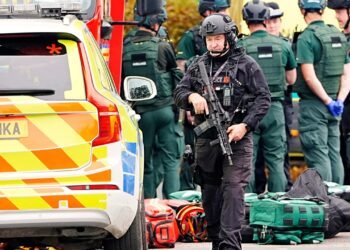
By 9.37 am, police had declared a major incident and activated Operation Plato, the code name used for marauding terrorist attacks. The rapid response reflected the authorities’ concern about both the immediate threat and the potential for further harm in a densely populated area. Firearms officers were on the scene within a minute of the declaration, and at 9.38 am, they shot a man believed to be the attacker. Paramedics arrived by 9.41 am, attending to multiple casualties, including those injured by the suspect’s vehicle and stab wounds inflicted during the rampage.

By 11.15 am, it was confirmed that two people had died from their injuries, along with the suspect, bringing immediate sorrow to the local community. A bomb disposal team later attended the scene after reports that the suspect had been wearing a vest resembling an explosive device, though officials subsequently confirmed that the device was non-viable.
The attack sent shockwaves across Manchester and the United Kingdom. Laurence Taylor, head of counter-terrorism policing in the UK, later confirmed that the incident was being treated as a terrorist attack, and two arrests were made in connection with it. Police emphasized that the rapid containment of the attacker likely prevented an even greater tragedy, with officers and worshippers playing key roles in limiting access to the synagogue itself.
Eyewitness accounts describe a scene of sheer terror. Worshippers who had arrived early for the morning service found themselves fleeing from an armed assailant. Some were trapped within the synagogue, barricading doors and windows to protect themselves from the attack. Others outside the building were struck by the vehicle or injured during attempts to evade the attacker. Reports indicate that in just a few minutes, the attacker had moved from the car to a direct assault on individuals, stabbing at random while the community attempted to secure the premises.
Residents in the area described the sound of gunfire and sirens as overwhelming. Fran Barrie, a 75-year-old resident overlooking the synagogue, recalled, “At about half past nine I heard a big bang and then four loud noises in quick succession. It might have been police firing, but within minutes, armed officers, fire engines, and emergency services arrived in force.” She added that police instructed residents in her block to move away from windows and evacuate the area, highlighting the seriousness of the situation and the presence of what was initially perceived as a potential explosive threat.
The broader community reacted with shock and solidarity. Josh Aronson, a Manchester-based journalist who had been planning to attend the synagogue later that day, described the chaos as reminiscent of war zones he had previously covered. “I immediately recognised the sound of gunfire. Then the sirens, the emergency vehicles, the cordons—it was terrifying. I saw the rabbi’s robes stained with blood. It’s just shocking,” he said. Aronson emphasised the long-term implications for community relations, noting that the attack represents not just an isolated act of violence but part of a disturbing trend of rising antisemitism in the UK.
Local politicians and leaders were quick to respond. Keir Starmer, returning from Denmark where he had been due to meet European leaders, called the attack “appalling” and stressed that the fact it occurred on Yom Kippur “makes it all the more horrific.” Conservative Party leader Kemi Badenoch condemned the attack as “vile and disgusting” and highlighted the broader context of increasing antisemitic incidents in the country. Andy Burnham, Mayor of Greater Manchester, pledged support to the Jewish community, stating, “I will stand with GM’s Jewish community at this time and will work through the day to support them.”
Graham Stringer, MP for Blackley and Middleton South, the constituency that encompasses Heaton Park shul, spoke to BBC Radio Manchester, noting that while the area enjoys generally excellent community relations, vigilance was necessary to prevent further harm. “We have to make sure these evil people do not damage our community. By and large, community relations are excellent between all the different ethnic groups and religious groups here, but events like this shake the foundations of trust and safety,” he said.
The attack is part of a troubling pattern of incidents targeting the Jewish community in Manchester. In the months preceding the assault, synagogues, kosher restaurants, and other Jewish institutions in the city were defaced with antisemitic graffiti, including messages such as “Nazi Jews are scum.” These acts, often linked to tensions surrounding the Gaza conflict, underscore the vulnerability of minority communities even in areas traditionally celebrated for cultural diversity. The suspect in Thursday’s attack, identified as Jihad Al-Shamie, a British citizen of Syrian descent, has been linked to further inquiries, with police arresting three additional individuals on suspicion of involvement in planning or instigating acts of terrorism.
Security measures were swiftly implemented following the attack. Bomb disposal experts carried out controlled detonations, including on the suspect’s vehicle, while police established extensive cordons around the synagogue. Officers were dispatched to other Jewish institutions across Manchester to ensure safety, and nearby hospitals were placed on heightened alert. Eyewitnesses described the scene as “chaotic but controlled,” with authorities moving quickly to manage both immediate risks and potential wider threats.
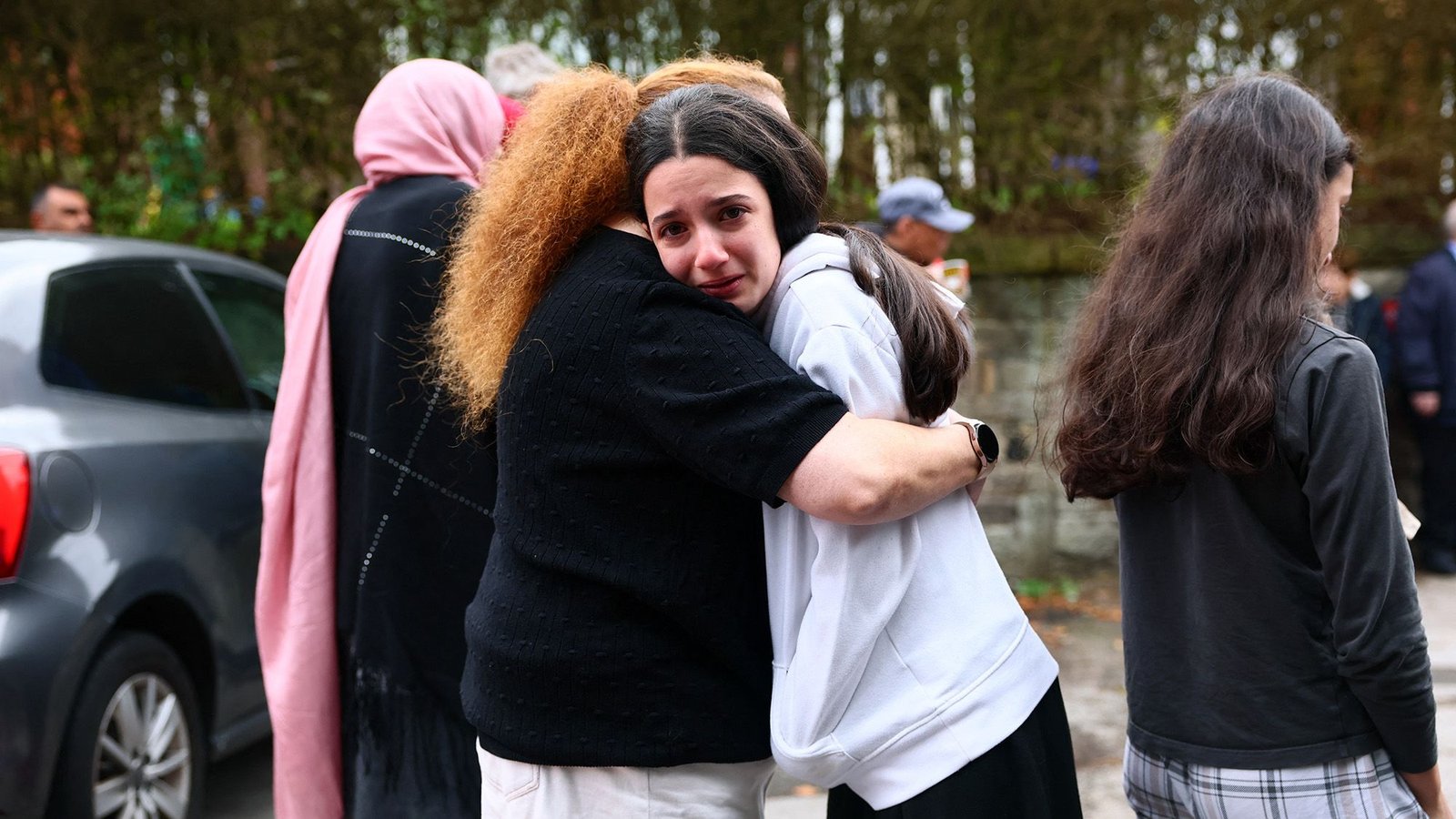
The psychological impact on the community has been profound. Many worshippers and residents expressed feelings of fear, grief, and disbelief. Volunteers and neighbours offered support, providing blankets, water, and comfort to those affected. For children and vulnerable community members, the experience was especially distressing, with families struggling to process the attack amidst ongoing concerns over safety and security.
Experts in community security and counter-terrorism emphasised the importance of rapid, coordinated responses in mitigating harm during such incidents. They noted that while the attack itself was brief, lasting mere minutes, the consequences—both human and psychological—extend far beyond that initial window of violence. Authorities have stressed the need for continued vigilance, community engagement, and intelligence-led policing to prevent similar attacks in the future.

As investigations continue, Greater Manchester Police have reiterated their commitment to maintaining public safety while conducting a thorough review of the events leading up to and during the attack. The broader national context—marked by a rise in hate crimes and antisemitic incidents in the wake of geopolitical tensions—has prompted renewed calls for dialogue, education, and community cohesion initiatives to ensure that religious and ethnic communities can coexist safely.
For Manchester’s Jewish community, Thursday’s attack serves as a stark reminder of vulnerability but also of resilience. Despite the trauma, local leaders, residents, and worshippers have emphasised unity and the importance of standing together against hatred and violence. As authorities pursue the investigation and legal processes unfold, the city grapples with the challenge of balancing security, community trust, and civil liberties, all while mourning the victims of a deeply unsettling and preventable act of terror.
In summary, the Manchester synagogue attack represents not only a horrific act of violence on a sacred day but also a critical moment for examining societal tensions, the protection of minority communities, and the role of law enforcement in rapid-response scenarios. While immediate action prevented further loss of life, the event has left a lasting imprint on the city, prompting reflection on both community resilience and the urgent need to address rising antisemitism across the UK.
Related News:
 UK Must Act with Courage and Clarity on Israel-Palestine Conflict, Says Foreign Affairs Committee Report
 Terror Probe Launched After Man Allegedly Shouts “Allahu Akbar” and “Death to Trump” on EasyJet Flight
 MPs Call on UK Government to Delay Biometric Visa Checks for Gaza Students Amid Humanitarian Crisis
 Trump Pushes for Peace: Plans Surprise Meeting with Putin and Zelensky to End Ukraine War
 Radioactive Leak at UK’s Nuclear Warhead Base Sparks Outcry Over Safety and Secrecy
 Mutual Inconvenience: Why Alaska Was Chosen for the Trump-Putin Summit on Ukraine
 “I Don’t Expect to Live a Normal Life”: How a Leeds Teenager Became the Target of a Chinese Bounty
 Manchester City Announce Their Return in Style with Haaland Double and Debut Goals at Wolves
 Terence Stamp, ’60s British Film Legend and Star of Superman, Dies at 87
 Where Is Prince William and Kate Middleton’s New House? Inside the Historic Lodge Set to Become Their ‘Forever Home’
 FIFA Eyes Biennial Club World Cup from 2029, Plans Possible Expansion
 EuroMillions Record-Breaking £210m Jackpot Won by Lucky Lottery Ticket Holder
 Is the UK Ready to Put Boots on the Ground in Ukraine? Assessing Military Capacity and Challenges
 Shein UK Faces Allegations of Shifting Majority of Profits to Singapore to Reduce UK Tax
 British Couple Among 16 Killed in Lisbon Funicular Tragedy
 British Couple Among Victims in Lisbon Funicular Tragedy
 Protests Expected as Israeli Arms Firms Join Global Defence Trade Fair in London
 Madeleine McCann Case: German Woman at Centre of Hit-and-Run Theory Speaks Out
 Trump Appears Sidelined as Israel’s Unprecedented Strikes Hit Qatar
 Serbia Humiliated 0-5 by England in World Cup Qualifier
 UK Immigration Figures: Separating Facts from Perceptions
 Thousands Gather in London to Protest Donald Trump’s Second UK State Visit
Trump Urges UK to “Call Out the Military” to Secure Borders Amid State Visit
Thousands Gather in London to Protest Donald Trump’s Second UK State Visit
Trump Urges UK to “Call Out the Military” to Secure Borders Amid State Visit
 British AI Startup Outshines Human Forecasters in Global Prediction Contest
 Liverpool Vs outhampton Set for Carabao Cup Clash at Anfield
Trump’s UN Speech Criticises London and UK Policies, Draws Far-Right Attention
Liverpool Vs outhampton Set for Carabao Cup Clash at Anfield
Trump’s UN Speech Criticises London and UK Policies, Draws Far-Right Attention
 UK Fighter Jet Purchase Could Breach Nuclear Treaty, Warns CND
 Britain Could Already Be at War with Russia, Former MI5 Chief Warns
 A Third of EU Citizens in UK Report Discrimination by Public Bodies Post-Brexit
 Jailed Georgian Opposition Leaders Warn UK of Iranian Links to Ruling Party
 Six Minutes of Terror: How Manchester Synagogue Attack Unfolded
 Russia repeatedly targets UK military satellites, warns Space Command chief
 Pro-Palestine March to Proceed in London Despite Calls to Cancel After Manchester Attack
 UK Universities Warn Students Ahead of 7 October Pro-Palestine Protests
Starmer Considers Stricter Measures on Pro-Palestinian Protest Chants
UK Universities Warn Students Ahead of 7 October Pro-Palestine Protests
Starmer Considers Stricter Measures on Pro-Palestinian Protest Chants
 Public Trust in SNP Hits Historic Low Amid NHS Concerns
 Cooper Unveils £4m Cyber Plan Against Russian Hackers
 Ferguson Fires Scotland to Dramatic Comeback Win Over Greece
 Tony Blair Met Jeffrey Epstein at Downing Street in 2002
 Tuchel Criticises ‘Silent Wembley’ After England Win
 Clarke’s Anger Overshadows Scotland’s Historic Win
 MPs Urge UK to Let Gaza Scholars Bring Their Children
 Johnson Suggests Mandelson Linked to China Spy Controversy
 Kane’s Double Seals England’s World Cup Qualification
 Witness statements reveal the CPS China spy row collapse in the UK
 Large scale Chinese spying in UK sparks political storm
 Nigel Farage Calls Vladimir Putin ‘A Very Bad Dude’
 China warns UK over delayed London mega embassy decision
 Rachel Reeves signals welfare reform ahead of key budget
 Barnes Inspires Newcastle to Champions League Triumph Over Benfica
City shine with PlayStation-style football to overwhelm Villarreal
Barnes Inspires Newcastle to Champions League Triumph Over Benfica
City shine with PlayStation-style football to overwhelm Villarreal
 Kosovo agrees to host Britain’s refused asylum seekers
 UK Deploys Troops to Help Monitor Gaza Ceasefire
 Plaid Cymru Triumphs in Caerphilly, Ending Labour Century-Long Hold
 UK Gamer Recruited by Wagner Group Found Guilty of Arson
 Fabio Wardley stuns Joseph Parker to earn Usyk title shot
 Rachel Reeves to lead UK trade push in Saudi Arabia amid rights debate
 British Woman in Iran ‘Losing Hope’ Amid Ongoing Detention
 Johnson Approved China’s London ‘Super-Embassy’ in 2018
 BBC Journalist Held and Interrogated in Vietnam
 The diet that can significantly ease symptoms of IBS
 Mass Stabbing on Doncaster to London Train Leaves Ten Injured
 Trump Speaks on Prince Andrew’s Royal Scandal Fallout
 Top Christmas Books Reads: Classics to Cozy Romcoms
 UPS Cargo Plane Crash in Kentucky Kills Seven
 Just Stop Oil Protesters Convicted Amid Climate Defence Row
 Tension and Turmoil at Aston Villa v Maccabi Match
 British Grandmother to Return Home After Death Sentence in Bali
 Lando Norris Dominates Brazil GP to Strengthen F1 Title Bid
 BBC director-general and news chief resign amid bias row
 Ronaldo Confirms Final World Cup and Plans Retirement
 Night after night, Belgium is on high alert.
 Hamas Fighters in Gaza Tunnels Stall Ceasefire Progress
 Fog Aids Russian Forces in Deep Push into Pokrovsk
 Delhi Car Blast Kills Eight, Declared Terror Incident
 New review urges UK to repatriate Shamima Begum, others from Syria
 Israel Confirms Returned Hostage as Meny Godard
 Rama Rebukes Mahmood for Targeting Albanian Families
 Russian Vessel Used Lasers on RAF Pilots, UK Claims
 Video shows Israeli troops kill Palestinians after surrender