Published: 04 October’ 2025. the English Chronicle Desk, English Chronicle Online
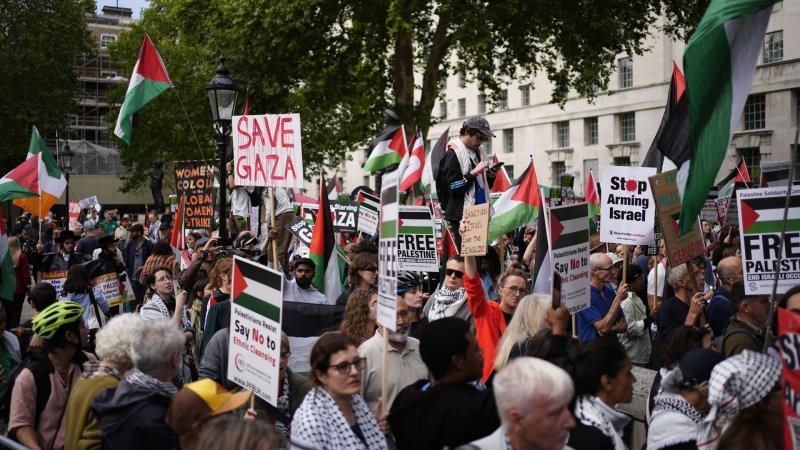
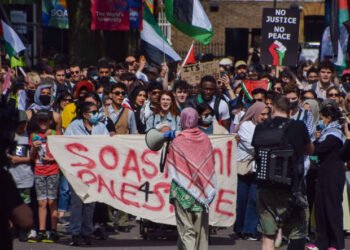
Pro-Palestine demonstrations in London are set to proceed this weekend despite appeals from political leaders and law enforcement to cancel the events following a terror attack at a Manchester synagogue on Thursday. Organisers of the protest, including the group Defend Our Juries, have confirmed that a rally in Trafalgar Square will take place on Saturday afternoon, with attendance expected to exceed 1,500 participants. Demonstrators plan to peacefully gather, carrying cardboard placards with messages such as “I oppose genocide. I support Palestine Action,” expressing solidarity with Palestinians while seeking to maintain a non-violent presence.
The decision to move forward with the march has sparked debate across political and social spheres, particularly given the timing in the immediate aftermath of a violent attack. Scotland Yard Commissioner Sir Mark Rowley publicly urged organisers to reconsider, citing concerns over the strain on police resources. With additional officers deployed to protect synagogues and religious sites in London and other cities, he noted that the demonstrations could further stretch operational capacity. Rowley also warned that, given the recent attacks, public perception of the protests could provoke tension or be deemed insensitive to the grieving communities affected by the Manchester incident.

Prime Minister Keir Starmer joined the chorus of cautionary voices, emphasizing the need for sensitivity in the wake of the synagogue attack. He urged protest groups and attendees to acknowledge the grief of British Jews and consider whether proceeding with public demonstrations might inadvertently deepen the pain of mourners. Starmer’s intervention reflects broader concerns about the intersection of public expression, political activism, and communal safety during periods of heightened tension. The Prime Minister stressed that while the right to protest remains fundamental, the context of recent events necessitates careful judgment and compassion.
Despite these appeals, some voices within the political landscape have defended the right to proceed with peaceful demonstrations. Labour MP Kim Johnson, speaking to the Independent, asserted that the protest should continue as scheduled, arguing that policing priorities should focus on maintaining public safety rather than suppressing lawful expressions of dissent. Johnson emphasized that citizens have a constitutional right to assemble and voice their concerns, even in challenging circumstances, and that authorities must balance security with the protection of civil liberties.
The proposed protest in Trafalgar Square represents the latest iteration of ongoing pro-Palestinian activism in the United Kingdom, reflecting the sustained engagement of advocacy groups in highlighting humanitarian concerns in Gaza and the wider Palestinian territories. Previous demonstrations have drawn attention to issues such as civilian casualties, economic blockades, and broader geopolitical dynamics, while also navigating the complexities of operating within highly scrutinized urban spaces. Organisers of Saturday’s rally have reiterated their commitment to peaceful conduct and maintaining a lawful presence, seeking to minimize disruption while ensuring their message reaches a public audience.
The backdrop of the Manchester synagogue attack has intensified scrutiny on public assemblies and demonstrations across the UK. On Thursday, a stabbing incident at the synagogue resulted in injuries and prompted an immediate law enforcement response, heightening concerns about security at religious sites and public gatherings. Authorities have since ramped up protective measures, deploying additional officers to synagogues, community centers, and areas expected to host large crowds. This heightened state of alert has placed pressure on policing resources and created a challenging environment for organisers of planned demonstrations.
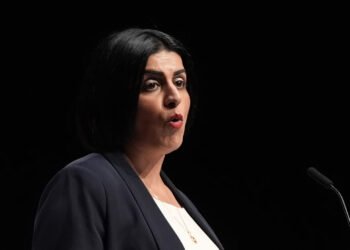
In the wake of the Manchester attack, several public figures have voiced their disapproval of any protests that could be perceived as insensitive. Former Shadow Minister Shabana Mahmood condemned a demonstration that occurred in Manchester shortly after the stabbings, urging participants to “show some humanity” and respect the vulnerability of affected communities. Mahmood’s remarks highlight the tension between the expression of political viewpoints and the necessity of empathy during periods of communal mourning.
The upcoming London protest has reignited this debate, raising questions about the balance between freedom of assembly, the expression of political solidarity, and the responsibility to avoid inflaming tensions in already fragile circumstances. Supporters of the protest maintain that it is a vital platform for raising awareness of ongoing humanitarian issues, while critics caution that timing and optics are crucial in preventing additional social strain.
Public reaction to the planned demonstration has been mixed, reflecting wider divisions within society over the appropriate response to international crises, domestic security concerns, and civic responsibility. Many observers recognize the legitimacy of voicing opposition to perceived injustices while simultaneously acknowledging the emotional impact of recent violent events. The tension between these priorities underscores the broader challenges of facilitating peaceful protest in a complex and sensitive public environment.
As preparations for the Trafalgar Square march continue, law enforcement officials are coordinating with organisers to implement safety measures and ensure orderly conduct. Contingency plans include designated routes, crowd control arrangements, and rapid response protocols in case of unforeseen incidents. Authorities are working to balance security considerations with the rights of citizens to gather and express their viewpoints, emphasizing communication, monitoring, and collaboration as central to maintaining public safety.

The unfolding situation in London serves as a microcosm of broader debates in the UK and globally regarding the intersection of civil liberties, activism, and security. The decision to proceed with protests in the shadow of violent attacks illustrates the resilience of civic engagement but also highlights the ongoing responsibility of both organisers and authorities to navigate these events with prudence, compassion, and adherence to the rule of law.
As the nation watches the developments in Trafalgar Square, the focus remains on ensuring that demonstrations proceed safely, peacefully, and without exacerbating social tensions. The coming days will provide insight into the capacity of communities, organisers, and law enforcement to manage the delicate balance between public expression and security in a climate of heightened awareness and vulnerability.
Related News:
 UK Must Act with Courage and Clarity on Israel-Palestine Conflict, Says Foreign Affairs Committee Report
 Starmer and Trump to Meet in Scotland Amid Growing Gaza Ceasefire Pressure
 Minister Dismisses Legal Concerns Over UK’s Pledge to Recognise Palestinian State
 MPs Call on UK Government to Delay Biometric Visa Checks for Gaza Students Amid Humanitarian Crisis
 Radioactive Leak at UK’s Nuclear Warhead Base Sparks Outcry Over Safety and Secrecy
 ‘I’m collateral damage’: ex-minister Tulip Siddiq on her Bangladesh corruption trial
 Mutual Inconvenience: Why Alaska Was Chosen for the Trump-Putin Summit on Ukraine
 “I Don’t Expect to Live a Normal Life”: How a Leeds Teenager Became the Target of a Chinese Bounty
 Ministers Accused of Defamation Over Palestine Action Ban and Mass Arrests
 UK Defence Secretary Says Allied Troops ‘Ready to Act from Day One’ if Ukraine Ceasefire Agreed
 Is the UK Ready to Put Boots on the Ground in Ukraine? Assessing Military Capacity and Challenges
 Protests Expected as Israeli Arms Firms Join Global Defence Trade Fair in London
 UK Home Office to Launch French Beach Signage to Warn Asylum Seekers of Risks
 Charlie Kirk Killing Used to Mobilise UK’s Largest Far-Right Rally in Decades
 UK Immigration Figures: Separating Facts from Perceptions
 Far-Right Rally in London Draws Record Crowds Amid Clashes with Police
 Thousands Gather in London to Protest Donald Trump’s Second UK State Visit
 UK and Ireland Set to Unveil New Proposals to Address Northern Ireland’s Troubles Legacy
 Trump Urges UK to “Call Out the Military” to Secure Borders Amid State Visit
Tulip Siddiq Raises Concerns Over Alleged ‘Fake’ Documents in Bangladesh Corruption Trial
Trump Urges UK to “Call Out the Military” to Secure Borders Amid State Visit
Tulip Siddiq Raises Concerns Over Alleged ‘Fake’ Documents in Bangladesh Corruption Trial
 UK Recognises State of Palestine in Push to Preserve Hope for Peace
 UK’s Recognition of Palestine: Symbolic Step or Real Change?
Trump’s UN Speech Criticises London and UK Policies, Draws Far-Right Attention
UK’s Recognition of Palestine: Symbolic Step or Real Change?
Trump’s UN Speech Criticises London and UK Policies, Draws Far-Right Attention
 UK Fighter Jet Purchase Could Breach Nuclear Treaty, Warns CND
 A Third of EU Citizens in UK Report Discrimination by Public Bodies Post-Brexit
 Jailed Georgian Opposition Leaders Warn UK of Iranian Links to Ruling Party
 Russia repeatedly targets UK military satellites, warns Space Command chief
 UK Universities Warn Students Ahead of 7 October Pro-Palestine Protests
Starmer Considers Stricter Measures on Pro-Palestinian Protest Chants
UK Universities Warn Students Ahead of 7 October Pro-Palestine Protests
Starmer Considers Stricter Measures on Pro-Palestinian Protest Chants
 Public Trust in SNP Hits Historic Low Amid NHS Concerns
 Tony Blair Met Jeffrey Epstein at Downing Street in 2002
 China’s Mega Embassy in London Faces Further Delay
 Johnson Suggests Mandelson Linked to China Spy Controversy
 Minister Blames Deputy for Collapse of China Spy Case
 Shabana Mahmood Warns Border Failings Are Eroding Trust in States
 Witness statements reveal the CPS China spy row collapse in the UK
 Large scale Chinese spying in UK sparks political storm
 Nigel Farage Calls Vladimir Putin ‘A Very Bad Dude’
 Rachel Reeves signals welfare reform ahead of key budget
 Prince Andrew met alleged Chinese spies during Pitch@Palace China trips
 Kosovo agrees to host Britain’s refused asylum seekers
 Plaid Cymru Triumphs in Caerphilly, Ending Labour Century-Long Hold
 Rachel Reeves to lead UK trade push in Saudi Arabia amid rights debate
 British Woman in Iran ‘Losing Hope’ Amid Ongoing Detention
 Johnson Approved China’s London ‘Super-Embassy’ in 2018
 BBC Journalist Held and Interrogated in Vietnam
 Zohran Mamdani becomes New York City’s first Muslim mayor
Zohran Mamdani names all-female transition team for NYC mayoralty
Zohran Mamdani becomes New York City’s first Muslim mayor
Zohran Mamdani names all-female transition team for NYC mayoralty
 Second world war veterans honoured as King leads Remembrance Sunday
 BBC director-general and news chief resign amid bias row
 New review urges UK to repatriate Shamima Begum, others from Syria
 Rama Rebukes Mahmood for Targeting Albanian Families
 Russian Vessel Used Lasers on RAF Pilots, UK Claims
 Ireland Boosts Ukraine Aid as Zelensky Visits Dublin
 Terence Stamp, ’60s British Film Legend and Star of Superman, Dies at 87
 Hong Kong Summons UK and Australian Envoys Following Asylum Grants to Democracy Activists
 Police Scotland Spends £500,000 Compensating Officers Over Trump Visit
 Urgent Action Needed on Windrush Compensation as Survivors Speak of “Waiting to Die”
 Tanni Grey-Thompson Faces Abuse Over Opposition to Assisted Dying Bill
 TfL Invites RMT to Resume Talks as London Tube Strikes End
Channel Crossings Surge: Over 1,000 People Arrive in the UK in Small Boats in a Single Day
TfL Invites RMT to Resume Talks as London Tube Strikes End
Channel Crossings Surge: Over 1,000 People Arrive in the UK in Small Boats in a Single Day
 Nigel Farage Unveils Controversial Immigration and Welfare Plans at Reform UK Press Conference
 Yvette Cooper Signals Global Momentum Towards Gaza Peace Deal Amid Humanitarian Crisis
 Ed Miliband Warns UK Government on X, Citing Elon Musk as a “Dangerous Influence”
 Digital ID Plans Ignite Debate Over £600m Treasury Tax Boost and Privacy Concerns
 Yvette Cooper Backs Digital ID Plan for UK Teens
 Ministry of Justice fails to file £11bn in spending receipts
 Reform UK candidate fined £19,000 after using AI-generated cases to challenge election
 William Steps Up Over Prince Andrew Palace Response
 Ireland Votes as Two Women Compete for Presidency
 Experts Warn Russia’s Burevestnik Missile Could Destabilise Arms Control
 Green Party Surges Past Labour in Latest UK Poll
 Zarah Sultana Launches Party to Change Politics
 Just Stop Oil Protesters Convicted Amid Climate Defence Row
 Starmer Faces Growing Dissent as Labour MPs Weigh Leadership Challenge
 Peers Flood Assisted Dying Bill with 942 Amendments
 Trump Deploys DHS to Charlotte in Major Arrest Operation
 Pentagon Officials in Ukraine to Discuss War End
 Venezuela Threatens Nobel Winner Machado with Fugitive Status
 Most Tories Expect to Support a Farage-Led Government