Published: 14 November 2025. The English Chronicle Desk. The English Chronicle Online.
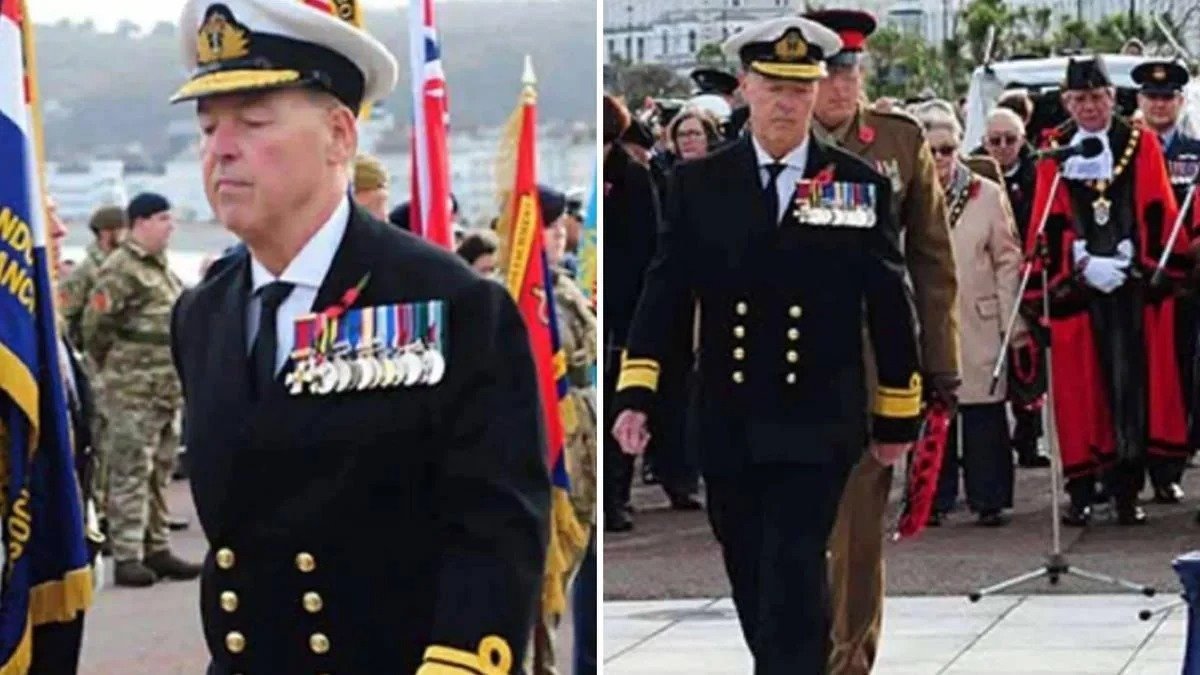
A shocking incident at a Remembrance Sunday commemoration in North Wales has stirred widespread outrage after a man, posing as a high-ranking naval officer, participated in the solemn event. Jonathan David Carley, 64, appeared at the war memorial in Llandudno on Sunday wearing the uniform of a rear admiral, complete with an improbable row of 12 medals. The ill-fitting attire, combined with a series of unlikely claims, has drawn sharp condemnation from veterans, serving military personnel, and local authorities alike.
According to eyewitnesses, Mr Carley arrived unannounced and walked among dignitaries, raising suspicions with a combination of medals that seemed incongruous. He sported the Distinguished Service Order, an MBE, the Gulf War Medal, and the Queen’s Voluntary Reserves Medal—a combination that, according to military regulations, would be impossible for a single individual to hold. Military experts noted that the Queen’s Voluntary Reserves Medal is exclusively awarded to reservists, who would never simultaneously hold a DSO. Additionally, Mr Carley wore a white cutaway collar shirt with oversized sleeves extending to his knuckles, further highlighting the uniform’s inaccuracy.
When approached by organisers, Mr Carley claimed he was representing the Lord-Lieutenant of Clwyd, a statement quickly refuted by the Lord-Lieutenant himself. Harry Fethersonhaugh told The Sun: “I have never seen him before in my life.” Llandudno town council, which organised the Remembrance service, confirmed that Mr Carley was not on the guest list. Despite this, he managed to lay a wreath at the memorial and left the event after a brief presence.

Investigations reveal that this was not Mr Carley’s first appearance at such ceremonies. Photographs from Remembrance Sunday commemorations in Caernarfon in 2018 and 2019 show a man wearing the same improbable combination of medals and uniform discrepancies. Retired senior naval officers have described the act as “disgraceful” and “probably a criminal offence” under the Uniforms Act of 1894, which prohibits anyone not serving in the armed forces from wearing military attire.
A retired officer commented: “He has no warfare branch badge—surface, submariner, or aviator—and it is impossible to imagine someone receiving a Distinguished Service Order without a proper command appointment. His cap badge looks suspect, and he is missing the jubilee medals he should possess. It is a mockery of service and dedication.” A serving soldier echoed these sentiments, stating, “It is very disappointing. I never understand why someone pretends to be a senior officer. It undermines the respect that our uniform and ranks deserve. Just pretend to be a chef or a civilian, it makes no sense to fake seniority in this way.”
Official records provide further evidence contradicting Mr Carley’s claims. In the London Gazette, the UK’s official military record, he is listed only once as a Second Lieutenant on probation with the Combined Cadet Force at Cheltenham College, where he worked as a history teacher. Mr Carley has also claimed to have studied at Christ Church, Oxford, and completed a business degree at Harvard University. However, The Walter Mitty Hunters Club, an organisation dedicated to exposing armed forces impersonators, has confirmed that Mr Carley is not listed in Harvard University’s alumni records. The club remarked: “This might be the highest-ranking Walt attempt ever,” referencing the term “Walt,” derived from Walter Mitty, the daydreaming character in James Thurber’s 1939 story.
Locals from Mr Carley’s hometown of Harlech, North Wales, report that he had frequently boasted about his military exploits. One resident told The Daily Mail: “It’s shocking that he’s tried to pass himself off as an admiral. He told neighbours about his supposed military service, but it’s all clearly fabricated. It’s outrageous and insulting to anyone who has served.”
The Royal Navy issued a formal statement condemning Mr Carley’s actions, describing the impersonation as “insulting” to veterans and service personnel. The statement reinforced that such acts could be considered a criminal offence and stressed the importance of maintaining the solemnity and dignity of Remembrance Sunday. “Nothing should detract from the poignancy of Remembrance Sunday, which is a time for the UK to honour those who have served or are currently serving,” the spokesman said.
Despite the audacity of Mr Carley’s impersonation, Llandudno town council highlighted that his presence did not overshadow the event. “We were aware that a gentleman attended our Remembrance Sunday service without prior notification. He was approached by the parade marshal, claimed to represent the Lord-Lieutenant of Clwyd, laid his wreath respectfully, and departed. Military organisations are aware and investigating, and the parade and service proceeded with dignity,” the council confirmed.
Analysts suggest that incidents like this, while rare, erode public trust and disrespect the sacrifices of genuine service members. Military impersonation undermines both the ceremonial significance of events like Remembrance Sunday and the integrity of the armed forces. In a climate where the memory of veterans is central to national identity, such acts are seen as deeply offensive. Veterans’ groups have called for stricter enforcement of the Uniforms Act and increased vigilance at public commemorations.
The psychological impact on veterans and serving personnel is also significant. The presence of someone falsely claiming military rank at a solemn ceremony can evoke anger, disappointment, and a sense of betrayal. For older veterans attending the memorials, the sight of a fabricated rear admiral in uniform can diminish the authenticity of the commemoration. Serving personnel, meanwhile, view it as a mockery of the discipline and rigour required to earn such distinctions legitimately.
Experts on military law emphasise that the Uniforms Act of 1894 exists to prevent exactly this type of deception. Wearing a uniform without having served constitutes a legal offence, punishable by fine or other legal measures. However, enforcement has historically been challenging, particularly when perpetrators appear harmless or are elderly civilians, leaving some impersonators able to attend multiple events before detection.
This incident also underscores the need for organisers of public ceremonies to implement verification procedures. Many local authorities now work closely with veterans’ organisations, military liaison officers, and event marshals to ensure that participants are genuine service members or official representatives. The Llandudno event highlights the vulnerability of such gatherings, particularly when high-ranking officials or military dignitaries are absent and no prior registration system is in place.

The broader social implications of such impersonation are equally concerning. Individuals who fabricate military credentials can gain undue respect, access to privileged events, and a platform to influence public perception. By presenting themselves as war heroes or senior officers, they not only deceive communities but also risk diminishing the collective memory of those who have genuinely served. The reaction to Mr Carley’s actions illustrates the deep-seated cultural respect for armed forces in the UK and the zero-tolerance attitude toward fraudulent representation.
Moving forward, the Royal Navy and local councils are expected to review procedures for verifying military attendees at public events. Veterans’ organisations advocate awareness campaigns to educate the public about identifying impersonators and encouraging reporting when discrepancies arise. They argue that collective vigilance is essential to preserve the sanctity of ceremonial occasions and honour those who have served.
In conclusion, Jonathan David Carley’s appearance at Llandudno’s Remembrance Sunday service has sparked national outrage, highlighting vulnerabilities in event oversight and the persistent issue of military impersonation. While he has claimed to represent a revered institution, every facet of his story—from improbable medals to questionable educational background—has been refuted by official records and authorities. The incident serves as a reminder of the importance of verification, the respect owed to genuine service personnel, and the need for communities to protect the integrity of ceremonial remembrance.
Related News:
 Five More Prisoners Freed by Mistake in Essex Week
 Nearly 48,000 Zombie Knives Removed from UK Streets in a Year
 Afghan man charged with murder after west London knife attack
 Man Charged Over Cambridgeshire Train Stabbing
 Pregnant UK Teen to Be Freed from Georgian Jail
 French Taxi Driver Cleared in David Lammy Theft Case After Fare Dispute
 Just Stop Oil Protesters Convicted Amid Climate Defence Row
 Lammy ‘misinformed’ over Wandsworth prisoner releases
 Met Police Culture Makes Racial Harm ‘Inevitable’
 British Grandmother to Return Home After Death Sentence in Bali
 Bar Council urges legal aid for all domestic abuse family cases
 Judges to Decide Fate of Chief Constable Guilty of Contempt
 Paralegal Fired After Exposé on Illegal Worker Scam
 Dan Wootton Rejects Catfishing Allegation in Court
 Serial Rapist and Former Cop Found Guilty Again
 Gardener Guilty of Brutal Attack on Teacher Partner
 Man Arrested Over Manchester Synagogue Terror Attack
 Twelve Prisoners Released in Error, Two Still Missing
 Tasers Introduced in UK Prisons to Combat Rising Violence and Protect Staff
 Targeted Attack in Bury Sparks Murder Investigation as Community Awaits Justice
 Man Remanded After Children Fall Ill at Leicestershire Summer Camp in Shocking Child Cruelty Case
 Hunt Intensifies for Southport Riot Suspects as Police Release Full List of 40 Still at Large
 AI Revolutionises Grooming Gang Investigations as Police Target Cold Cases Across England and Wales
 Police Advised to Disclose Ethnicity of Suspects in High-Profile Cases
 Merseyside Police Helicopter Crew Cleared After Low-Altitude Pursuit of Suspect
 UK Launches Major Crackdown on Networks Profiting from Online Child Sexual Abuse
 No Evidence Found to Substantiate Alleged Rape in Oxfordshire Churchyard, Police Confirm
 Madeleine McCann Detectives to Testify Against Woman Accused of Stalking the Family
 Peterborough Mosques Tighten Security After Attack
 Badenoch Warns Farage’s Grooming Gangs Plan Could Backfire
 Migrant Sex Offender Deported After Erroneous Prison Release
 FBI Director Kash Patel Defends Girlfriend Amid Government Jet Claims
 Trump Speaks on Prince Andrew’s Royal Scandal Fallout
 Police Probe Four Knife Incidents Linked to Cambridgeshire Train Attack
 Phillipson urges careful review of gender recognition guidance
 UK Bans Fake Numbers: Scammers Lose Their Trick
 Newcastle United Lifts Ban on Fan Over Gender-Critical Views
 Eleven Arrested After Pro-Palestine Protest at Villa Match
 Jailed UK climate protesters face extremist-style restrictions
 Remaining rebel Labour MPs have whip restored
 King Charles to Lead Nation in Remembrance Sunday Service
 How to get help when a child goes missing – call 999 urgently
 ‘Reckless’ cuts to victims’ services will cost more than they save
 Government urges schools to ban phones to curb classroom disruption
 Madeleine McCann Suspect Forced into Woodland Hideout After Release
 Palace to reinstate hyphen in Andrew’s surname
 Pop Stars Call on UK Government to Cap Resale Prices for Fans
 South Korea’s Jeju Island Faces Rising Tide of Illicit Drugs
 Victims’ commissioner Baroness Newlove dies aged 63
 ‘Fever Pitch’ Screaming: Red Flags Before Sara Sharif’s Death
 Major Rent Reform Ends No-Fault Evictions in England
 Peers Flood Assisted Dying Bill with 942 Amendments
 Oklahoma Governor Grants Last-Minute Clemency to Death Row Inmate
 Rio Raid’s Death Toll Raises Questions About Gang Impact
 UK Unveils Fast-Track Deportation and Asylum Overhaul
 Delhi Car Bomb Arrest: Suspect Linked to Deadly Attack
 UK Asylum Overhaul Sparks Debate Over Human Rights and Deportations
 UK Asylum Reforms: Temporary Refugee Status and Faster Deportations
 UK Candidate Moved to Safe House After Election Threats
 Mahmood Defends Tough Overhaul of UK Asylum System
 Mother Watches in Horror as Teen Daughter Dies on Tracks
 Scottish Ministers Express Alarm Over UK Asylum Reforms
 Charlotte Raids: 130 Arrested in Major Immigration Sweep
 South African Detained After Neo-Nazi Rally in Australia
 Convicted Killer Challenges Vegemite Ban Behind Bars
 Westminster Advances Legacy Bill Amid Criticism
 Minister Defends Tough New Asylum Reform Plan
 UK Net Migration Falls Sharply After ONS Revisions
 Newport Man Left Injured After Electric Bike Collision
 Man Charged Over Attempted Murder of Senior Officer
 Two Officers Injured After Van Deliberately Rams Patrol Car
 Podcaster Faces Abuse Charges Over Controlling Behaviour
 Police Name Woman Who Died in Swindon as Murder Probe Continues
 Swindon Counsellor Dies; Teen Arrested and Released
 Ex-Classmate Accuses Farage of Dishonesty on Racism Claims
 Peers Get Extra Time to Debate Assisted Dying Bill
 Sudanese Family Vows to Stay After Racist Graffiti
 Second homes curbs quashed in Gwynedd legal ruling
 Virgin Media Fined £23.8m Over Telecare Safety Failures
 Man Swallows $19K Fabergé Egg Pendant in Theft