Published: 01 January 2026. The English Chronicle Desk. The English Chronicle Online.
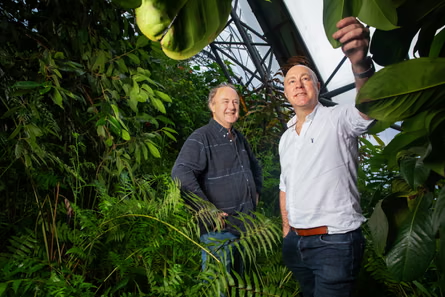
The Eden Project marks 25 years, reflecting how the world is better today, Sir Tim Smit said. From its Cornwall base, Smit explained that people are now far more aware of their place within nature, adding that the planet’s trajectory offers hope despite climate challenges. “The world is in a better place than it was when Eden Project started, and humanity’s instincts are fundamentally good,” he noted, emphasising that individuals increasingly appreciate conservation and sustainability. This milestone celebrates the Eden Project’s role in inspiring environmental awareness while highlighting global progress over a quarter-century.
Smit observed that extreme political views often emerge from fear, yet optimism is growing. “When people realise that the future can be amazing, the desire to control it diminishes,” he said. He likened temporary political enthusiasm for parties like Reform UK to fleeting personal mistakes that are quickly regretted, noting that society will learn to prioritise morality and collective wellbeing over individual fears. For Smit, recognising progress is crucial, as humans tend to romanticise the past while underestimating the present and the potential of tomorrow.
The Eden Project opened in 2001 with the mission to explore humans’ relationship with the natural world. At the time, climate concerns were acknowledged but not central to public consciousness. Smit said the core idea was demonstrating the critical role plants play in sustaining life. He described the Eden Project as “a monument to the importance of plants,” aiming to reconnect people to the ecosystems they depend on. Through immersive biomes and educational programmes, Eden encourages visitors to understand that harming the natural world ultimately harms humanity.

Over its 25-year history, Eden has drawn around 25 million visitors who experience its rainforest biome, cultural events, and concerts, including upcoming performances by the Pixies and Becky Hill. Smit highlighted the unifying power of such gatherings, describing them as “a spiritual experience with a small ‘s’, special and hopeful.” He also stressed Britain’s need for energy independence, linking national self-sufficiency to ecological resilience. “With energy independence, we can control both food and power, securing the island’s capacity to regenerate,” he said.
Smit candidly addressed criticism he faced in 2022 for remarks about Cornish culture and past disputes over educational facilities in Lostwithiel. Despite controversies, Eden has had a measurable economic impact, contributing £2.2 billion to Cornwall by 2019, with figures expected to rise. Future expansions include sites in Morecambe, Dundee, and an “Oriental Eden” in Qingdao, China. Smit reflected on the project’s growth, noting that initial possessiveness over Eden gave way to pride in how it inspires young people to dream and engage with nature.
He emphasised that climate change remains an urgent concern. Wet winters and arid summers signal a fragile balance, while consumer culture threatens sustainability. Advances in understanding mycelium, fungi-based building materials, and environmental remediation give hope, illustrating how innovation and nature can intersect. Smit’s vision positions Eden as a hub for both education and optimism, bridging ecological knowledge with practical solutions.

Reflecting on 25 years, Smit reinforced that people are inherently cooperative and caring, drawing parallels between human behaviour and tribal instincts. He believes this natural empathy will shape a more moral and environmentally conscious society. Through Eden, visitors witness the intricate patterns of the natural world, inspiring imagination, stewardship, and a recognition that progress is tangible. The project’s ongoing success demonstrates that despite global challenges, society can learn, adapt, and thrive by reconnecting with the environment.
The Eden Project’s 25-year legacy underscores hope, resilience, and the evolving understanding that humans are part of nature. Its combination of immersive learning, entertainment, and ecological activism ensures that awareness of conservation will deepen, guiding future generations toward sustainability. Sir Tim Smit’s reflections serve as a reminder that while the world faces environmental pressures, humanity’s capacity for care, innovation, and moral progress continues to grow, making the planet a better place than it was a quarter-century ago.
Related News:
 ‘Extinct’ Antelope Returns to Sahara, Bringing Hope
 Norfolk Coastal Graves at Risk as Erosion Deepens Family Anguish
 Exclusive: Leaked Documents Reveal Khan’s Controversial Road Policy Overhaul – Drivers Warn of ‘Final Nail in Coffin’
 England Grapples with Unprecedented Bluetongue Virus Outbreak: Entire Nation Declared Infected Zone
 Whether You Win or Lose, Some Fights Are Worth Fighting’: The Unlikely Origins of the Largest-Ever Climate Case
 Tragedy Strikes Sylhet Airport: Technician Killed in Boarding Bridge Wheel Explosion
 Singapore Corruption Scandal: Details Emerge on Iswaran’s Luxury Flight and Ties to Tycoon Ong Beng Seng
 Peter Andre Breaks 16-Year Silence with Scathing Statement Against Katie Price
 Hundreds of Swimming Pool Closures Leave Children ‘At Risk of Drowning’, Union Warns
 Xi, Putin and Kim Display Unified Front at Massive Beijing Military Parade
 Peterborough Mosques Tighten Security After Attack
 Reeves Faces Setback as Labour May Miss Homes Target
 Virgin Trains Moves Closer to Challenging Eurostar Monopoly
 Kate Winslet to Narrate Film Highlighting King’s Environmental Mission
 Army Officers Orders to Cut Ties with Men-Only Clubs
 Trump’s UK Ambassador Urges North Sea Drilling to Strengthen US Ties
 Ryanair Chief UK Economy ‘Doomed’ Under Labour
 French Taxi Driver Cleared in David Lammy Theft Case After Fare Dispute
 UK Bans Fake Numbers: Scammers Lose Their Trick
 M&S Profits More Than Halve After Cyber-Attack
 Kent village told to remove flags before Christmas lights go up
 Vibe coding’ named Collins dictionary’s word of the year
 Patients to Test Health at Home to Ease NHS Winter Pressure
BBC to Apologise Over Edited Trump Speech Amid Backlash
Patients to Test Health at Home to Ease NHS Winter Pressure
BBC to Apologise Over Edited Trump Speech Amid Backlash
 Britain deploys RAF specialists to assist Belgium with drone threats
 Palace May Restore Hyphen to Andrew Mountbatten-Windsor’s Name
 Millionaires group urge Reeves to introduce wealth tax to ‘lift kids out of poverty’
 From Lego to Pokémon: How Adults Are Driving UK Toy Market Growth
 Shouting Works Best to Deter Gulls, UK Study Finds
 Reeves rejects £1bn plea for NHS redundancy payouts
 Northern Lights may illuminate UK skies this week
 UK and Ireland Announce Venues for Euro 2028 Tournament
 PM Condemns Leaks, Vows Loyalty to Ministers and Stability
 TalkTV Fires Mike Graham Over Racist Facebook Post
 Phillipson Accused of Appeasing Unions by Diluting EBacc
 Major Rent Reform Ends No-Fault Evictions in England
 Senator John Fetterman Hospitalized After Fall from Heart Flare-Up, Keeps Sense of Humor
 Saka Solidifies Role as Tuchel’s Key England Lieutenant
 New AI tool could cut wasted efforts in organ transplants
 Greene Pushes Epstein Files Amid Trump Fallout
 December Run-Off in Chile as Election Produces No Winner
 Criminal Gangs Pose as Truckers to Hijack UK Supply Chains
 Zelenskyy Signs Fighter Jet Deal Amid Russian Drone Attacks
 Stroke Patient Mistaken for Drunk, Care Delayed
 Canada Passes Carney’s First Budget in Tight Parliamentary Vote
 Sundar Pichai Cautions on AI Hype and Market Risks
 What Now for the Queen’s Childhood Playhouse After Andrew’s Eviction?
 Van Dwellers Face Eviction After Park Misuse Sparks Outcry
 Shadow Fleet at Sea: Europe’s Battle Against Illicit Oil Shipping
 Tiny Curacao Makes History as Smallest Nation to Reach World Cup
 Deadly Russian Strikes Hit Western Ukraine, 20 Killed in Ternopil
 Snow and Ice Cause Travel Chaos in North Yorkshire
 Man Denies Stealing Bronze Age Gold from Museum
 Ukraine Peace Plan: Zelensky Ready for Dialogue
 Director Michael Caton-Jones Reflects on Career and Beginnings
 Royal Navy Shadows Russian Warships Entering the Channel
 Inside the Helpline Protecting Missing Children in the UK
 Boots Showstopper Beauty Bundle Outshines Many Advent Calendars This Holiday Season
 Labour’s ‘blinkered’ drive to build risks pushing wildlife to point of no return, nature experts warn
 PlayStation PS5 Deals Hit Lowest Prices Ahead of Black Friday
 Runaway Driver Caught by DNA Evidence
 US Suspends Afghan Immigration After White House Shooting
 Georgians Defy Government Crackdown After Year of Protests
 US National Guard Member Killed in DC Shooting
 Five-Year-Old Dies After Rare Tonsil Surgery Complication
 ICC to Rule on Duterte’s Provisional Release
 Tokyo court rules Japan’s same-sex marriage ban constitutional
 Starmer Says Labour’s Economic Plan Needs Years to Deliver
 Rusty Bond-Era Aston Martin Restored to £1m Glory
 More Patients Now Contacting GPs Online, Data Shows
 IndiGo Cancels Hundreds of Flights Amid Pilot Shortages
 Conservatives Pledge to Scrap 2030 Petrol and Diesel Car Ban
 UK unemployment rises to four-year high of 5.1% before budget
 Young Britons Face Heaviest Burden from Ageing Population, Lords Warn
 Wiltshire Police Use Lasso to Catch Rampaging Village Goat
 Australia Face Big Changes as Cummins and Lyon Ruled Out of Ashes
 U‑Turn on Farmers’ Inheritance Tax Sparks Political Firestorm
 Khaleda Zia Death in Bangladesh: First Female PM Dies at 80
 Facebook Slow to Remove Bondi Attack Praise, Anti-Hate Group Claims
 Children to Receive Home Vaccines as England Acts