Published: 23 July 2025 | The English Chronicle Online
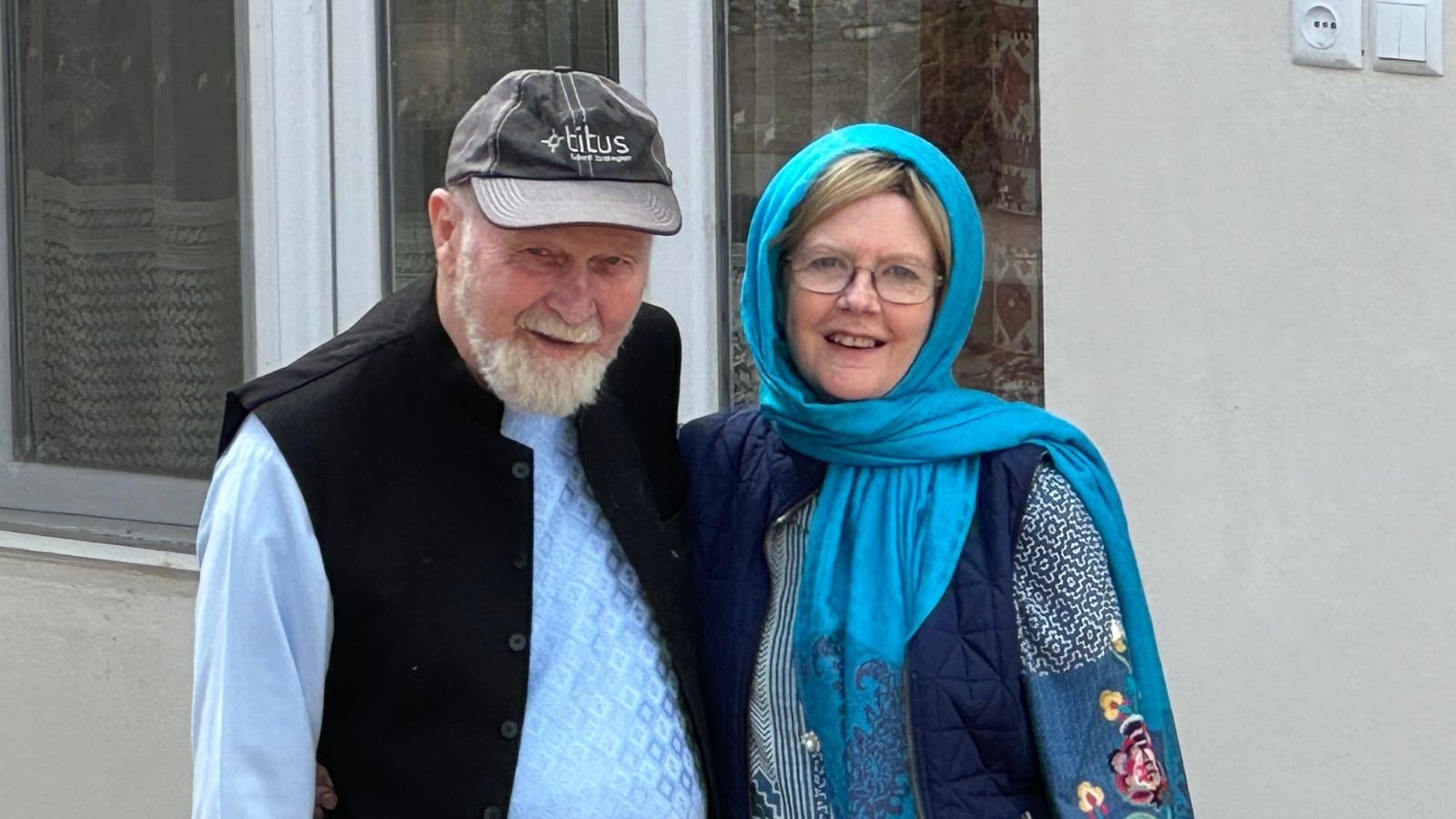
The harrowing ordeal of a British couple held by the Taliban in Afghanistan has taken a distressing turn, with their son warning that they may not survive the conditions of their imprisonment. Peter Reynolds, 80, and his wife Barbie, 76, were detained five months ago as they returned to their home in Bamiyan province, central Afghanistan—a region where they had lived for nearly two decades and engaged in educational projects.
The precise reasons for their arrest on February 1 remain unclear, but their situation has deteriorated rapidly. Their son, Jonathan Reynolds, revealed to the BBC that his father has been suffering severe convulsions and displays symptoms resembling early-stage Parkinson’s disease, while his mother battles debilitating anaemia and malnutrition. Both are enduring life-threatening health problems exacerbated by the harsh conditions of their confinement.

Despite an initial Taliban promise to release the couple “as soon as possible,” they remain in custody, held under grueling circumstances that have drawn sharp criticism from international human rights organisations. The United Nations has condemned their detention as “inhumane,” warning that without immediate medical intervention, the couple could perish in custody. The UN’s human rights body has called for their urgent transfer to a civilian hospital, emphasising the absence of legitimate grounds for their imprisonment.
Jonathan Reynolds described his parents’ plight as “harrowing and surreal,” highlighting that despite being deemed innocent by a judge and facing no formal charges, the couple have been confined in a maximum-security prison. His father was reportedly shackled alongside convicted murderers and criminals, and both were subjected to six weeks in a basement without sunlight or any access to outdoor time. Such conditions have gravely impacted their physical and mental wellbeing.
The Reynolds family last heard from Peter and Barbie on June 15, when the couple communicated details of their worsening health. Mr Reynolds recounted how his father experienced prolonged convulsions on the prison floor, requiring intervention from prison guards to move him to a mattress pad. His mother’s extremities have turned blue from lack of proper medical care, a stark indicator of her malnutrition and anaemia.
While grateful that British officials recently visited the couple and provided a photo as proof of life, Jonathan expressed frustration at the ongoing delays in securing their release. “Every week it seems like we’re told ‘just wait two or three more days now… just hang tight’,” he lamented. Despite this, he acknowledged the support and communication efforts from the Foreign, Commonwealth & Development Office (FCDO), which remains involved in the case despite severely limited diplomatic presence following the UK’s withdrawal from Afghanistan in 2021.
The couple, who have celebrated both birthdays and their 55th wedding anniversary in detention, had been active contributors to their community in Bamiyan. They ran educational programmes, including training for women and children—a significant endeavour given the Taliban’s restrictions on girls’ education beyond age 12 and prohibitions against women working.

The UN and other advocates continue to urge the Taliban and the UK government for swift action to prevent a tragic outcome, reiterating that the continued detention of the elderly couple in such conditions is both unjustified and inhumane.
As international attention focuses on their plight, the Reynolds family’s desperate hope remains that their parents will soon be freed to receive the medical care they urgently need, ending a prolonged nightmare fraught with uncertainty and suffering.
Related News:
 Glory for the Lionesses: England Crowned Women’s Euros Champions Again Amid National Calls for Bank Holiday
 Starmer and Trump to Meet in Scotland Amid Growing Gaza Ceasefire Pressure
 MPs Call on UK Government to Delay Biometric Visa Checks for Gaza Students Amid Humanitarian Crisis
 Trump Pushes for Peace: Plans Surprise Meeting with Putin and Zelensky to End Ukraine War
 ‘I’m collateral damage’: ex-minister Tulip Siddiq on her Bangladesh corruption trial
 “I Don’t Expect to Live a Normal Life”: How a Leeds Teenager Became the Target of a Chinese Bounty
 Ministers Accused of Defamation Over Palestine Action Ban and Mass Arrests
 Manchester City Announce Their Return in Style with Haaland Double and Debut Goals at Wolves
 Where Is Prince William and Kate Middleton’s New House? Inside the Historic Lodge Set to Become Their ‘Forever Home’
 FIFA Eyes Biennial Club World Cup from 2029, Plans Possible Expansion
 EuroMillions Record-Breaking £210m Jackpot Won by Lucky Lottery Ticket Holder
 British Couple Among 16 Killed in Lisbon Funicular Tragedy
 British Couple Among Victims in Lisbon Funicular Tragedy
 Germany and Northern Ireland Set for Crucial World Cup Qualifier Clash in Cologne
 Protests Expected as Israeli Arms Firms Join Global Defence Trade Fair in London
 Madeleine McCann Case: German Woman at Centre of Hit-and-Run Theory Speaks Out
 Serbia Humiliated 0-5 by England in World Cup Qualifier
 UK Home Office to Launch French Beach Signage to Warn Asylum Seekers of Risks
 UK Immigration Figures: Separating Facts from Perceptions
 Far-Right Rally in London Draws Record Crowds Amid Clashes with Police
 First Group of Children from Gaza Arrive in UK for Life-Saving NHS Treatment
 Thousands Gather in London to Protest Donald Trump’s Second UK State Visit
 Man City 2-0 Napoli: Haaland Reaches 50 Champions League Goals After Red Card Turns Tide
 Rashford’s Brilliance Stuns Newcastle as Barcelona Claim Champions League Victory
 Trump Urges UK to “Call Out the Military” to Secure Borders Amid State Visit
 British AI Startup Outshines Human Forecasters in Global Prediction Contest
 Tributes Pour In as Former Liverpool Women Manager Matt Beard Dies Aged 47
 UK Recognises State of Palestine in Push to Preserve Hope for Peace
 Liverpool Vs outhampton Set for Carabao Cup Clash at Anfield
Trump’s UN Speech Criticises London and UK Policies, Draws Far-Right Attention
Liverpool Vs outhampton Set for Carabao Cup Clash at Anfield
Trump’s UN Speech Criticises London and UK Policies, Draws Far-Right Attention
 UK Fighter Jet Purchase Could Breach Nuclear Treaty, Warns CND
 Britain Could Already Be at War with Russia, Former MI5 Chief Warns
 A Third of EU Citizens in UK Report Discrimination by Public Bodies Post-Brexit
 Jailed Georgian Opposition Leaders Warn UK of Iranian Links to Ruling Party
 Manchester Synagogue Attack: A Community Shaken on Yom Kippur
 Russia repeatedly targets UK military satellites, warns Space Command chief
 Pro-Palestine March to Proceed in London Despite Calls to Cancel After Manchester Attack
 UK Universities Warn Students Ahead of 7 October Pro-Palestine Protests
Starmer Considers Stricter Measures on Pro-Palestinian Protest Chants
UK Universities Warn Students Ahead of 7 October Pro-Palestine Protests
Starmer Considers Stricter Measures on Pro-Palestinian Protest Chants
 Public Trust in SNP Hits Historic Low Amid NHS Concerns
 Cooper Unveils £4m Cyber Plan Against Russian Hackers
 Ferguson Fires Scotland to Dramatic Comeback Win Over Greece
 England Thrash Wales as Rogers, Watkins and Saka Shine Bright
 Tony Blair Met Jeffrey Epstein at Downing Street in 2002
 China’s Mega Embassy in London Faces Further Delay
 Tuchel Criticises ‘Silent Wembley’ After England Win
 Clarke’s Anger Overshadows Scotland’s Historic Win
 MPs Urge UK to Let Gaza Scholars Bring Their Children
 Johnson Suggests Mandelson Linked to China Spy Controversy
 Kane’s Double Seals England’s World Cup Qualification
 Witness statements reveal the CPS China spy row collapse in the UK
 Large scale Chinese spying in UK sparks political storm
 Nigel Farage Calls Vladimir Putin ‘A Very Bad Dude’
 China warns UK over delayed London mega embassy decision
 Rachel Reeves signals welfare reform ahead of key budget
 Barnes Inspires Newcastle to Champions League Triumph Over Benfica
City shine with PlayStation-style football to overwhelm Villarreal
Barnes Inspires Newcastle to Champions League Triumph Over Benfica
City shine with PlayStation-style football to overwhelm Villarreal
 Prince Andrew met alleged Chinese spies during Pitch@Palace China trips
 Kosovo agrees to host Britain’s refused asylum seekers
 UK Deploys Troops to Help Monitor Gaza Ceasefire
 Plaid Cymru Triumphs in Caerphilly, Ending Labour Century-Long Hold
 UK Gamer Recruited by Wagner Group Found Guilty of Arson
 Fabio Wardley stuns Joseph Parker to earn Usyk title shot
 Rachel Reeves to lead UK trade push in Saudi Arabia amid rights debate
 British Woman in Iran ‘Losing Hope’ Amid Ongoing Detention
 Johnson Approved China’s London ‘Super-Embassy’ in 2018
 BBC Journalist Held and Interrogated in Vietnam
 The diet that can significantly ease symptoms of IBS
 Trump Speaks on Prince Andrew’s Royal Scandal Fallout
 Top Christmas Books Reads: Classics to Cozy Romcoms
 UPS Cargo Plane Crash in Kentucky Kills Seven
 Just Stop Oil Protesters Convicted Amid Climate Defence Row
 Tension and Turmoil at Aston Villa v Maccabi Match
 British Grandmother to Return Home After Death Sentence in Bali
 Lando Norris Dominates Brazil GP to Strengthen F1 Title Bid
 BBC director-general and news chief resign amid bias row
 Ronaldo Confirms Final World Cup and Plans Retirement
 New review urges UK to repatriate Shamima Begum, others from Syria
 Rama Rebukes Mahmood for Targeting Albanian Families
 Russian Vessel Used Lasers on RAF Pilots, UK Claims