Published: 13 January 2026. The English Chronicle Desk. The English Chronicle Online.
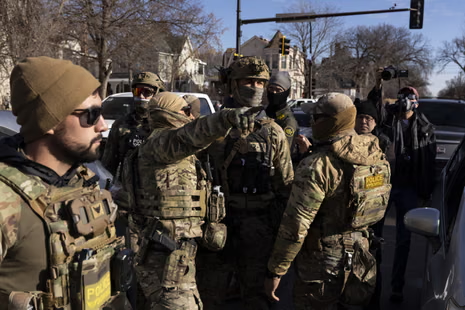
Minnesota has filed a Trump lawsuit challenging the federal government’s surge of ICE agents across the state, calling the deployment unconstitutional. Attorney General Keith Ellison announced the legal action following a fatal shooting of resident Renee Nicole Good by an ICE agent last week. The Trump lawsuit alleges excessive federal force, unconstitutional arrests, and violations of administrative procedures, highlighting the impact on schools, churches, and local courts. Minnesota officials insist this federal operation undermines safety, disproportionately targets communities with minimal immigrant populations, and represents a politically motivated overreach.

Ellison described federal agents as poorly trained, noting multiple cases where ICE officers allegedly detained residents without proper warrants. “They are making unconstitutional arrests and using excessive force,” Ellison said, citing raids in public areas where agents refused to present legally required warrants. The Trump lawsuit also seeks a temporary restraining order to halt further federal interventions, emphasizing that these operations have disrupted daily life and threatened civil liberties. Schools and businesses have temporarily closed amid growing public concern over federal actions.
Local leaders reinforced concerns regarding the ICE surge. Minneapolis Mayor Jacob Frey described the influx of federal agents as effectively an invasion, questioning why Minnesota, with only 1.5 percent noncitizen immigrants, is being targeted. “If this were about safety or fraud, there would be alternative approaches,” Frey said, implying political bias may have influenced the federal strategy. Saint Paul Mayor Kaohly Her shared personal experiences of fear, carrying her passport constantly due to unpredictable ICE interactions. The Trump lawsuit underscores the state’s effort to defend residents from these federal tactics.
The legal action also highlights broader civil rights issues, particularly affecting minority communities. Minnesota’s Somali-American population has been disproportionately impacted, according to Ellison, who cited recent social service fraud cases that drew conservative media attention. Legal experts note that the Trump lawsuit could set a precedent for federal enforcement limits and reinforce state-level autonomy over law enforcement. Ellison stressed that Minnesota will not tolerate arbitrary or racially biased federal operations that jeopardize civil liberties.
Journalists covering the surge have also been affected. AC Thompson of PBS Frontline reported being pepper-sprayed while documenting federal actions, raising First Amendment concerns. Ellison encouraged media personnel to report incidents, highlighting the importance of press freedom. The lawsuit requests restrictions on federal agents’ use of excessive force and crowd control measures during operations.

Civil society groups, immigrant advocacy organizations, and local residents support the legal challenge, arguing that the Trump administration has exceeded its authority. Observers believe the Trump lawsuit reflects broader tensions between federal priorities and local governance, aiming to define boundaries for federal enforcement while protecting civil rights. Analysts note that a favorable ruling could influence how federal agents operate in other states with low immigrant populations but high political scrutiny.
Minnesota’s legal challenge demonstrates the state’s commitment to defending constitutional rights and public safety against what it considers federal overreach. By framing the issue around civil liberties, Ellison and other officials hope the courts will enforce accountability, ensuring federal operations do not disrupt communities unnecessarily. The Trump lawsuit positions Minnesota as a test case for balancing federal immigration enforcement with state sovereignty and citizen protections.
The lawsuit marks a significant moment in U.S. legal and political history, highlighting the ongoing debate over federal authority, civil rights, and state autonomy. Minnesota’s actions may guide similar challenges nationwide, emphasizing that federal enforcement must respect constitutional protections and avoid politically motivated targeting of communities.
Related News:
 Two National Guard Soldiers Critically Injured Near White House
 US National Guard Member Killed in DC Shooting
 American Mother Extradited From UK to U.S. on Murder Charges
 US Cities Erupt in Protests Against Trump’s Venezuela Military Action
 Federal Immigration Shift: Officers Leave Louisiana for Minneapolis
 Trump Says US Must ‘Own’ Greenland to Block Russia, China
 Greenland Faces Pivotal Summit Over Arctic Power Struggle
 Government Unveils Northern Powerhouse Rail Plans
 Kyrsten Sinema Faces High-Profile Lawsuit Over Marriage Interference
 ICE detainee death may be investigated as homicide in Texas camp
 ‘He Believed Help Was Coming’: Why Iran’s Protesters Feel Betrayed
 Trump officials continue false claims after Alex Pretti shooting
 Fulton election raid hits Georgia election office
 Thousands Protest ICE Operations in Nationwide US Day of Action
 Epstein Files Reveal Trump Officials’ Emails with Financier
 Thousands Protest ICE in New York Against Trump Deportation Campaign
 US-Cuba Negotiations Shift as Oil Blockade Looms
 Portland Mayor Demands ICE Leave After Protest Violence
 California Democrats Vow Trump Reckoning
 Missing North Carolina Woman Found Alive After 24 Years
 Trump’s Surgeon General Pick Evades Vaccine Questions
 Buffalo Refugee Tragedy: Border Patrol Neglect Leads to Death
 Minnesota Medicaid Funding Blocked Amid New ‘Fraud’ Crackdown
 Trump Probe Fallout: Patel Fires FBI Staff Tied to Documents Case
 Clinton Testimony Erupts in Fiery Exchange
 Trump Rebukes Starmer Over Iran Strike Support
 Ukraine war briefing: Zelenskyy offers help to Saudi Crown prince on combatting Iranian drones
 Utah Woman Found Guilty of Poisoning Husband for Inheritance
 MAGA Anxiety and the Iran War: A Movement Divided at CPAC
 Can King Charles Calm Trump on Key US Visit?
 Evacuations Ordered as California Wildfires Spread Fast
 US Airman Rescued in Daring Mission After F-15 Shot Down in Iran
 Congresswoman Condemns Trump Over Iran Conflict
 Melania Trump Epstein remarks spark survivor backlash
 Trump’s Presidency: A House of Cards Collapsing?
 Brennan Investigation Faces Major Prosecutor Shift
 US Catholics Caught Between President and the Pope
 US Catholics Caught Between President and the Pope
 Trump Faces Crisis as Iran Reopens Hormuz Tensions
 GOP Senator Criticizes Trump’s Feud With Pope Leo XIV
 Trump Starts $166bn Tariff Refund Process
 Trump at Press Dinner Sparks Tension
 Trump Defiant After Washington Hotel Shooting
 Identity Revealed: Suspected Washington Gunman Named
 America’s Furry Leaders: A Curious Civic Tale
 US Court Weighs Fate of TPS for Migrants
 The Long Crusade to Silence the Voting Rights Act
 Judge halts deportation of Yemeni refugees in US
 White House Security Case Sparks Political Firestorm
 Trump approval plunges amid Iran war fears
 Ohio’s Battle for Trust: Democrats Vying to Flip the Buckeye State
 Trump warns Iran as Middle East tensions surge again
 US ‘Narco Boat’ Strikes Draw Global Outcry
 Ohio Primaries Set Stage for Crucial Midterms
 Afghan Families Left in Limbo Face Risk of Deportation
 Miami Upgrades Shake Up F1 Title Fight
 Florida Surgeon ‘Devastated’ Over Fatal Surgery Error
 Tensions Emerge in Netanyahu-Trump Alliance
 US Awaits Iran Reply on New Ceasefire Proposal
 Immigration Judges Fear Pressure in Trump Era
 Nancy Pelosi Endorses Connie Chan For Congress
 Democrats release 2024 election report amid fierce backlash
 US green card applicants must apply from abroad, DHS says
 Tulsi Gabbard exits after turbulent intelligence tenure
 Hormuz Talks Near Critical Stage
 DeSantis’s ‘Alligator Alcatraz’ Faces Final Shutdown
 Prosecutor Proposes Law to Combat Election Deceit
 House Curbs Trump’s War Powers in Rare Rebellion
 Trump Urged to Condemn UFC Fighter Over Obama Slurs
 US Military Pacific Boat Strike Kills Three People
 US Loan Caps Threaten Future of Physician Assistants
 US Courts Back Trump on Park Signage Removals
 Trump’s Mount Rushmore Speech: A Divisive Anniversary
 Trump Intervenes in Fifa World Cup Balogun Ban
 NCAA Rules Unchanged After Supreme Court Transgender Ruling
 Conservative Groups Challenge ABC Broadcast Licenses
 US Airman Avoids British Court in Indecent Exposure Case
 Trump Refuses to Sign Housing Bill, But Law Takes Effect
 Florida Executes One of Its Oldest Death Row Prisoners
 Houthis Strike Saudi Arabia as Middle East Tensions Rise