Published: 13 January 2026. The English Chronicle Desk. The English Chronicle Online.
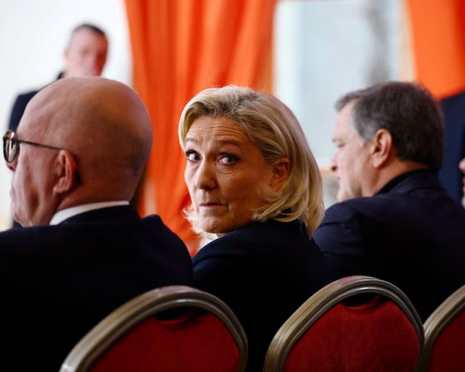
The Le Pen appeal over her embezzlement conviction begins this week, drawing international attention. The French far-right leader faces scrutiny for allegedly diverting European parliament funds, a case that could prevent her from contesting the 2027 presidential election. Le Pen, 57, heads the National Rally and has consistently denied wrongdoing, insisting she remains committed to leading France despite the legal challenge. This high-profile Le Pen appeal comes after her 2025 conviction barred her from office, igniting debates across France and abroad about justice, politics, and the future of the National Rally.
The legal case revolves around Le Pen’s alleged orchestration of a scheme from 2004 to 2016. European funds meant for parliamentary assistants were reportedly redirected to pay party employees in France, unrelated to European parliamentary work. The total loss is estimated at €4.8 million (£4.2m), which critics say highlights a systemic abuse of taxpayer money. Le Pen’s conviction last year led to a five-year ban from holding office, alongside a four-year prison sentence, partially suspended, and a €100,000 fine.

Her Le Pen appeal is joined by ten other party members previously convicted, and the trial is scheduled to continue until 12 February. The final verdict, expected before summer, will directly influence whether Le Pen can mount a fourth presidential campaign next year. Should she remain ineligible, her party has suggested her protégé, Jordan Bardella, 30, would assume candidacy, having already gained popularity among voters. Recent polls suggest Bardella enjoys strong support, with nearly half of French respondents viewing him as the most likely winner in 2027.
Political analysts caution that the broader election landscape is still uncertain, with several contenders yet to declare. The outcome of the Le Pen appeal holds significance not only for Le Pen herself but also for the National Rally’s strategic positioning. Le Pen maintains she remains a viable candidate, describing the judicial process as a form of political persecution she must navigate. In interviews, she has expressed that even if barred, Bardella could effectively carry forward the party’s agenda, underscoring her influence over National Rally’s direction.
Le Pen’s conviction drew international attention, with figures such as former US President Donald Trump calling it a “witch-hunt” orchestrated by European leftists. Reports briefly suggested possible US discussions on sanctioning French judicial figures involved in the case, though the state department later denied any such action. French authorities reiterated that interference in domestic judicial matters would be unacceptable and stressed their commitment to legal independence.
The appeal raises questions about the potential length of any revised sentence. If a shorter ban from running for office is issued, Le Pen could theoretically return to politics in time for the 2027 election. Party officials have withheld candidate announcements until the Le Pen appeal concludes, leaving speculation about whether Le Pen will continue to lead the party into the presidential race.
Public discourse around the case remains intense, reflecting broader tensions in French society over political corruption and the influence of populist movements. Le Pen’s supporters argue that the conviction was politically motivated, while critics emphasize the scale of financial mismanagement and the need for accountability. Analysts also note that voter sentiment may shift significantly depending on the appeal outcome, influencing both presidential and parliamentary campaigns.
Legal observers highlight the meticulous investigation that uncovered the misappropriation of European funds, noting that the scheme involved multiple layers of administrative deception. The conviction signalled to many that even high-ranking political figures are subject to scrutiny, reinforcing principles of transparency and rule of law. Meanwhile, Le Pen’s narrative frames her as a determined political leader confronting what she perceives as systemic judicial bias, a message likely intended to resonate with her electorate.
 The case has broader implications for European politics, demonstrating the intersection between national legal systems and European institutional oversight. The European Parliament continues to monitor the situation, ensuring that safeguards prevent misuse of public funds. Observers suggest that this trial may influence not only French electoral politics but also discussions on accountability mechanisms within European political institutions.
As proceedings advance, attention will remain on how Le Pen and her party navigate the appeal’s outcome. A verdict favoring a reduced sentence could restore her candidacy rights, potentially reshaping the dynamics of the 2027 election. Conversely, a reaffirmation of the existing ban would elevate Bardella as the party’s figurehead, testing his ability to consolidate support and continue Le Pen’s political legacy.
Marine Le Pen’s Le Pen appeal trial, with its significant legal and political stakes, continues to captivate national and international audiences. Whether she ultimately returns to presidential politics or passes the baton to Bardella, the case underscores the persistent tensions between legal accountability, political ambition, and public perception in modern French democracy. The unfolding developments will likely shape both the National Rally’s trajectory and broader electoral outcomes in the years leading up to 2027.
Related News:
 Army Officers Orders to Cut Ties with Men-Only Clubs
 Trump’s UK Ambassador Urges North Sea Drilling to Strengthen US Ties
 French Taxi Driver Cleared in David Lammy Theft Case After Fare Dispute
BBC to Apologise Over Edited Trump Speech Amid Backlash
French Taxi Driver Cleared in David Lammy Theft Case After Fare Dispute
BBC to Apologise Over Edited Trump Speech Amid Backlash
 Britain deploys RAF specialists to assist Belgium with drone threats
 Millionaires group urge Reeves to introduce wealth tax to ‘lift kids out of poverty’
 Reeves rejects £1bn plea for NHS redundancy payouts
 PM Condemns Leaks, Vows Loyalty to Ministers and Stability
 Major Rent Reform Ends No-Fault Evictions in England
 Senator John Fetterman Hospitalized After Fall from Heart Flare-Up, Keeps Sense of Humor
 Greene Pushes Epstein Files Amid Trump Fallout
 December Run-Off in Chile as Election Produces No Winner
 Canada Passes Carney’s First Budget in Tight Parliamentary Vote
 Shadow Fleet at Sea: Europe’s Battle Against Illicit Oil Shipping
 Georgians Defy Government Crackdown After Year of Protests
 ICC to Rule on Duterte’s Provisional Release
 Starmer Says Labour’s Economic Plan Needs Years to Deliver
 Australia grants Asio powers to designate hate groups under new laws
 Trump Policies Boost China’s Global Rise, Survey Finds
 Kyrsten Sinema Faces High-Profile Lawsuit Over Marriage Interference
 Starmer Resists Matching Trump Amid Greenland Tensions
 Huge mistake: Labour blocks Burnham from byelection bid
 Labour targets Greens on drugs in Gorton Denton byelection
 Greens nominate Hannah Spencer for Gorton and Denton byelection
 Thousands Protest ICE Operations in Nationwide US Day of Action
 EU Signals Open Mind on UK Customs Union Talks
 Labour Thinktank Row Deepens Over Journalist Probe Claims
 Cabinet Secretary Shake-Up Triggers Due Diligence Warning
 Starmer Faces Inquiry Calls Over Thinktank Probe
 Royal Mail Delivery Crisis Deepens Amid Weather Chaos
 UK shelves £110m border project amid trade strain
 AFP Reviews Pauline Hanson Comments
 California Democrats Vow Trump Reckoning
 Trump Tariffs Threat Spark UK and EU Alarm
 Trump’s Surgeon General Pick Evades Vaccine Questions
 The Dangerous Rise of Remigration Across Modern Europe
 US to offer passport services in West Bank settlements
 Green Party Stuns Labour in Gorton and Denton Byelection
 Labour Together scandal sparks clean break vow
 Iran Defiance Grows Amid US-Israel War Pressure
 Starmer Praised for Stance on Trump and Iran Conflict
 NHS Plans to Cut Overseas Workers Labeled Overambitious
 Family Court Reform Promises New Era for UK Families
 Danish Election Deadlock Shakes Frederiksen’s Grip
 Pope Rebukes Leaders for War as Middle East Tensions Rise
 Army Probes Apache Flyover at Kid Rock’s Nashville Estate
 Farage Shuns Truss as US Right-Wing Roadshow Hits London
 Chancellor Meets Supermarket Chiefs Over Living Costs
 Italian Town Buys Mussolini Villa to Keep Away Fascist Fans
 Report Says Pezzullo Acted ‘Recklessly’ in Dealings
 Trump Employs Nixon’s Madman Theory Amid Iran Crisis
 Suspected Plot Targets Pipeline Before Hungary Vote
 Starmer Faces Commons Test Over Mandelson Scandal
 Crackdown Backfires on UK Climate Protesters
 Trump Defiant After Washington Hotel Shooting
 Royal Diplomacy: King Charles Wins Over US Congress
 Starmer Survives Mandelson Rebellion
 Trump approval plunges amid Iran war fears
 Ohio’s Battle for Trust: Democrats Vying to Flip the Buckeye State
 Tough Fiscal Realities Await Next Scottish Government
 US ‘Narco Boat’ Strikes Draw Global Outcry
 One Nation Candidate’s Surprising Ties to Independents
 Labour Members Doubt Starmer Future as Burnham Leads Poll
 US Awaits Iran Reply on New Ceasefire Proposal
 Reform UK Faces Crisis as Newly Elected Councillors Resign
 Farage Faces New Questions Over Private Helicopter Use
 Green Party Makerfield Candidate Resigns Over Posts
 Tony Abbott Returns as New Liberal Party President
 Discontent grows around Putin amid war strain
 Secret Role of UK Security Services in Troubles Amnesty Law
 The Hidden Crisis Eroding Trust in British Communities
 Deepfake Abuse on X Sparks Safety Concerns for Dissidents
 US Courts Back Trump on Park Signage Removals
 Trump’s Mount Rushmore Speech: A Divisive Anniversary
 Trump’s Red-Card Intervention Hurts the US World Cup
 Farage Warns Sky News Following Financial Inquiry
 Trump Swaps Planes Amid Iran Tensions
 Ann Widdecombe, Formidable Political Figure, Dies at 78
 Houthis Strike Saudi Arabia as Middle East Tensions Rise
 Former Diplomats Urge UK and France to Act on Palestine