Published: 15 January 2026. The English Chronicle Desk. The English Chronicle Online.
Labor’s hate laws face mounting challenges as the Coalition and Greens rule out support, putting the proposed legislation at risk of failing in federal parliament. Designed to tackle rising antisemitism and Islamic extremism, these hate laws emerged following the Bondi terror attack, which left 15 people dead, and aim to provide urgent protections for vulnerable communities. Labor maintains negotiations continue, but securing bipartisan agreement remains difficult amid strong opposition from both sides of parliament.
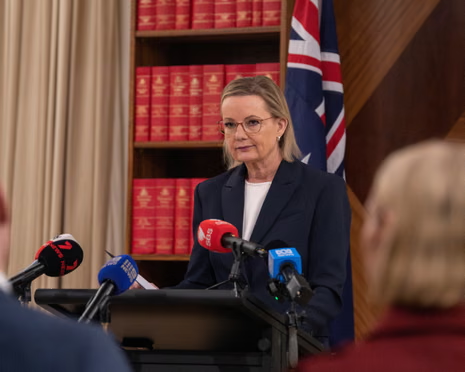
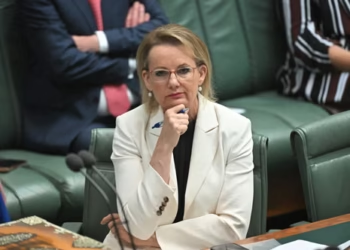
The Coalition has made clear it will oppose the legislation, with Shadow Minister Sussan Ley calling it “pretty unsalvageable” and arguing that the proposed hate laws do not adequately target extremist propaganda or offensive antisemitic phrases. Despite appeals from the Executive Council of Australian Jewry (ECAJ) to pursue amendments rather than outright rejection, Ley remains unconvinced, highlighting the rushed drafting process and absence of crucial provisions.

The Greens have also expressed objections, stating that hate laws must protect all Australians equally and should not favour one group over another. Leader Larissa Waters emphasised that legislation must safeguard religious communities, LGBTQ+ individuals, and people with disabilities, while preserving protest rights, including for pro-Palestinian groups. Her stance signals the considerable difficulty Labor faces in achieving a Senate pathway without adjustments that satisfy all stakeholders.
Labor insists dialogue continues, with Prime Minister Anthony Albanese criticising the Coalition’s inconsistent position. Albanese noted that opposition members had previously called for parliament to reconvene, yet now oppose urgent hate laws. He stressed that negotiation and compromise are essential to secure protections for Australians affected by rising extremist threats.
The legislation would modernise counter-terrorism laws and codify antisemitism for the first time while empowering the Australian Federal Police and ASIO. It would also restrict extremists from entering Australia and remove citizenship from dual-national terrorists and hate preachers. Labor argues that these hate laws are vital in providing legal tools to prevent future attacks and safeguard communities across the nation.
Community leaders remain divided, highlighting tensions between the urgency of reform and careful legislative drafting. Peter Wertheim of the ECAJ warned that rejecting the bill outright would be a retrograde step, stressing the importance of immediate implementation even if the hate laws are imperfect. Former Labor adviser Dean Sherr echoed this, stressing that bipartisan cooperation is essential for public trust and credibility in protecting vulnerable communities.
Gun law reforms included in the legislation further complicate its passage, as some Nationals MPs oppose stricter firearm regulations, and backbenchers such as Andrew Hastie raise constitutional concerns. Labor maintains that last-minute amendments could help broaden protections for religious groups, LGBTQ+ Australians, and individuals with disabilities while reinforcing powers against extremists.

Foreign Minister Penny Wong criticised the Coalition for showing “weakness and hypocrisy,” arguing that urgent hate laws are necessary to address the growing threat of violent extremism and rising hate crimes. Albanese added that political obstruction could delay vital protections, underscoring the importance of enacting these laws without unnecessary partisan delays.
Parliament will sit next week on Monday and Tuesday, where the fate of Labor’s hate laws will likely be decided. Observers say the bill’s outcome illustrates the challenges of passing sensitive legislation in a fragmented political environment, balancing civil liberties with the need to protect communities from hate-driven violence.
Related News:
 Australia’s Opposition Coalition Reunites After Rift
 Phillipson urges careful review of gender recognition guidance
 French Taxi Driver Cleared in David Lammy Theft Case After Fare Dispute
 China-critical UK academics face ‘extremely heavy’ pressure from Beijing
 Met Police Culture Makes Racial Harm ‘Inevitable’
 Remaining rebel Labour MPs have whip restored
 Palace to reinstate hyphen in Andrew’s surname
 Major Rent Reform Ends No-Fault Evictions in England
 Peers Flood Assisted Dying Bill with 942 Amendments
 US Justice Department Files Lawsuit Against California Over Partisan Voting Maps
 UK Unveils Fast-Track Deportation and Asylum Overhaul
 Trump Deploys DHS to Charlotte in Major Arrest Operation
 UK Asylum Overhaul Sparks Debate Over Human Rights and Deportations
 UK Asylum Reforms: Temporary Refugee Status and Faster Deportations
 Mahmood Defends Tough Overhaul of UK Asylum System
 South African Detained After Neo-Nazi Rally in Australia
 Westminster Advances Legacy Bill Amid Criticism
 Minister Defends Tough New Asylum Reform Plan
 Federal Court Blocks Texas Republican Maps Over Racial Bias
 Only One Republican Opposes Mass Release of Epstein Files
 Congress Approves Release of Epstein Files, Trump Expected to Sign
 Trump Signs Bill Releasing Justice Department Files on Epstein
 Texas Governor Faces Lawsuit From CAIR
 Peers Get Extra Time to Debate Assisted Dying Bill
 US National Guard Member Killed in DC Shooting
 ICC to Rule on Duterte’s Provisional Release
 Chinese & Japanese Boats Clash Near Disputed Islands
 Putin Meets US Envoy Amid Key Ukraine Peace Talks
 Liberal Turmoil Threatens Victorian Election Hopes
 Australia grants Asio powers to designate hate groups under new laws
 Nationals Crisis Meeting Threatens Coalition Stability
 Criticism of Netanyahu Risks Offence Under Australia Law
 Sussan Ley leadership milestone shakes Liberal future
 Andrew Hastie Emerges as Leadership Rival to Ley
 Tim Walz urges Trump to withdraw federal agents immediately
 Trump officials continue false claims after Alex Pretti shooting
 NSW Inquiry Targets “Globalise the Intifada” in Public Spaces
 UK and EU Signal Fresh Push for Defence Cooperation Talks
 Thousands Protest ICE Operations in Nationwide US Day of Action
 David Littleproud and Sussan Ley to Discuss Coalition Future
 Sydney Protest Clash Triggers Police Probe
 Angus Taylor Faces Immense Test with New Frontbench
 Civil Service Pay: Union Urges Ministers to End ‘Barking Mad’ Limits
 Liberal Review Shelved After Historic Election Loss
 Labour Lawyers Blocked From Briefing MPs on Jury Trials
 SA Liberals Back Candidate With Controversial Views on Homosexuality
 Report Says Pezzullo Acted ‘Recklessly’ in Dealings
 Starmer Defends Workers’ Rights Amid Rising Green Threat
 Hungary election: Orbán faces biggest test amid scandal
 Suspected Plot Targets Pipeline Before Hungary Vote
 Crackdown Backfires on UK Climate Protesters
 Trump at Press Dinner Sparks Tension
 US Court Weighs Fate of TPS for Migrants
 Florida Redistricting Map Sparks Major US Political Battle
 US Voting Rights Ruling Sparks Celebration and Outcry
 US Court Ruling Reshapes Voting Rights Landscape
 Cartel crackdown raises fears of fresh violence
 US states redraw maps after voting rights ruling
 Judge halts deportation of Yemeni refugees in US
 Asylum deal sparks fears over Syria deportations
 White House Security Case Sparks Political Firestorm
 Queensland Government Faces Heat Over Ministerial Scandal
 Trump warns Iran as Middle East tensions surge again
 US Supreme Court fast-tracks Voting Rights ruling
 Immigration Judges Fear Pressure in Trump Era
 FDA Chaos Deepens as Trump Eyes Makary Exit
 Tony Abbott Returns as New Liberal Party President
 US green card applicants must apply from abroad, DHS says
 Tulsi Gabbard exits after turbulent intelligence tenure
 Former ICC prosecutor condemns US sanctions
 Gunman Killed After White House Security Shootout
 Irish Gangland Figure Fails in Dublin Election Bid
 Prosecutor Proposes Law to Combat Election Deceit
 Moira Deeming Gains Respite in Liberal Party Standoff
 Court Lifts Suppression on Senator Thorpe MCG Assault Case
 NSW Legal Scandal: Top Prosecutor Faces Inquiry Findings
 Le Pen’s Popularity Holds Despite Conviction
 Mystery Grows Over Mitch McConnell’s Health
 Trump Refuses to Sign Housing Bill, But Law Takes Effect
 Trump Orders Signs Criticising Smithsonian Museum