Published: 25 January 2026. The English Chronicle Desk. The English Chronicle Online
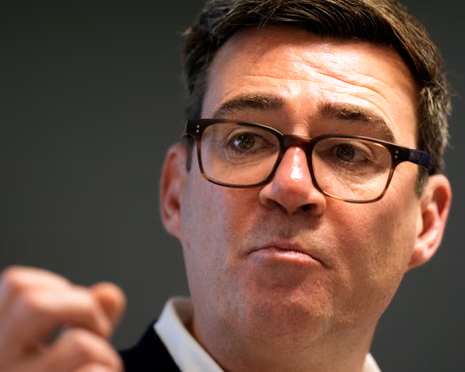
Andy Burnham has long occupied a curious space in British politics, forever close to power yet never quite grasping it. Once a Cabinet minister under both Tony Blair and Gordon Brown, later reborn as the dominant political figure in Greater Manchester, he now finds himself once again at the heart of a Labour Party drama that exposes deep anxieties about leadership, direction, and survival in government. His blocked attempt to return to Westminster through a Manchester by-election has not merely disappointed supporters. It has triggered what many inside the party openly describe as a civil war.
History offers examples of city mayors using municipal platforms as springboards toward national leadership, though such journeys remain rare. In the United States, Andrew Johnson, Grover Cleveland, and Calvin Coolidge all travelled that path. Europe produced even more striking cases, from Willy Brandt’s ascent from West Berlin to Jacques Chirac’s move from Paris City Hall to the Élysée Palace. Britain’s most recent parallel came with Boris Johnson, who honed a populist persona as London mayor before ultimately claiming the premiership. Against that backdrop, Burnham’s ambition hardly appears outlandish. From his mayoral headquarters in Manchester’s Tootal Building, the question increasingly whispered across Westminster concerns whether he might yet follow Johnson’s route to Downing Street.
The immediate spark for Labour’s internal row lies in the expected by-election in Gorton and Denton, a Manchester seat regarded as safely Labour. Burnham’s interest in standing for the constituency briefly raised the prospect of his return to the House of Commons after nearly a decade away. Such a move would have required him to resign as mayor, triggering another mayoral election in Greater Manchester. Labour’s National Executive Committee ultimately blocked his bid, citing the financial and organisational burden of holding two contests in quick succession. Officially, the decision aimed to conserve campaign resources. Unofficially, many saw something far more political at work.

Burnham today enjoys a standing within the party that few Labour figures can match. Nicknamed the “King of the North,” he consistently polls better in Greater Manchester than Labour does nationally, projecting an image of competence, authenticity, and regional pride. That popularity feeds speculation that he represents one of the few credible alternatives to Prime Minister Keir Starmer, whose authority has weakened amid falling poll ratings and policy reversals. While Starmer’s grip on the leadership once seemed unshakeable, the past year has been marked by unease, rumours, and open dissent.
For a brief moment last autumn, Labour appeared to catch what some insiders jokingly termed “the Tory disease,” the belief that changing leaders might solve structural problems. In that anxious climate, Burnham’s name surfaced repeatedly as a symbol of renewal. His distance from Westminster politics over recent years made him seem, to some, refreshingly untarnished. That perception proved fragile once he stepped back into the media spotlight.
Speculation intensified following Andrew Gwynne’s decision to step down as a Labour MP, a move that reopened questions about Burnham’s ambitions. Yet Burnham himself struggled to manage the attention. Pressed repeatedly on whether he sought the Labour leadership, he neither confirmed nor denied, an understandable reluctance that nonetheless came across as hesitation. Torn between a preference for plain speaking, a record of failed leadership bids, and genuine doubts about timing, he appeared uncertain at a moment when decisiveness mattered most.

Substance also posed a problem. Burnham’s political offer often rested on an ill-defined “soft left” identity and the concept of “Manchesterism,” a blend of devolution, social justice, and civic pride that resonated locally but lacked national clarity. While Labour members signalled appetite for a modest shift leftward when Lucy Powell defeated Starmer ally Bridget Phillipson for the deputy leadership, that result failed to translate into a coherent challenge. Starmer, meanwhile, steadied himself with a strong conference speech in Liverpool, effectively closing down the leadership panic. Burnham returned north, and Westminster moved on.
Yet the underlying tensions never disappeared. Through the autumn, Labour’s poll numbers worsened, government U-turns multiplied, and rumours of plotting persisted. An alleged unprovoked briefing attack on health secretary Wes Streeting, attributed to a rogue Downing Street operator, reinforced impressions of a leader surrounded by rivals unwilling or unable to strike decisively. Streeting, Burnham, Shabana Mahmood, and Angela Rayner all loomed as potential successors, yet none articulated a compelling alternative vision. Starmer looked weak, but his opponents looked fragmented. In politics, division among challengers often proves enough for a leader to survive.
Against that background, Burnham’s blocked return to Parliament takes on symbolic weight. Supporters argue that preventing a figure of his stature from standing in a safe seat smacks of insecurity at the top. Critics counter that even if Burnham had entered the Commons, his impact might have been limited. He could just as plausibly have found himself marooned on the backbenches as propelled toward leadership. The aura surrounding his mayoralty does not automatically translate into parliamentary influence.
There also lingers the sense that time may be running out. Burnham has become Labour’s archetypal “nearly man,” a politician whose career features repeated brushes with greatness. In 2015, following Ed Miliband’s resignation, he entered the leadership race as favourite. Had Labour MPs not lent nominations to Jeremy Corbyn, Burnham might well have won, edging out Yvette Cooper and Liz Kendall. Instead, Corbyn surged to a landslide victory, leaving Burnham with a humiliating 19 percent. Five years earlier, after Gordon Brown stood down, Burnham fared even worse, finishing with just 9 percent behind the Miliband brothers and Ed Balls.
Those defeats still haunt perceptions of him within Labour. Admirers see resilience and unfinished business. Detractors see a candidate repeatedly rejected by members. Even Burnham himself may wonder how many times one can credibly return to the starting line. A successful leap back into Westminster might have offered a final chance to reshape that narrative. Its denial therefore feels momentous, not merely procedural.
For Labour as a governing party, the episode exposes unresolved contradictions. It seeks unity and discipline while wrestling with ideological uncertainty and electoral vulnerability. Blocking Burnham may protect resources and leadership stability in the short term. It may also deepen resentment among members who believe popular figures are being sidelined for factional reasons. With major elections looming and voter patience thinning, such internal struggles risk compounding external threats.
Andy Burnham remains mayor of Greater Manchester, a powerful platform in its own right. Whether he ever trades that office for Westminster again now appears doubtful. Yet the controversy surrounding his aborted bid says less about one man’s ambition than about a party grappling with fear, fatigue, and the absence of an obvious path forward. In that sense, the “King of the North” continues to cast a long shadow over Labour politics, even when barred from entering the arena.
Related News:
 British Woman in Iran ‘Losing Hope’ Amid Ongoing Detention
 BBC Journalist Held and Interrogated in Vietnam
 Green Party Surges Past Labour in Latest UK Poll
 Celebrities and Charities Demand UK Government Act on Child Poverty
 Trump’s UK Ambassador Urges North Sea Drilling to Strengthen US Ties
 FBI Director Kash Patel Defends Girlfriend Amid Government Jet Claims
 Phillipson urges careful review of gender recognition guidance
 French Taxi Driver Cleared in David Lammy Theft Case After Fare Dispute
 Rachel Reeves Set to Break Labour Pledge and Raise Income Tax
 Who is Rama Duwaji? What Zohran Mamdani’s wife has said about Gaza and ICE as he’s elected NYC mayor
 MPs Press Rachel Reeves to Hike Gambling Taxes
 Met Police Culture Makes Racial Harm ‘Inevitable’
 Eleven Arrested After Pro-Palestine Protest at Villa Match
 Boris Johnson accused of undermining BBC leadership
 Remaining rebel Labour MPs have whip restored
 ‘Reckless’ cuts to victims’ services will cost more than they save
 BBC director-general and news chief resign amid bias row
 Millionaires group urge Reeves to introduce wealth tax to ‘lift kids out of poverty’
 Starmer Faces Growing Dissent as Labour MPs Weigh Leadership Challenge
 BBC Faces Backlash as Reform UK Withdraws from Film
 Reeves rejects £1bn plea for NHS redundancy payouts
 Farage appointee to lead Reform youth accused of anti-British views
 Palace to reinstate hyphen in Andrew’s surname
 Politics latest: Starmer ‘will fight any leadership coup’ as Streeting denies attempt to oust Labour PM
 PM Condemns Leaks, Vows Loyalty to Ministers and Stability
 Major Rent Reform Ends No-Fault Evictions in England
 Peers Flood Assisted Dying Bill with 942 Amendments
 England’s Special Needs Support Faces Breaking Point
 MoD warned over Excel risks before Afghan data breach
 UK Unveils Fast-Track Deportation and Asylum Overhaul
 UK Asylum Overhaul Sparks Debate Over Human Rights and Deportations
 UK Asylum Reforms: Temporary Refugee Status and Faster Deportations
 UK Candidate Moved to Safe House After Election Threats
 Mahmood Defends Tough Overhaul of UK Asylum System
 UK Warns China After MI5 Issues Espionage Alert
 Westminster Advances Legacy Bill Amid Criticism
 Minister Defends Tough New Asylum Reform Plan
 UK Vulnerable to Attack, Defence Committee Finds
 Labour Faces Historic Decline in Wales
 Rama Rebukes Mahmood for Targeting Albanian Families
 Russian Vessel Used Lasers on RAF Pilots, UK Claims
 PM Shares Emotional Letter to Son on Men’s Struggles
 MP Offers Seat to Help Burnham Challenge Starmer
 PM Highlights UK Business at G20 in South Africa
 Kate Forbes: Motherhood Harder Than Politics
 Welsh Government Christmas 2020 Lockdown Criticised
Reeves to Crack Down on Benefit Fraud While Lifting Two-Child Limit
Welsh Government Christmas 2020 Lockdown Criticised
Reeves to Crack Down on Benefit Fraud While Lifting Two-Child Limit
 BBC to Expand Standards Panel and Create Deputy Director Role
 Most Tories Expect to Support a Farage-Led Government
 Labour MP claims devolution bill is ‘blatant discrimination’ against Cornwall
 English Mayors Set to Introduce Tourist Taxes
 Millions Face Higher Taxes Under Reeves New Budget
 Peers Get Extra Time to Debate Assisted Dying Bill
 Planned Palestinian Flag Raising at Belfast City Hall Faces Delay Amid Legal Concerns
 Government righting decades-old injustice for miners
 Starmer Says Labour’s Economic Plan Needs Years to Deliver
 UK delays ruling on China embassy plan until January
 Culture secretary to review Telegraph takeover by Daily Mail owner
 Andy Burnham Apologises for Past LGBTQ+ Police Discrimination
 UK to Launch Military ‘Gap Year’ Scheme to Boost Recruitment
 Reeves Slams Farage Over Two-Child Benefit Cap Opposition
 Mandelson Refuses Apology Over Epstein Ties
 Plans to Limit Jury Trials Face Retreat After Mounting Opposition
 Jenrick Reform defection deepens Tory civil war
 China Dependence Threatens UK Energy Supply Chains and Jobs
 Right Must Unite After Jenrick Defection, Urges Rees-Mogg
 Romford MP Andrew Rosindell defects to Reform UK
 UK Ministers Drop Foreign Student Targets for Global Education Push
 MPs warn AI financial risks threaten UK stability
 MPs warn AI financial risks threaten UK stability
 No Gas Boiler Ban as UK Warm Homes Plan Backs Heat Pumps
 Hugh Grant Joins Call for Under-16 Social Media Ban in UK
 Shinzo Abe’s killer receives life sentence in Japan
 US Africa aid remarks spark anger after leaked State email
 Lords Vote Piles Pressure on Starmer Over Social Media Ban
 Judge-only trials plan fails to ease court backlog
 UK Government Borrowing Drops to £11.6bn in December
 Planned Troubles Board Game Sparks Outrage in Northern Ireland
 Reform UK Health Plan ‘Would Cost £1.7bn’, Streeting Says
 Labour Blocks Burnham as Party Rift Deepens Ahead of Polls