Published: 27 January 2026. The English Chronicle Desk. The English Chronicle Online.
The focus on border patrol practices in the United States has intensified scrutiny of safety ahead of the 2026 World Cup. Recent federal actions have raised concerns that hosting the tournament could place players, fans, and visitors at risk. Safety experts warn that ongoing federal operations, including highly publicized shootings, create an environment inconsistent with international sporting standards. Advocates argue that ensuring security requires accountability, yet US authorities continue to defend controversial measures. The intersection of sports and civil safety now highlights the potential consequences of inadequate oversight by federal authorities.
For many, the 2026 World Cup was meant to be a celebration of soccer’s growth in North America, yet increasing federal intervention has overshadowed those hopes. Cities across the US, prepared to welcome global visitors, now face complex logistical challenges because of federal policies widely criticized as harsh. While fans anticipated unforgettable experiences in stadiums across the continent, concerns about border patrol operations have left communities questioning whether hosting the tournament is feasible. International observers note that the nation’s approach to security, particularly in immigration enforcement, undermines its credibility as a safe host.

The United States has long sought the prestige of hosting soccer’s premier tournament. The 1994 World Cup marked a turning point in American soccer, laying the groundwork for decades of growth in the sport’s popularity. The 2026 edition promised to cement the US as a key player on the global football stage. But recent events involving border patrol agents have cast a shadow over these ambitions. Videos documenting federal actions in Minneapolis show the deaths of unarmed individuals under circumstances widely condemned by human rights groups. These incidents have prompted intense debates about whether the US government can adequately protect visitors during such a large-scale international event.
Beyond the immediate human cost, federal strategies have created economic and political ramifications that threaten World Cup preparations. Cities anticipated revenue from tourism, local events, and stadium activities, yet concerns about border patrol operations have prompted some sponsors to reassess participation. Analysts argue that public confidence is crucial to successful event execution, and repeated incidents of federal aggression erode that trust. The perception of the US as a safe and welcoming destination is now under intense international scrutiny.
Soccer governing bodies, including FIFA and Concacaf, have historically maintained a position that separates the sport from politics. However, the ongoing scrutiny of federal operations, including border patrol conduct, challenges this stance. FIFA President Gianni Infantino previously emphasized the World Cup’s role in promoting peace and unity. Yet critics argue that hosting the tournament amidst mounting reports of federal violence contradicts that principle. International media coverage has increasingly linked US law enforcement policies with potential risks for attendees, fueling calls for reconsideration of hosting rights.
Local communities have voiced frustration with the disproportionate allocation of resources toward federal enforcement at the expense of public welfare. Reports indicate that numerous individuals detained by immigration and customs authorities in 2025 were held without criminal records, sparking debates about fairness and legality. The rising death toll in federal custody further fuels public outrage, making border patrol a central concern in the conversation around World Cup safety. Civic groups now demand greater transparency and accountability, warning that ignoring these issues could tarnish the event’s legacy.
The political landscape adds additional complications. US administrations have used security concerns and threats of violence to justify aggressive federal operations. Cities expected to host matches face conflicting pressures: welcoming global visitors while navigating heightened federal oversight. Many officials worry that inadequate safety measures could deter tourists, creating reputational damage and financial losses. Meanwhile, ongoing clashes between civil liberties advocates and federal authorities continue to dominate headlines, overshadowing preparations for stadiums, fan zones, and cultural activities.
Internationally, the situation has sparked discussions about ethical hosting standards. Some analysts argue that countries with controversial security practices, including aggressive border patrol operations, should not host events of global significance. Critics contend that allowing the World Cup to proceed under current circumstances may signal tolerance for human rights violations. Others note that relocation is logistically difficult but increasingly plausible if international backlash grows. These debates underline the tension between sports diplomacy and moral responsibility on the world stage.

Despite these challenges, many American soccer fans remain committed to supporting the tournament. Local clubs, youth programs, and fan associations view the 2026 World Cup as a historic opportunity to showcase the nation’s growth in the sport. Yet enthusiasm is tempered by uncertainty regarding federal oversight and its potential impact on safety. Organizers are under pressure to implement enhanced security protocols while balancing the demands of fans, sponsors, and international partners. Failure to address these concerns could result in reputational damage that extends far beyond the tournament itself.
Analysts predict that the spotlight on border patrol policies will not fade anytime soon. The convergence of federal operations, public safety, and international expectations creates a complex challenge for the United States. Every stakeholder—from FIFA executives to local business owners—must weigh the benefits of hosting against the risks posed by ongoing federal practices. The discussion highlights the broader implications of governance and accountability for large-scale international events, emphasizing that safety is not just a logistical issue but a moral imperative.
In conclusion, hosting the 2026 World Cup amid rising concerns over federal violence and border patrol operations raises serious questions about the US’s ability to provide a secure environment. While the tournament represents the pinnacle of soccer achievement, the intersection of politics, law enforcement, and civil safety cannot be ignored. Fans, organizers, and international observers are watching closely, recognizing that the World Cup’s success depends as much on effective governance as it does on sporting excellence. The United States now faces a pivotal moment, where ensuring safety for all participants must take precedence over ambition and spectacle.
Related News:
 Granit Xhaka Rescue Earns Everton Draw at Sunderland
 Bellingham has ‘the edge’ among England No 10s
 Man City Masterclass on Guardiola’s Milestone Day Exposes Liverpool Woes
 VAR Must Rein Its Neck In to Save Football’s Spirit
 Mary Earps’s Manchester United Return Faces Mixed Reception
 UK and Ireland Announce Venues for Euro 2028 Tournament
 Saka Solidifies Role as Tuchel’s Key England Lieutenant
 Former Lion Heskey Warns of Shortage of England Strikers
 Tiny Curacao Makes History as Smallest Nation to Reach World Cup
 Haiti Qualifies for World Cup Despite Coach Never Visiting Country
 Moyes Defends Gueye After Dramatic Everton Bust-Up
 Mbappe Scores 4 as Real Madrid Edge Olympiakos
 Barcelona, Atletico set for decisive La Liga showdown
 Australia Face Big Changes as Cummins and Lyon Ruled Out of Ashes
 Van de Ven Tackle Leaves Isak with Fractured Leg
 ECB powerless to halt England’s recurring Ashes failures
 Stokes urges empathy for England players amid Ashes struggles
 Aston Villa Remain Arsenal’s Key Obstacle in Title Pursuit
 Salah Shines as Egypt Knock Out Ivory Coast at Afcon
 Raphinha doubles up as Barcelona beat Real Madrid in Super Cup
 Xabi Alonso leaves Real Madrid, Arbeloa Takes Over
 Maya Joint stunned by Valentová in Australian Open upset
 Carlos Alcaraz Triumphs Over Zverev in Five-Set Australian Open Epic
 Newcastle fans face bleak reality under Saudi ambitions
 Infantino Faces Russia Threat and Trump Concerns at Uefa Congress
 Arsenal blow lead as Arteta rues Wolves draw
 England v Ireland: Scrum Battle Takes Centre Stage
 Buttler Eyes Vital Run Surge as England Face New Zealand
 Manchester United Face Huge Bill After Ruben Amorim Exit
 Saka criticism response: Arsenal star dismisses outside noise
 India T20 World Cup Triumph Seals Historic Title Defence
 Abramovich Chelsea Sale Cash Faces Jersey Probe
 Champions League Failure Sparking Premier League Crisis
 African World Cup Fans Face $15,000 Entry Bond Fee
 Roy Hodgson Returns to Bristol City in Sensational Move
 Eddie Howe Faces Seven Game Test to Secure Newcastle Future
 ECB Faces Backlash Over Disability Premier League Inclusion
 Brighton Stun Arsenal as Liverpool Edge Past Charlton
 Maguire Commits Future to Manchester United with New Deal
 Can De Zerbi Restore Belief to Save Spurs From the Drop?
 Robots Outpace Humans in Beijing Half-Marathon
 Gianluigi Buffon: Reflections on a Legendary Career
 Cricket’s New Era: Seeking Substance Beyond the Glitz
 Ashley Cole: Finding His Voice and Vision in Italy
 A Nine-Goal Thriller Redefines European Football Brilliance
 George North Announces Retirement From Rugby
 $13bn World Cup Set to Break All Revenue Records
 Disney+ Wins Champions League Rights in Key Markets
 Foden Commits Future to Man City Until 2030
 FIFA Confirms Global Ban for Benfica Star Prestianni
 The Global Battle for Control Over the Women’s Game
 Fernandes Equals Assist Record as United Secure Third
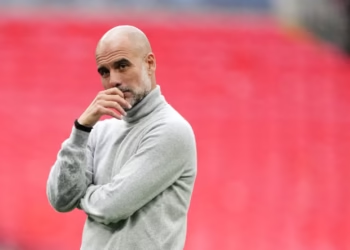 Bracing for the Cherries: Guardiola Likens Vital Bournemouth Trip to the Dentist
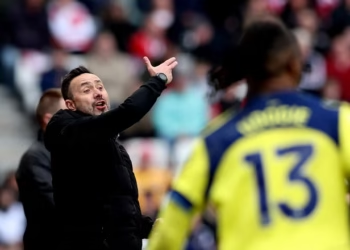 De Zerbi Rallies Spurs To Fight Relegation Threat
 The Battle for Wembley Sparking Unprecedented Legal Warfare
 Chasing Glory: The Quest for a New World Cup Champion
 Tuchel Defends Tough England Squad Decisions
 Farewell to an Icon: Pep Guardiola to Exit Manchester City
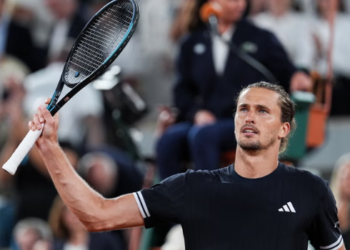 Chasing Paris Glory Amid Familiar Echoes
 Tom Pidcock On Chasing Tadej Pogacar And His Future Ambitions
 Is Ollie Robinson the Chaos English Cricket Needs Today?
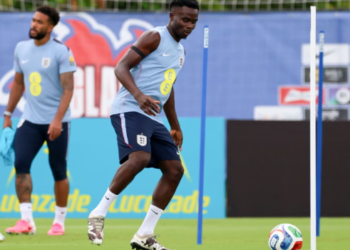 Saka Playing Through Pain As England World Cup Campaign Looms
 Iran Files Official Fifa Complaint Over World Cup Travel
 Women’s T20 World Cup Breaks Records But Gaps Remain
 Serena Williams Returns to Wimbledon Centre Court
 Martinelli Strikes Late as Brazil Edge Past Brave Japan
 Paraguay Shock Germany in Historic Penalty Shootout
 France Dominate Sweden as Deschamps’ New Era Takes Shape
 Mexico World Cup Joy Turns to Tragedy as Two Die in Crowds
 US Advance Past Bosnia in World Cup Thriller
 Kane Saves Tuchel as England Survive Dramatic Exit
 The Stokes Departure: A New Era or a Tactical Mistake?
 Taylor Swift and Travis Kelce Marry at Madison Square Garden
 Trump’s Red-Card Intervention Hurts the US World Cup
 Trump Intervenes in Fifa World Cup Balogun Ban
 NCAA Rules Unchanged After Supreme Court Transgender Ruling
 USA World Cup Heartbreak: Belgium Ends Their Dream
 Mbappé Brilliance Leads France Into Semi-Finals
 Spain’s Superstar Fan: Keyne Yamal Steals the Spotlight
 Lamine Yamal’s Birthday: Football, Fame, and France