Published: 10 February 2026. The English Chronicle Desk. The English Chronicle Online.
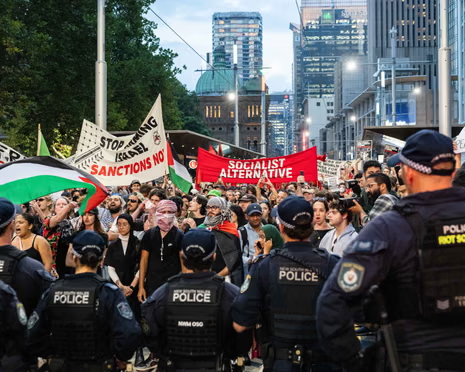
In Sydney on Monday night a protest against Israeli President Herzog’s visit turned chaotic as police clashed with demonstrators and a woman was left with broken bones. The Herzog protest had begun peacefully with thousands of people assembling at Town Hall to voice opposition to the controversial visit. But tensions soared when officers, backed by expanded powers under a Major Events Act, attempted to restrict movement and disperse the crowd. A 69‑year‑old woman was pushed violently to the ground by an officer without warning, leaving her with four broken vertebrae and a long road to recovery ahead.
From the start the Herzog protest drew vigils and speeches from advocates and families grieving conflicts in the Middle East, underscoring deep emotional stakes. Organisers had hoped to march through the city, but a court rejected a legal challenge to the government’s decision to give police sweeping authority during the president’s visit. That decision meant officers were empowered to control crowd movement and enforce strict conditions, a factor critics argued contributed to the volatile turn of events.

As night fell and more people gathered, police repeatedly ordered the crowd to disperse amid the Herzog protest, warning that any attempt to march would breach restrictions. Some demonstrators tried to push past police lines, chanting for the right to continue their march, but were met with force. The atmosphere quickly escalated, with officers deploying pepper spray and making dozens of arrests in efforts to contain the rally.
Eyewitness footage from the Herzog protest captured chaotic scenes of police shoving participants and attempting to control the dense crowd. Many people found themselves caught between lines of advancing officers and barriers that blocked easy exits, intensifying panic and confusion. Paramedics were seen treating those affected by pepper spray, while others struggled to navigate the compacted square as heavy police presence dominated the space.
The injury to the elderly woman became a flashpoint in public debate. She described being pushed so forcefully that she immediately sensed severe harm, and while trying to stand up, other protesters were pushed onto her. After the incident, she could barely walk and was helped to safety before being taken to hospital, where doctors confirmed her fractured vertebrae. Despite not requiring surgery, she faces prolonged recovery and uncertainty about her future mobility.
Police have said they are reviewing body camera and social media footage to better understand the unfolding of events during the Herzog protest, but initial statements suggested they were unaware of the specific incident until it was brought to their attention. Officers maintained their actions were intended to uphold public safety amid what they described as unpredictable conditions, but questions remain about the proportionality of their response.
The significance of this particular protest was heightened by Sydney’s recent history of heightened tensions and legal moves to curb protests in certain areas after a terror attack late last year. Those measures, meant to safeguard large public gatherings, extinguish civil liability for police under the Major Events Act. Legal experts and activists argue this erodes accountability and dissuades individuals from seeking justice for excessive force or misconduct.

Political responses to the Herzog protest have been sharply divided. Some figures called for independent investigations into police conduct, arguing that civil rights and freedoms were undermined when law‑enforcement engages with peaceful demonstrators. The mayor of Sydney urged transparency and accountability, asserting that trust in police depends on clear, unbiased reviews of actions taken during high‑profile events.
At the same time, government leaders defended the police, citing the complexity of the situation and the need to prevent clashes between different groups in the city centre. They encouraged people to avoid judging brief clips of violent encounters without fuller context and reiterated the importance of law and order in managing large crowds.
The Herzog protest also saw religious demonstrators forcibly moved by officers while praying, and critics of the police operation noted this as a distressing example of overreach. Advocates for protest rights highlighted that the right to peaceful assembly and expression must be balanced with ensuring public safety, but warned that heavy‑handed tactics risk chilling legitimate dissent.
As Sydney and Australia continue to debate the implications of this protest and the response by authorities, many voices from across the political and civil spectrum are calling for reforms. They warn that without safeguards for the right to protest, incidents like those witnessed at the Herzog protest could erode public trust and stifle democratic expression.
Related News:
 British Woman in Iran ‘Losing Hope’ Amid Ongoing Detention
 BBC to Apologise Over Edited Trump Speech Amid Backlash
 Britain deploys RAF specialists to assist Belgium with drone threats
 US Justice Department Files Lawsuit Against California Over Partisan Voting Maps
 Greene Pushes Epstein Files Amid Trump Fallout
 Trump Deploys DHS to Charlotte in Major Arrest Operation
 December Run-Off in Chile as Election Produces No Winner
 Canada Passes Carney’s First Budget in Tight Parliamentary Vote
 Shadow Fleet at Sea: Europe’s Battle Against Illicit Oil Shipping
 Pentagon Officials in Ukraine to Discuss War End
 Venezuela Threatens Nobel Winner Machado with Fugitive Status
 Georgians Defy Government Crackdown After Year of Protests
 India’s Labour Law Overhaul Sparks Fierce Debate
 EU plans $105bn Ukraine aid using frozen Russian assets
 Global campaign launched to free Palestinian leader Barghouti
 Trump Policies Boost China’s Global Rise, Survey Finds
 Iran unrest slows under brutal crackdown and global tensions
 Pentagon Signals Reduced Role in Deterring North Korea
 Thousands Protest ICE Operations in Nationwide US Day of Action
 Epstein Files Reveal Trump Officials’ Emails with Financier
 Starmer Condemns ‘Depraved’ Russian Strikes on Ukraine
 Herzog visit sparks protests across Australian cities
 UK and US Drop in Global Corruption Index Rankings
 Tarique Rahman’s Rise Toward Bangladesh’s Top Job
 Glass Cliff Debate After Ley’s Ouster
 Japan Seizes Chinese Boat Amid Rising Tensions
 AFP Reviews Pauline Hanson Comments
 Duterte ICC Hearing Begins Amid Defiance
 Trump Tariffs Threat Spark UK and EU Alarm
 Difficult Grace Tame Label Ignites Fury and Debate Down Under
 The Dangerous Rise of Remigration Across Modern Europe
 Trump’s Marathon Speech Fails to Mask a Growing National Disconnect
 US to offer passport services in West Bank settlements
 Clinton Testimony Erupts in Fiery Exchange
 Health Funding Row Rocks US‑Africa Relations
 New UK-EU Reset Faces Criticism from Parliament
 Cuba charges six exiles for terrorism after speedboat raid
 US and Ecuadorian Forces Strike Drug Cartels Together
 Mojtaba Khamenei Chosen as Iran’s New Supreme Leader
 Mojtaba Khamenei Supporters Rally as Iranians Fear Repression
 Iran Defiance Grows Amid US-Israel War Pressure
 US Strikes on Iran Set for Most Intense Day Yet
 Iran Nuclear Stockpile Sparks US Special Forces Debate
 China’s Ethnic Unity Law Set to Reshape Minority Schools
 Moscow Internet Blackouts Raise Censorship Fears
 Republicans Rebuke FCC Threat Over Iran War Coverage
 Oil Prices Surge as IEA Weighs Emergency Release
 Danish Election Deadlock Shakes Frederiksen’s Grip
 Trump to Visit China in May After Iran War Delay
 Pope Rebukes Leaders for War as Middle East Tensions Rise
 Trump to Deploy “God Squad” Over Gulf Wildlife Protections
 Army Probes Apache Flyover at Kid Rock’s Nashville Estate
 Italian Town Buys Mussolini Villa to Keep Away Fascist Fans
 Report Says Pezzullo Acted ‘Recklessly’ in Dealings
 Trump Employs Nixon’s Madman Theory Amid Iran Crisis
 Trump Voices Frustration Over Nato Role in Iran Conflict
 Hungary election: Orbán faces biggest test amid scandal
 Suspected Plot Targets Pipeline Before Hungary Vote
 Trump Slams UK Ties and Threatens To Rewrite Trade Deal
 Southeast Asia Turns to Russia Amid Energy Crisis
 Capitalism ‘Suicidal’, Warns Petro at Climate Summit
 Judge halts deportation of Yemeni refugees in US
 Activists allege abuse after Gaza flotilla seizure
 Trump approval plunges amid Iran war fears
 Ohio’s Battle for Trust: Democrats Vying to Flip the Buckeye State
 US ‘Narco Boat’ Strikes Draw Global Outcry
 Ohio Primaries Set Stage for Crucial Midterms
 Afghan Families Left in Limbo Face Risk of Deportation
 Tensions Emerge in Netanyahu-Trump Alliance
 US Awaits Iran Reply on New Ceasefire Proposal
 Hormuz Talks Near Critical Stage
 Discontent grows around Putin amid war strain
 Starmer Leadership Under Pressure After Setbacks
 House Curbs Trump’s War Powers in Rare Rebellion
 Germany Summons Chinese Envoy Over Russian Troop Training
 New South Wales Premier Chris Minns Signals Tough Road Ahead for Labor
 Le Pen to Run for President Despite Embezzlement Conviction
 Ukraine Creates Long-Range Strike Command
 Le Pen’s Popularity Holds Despite Conviction
 Houthis Strike Saudi Arabia as Middle East Tensions Rise