Published: 27 November 2025 Thursday. The English Chronicle Desk. The English Chronicle Online
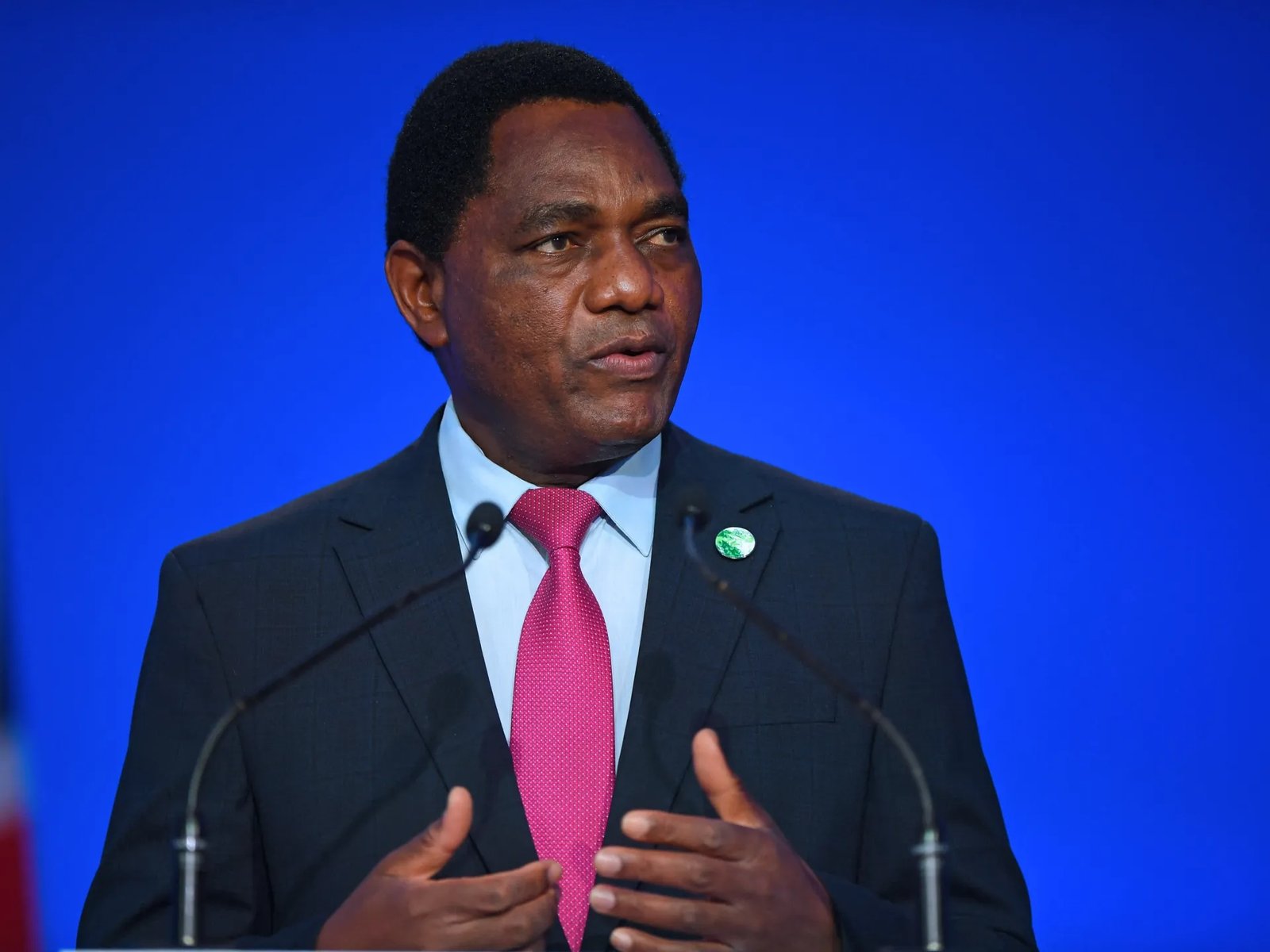
Zambia’s President Hakainde Hichilema has faced a tough month after being attacked by stone throwers while attempting to make a speech. Videos of him crouching and being whisked away from a rally in the Copperbelt province shocked the nation, drawing condemnation across political lines. With nine months until elections, the president now faces mounting pressure.
In his first press conference in 18 months, Hichilema defended his record, highlighting achievements in the economy and power generation. He said, “This level of hatred is shocking, you can see and even touch the venom,” while urging Zambians to love one another. However, critics argue his message may not resonate with citizens still struggling with daily hardships.

Opposition figures, like Lusaka mayoral candidate Simon Mwila, suggest the president has lost touch with the “real pulse of the people,” which may explain the public anger. Historian Sishuwa Sishuwa adds that Hichilema has diverged from the principles he once championed, though the president points to his success in managing Zambia’s debt crisis and stabilizing government finances.
Earlier in November, Hichilema had hoped for a warm reception in Chingola town while delivering $450,000 to rebuild a local market destroyed by fire. Instead, an angry crowd forced him to abandon his speech. Police reported looting and arrested 27 individuals for violence and arson. Hichilema accused illegal artisanal miners of causing unrest as the government cracks down on unregistered work.
Hichilema rose to power in 2021 after five unsuccessful presidential runs, winning a landslide victory over Edgar Lungu. At the time, Zambia faced high inflation, power blackouts, and a debt crisis. His campaign slogan, “Bally will fix it,” positioned him as the nation’s problem solver. Since then, debt repayments have been renegotiated, inflation reduced, and the mining sector stabilized.

Despite these gains, critics argue that unresolved issues, particularly the power crisis, high living costs, and unemployment, continue to affect ordinary citizens. Economist Trevor Hambayi praised the president’s financial reforms and investments in infrastructure, education, and health but acknowledged that many Zambians still struggle.
A report from the Jesuit Centre for Theological Reflection highlighted the strain on families, noting that high prices for essential goods force households to reduce food quality or skip meals. Hichilema acknowledged the energy challenges, emphasizing the government’s awareness of citizens’ frustrations.
With elections approaching in August 2026, the president faces the difficult task of balancing his achievements with public discontent. Stone-throwing incidents and growing unrest signal that progress alone may not satisfy the electorate, and Hichilema must address both economic recovery and the day-to-day struggles of ordinary Zambians.
Related News:
 British Woman in Iran ‘Losing Hope’ Amid Ongoing Detention
 BBC Journalist Held and Interrogated in Vietnam
 UK University Suspends Human Rights Research Following Pressure from China
 UK University Faces Counter-Terror Probe Over China Pressure
 Zohran Mamdani becomes New York City’s first Muslim mayor
 Abigail Spanberger Elected Virginia’s First Female Governor
 Mikie Sherrill Elected New Jersey’s Governor in Key Win
Zohran Mamdani names all-female transition team for NYC mayoralty
China-critical UK academics face ‘extremely heavy’ pressure from Beijing
Mikie Sherrill Elected New Jersey’s Governor in Key Win
Zohran Mamdani names all-female transition team for NYC mayoralty
China-critical UK academics face ‘extremely heavy’ pressure from Beijing
 British military receives first Ajax armoured vehicles – eight years late
 BBC to Apologise Over Edited Trump Speech Amid Backlash
 Second world war veterans honoured as King leads Remembrance Sunday
 Britain deploys RAF specialists to assist Belgium with drone threats
 BBC director-general and news chief resign amid bias row
 Night after night, Belgium is on high alert.
 Ukraine-Russia war latest: Putin’s troops exploit bad weather to force Kyiv withdrawal from multiple towns
 Trump Claims Victory as Longest Shutdown Ends
 New Epstein Files Spark Political Clash in Washington
 Trump Ends Record Shutdown by Signing Temporary Funding Bill
 Hamas Fighters in Gaza Tunnels Stall Ceasefire Progress
 Ukraine Energy Corruption Scandal Hits Zelensky’s Inner Circle
 Early Trends Suggest Modi’s Alliance Leading in Key Bihar Election
 US Justice Department Files Lawsuit Against California Over Partisan Voting Maps
 South Sudan President Removes Vice-President Amid Political Uncertainty
 Berlin Reintroduces Military Service Amid Rising Security Concerns
 Greene Pushes Epstein Files Amid Trump Fallout
 Trump Deploys DHS to Charlotte in Major Arrest Operation
 Former President Backs Public Release of Epstein Records
 December Run-Off in Chile as Election Produces No Winner
 UN Security Council Approves Trump’s Gaza Peace Plan
 Ukraine to Get 100 French Rafale Jets in Historic Deal
 Canada Passes Carney’s First Budget in Tight Parliamentary Vote
 Why Russian Liberals Push Strongly Pro-Israel Narratives
 Congress Approves Release of Epstein Files, Trump Expected to Sign
 Trump Says Crown Prince Knew Nothing About Khashoggi Death
 Shadow Fleet at Sea: Europe’s Battle Against Illicit Oil Shipping
 Rama Rebukes Mahmood for Targeting Albanian Families
 Russian Vessel Used Lasers on RAF Pilots, UK Claims
 Pentagon Officials in Ukraine to Discuss War End
 Turkey to Host COP31 After Breakthrough Deal with Australia
 US Military Team Visits Kyiv Amid War Talks
 WhatsApp Messages Expose Nathan Gill’s Bribery
 Venezuela Threatens Nobel Winner Machado with Fugitive Status
 Texas Governor Faces Lawsuit From CAIR
 Mamdani’s Vision: Affordable, Democratic Socialism
 Trump Envoy to Discuss Ukraine Peace at Kremlin
 Pope Leo XIV Begins Historic Trip to Turkey and Lebanon
 Georgians Defy Government Crackdown After Year of Protests
 Putin Intensifies Territorial Demands Before US Talks
 India’s Labour Law Overhaul Sparks Fierce Debate
 Video shows Israeli troops kill Palestinians after surrender
 Trump to Recheck Green Cards from 19 Nations After DC Attack
 Carney’s Alberta Pipeline Deal Sparks Immediate Pushback
 Guinea-Bissau President Flees After Military Coup
 Chinese & Japanese Boats Clash Near Disputed Islands
 Putin Meets US Envoy Amid Key Ukraine Peace Talks
 Ireland Boosts Ukraine Aid as Zelensky Visits Dublin
 Kremlin Talks With US Yield No Ukraine Peace Breakthrough
 Putin visits India as Ukraine peace, trade push intensifies
 Russia-Ukraine war update: Key events, day 1,379
 EU plans $105bn Ukraine aid using frozen Russian assets
 Global campaign launched to free Palestinian leader Barghouti
 UK Aid Cuts Could Undermine Global Influence, Experts Warn
 UK Must Act with Courage and Clarity on Israel-Palestine Conflict, Says Foreign Affairs Committee Report
 Radioactive Leak at UK’s Nuclear Warhead Base Sparks Outcry Over Safety and Secrecy
 Hong Kong Summons UK and Australian Envoys Following Asylum Grants to Democracy Activists
 Is the UK Ready to Put Boots on the Ground in Ukraine? Assessing Military Capacity and Challenges
 Yvette Cooper Signals Global Momentum Towards Gaza Peace Deal Amid Humanitarian Crisis
 Russia’s Latest Push to Win US Favors Shows Deep Desperation
Trump’s UK Ambassador Urges North Sea Drilling to Strengthen US Ties
Russia’s Latest Push to Win US Favors Shows Deep Desperation
Trump’s UK Ambassador Urges North Sea Drilling to Strengthen US Ties
 Millionaires group urge Reeves to introduce wealth tax to ‘lift kids out of poverty’
 Reeves rejects £1bn plea for NHS redundancy payouts
 PM Condemns Leaks, Vows Loyalty to Ministers and Stability
 Zelenskyy Signs Fighter Jet Deal Amid Russian Drone Attacks
 Tiny Curacao Makes History as Smallest Nation to Reach World Cup
 India’s COP30 Delay Raises Global Climate Concerns
 US Suspends Afghan Immigration After White House Shooting
 Southern Lebanon reels as Israeli strikes shatter communities
 Jordan Bardella: France’s Young Presidential Contender
 Culture secretary to review Telegraph takeover by Daily Mail owner