Published: 27 February 2026. The English Chronicle Desk. The English Chronicle Online.
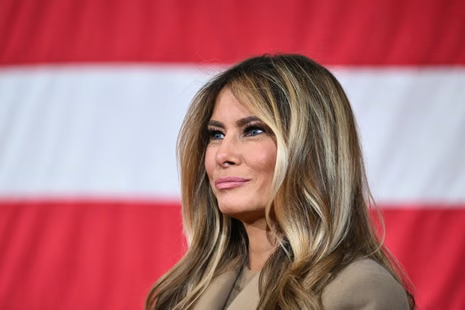
The announcement that Melania Trump will chair the UN Security Council has sparked global attention. The White House confirmed that the First Lady will preside over a high-level session on Monday. The meeting coincides with the United States assuming the council’s rotating monthly presidency. It also marks a historic first for any serving American first lady.
The session will take place at the headquarters of the United Nations in New York. It is titled “Children, Technology, and Education in Conflict.” According to officials, the discussion will explore how education and digital access can promote tolerance. The White House said the initiative aims to strengthen peace and security worldwide.
In doing so, Melania Trump will become the first sitting US first lady to lead proceedings of the powerful 15-member council. Traditionally, meetings are chaired by a nation’s UN ambassador or senior cabinet representative. This departure from precedent has prompted both praise and questions across diplomatic circles.
A statement from the White House described the moment as historic and meaningful. It emphasised the importance of focusing on children caught in conflict zones. The administration said education and technology are vital tools for resilience and reconciliation. Observers note that the choice of theme aligns with the First Lady’s longstanding advocacy work.

The meeting on 2 March is expected to include the US ambassador to the UN, Mike Waltz. Fellow Security Council members will also attend alongside international representatives. Diplomats suggest the session could draw significant media coverage due to its unusual leadership.
On social media, Waltz welcomed the announcement enthusiastically. He wrote that the United States was thrilled to have the First Lady open proceedings. His remarks signalled clear support from Washington’s diplomatic team. However, some analysts believe the symbolism extends beyond ceremony.
Melania Trump has previously championed efforts to support children affected by war. She has drawn particular attention to the plight of Ukrainian minors. Since Russia’s invasion in 2022, thousands of children have reportedly been displaced or transferred. The First Lady has publicly backed initiatives aimed at reuniting families.
In October, she announced that several Ukrainian children had been returned home. Those reunifications were achieved through coordination with international partners. Her involvement has been framed as humanitarian rather than overtly political. Nonetheless, the issue remains deeply entangled with geopolitical tensions.
The broader context surrounding Melania Trump and the UN Security Council is complex. President Donald Trump has often expressed scepticism about the United Nations. He has criticised the organisation as ineffective and resistant to reform. During both his terms, he has advocated sweeping structural changes.
Under his leadership, the United States withdrew from several UN-affiliated bodies. These included the World Health Organization and the UN Framework Convention on Climate Change. The administration argued that these institutions required fundamental reform. Critics, however, warned that withdrawal weakened global cooperation.
Funding decisions have also shaped Washington’s relationship with the UN. The administration reduced contributions to agencies assisting Palestinian refugees. Officials described one programme as irredeemably flawed and in need of overhaul. These moves fuelled debate over America’s commitment to multilateral diplomacy.
Against this backdrop, the decision for Melania Trump to lead the UN Security Council session appears striking. Supporters say it demonstrates constructive engagement despite broader criticism. They argue that focusing on children and education sends a hopeful message. Detractors question whether the gesture masks deeper policy divisions.
Diplomatic historians note that first ladies have long played influential international roles. Eleanor Roosevelt famously contributed to drafting the Universal Declaration of Human Rights. Her work cemented a lasting legacy within the UN system. Yet she did not preside over Security Council proceedings while serving as first lady.
The Security Council itself remains the UN’s most powerful body. It holds authority over sanctions, peacekeeping missions, and conflict resolutions. Its five permanent members wield veto power over substantive decisions. For that reason, its monthly presidency carries symbolic and procedural weight.
The United States assumes that rotating presidency at a sensitive time. Ongoing conflicts in Ukraine and the Middle East continue to test international consensus. Meanwhile, debates about technology’s role in warfare intensify each year. Artificial intelligence and digital surveillance raise new ethical questions.
By centring children and technology, Melania Trump’s session seeks to bridge humanitarian and security concerns. Education in conflict zones often suffers severe disruption. Schools are damaged, teachers displaced, and digital access restricted. These challenges can fuel instability for generations.
Advocates argue that investment in education reduces long-term conflict risks. Access to reliable technology can help maintain learning continuity. Remote platforms have proved essential during war and displacement. However, experts warn that technology can also expose children to exploitation.
The First Lady’s approach appears to balance optimism with caution. White House aides say she intends to highlight collaborative solutions. International partnerships, they stress, are essential for lasting peace. Whether council members align behind specific commitments remains uncertain.
Political analysts also view the event through a domestic lens. It offers the administration an opportunity to showcase softer diplomacy. Melania Trump’s public appearances have often centred on children’s wellbeing. Leading the UN Security Council allows her to extend that focus globally.
At the same time, President Trump recently introduced his so-called “board of peace.” The initiative is presented as an alternative mechanism for resolving disputes. Some global leaders reportedly expressed concern about duplicating UN roles. They worry parallel structures could undermine established institutions.

The White House insists the board complements rather than replaces the UN. Officials argue that innovation is necessary in a changing world. Critics counter that multilateral frameworks already provide adequate channels. The juxtaposition of initiatives adds further intrigue to Monday’s session.
Within diplomatic circles, reactions remain measured. Several ambassadors privately described the development as unconventional but not unprecedented in spirit. They emphasised that council rules allow flexibility in representation. Ultimately, the effectiveness of the meeting will depend on substantive outcomes.
For many observers, symbolism carries its own importance. A first lady presiding over the UN Security Council sends a notable signal. It underscores the evolving nature of diplomatic representation. It also highlights the increasing visibility of women in global governance.
As preparations continue in New York, attention will focus on the tone and substance of the debate. If discussions produce tangible commitments, the session may shape future policy conversations. If not, it could remain primarily symbolic. Either way, the moment marks a distinctive chapter in American diplomacy.
The world will watch closely as Melania Trump takes the gavel. Her leadership of the UN Security Council session blends history with contemporary politics. In a divided international climate, even symbolic gestures can resonate widely. Monday’s meeting may reveal whether education can indeed become a bridge toward peace.
Related News:
 BBC to Apologise Over Edited Trump Speech Amid Backlash
 Britain deploys RAF specialists to assist Belgium with drone threats
 Palace May Restore Hyphen to Andrew Mountbatten-Windsor’s Name
 Greene Pushes Epstein Files Amid Trump Fallout
 December Run-Off in Chile as Election Produces No Winner
 Zelenskyy Signs Fighter Jet Deal Amid Russian Drone Attacks
 Canada Passes Carney’s First Budget in Tight Parliamentary Vote
 Shadow Fleet at Sea: Europe’s Battle Against Illicit Oil Shipping
 Tiny Curacao Makes History as Smallest Nation to Reach World Cup
 Deadly Russian Strikes Hit Western Ukraine, 20 Killed in Ternopil
 Ukraine Peace Plan: Zelensky Ready for Dialogue
 Royal Navy Shadows Russian Warships Entering the Channel
 US Suspends Afghan Immigration After White House Shooting
 Georgians Defy Government Crackdown After Year of Protests
 Tokyo court rules Japan’s same-sex marriage ban constitutional
 ‘Extinct’ Antelope Returns to Sahara, Bringing Hope
 American Mother Extradited From UK to U.S. on Murder Charges
 Irish Beach Tragedy: Irish Drown at Whitehaven Beach in Australia
 Sanctioned oil tankers sail Channel amid Russia scrutiny
 US and UK Withdraw Personnel as Middle East Tensions Rise
 Half the World’s Largest Cities Face Rising Water Stress
 Pentagon Signals Reduced Role in Deterring North Korea
 UK and US Drop in Global Corruption Index Rankings
 SA Police Intensify Search in Gus Lamont Case
 Canberra Poster Seizure Sparks Free Speech Row
 Evo Morales Returns After Mysterious Absence
 El Mencho Killed as Mexico Faces Violence
 Australian children in Syria deserve safe return
 Greenpeace $345m Ruling Sparks Appeal Battle
 Jacinda Ardern Moves To Australia Following Her US Fellowships
 Iranian Australian community divided after vigils
 UK Rescue Flight Delayed Amid Middle East War
 Iran Defiance Grows Amid US-Israel War Pressure
 US Missile Strike on Iran School Sparks Global Shock
 Canada Plasma Deaths Raise Safety Concerns After Two Donors Die
 US Attack on IRIS Dena Shocks Indian Ocean Security
 Australian Petrol Crisis Deepens as Local Stations Run Dry
 Gulf Tensions Rise as Iran Alleges Covert Support
 Oil Slides, Stocks Jump on Trump Peace Signals
 Danish Election Deadlock Shakes Frederiksen’s Grip
 Bondi terror attack linked to global rise in IS plots
 Pope Rebukes Leaders for War as Middle East Tensions Rise
 Army Probes Apache Flyover at Kid Rock’s Nashville Estate
 Iran Drone Strike Hits Kuwaiti Oil Tanker in Dubai Port
 Artemis II: Humanity Returns to the Moon After Decades
 Nuns of Schloss Goldenstein Move Closer to Staying Home
 Italian Town Buys Mussolini Villa to Keep Away Fascist Fans
 Report Says Pezzullo Acted ‘Recklessly’ in Dealings
 Trump and Tehran Find Common Ground in Landmark Ceasefire
 Trump Employs Nixon’s Madman Theory Amid Iran Crisis
 Singapore Pledges Stable Fuel Supply for Australia
 Suspected Plot Targets Pipeline Before Hungary Vote
 Reeves Slams Trump Over Iran War Lack Of Exit Plan
 Learner Driver Charged After Expo Tragedy
 Coalition pushes fossil fuel phaseout plan
 Trump approval plunges amid Iran war fears
 Ohio’s Battle for Trust: Democrats Vying to Flip the Buckeye State
 US ‘Narco Boat’ Strikes Draw Global Outcry
 FIFA Confirms Global Ban for Benfica Star Prestianni
 US Awaits Iran Reply on New Ceasefire Proposal
 US and Mexico Face Heatwave as Floods Batter South Africa
 Putin Signals War End as Russian Momentum Stalls
 Australia Welcomes the Iconic Michelin Guide
 Scepticism and tight security as Beijing braces for Trump
 Philippine Senator Flees After Days Under Senate Siege
 Tensions Flare as Israeli Nationalists March in Jerusalem
 High Street Crisis: Fears Grow Over Post Office Closures
 Xi Hosts Putin for Talks Right After Trump Visit
 Fragile Truce Shattered as Violence Escapes Diplomatic Control
 Oil Markets Face ‘Red Zone’ Threat Amid Iran Crisis
 Pope Meets Families in Italy Toxic Waste Zone
 Discontent grows around Putin amid war strain
 US Strikes Iranian Sites Amid Shaky Ceasefire Talks
 Starmer Leadership Under Pressure After Setbacks
 Papal Visit Offers Political Lifeline to Spanish Premier
 Aukus Deal Facing Fierce Backing and Historic Criticism
 Thai Princess Bajrakitiyabha Passes Away at 47
 Le Pen to Run for President Despite Embezzlement Conviction
 Ukraine Creates Long-Range Strike Command
 Houthis Strike Saudi Arabia as Middle East Tensions Rise