Published: 04 March 2026. The English Chronicle Desk. The English Chronicle Online.
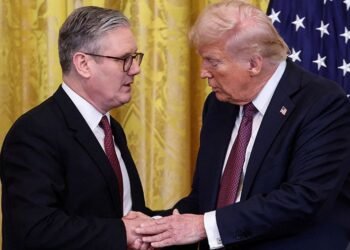
Tensions between London and Washington deepened this week as the Iran strikes row intensified between Prime Minister Keir Starmer and US President Donald Trump. The disagreement centres on Britain’s refusal to allow initial American attacks on Iran to be launched from UK bases. Within hours, the diplomatic rift became personal, public and unusually sharp.
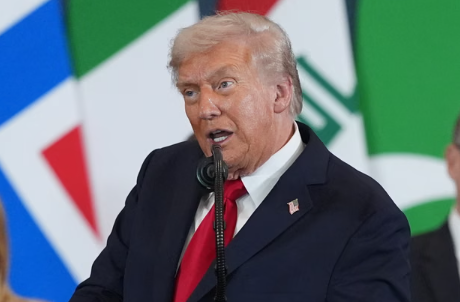
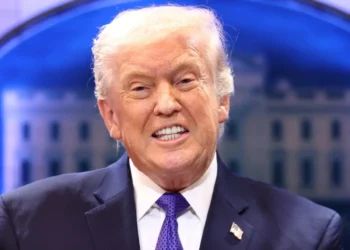
President Trump openly criticised Sir Keir for declining early military cooperation. Speaking to reporters, he remarked that “this is not Winston Churchill that we’re dealing with.” The comment signalled clear frustration over Britain’s cautious approach to the unfolding crisis. It also marked the third rebuke in just 24 hours, underlining how deeply the Iran strikes row has unsettled transatlantic relations.
The White House confirmed that the United States ultimately received limited access to facilities. Britain agreed that American forces could use Diego Garcia for later strikes on Iranian missile sites. However, Downing Street insisted that initial offensive operations would not originate from British soil. That distinction has proved central to the political storm now engulfing both capitals.
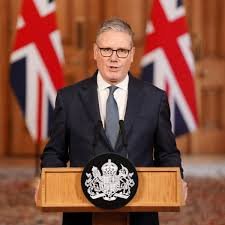
Addressing Parliament, Sir Keir defended his decision with measured firmness. He told MPs that Britain does not believe in “regime change from the skies.” He stressed that any action must align with international law and national interest. His remarks reflected wider concerns about escalation across the Middle East.

In the House of Commons, he acknowledged President Trump’s disagreement. Yet he maintained that safeguarding British citizens remains his primary duty. The prime minister also authorised defensive use of bases, including RAF Fairford, to protect allied personnel. Officials said those measures were precautionary rather than provocative.
The Iran strikes row has unfolded against a volatile regional backdrop. American and Israeli operations targeted Iranian missile infrastructure earlier this week. Tehran responded with retaliatory strikes against allied positions across the region. Governments throughout Europe have struggled to articulate a united response.
President Trump widened his criticism beyond Britain. He threatened to curtail trade with Spain after Madrid denied similar base access. During an Oval Office appearance with German Chancellor Friedrich Merz, he accused European partners of hesitating at a critical moment. His tone suggested mounting impatience with traditional allies.
Referring again to Diego Garcia, he described Britain as “very, very uncooperative.” He argued that delays forced American aircraft to fly longer routes. According to the president, this complicated operational planning and reduced efficiency. Such remarks have fuelled further debate about the depth of the special relationship.
For decades, the UK and US have maintained close defence cooperation. Shared intelligence and joint operations have often defined their alliance. Yet the Iran strikes row has exposed fresh fault lines beneath that partnership. Analysts suggest this episode reflects broader disagreements about strategy and risk.
Sir Keir has previously been credited with managing relations carefully. Despite political differences, he maintained steady communication with Washington. However, this dispute has tested that approach more than previous disagreements. Observers note that domestic pressures also shape his calculations.
Public opinion appears divided, though scepticism about intervention remains strong. A recent survey by YouGov found that nearly half of Britons oppose the American strikes. Only around a quarter expressed support for the action. When asked about using RAF bases, half remained against involvement.
These findings provide political context for Downing Street’s caution. Many voters fear being drawn into another prolonged Middle Eastern conflict. Memories of past interventions continue to influence public sentiment. Sir Keir’s advisers are keenly aware of that historical shadow.
Meanwhile, senior Labour figures have responded robustly to President Trump’s comments. Emily Thornberry, chair of the Foreign Affairs Committee, questioned the comparison with Churchill. She remarked that Trump is certainly no Franklin D Roosevelt. Her words echoed frustration among several MPs.
Beyond military questions, President Trump expanded his criticism into domestic policy areas. He urged Britain to reconsider the Chagos Islands agreement. He also called for renewed North Sea oil exploration. Additionally, he raised immigration issues in pointed language.
Such interventions have unsettled officials in London. Government sources emphasised that domestic policies remain sovereign decisions. They stressed that national interest guides each judgment independently. The Iran strikes row therefore intertwines foreign policy and political rhetoric.
Downing Street’s chief secretary, Darren Jones, defended the government’s stance. He said Britain would always act to protect its citizens. He added that most people wish to avoid a wider regional war. His remarks sought to balance resolve with reassurance.
Diplomatic channels remain active despite the sharp exchanges. Officials on both sides continue discussions regarding security coordination. Defence experts believe cooperation will persist in practical terms. However, the public nature of this dispute has undeniably strained atmospherics.
European capitals are watching closely. Several governments share concerns about escalation risks. At the same time, they value American security guarantees. The Iran strikes row therefore highlights Europe’s delicate balancing act.
Strategically, Diego Garcia occupies a crucial position in the Indian Ocean. Its location enables long-range operations across Asia and the Middle East. Access arrangements have long symbolised Anglo-American defence integration. Any tension surrounding the island inevitably attracts attention.
Legal scholars have also entered the debate. Some question whether the strikes complied fully with international frameworks. Others argue that deterrence sometimes demands decisive force. This legal dimension further complicates political calculations in Westminster.
President Trump’s rhetoric has remained unapologetic. He insisted that swift cooperation would have strengthened allied unity. In interviews with British newspapers, he lamented what he called a changed relationship. Such language suggests lingering disappointment within the White House.
Yet seasoned diplomats caution against dramatic conclusions. The UK-US alliance has weathered disagreements before. From Suez to Iraq, moments of friction eventually gave way to pragmatic cooperation. Whether the Iran strikes row follows a similar pattern remains uncertain.
For Sir Keir, the challenge lies in balancing alliance and autonomy. He must demonstrate reliability without sacrificing independent judgment. That tightrope has rarely been so visible to the public. Each statement now carries both domestic and international implications.
As the Middle East situation evolves, attention will remain fixed on London and Washington. Markets and security analysts alike seek signs of stability. Military planners continue assessing risks of further retaliation. Meanwhile, citizens hope tensions will not escalate further.

The coming days may determine whether this episode marks a lasting rupture. Much depends on events in Tehran and regional capitals. Diplomatic engagement could yet cool tempers on both sides. For now, the Iran strikes row stands as a stark reminder of shifting alliances.
In Britain, parliamentary scrutiny is expected to intensify. Opposition parties will press for transparency about legal advice and intelligence assessments. Ministers insist that all actions remain consistent with British law. This domestic debate adds another layer to the unfolding story.
Ultimately, the disagreement reflects contrasting strategic instincts. Washington favours decisive projection of force to deter adversaries. London prefers calibrated engagement anchored in legal caution. Navigating those differences will test leaders on both sides of the Atlantic.
The special relationship endures, but it feels unsettled. Both leaders insist their countries remain close partners. Yet rhetoric has revealed bruised sensitivities and diverging priorities. The Iran strikes row has therefore become more than a military dispute.
It now symbolises the complex realities of twenty-first century alliances. Shared history does not eliminate strategic divergence. Trust must be constantly renewed through dialogue and respect. As events unfold, that principle may prove decisive.
Related News:
 British Woman in Iran ‘Losing Hope’ Amid Ongoing Detention
 BBC Journalist Held and Interrogated in Vietnam
 Zohran Mamdani becomes New York City’s first Muslim mayor
Zohran Mamdani names all-female transition team for NYC mayoralty
Zohran Mamdani becomes New York City’s first Muslim mayor
Zohran Mamdani names all-female transition team for NYC mayoralty
 Second world war veterans honoured as King leads Remembrance Sunday
 BBC director-general and news chief resign amid bias row
 Rama Rebukes Mahmood for Targeting Albanian Families
 Russian Vessel Used Lasers on RAF Pilots, UK Claims
 Ireland Boosts Ukraine Aid as Zelensky Visits Dublin
 US Africa aid remarks spark anger after leaked State email
 Starmer China visit raises human rights pressure on Beijing
 UK and EU Signal Fresh Push for Defence Cooperation Talks
 Cory Bernardi joins One Nation for SA election
 Starmer Condemns ‘Depraved’ Russian Strikes on Ukraine
 Trump Warns Over Chagos Islands Deal
 Trump and Chagos Deal Rift Over Iran Strikes
 Andrew Mountbatten-Windsor Arrest After FBI Radar
 Farage Chagos Islands Row Sparks Fury
 Trump Tariffs Threat Spark UK and EU Alarm
 UK Allows US Base Use Amid Iran Tensions
 UK Prepares Aircraft Carrier for Middle East Crisis
 Gordon Brown urges court for crimes against children
 Yvette Cooper: UK Must Follow Principles, Not US Pressure
 UK Minister Denies Iran Missile Threat to Britain
 Army Probes Apache Flyover at Kid Rock’s Nashville Estate
 Relationship with Trump may be beyond repair, Starmer warned
 Charles Faces Trump Test in High-Stakes US Visit
 UK Stands Firm on Falklands Amid US Rift
 Ceasefire Standoff Deepens in Ukraine War
 Koh-i-noor Diamond Row Reignites Colonial Debate
 Starmer Faces Revolt After Crushing Election Losses
 UK Pushes for New EU Goods Trade Deal
 Reeves Fights to Keep Treasury Role Amid Labour Turmoil
 Farage and Reform UK Reshape British Politics
 Starmer Leadership Under Pressure After Setbacks
 Deadly Russian Air Raids Strike Across Ukraine
 UK Government Cancels Higher Education Programme for Women and Girls
 New South Wales Premier Chris Minns Signals Tough Road Ahead for Labor
 Labour MPs Urge Burnham to Revive UK Aid Target
 Former Diplomats Urge UK and France to Act on Palestine
 UK Must Act with Courage and Clarity on Israel-Palestine Conflict, Says Foreign Affairs Committee Report
 Radioactive Leak at UK’s Nuclear Warhead Base Sparks Outcry Over Safety and Secrecy
 Is the UK Ready to Put Boots on the Ground in Ukraine? Assessing Military Capacity and Challenges
 Trump’s UK Ambassador Urges North Sea Drilling to Strengthen US Ties
BBC to Apologise Over Edited Trump Speech Amid Backlash
Trump’s UK Ambassador Urges North Sea Drilling to Strengthen US Ties
BBC to Apologise Over Edited Trump Speech Amid Backlash
 Millionaires group urge Reeves to introduce wealth tax to ‘lift kids out of poverty’
 Reeves rejects £1bn plea for NHS redundancy payouts
 PM Condemns Leaks, Vows Loyalty to Ministers and Stability
 Greene Pushes Epstein Files Amid Trump Fallout
 Shadow Fleet at Sea: Europe’s Battle Against Illicit Oil Shipping
 Starmer Says Labour’s Economic Plan Needs Years to Deliver
 Pentagon Signals Reduced Role in Deterring North Korea
 Artificial intelligence will cost jobs, admits Liz Kendall
 Mandelson Faces Police Inquiry Over Epstein Leak
 Morgan McSweeney downfall shocks Labour leadership
 UK and US Drop in Global Corruption Index Rankings
 Farage Unveils Reform UK Frontbench Team
 Canberra Poster Seizure Sparks Free Speech Row
 Evo Morales Returns After Mysterious Absence
 Wales Approves Assisted Dying Bill Consent
 Jacinda Ardern Moves To Australia Following Her US Fellowships
 Jacinda Ardern Move Sparks Kiwi Reflection
 Corbyn Leads Your Party in Coordinated Left-Flank Strategy
 Nick Greiner Warns Over Election Review Fallout
 UK Rescue Flight Delayed Amid Middle East War
 Iran Defiance Grows Amid US-Israel War Pressure
 Starmer Praised for Stance on Trump and Iran Conflict
 NHS Plans to Cut Overseas Workers Labeled Overambitious
 Danish Election Deadlock Shakes Frederiksen’s Grip
 Pope Rebukes Leaders for War as Middle East Tensions Rise
 Italian Town Buys Mussolini Villa to Keep Away Fascist Fans
 Report Says Pezzullo Acted ‘Recklessly’ in Dealings
 Suspected Plot Targets Pipeline Before Hungary Vote
 Starmer Survives Mandelson Rebellion
 Reform UK Faces Crisis as Newly Elected Councillors Resign
 Secret Role of UK Security Services in Troubles Amnesty Law
 The Hidden Crisis Eroding Trust in British Communities
 Farage Warns Sky News Following Financial Inquiry
 Ann Widdecombe, Formidable Political Figure, Dies at 78
 Houthis Strike Saudi Arabia as Middle East Tensions Rise