Published: 06 March 2026. The English Chronicle Desk. The English Chronicle Online.
The Hormuz tanker crisis is leaving thousands of seafarers stranded as conflict escalates around the Gulf. Crews aboard oil tankers now wait anxiously while military tensions close one of the world’s most vital shipping routes. For many sailors, daily life has turned into a tense routine filled with uncertainty and constant fear.
From cramped cabins beneath massive decks, seafarers watch flashes of light illuminate the night sky. Those distant explosions remind crews how close the conflict has crept toward their floating workplaces. Ships carrying millions of barrels of oil remain anchored while authorities decide whether passage through the region is safe.
One crew member described the frightening experience while speaking from aboard a tanker anchored offshore. The vessel had just completed loading crude oil when tensions escalated dramatically in the region. Soon afterward, shipping traffic slowed sharply as the Hormuz tanker crisis began disrupting maritime movement.
The sailor recalled hearing warnings shortly after political threats escalated between Western governments and Iran. When Donald Trump warned Iran to accept a diplomatic deal within days, some seafarers feared the situation could quickly worsen. That prediction soon proved accurate as military activity intensified across the Gulf.
While the crew loaded crude oil at a sprawling industrial complex, sudden explosions echoed nearby. Bright flashes appeared across the dark horizon as the sailors watched anxiously from the deck. Soon the captain received orders instructing workers to stop loading the tanker immediately.
For several tense hours the vessel remained motionless, its crew awaiting further instructions. Then unexpected orders arrived directing the team to resume loading operations without delay. By the time the process finished, the tanker carried more than one million barrels of crude oil.
During those chaotic hours, the crew lost access to GPS systems and reliable communications. The sailors understood they were floating inside a dangerous region without clear navigation tools. The Hormuz tanker crisis had effectively stranded them before they even attempted departure.

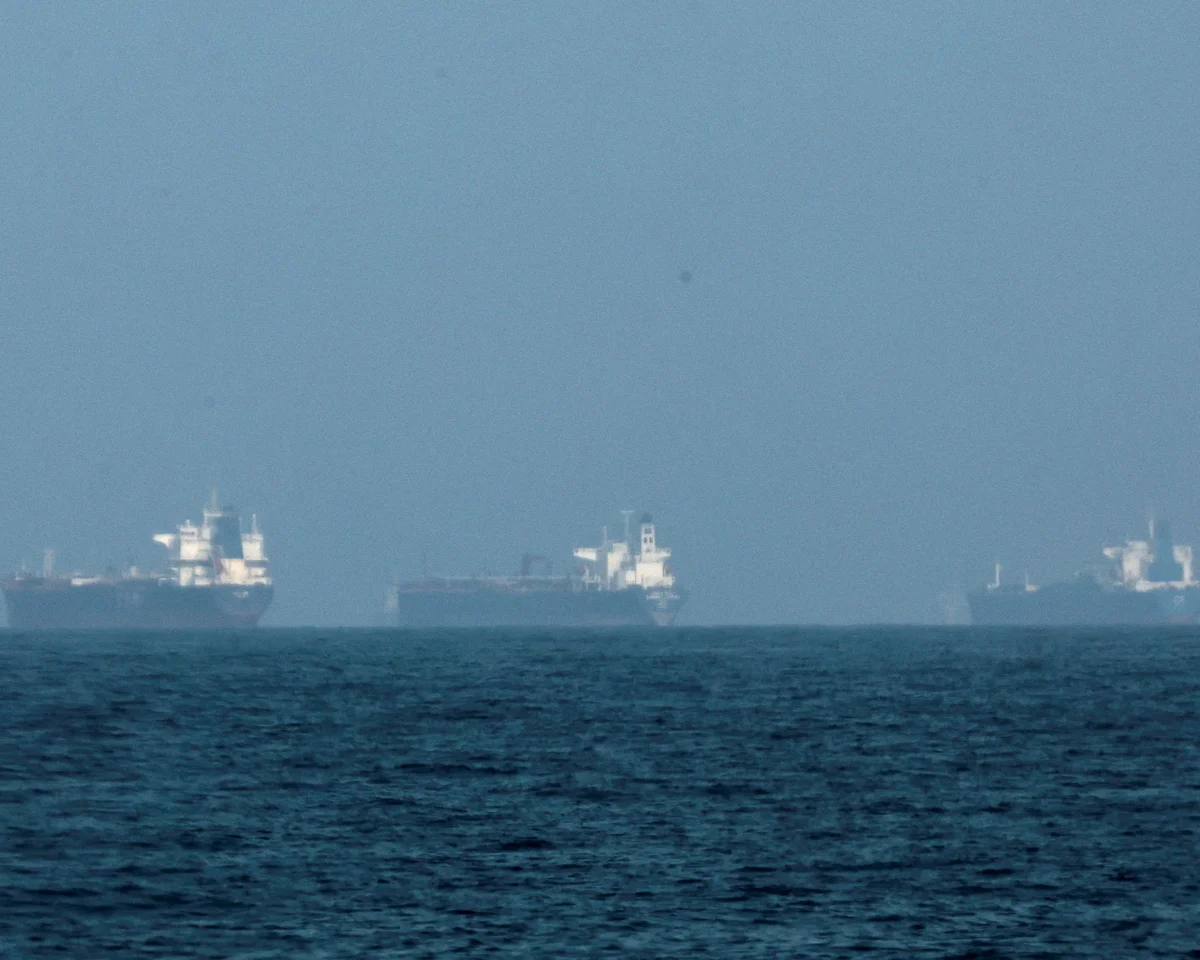
Today the tanker sits at anchor near the busy coastline of Dubai. Nearby waters normally bustle with vessels transporting oil toward global markets. Yet shipping activity has fallen sharply as the conflict spreads across the Gulf.
Seafarers aboard the tanker feel powerless while waiting for safe instructions from shipping authorities. Many worry that a missile or stray drone could strike the vessel unexpectedly. Their greatest hope remains simple: avoiding attention until the situation stabilises.
The strategic waterway at the centre of the crisis is the Strait of Hormuz. This narrow corridor connects the Persian Gulf to global oceans and energy markets. Roughly one fifth of the world’s oil normally passes through this critical maritime passage.
Following the outbreak of hostilities, Iran’s Revolutionary Guards issued a dramatic warning. Officials declared that Western tankers attempting to cross the strait could be targeted. That declaration immediately frightened shipping companies and triggered a rapid halt in tanker movement.
Insurance costs surged overnight as companies reconsidered the risks of operating near the conflict zone. Some insurers suspended coverage entirely for ships travelling through the region. Without adequate insurance, most vessels cannot legally sail through contested waters.
The result has been an extraordinary maritime standstill now widely known as the Hormuz tanker crisis. Normally about one hundred tankers pass through the strait every day. Today, shipping lanes that once carried global energy supplies appear unusually quiet.
Maritime analysts estimate that around two hundred tankers are currently stranded nearby. Many vessels sit at anchor while awaiting instructions from shipping companies and authorities. Each tanker holds dozens of crew members whose lives remain temporarily suspended.
Thousands of sailors from around the world now find themselves trapped within a volatile maritime region. Crews represent many nationalities including India, the Philippines, and several European countries. Most had expected to finish voyages and return home weeks earlier.
The seafarer who described the ordeal had spent nearly three months aboard the tanker. Their contract originally included a journey toward East Asia carrying newly loaded crude oil. Instead, the ship remains anchored while geopolitical tensions dominate the horizon.
Communication with families has become difficult because signal interference disrupts satellite systems. Sailors often rely on brief internet connections to send reassuring messages home. Those moments provide relief for relatives worried by news reports of the conflict.
The crew sends routine safety updates to the tanker’s owner several times each day. In return, they receive standard responses reminding them of available mental health support. For many sailors, however, those messages feel distant and impersonal.
Access to reliable internet remains limited on board, which increases feelings of isolation. Some crew members pay additional fees to extend their data allowance whenever signals appear. Even then, satellite disruption frequently interrupts communication.
The sailor explained that both American and Iranian systems sometimes interfere with navigation signals. Those disruptions occasionally block GPS connections for hours at a time. Without reliable positioning data, crews feel even more vulnerable within the contested region.
Meanwhile, the economic consequences of the Hormuz tanker crisis are spreading across global markets. Energy prices have climbed sharply since shipping activity slowed dramatically. Analysts warn that prolonged disruption could trigger inflation across many economies.
Oil markets respond quickly whenever supply routes face unexpected interruptions. Because the strait handles such enormous volumes, even brief closures create uncertainty worldwide. Governments are watching closely as the conflict threatens international trade stability.
Reports have already confirmed attacks on several vessels since fighting intensified across the Gulf. At least six ships have suffered damage during incidents linked to the escalating confrontation. Two seafarers have tragically died while working aboard targeted vessels.
One particularly powerful explosion recently shook an oil tanker near the coast of Kuwait. The blast heightened anxiety among sailors anchored nearby. Many crews now monitor the horizon constantly for signs of danger.
Despite the tension, daily routines continue aboard stranded vessels to maintain morale. Some sailors exercise in small onboard gyms or watch films during their limited free time. Others gather quietly to share meals and discuss news updates.
A few crew members even try fishing during calm evening hours near the anchored tanker. Yet they keep lights dim to avoid drawing attention in the dark waters. These small precautions reflect the constant awareness of risk surrounding them.
Representatives from the maritime labour movement have raised growing concern about crew welfare. Stephen Cotton of the International Transport Workers’ Federation said his organisation has received urgent messages from worried seafarers.
Cotton emphasised that sailors often remain invisible despite their essential role in global trade. Modern economies depend heavily on the cargo these workers transport across oceans. Yet their safety rarely dominates public discussion during geopolitical crises.
He stressed that seafarers are civilians caught unexpectedly in a rapidly escalating conflict zone. None of them expected to find themselves working within an active military theatre. Their only goal remains completing voyages and returning safely home.
Trade unions are now exploring possible evacuation or relief options for trapped sailors. However, leaving a vessel at sea is far more complicated than many observers realise. Ports may refuse entry while insurance and security concerns limit available solutions.
According to maritime experts, psychological stress may become the greatest challenge if delays continue. Sailors often rely on predictable rotations that allow them regular breaks ashore. Extended confinement can strain mental health and morale.
Veterans of the shipping industry remember similar hardships during the global pandemic several years ago. At that time many crews remained trapped aboard vessels for months without relief. Those memories now resurface as sailors face another uncertain waiting period.
Industry representatives say no seafarer can legally be forced to enter high risk conflict areas. Yet replacing current crews would require volunteers willing to accept serious danger. Few maritime workers appear eager to step into such circumstances.

The stranded sailor admitted they doubt many replacements would volunteer for the assignment. The risks appear obvious even from the relative safety of distant ports. Only those desperate for work might consider joining a tanker in the conflict zone.
For now, the tanker still carries enough food supplies to support its crew for several weeks. The vessel also operates desalination systems that convert seawater into drinkable water. Those systems help maintain basic living conditions while the crisis unfolds.
Still, uncertainty about the future weighs heavily on every sailor aboard the anchored ships. Days pass slowly while news reports describe escalating political tensions. Each new headline raises fresh concerns among those waiting quietly at sea.
The sailor admitted they dream frequently about finally returning home once the crisis ends. They imagine simple pleasures like greeting family members and walking familiar streets again. Even small comforts now seem distant while the ship remains trapped.
Many seafarers share similar hopes while enduring the ongoing Hormuz tanker crisis. Their stories highlight the human cost behind global energy supply chains. While governments debate strategy, ordinary sailors continue waiting patiently on silent decks.
For them, the horizon holds both danger and hope. Every sunrise could bring orders allowing ships to leave safely. Until then, thousands remain watchful guardians of cargo while war shadows the surrounding waters.
Related News:
 BBC to Apologise Over Edited Trump Speech Amid Backlash
 Britain deploys RAF specialists to assist Belgium with drone threats
 Palace May Restore Hyphen to Andrew Mountbatten-Windsor’s Name
 Greene Pushes Epstein Files Amid Trump Fallout
 December Run-Off in Chile as Election Produces No Winner
 Zelenskyy Signs Fighter Jet Deal Amid Russian Drone Attacks
 Canada Passes Carney’s First Budget in Tight Parliamentary Vote
 Shadow Fleet at Sea: Europe’s Battle Against Illicit Oil Shipping
 Tiny Curacao Makes History as Smallest Nation to Reach World Cup
 Deadly Russian Strikes Hit Western Ukraine, 20 Killed in Ternopil
 Ukraine Peace Plan: Zelensky Ready for Dialogue
 US Suspends Afghan Immigration After White House Shooting
 Georgians Defy Government Crackdown After Year of Protests
 ‘Extinct’ Antelope Returns to Sahara, Bringing Hope
 American Mother Extradited From UK to U.S. on Murder Charges
 Irish Beach Tragedy: Irish Drown at Whitehaven Beach in Australia
 Sanctioned oil tankers sail Channel amid Russia scrutiny
 US and UK Withdraw Personnel as Middle East Tensions Rise
 Half the World’s Largest Cities Face Rising Water Stress
 Pentagon Signals Reduced Role in Deterring North Korea
 UK and US Drop in Global Corruption Index Rankings
 SA Police Intensify Search in Gus Lamont Case
 Canberra Poster Seizure Sparks Free Speech Row
 Evo Morales Returns After Mysterious Absence
 El Mencho Killed as Mexico Faces Violence
 Australian children in Syria deserve safe return
 Greenpeace $345m Ruling Sparks Appeal Battle
 Jacinda Ardern Moves To Australia Following Her US Fellowships
 Jacinda Ardern Move Sparks Kiwi Reflection
 Middle East Airspace Crisis Strands Thousands
 Nick Greiner Warns Over Election Review Fallout
 Kelly Wilkinson Inquest Reveals Bail Failure
 Seventh US Service Member Killed in Iran Conflict Identified
 Iran Defiance Grows Amid US-Israel War Pressure
 US Missile Strike on Iran School Sparks Global Shock
 Canada Plasma Deaths Raise Safety Concerns After Two Donors Die
 US Attack on IRIS Dena Shocks Indian Ocean Security
 Australian Petrol Crisis Deepens as Local Stations Run Dry
 Gulf Tensions Rise as Iran Alleges Covert Support
 Oil Slides, Stocks Jump on Trump Peace Signals
 Danish Election Deadlock Shakes Frederiksen’s Grip
 Bondi terror attack linked to global rise in IS plots
 Pope Rebukes Leaders for War as Middle East Tensions Rise
 Army Probes Apache Flyover at Kid Rock’s Nashville Estate
 Iran Drone Strike Hits Kuwaiti Oil Tanker in Dubai Port
 Artemis II: Humanity Returns to the Moon After Decades
 Nuns of Schloss Goldenstein Move Closer to Staying Home
 Italian Town Buys Mussolini Villa to Keep Away Fascist Fans
 Report Says Pezzullo Acted ‘Recklessly’ in Dealings
 Trump and Tehran Find Common Ground in Landmark Ceasefire
 Trump Employs Nixon’s Madman Theory Amid Iran Crisis
 Singapore Pledges Stable Fuel Supply for Australia
 Suspected Plot Targets Pipeline Before Hungary Vote
 Reeves Slams Trump Over Iran War Lack Of Exit Plan
 Learner Driver Charged After Expo Tragedy
 Coalition pushes fossil fuel phaseout plan
 Trump approval plunges amid Iran war fears
 Ohio’s Battle for Trust: Democrats Vying to Flip the Buckeye State
 US ‘Narco Boat’ Strikes Draw Global Outcry
 FIFA Confirms Global Ban for Benfica Star Prestianni
 US Awaits Iran Reply on New Ceasefire Proposal
 US and Mexico Face Heatwave as Floods Batter South Africa
 Putin Signals War End as Russian Momentum Stalls
 Australia Welcomes the Iconic Michelin Guide
 Scepticism and tight security as Beijing braces for Trump
 Philippine Senator Flees After Days Under Senate Siege
 Tensions Flare as Israeli Nationalists March in Jerusalem
 High Street Crisis: Fears Grow Over Post Office Closures
 Xi Hosts Putin for Talks Right After Trump Visit
 Oil Markets Face ‘Red Zone’ Threat Amid Iran Crisis
 Pope Meets Families in Italy Toxic Waste Zone
 Discontent grows around Putin amid war strain
 US Strikes Iranian Sites Amid Shaky Ceasefire Talks
 Starmer Leadership Under Pressure After Setbacks
 Papal Visit Offers Political Lifeline to Spanish Premier
 Aukus Deal Facing Fierce Backing and Historic Criticism
 Thai Princess Bajrakitiyabha Passes Away at 47
 Le Pen to Run for President Despite Embezzlement Conviction
 Ukraine Creates Long-Range Strike Command
 Houthis Strike Saudi Arabia as Middle East Tensions Rise