Published: 06 March 2026
The English Chronicle Desk
The English Chronicle Online
A new edition of the Art Map has been launched to help passengers discover permanent artworks across the London Underground network, as the capital celebrates a century of commissioning art for the Tube .
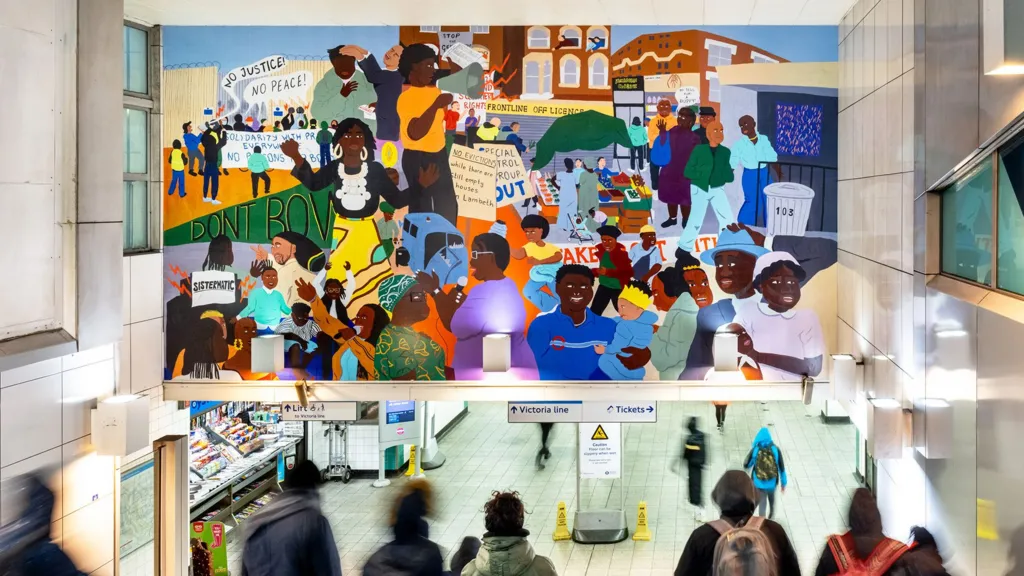
Transport for London’s updated guide highlights 26 permanent works across the network, with copies available in all Zone 1 stations and at stations outside central London that feature Art on the Underground commissions, including Brixton, Seven Sisters and Sudbury Town . The leaflet replaces the previous 2016 version and includes six major permanent commissions added over the last decade, providing images, background information and details on where each artwork can be found .

To mark the launch, a series of free pop-up talks took place last Sunday, giving the public a chance to hear directly from artists and curators . Amelia Gentleman spoke about her father David Gentleman’s work Cross for Queen Eleanor at Charing Cross station, while British-Ghanaian artist Larry Achiampong discussed his 2022 roundel designs at Westminster station. Eleanor Pinfield, Head of Art on the Underground, introduced Angels of History by Hannah Quinlan and Rosie Hastings at St James’s Park station .
The celebration comes as Art on the Underground, which began in 2000, continues its 2026 programme with five major new commissions exploring subterranean histories, lost voices and hidden labour . The programme, sponsored by Reed, has been at the forefront of critically engaged public art for more than two decades, commissioning site-specific works that reflect on the changing nature of public space .
Justine Simons OBE, Deputy Mayor for Culture and the Creative Industries, said: “From murals in Brixton to The Arches on Gloucester Road and mysterious mazes across stations, for over a decade Art on the Underground has brought joy, inspiration and great art for free to the millions travelling across London. The updated free Art Map and fantastic series of pop-up events will enable Londoners and visitors to learn more about these inspiring works, as we continue to build a better London for everyone” .
Eleanor Pinfield, Head of Art on the Underground, added: “Everyone benefits from the transformational powers of art, and our Art on the Underground programme takes pieces outside of a gallery context and into the public realm, where millions can see them as they travel around London. The pop-up talks this weekend are a fantastic opportunity to find out about the rich and layered context behind some of our permanent commissions, and we’re also encouraging people to pick up our updated Art Map to help them explore the network and our Art on the Underground commissions, and find the piece that speaks to them most” .
The tradition of art on the Underground dates back more than a century to Frank Pick, the visionary managing director of London Underground in the early 20th century . Pick pioneered the concept of total design, commissioning leading artists and designers to create posters for the rapidly expanding network . “Where there is life, there is art,” Pick declared in 1917 .
Pick’s ambition turned the Underground into one of London’s most important patrons of the arts . When a new headquarters was needed at 55 Broadway, he asked architect Charles Holden to collaborate with leading sculptors including Jacob Epstein, Eric Gill and Henry Moore to create powerful pieces for the building’s exterior . Moore’s work, created in 1929, was his first public commission and remains part of the network’s historic collection .
The 1920s and 1930s saw a flourishing of artistic work across the network, including Eric Aumonier’s sculpture The Archer at East Finchley, part of a progressive plan interrupted by the Second World War . In the 1960s, work started on the Victoria line, with London Transport collaborating with pioneering agency Design Research Unit to create distinctive tiled motifs giving each station its own identity . At Pimlico, for example, Peter Sedgley’s modern design riffed on work shown at the nearby Tate Gallery .
From the late 1970s, London Transport wanted each station’s design to be unique, commissioning extraordinary artworks including Eduardo Paolozzi’s vibrant mosaics at Tottenham Court Road, Robyn Denny’s ribbon-like designs at Embankment and David Gentleman’s woodcuts at Charing Cross . Paolozzi’s 1986 mosaics, covering almost a kilometre of walls, reflected his interest in mechanisation, urbanisation and popular culture .
The poster campaign, which began in 1908, produced more than 5,000 posters and exposed passengers to leading currents of artistic modernism . In 1928, critic Sir Lawrence Weaver compared the Underground to London’s prestigious galleries, writing that it “has provided the people of London with a picture gallery as fine in some ways … as the Tate or the National” .
In 2000, Platform for Art was launched as a dedicated art programme, initially focusing on temporary artworks on the disused platform at Gloucester Road station . The first piece commissioned was an elephant sculpture by Kendra Haste, now on permanent display at Waterloo station . In 2007, the programme was rebranded as Art on the Underground, expanding to temporary sites and permanent commissions .
Since 2004, artists have been commissioned to create covers for the pocket Tube map, one of the largest public art commissions in the UK with millions of copies printed . More than 35 different designs have been produced by British and international artists including Rachel Whiteread, Yayoi Kusama and Tracey Emin . The 41st cover, launched in June 2025, featured Map Projections by Agnes Denes, a leading pioneer of the environmental art movement .
In 2013, Turner Prize-winning artist Mark Wallinger created Labyrinth to commemorate the 150th anniversary of the Underground, installing 270 unique artworks, one for every station . Recent permanent commissions include Alexandre da Cunha’s Sunset, Sunrise, Sunset at the new Battersea Power Station station, using rotating billboard mechanisms to echo the vertical bars measuring electricity output in the original power station’s control room .
James Reed, Chairman and CEO of Reed Employment, said: “We’re proud to sponsor Art on the Underground, a programme that gets into the heart of how we feel and experience London each day. For more than six decades, Reed has been part of the London story, strengthening communities and helping Londoners adapt to a changing world of work. This Art Map helps us tell that story, and celebrate the idea that art belongs in everyday life, which it most certainly does” .
This month, artist Phoebe Boswell will launch a new photographic artwork at Bethnal Green and Notting Hill Underground stations, the first of five new commissions in the 2026 programme . Inspired by local Black swimming communities, Boswell’s multi-layered photographic assemblages explore water as a site of healing, migratory trauma and collective power .
The 2026 programme continues throughout the year with an audio commission by Ain Bailey at Waterloo station in June, featuring an original composition recorded with experimental vocalist Elaine Mitchener and paying homage to more than 60 lost London cultural venues . In September, Scottish painter Caroline Walker will unveil a large-scale work at Stratford station spotlighting women working night shifts as Train Operators and Cleaners on the TfL network . In November, Hurvin Anderson will mark the 10th Brixton Mural commission, drawing upon his close connection to the area where he has held a studio since 1998 .

American artist Ellen Gallagher will create the 42nd pocket Tube map cover for summer 2026, exploring notions of sediment and hidden waterways running alongside Underground tunnels beneath the city’s surface .
Simon Murphy, a regular Tube passenger, told The English Chronicle: “You don’t always notice it when you’re rushing to work, but when you stop and look, the Underground is like a giant gallery. From the mosaics at Tottenham Court Road to the poems in the carriages, it makes the daily commute a bit more bearable. It’s part of what makes London special.”
Related News:
 Karen Gillan Reveals What She Misses Most About Scotland’s Food and People
 Why Alan Carr Bought a Castle in Kent
 BBC Apologises After Racial Slur Aired at BAFTAs by Guest With Tourette’s
 Henry Moore sculpture sells for £26m at auction
 Fringe Dreams Strained as Oasis Reunion Sparks Soaring Costs for Edinburgh Performers
 Unseen Killers of the Deep Inside the UK Lab Uncovering the Silent Deaths of Sea Creatures
 Drag Queens Forced to Stop Reading ‘Dear Zoo’ to Children Amid Protests at Belfast Library
 Jack Osbourne Breaks Silence with Heartfelt Tribute Following Ozzy Osbourne’s Funeral
 Wembley Investigates Allegations of Ticketless Entry at Oasis Reunion Concerts
 Prince Charles Cinema Eyes Expansion to East London Amid Leicester Square Uncertainty
 Russell T Davies Warns of Declining UK Gay Rights Amid Rise of Reform UK and Trump Influence
 Terence Stamp, ’60s British Film Legend and Star of Superman, Dies at 87
 Millie Bobby Brown and Jake Bongiovi Begin Parenthood Through Adoption
 Chappell Roan Delivers Fairytale Spectacle at Reading Festival, Cementing Pop Stardom
 Watchdog, Cornflakes and Courage: Remembering John Stapleton, a Broadcaster Who Did It All
 Dawson’s Creek” Cast Reunites for Special Broadway Benefit to Support James Van Der Beek
 Actor Noel Clarke Arrested at London Home Amid Ongoing Investigation
 Patricia Crowther, Known as UK’s Oldest Witch, Dies Aged 97
 Labi Siffre Demands Tommy Robinson Stop Using Iconic Anti-Apartheid Anthem
 Man Buys Model Thunderbird 3 Only to Discover It’s a Gigantic 18-Foot Replica
 George and Amal Clooney Celebrate Global Human Rights Champions at Star-Studded Albies
 Jilly Cooper: The Bonkbuster Queen Who Redefined Romantic Fiction
 Celebrity Traitors First Look: A Star-Studded Highland Adventure That Hooks from the Start
 Who is Ruth Codd? All about the Irish actress on Celebrity Traitors
 Former BBC DJ Tim Westwood Charged with Rape and Sexual Assault
 Academy Award-Winning Actress Diane Keaton Dies at 79
 Paedophile Singer Ian Watkins Dies After Prison Attack
 Strictly Celebs Starstruck as Cynthia Erivo Shines
 Alan Davies Criticises England Flag Displays and Patriotism
 Grange Hill Creator Criticises TV’s ‘Oxbridge Gang’ Rule
 D’Angelo: Neo-Soul’s Radical Genius and Lasting Legacy
 Marianne Faithfull Family Clash Over £400k Inheritance
 Dave Ball: The Unsung Genius Behind Soft Cell’s Bold Sound
 Fabio Wardley stuns Joseph Parker to earn Usyk title shot
 British Airways suspends podcast sponsorship after controversial interview
 Prunella Scales: From Fawlty Towers Icon to Beloved Canal Explorer
 Charlie Kaufman: They told me Being John Malkovich would never get made
 The Line of Beauty, Almeida review: A wild, witty ride through Thatcher-era high society
 Kate Winslet to Narrate Film Highlighting King’s Environmental Mission
 Hollywood Is an Industry of Looney Tunes Pretending to Be Normal
 Prince of Wales showcases volleyball skills on Brazil visit
 Top Christmas Books Reads: Classics to Cozy Romcoms
 Meghan ‘to return to acting’ after eight-year hiatus
 Oprah enjoys Meghan’s jam on English muffins
 Pauline Collins, Beloved ‘Shirley Valentine’ Star, Dies at 85
 I’m a Celebrity 2025 line-up revealed: Osbourne joins
 Lola Petticrew: ‘Calling it the Troubles minimises what it really was’
 Amber Davies Shines on Strictly – Time to Drop the West End Debate
 VAR Must Rein Its Neck In to Save Football’s Spirit
 David Szalay’s ‘Flesh’ Wins 2025 Booker Prize
 Pop Stars Call on UK Government to Cap Resale Prices for Fans
 Princess of Wales Hosts Festive Christmas Service at Abbey
 Anthony Joshua Faces Backlash Over Proposed Jake Paul Fight
 EastEnders icon Pat Butcher returns to Walford this Christmas
 UK Government to Ban Reselling Tickets Above Face Value
 TikTok Star Jessie Yendle Mocked by KFC
 Chef Skye Gyngell, Slow Food Pioneer, Dies Aged 62
 11 Best Supermarket Wines Chosen by Experts and Sommeliers
 Reggae Legend Jimmy Cliff Dies at 81
 Prince Andrew Named Punchline in Top Christmas Cracker Joke
 John Lithgow criticises Rowling stance in trans debate
 David Furnish Says Alleged Daily Mail Hacks of Him and Elton John Were ‘An Abomination’
 Flat Fury: Made In Chelsea Star Still Owes Thousands for Trashing £1.8m Apartment
 ‘She Loved Painting Life Out Loud’: The Story of Beryl Cook’s Saucy Art
 One Battle After Another Triumphs at BAFTAs as Robert Aramayo Wins Best Actor
 How a Welsh Village Saved Its Forest … and Its Future
 Meet Robert Aramayo: From Humble Beginnings in Hull to Juilliard and BAFTA Glory After Beating Timothée Chalamet
 ‘We Pray for Peace’: Indian Filmmaker From Troubled State Who Won a BAFTA
 The Hidden Dark Side of Early Reality TV Fame
 Mediterranean Storms: A New Era of Climate Tragedies
 Tracey Emin Says My Bed Would Be ‘Tidy, Clean and Boring’ If Made Today
 Actor Awards: The Winners and Nominations in Full
 Actor Awards: The Red Carpet in Pictures
 After Decades of Decline, Why Welsh Male Voice Choirs Are Back
 Tributes to The Quarrymen’s Len Garry Who Has Died
 ‘The Bride!’ Review: Maggie Gyllenhaal’s Bride of Frankenstein Riff Is Exhilarating and Unforgettable
 Ozzy Osbourne: The Prince of Darkness Bows Out, Leaving Behind a Legacy of Metal and Myth
 UK Must Act with Courage and Clarity on Israel-Palestine Conflict, Says Foreign Affairs Committee Report
 London Set to Honour Euro 2025 Champions as Lionesses Take Victory Parade Through the Capital
 Draft Severe Weather Plan Following Storm Flooding