Published: 10 March 2026. The English Chronicle Desk. The English Chronicle Online.
A sudden ice shelf detachment on Lake Huron left Canadian fishers fearing for their lives on Sunday. Kevin Fox and a friend had set out early in south-eastern Ontario, expecting a routine day of ice fishing, following the brief spring-like warmth that temporarily thawed the region’s frozen waters. The focus keyword ice shelf captures the dramatic event that unfolded as nearly two dozen anglers found themselves stranded on a drifting sheet far from the shore. The day began predictably, with lines cast into the icy water, yet it quickly turned into a test of survival when the ice unexpectedly moved.
The group, which included families, initially thought the slow movement of the ice was minor, barely perceptible on their electronic monitors. Yet unseasonably warm temperatures and strong gusts had detached a significant portion of the ice from Georgian Bay, setting the stage for a high-risk emergency. The anglers realized the severity only after attempting to return to land and discovering that the ice had already separated at multiple points along the shore. Panic began to rise as chasms replaced familiar cracks, signaling imminent danger.
“I just started screaming: the ice is opening. The ice is opening,” Alfie How, one of the stranded fishers, recounted to a local newspaper. Three members of the group tried to sprint towards the shore, but the ice fractured beneath them, leaving them stranded on isolated pieces of floating ice. As the reality of the situation sank in, survivors described moments of sheer terror and helplessness, with some making last calls to loved ones while surrounded by freezing water. Even those wearing flotation suits knew they had only minutes before hypothermia could take hold.
Fox documented the ordeal on social media, noting that the decision to shift fishing locations had been prompted by uneasy winds and a lack of nearby fish. He stressed that monitoring the ice, wind, and temperature was crucial, and credited this vigilance with preventing a larger tragedy. Despite the precautions, the unpredictable nature of thawing ice made the situation perilous, demonstrating that even experienced anglers are vulnerable when environmental conditions change rapidly.

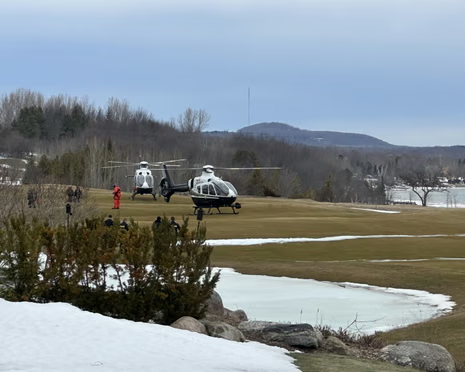
Ontario police responded with urgency, deploying two helicopters and an air ambulance to retrieve the stranded anglers. The rescue operation, which took roughly two hours, began with the trio isolated on a smaller ice fragment before proceeding to collect the rest of the group. Authorities emphasized that warm weather can destabilize large ice formations unpredictably, making even familiar areas hazardous. Constable Craig Soldan of Huron County Ontario Provincial Police warned residents to avoid all ice, particularly near water edges, rivers, and ponds, stating, “No ice is safe ice.”
The incident has sparked a broader discussion about safety during recreational ice fishing. Experienced fishers like Fox often rely on visual cues, ice thickness readings, and weather forecasts to make informed decisions, yet experts caution that sudden temperature fluctuations can render ice unstable in minutes. Lake Huron’s vast surface amplifies this danger, as wind and currents can accelerate ice separation without warning. This recent event underscores the need for heightened awareness and caution, even among those familiar with winter fishing practices.
Social media played a critical role in raising awareness during the rescue. Videos shared by Fox and other participants captured the slow but terrifying movement of the ice, allowing authorities to understand the scope of the emergency before arrival. Online platforms also became channels for safety reminders, urging recreational anglers to reconsider venturing onto frozen lakes during periods of unseasonable warmth. Experts emphasize that relying solely on personal judgment or past experience can be perilous, given that ice stability varies dramatically with temperature, wind, and water currents.
Survivors recounted their ordeal with vivid detail, highlighting both fear and relief. Many described the chilling isolation on the drifting ice and the emotional strain of witnessing friends and family confront potential death. Moments of vulnerability, such as hearing strong winds prevent initial rescue attempts, left lasting psychological impressions. The rescue itself, though successful, demonstrated the complexity and risk of retrieving multiple individuals from unstable ice. Helicopters had to navigate gusty conditions while picking up stranded fishers from separate ice fragments, illustrating the logistical challenges of such operations.
Fox emphasized that preparation and situational awareness were vital in mitigating the danger. The anglers had planned their day based on recent weather trends and ice conditions, yet nature’s unpredictability rendered these precautions only partially effective. Constable Soldan reinforced this, stating that no ice should be presumed safe, especially during periods of thaw or sudden warming. The advice extends beyond Lake Huron, encompassing rivers, ponds, and smaller bodies of water where ice may detach unexpectedly, potentially stranding individuals far from safety.
The incident serves as a stark reminder of how quickly a recreational activity can become life-threatening. Ice fishing remains a popular pastime across Canada and parts of the northern United States, drawing enthusiasts to frozen lakes each winter. However, authorities consistently advise that ice conditions be assessed carefully, with attention to temperature fluctuations, water currents, and wind patterns. The Lake Huron event may prompt renewed safety campaigns, as local residents and authorities work to prevent similar emergencies in future seasons.
Experts stress that even seasoned anglers should carry safety equipment, including flotation suits, ice picks, and communication devices, to enhance survival odds in case of unexpected ice movement. Awareness of local ice conditions, adherence to official warnings, and swift action in emergencies are essential. The Lake Huron rescue underscores the importance of responding to early signs of ice instability, such as cracking sounds, separation from the shoreline, and drifting movements detectable through electronic monitoring.
In reflecting on the ordeal, survivors expressed gratitude for the timely intervention by Ontario police and medical personnel. The successful extraction of all 23 stranded individuals highlights the importance of coordinated emergency responses in mitigating potentially fatal outcomes. The incident has already led to increased community discussions about winter safety, with anglers and authorities sharing lessons learned to promote caution on frozen waterways.
The dramatic events on Lake Huron are a testament to the unpredictable power of nature and the thin line between recreation and survival. The fishers’ experience demonstrates that even well-prepared individuals can encounter unforeseen hazards, reinforcing the need for ongoing education, awareness, and respect for environmental conditions. As spring approaches and ice continues to melt across Ontario, local authorities urge the public to stay vigilant and prioritize safety above all, acknowledging that no ice can be guaranteed safe for recreational use.

The Lake Huron rescue also highlights the role of social media in real-time crisis communication. Immediate sharing of locations, ice conditions, and warnings allowed for faster coordination with emergency services. This digital immediacy complements traditional monitoring methods, providing an extra layer of situational awareness for those venturing onto potentially unstable ice. Survivors and officials alike agree that combining preparation, technology, and rapid response measures can save lives when unpredictable conditions arise.
Ultimately, the story serves as a cautionary tale for anyone considering ice-based activities. It emphasizes the delicate balance between human enjoyment of natural resources and the inherent risks posed by environmental unpredictability. Through the lens of this rescue, communities gain a renewed understanding of the importance of vigilance, safety protocols, and swift emergency interventions when ice shelves detach unexpectedly.
The Lake Huron incident has left a lasting impression on both survivors and local authorities, reminding everyone that winter recreation carries inherent risks. From the terrifying isolation on drifting ice to the eventual relief brought by the helicopter rescue, the experience reinforces the critical need for preparation, awareness, and respect for nature’s unpredictable forces. As authorities continue to warn against venturing onto thawing ice, the lessons of this dramatic event will influence recreational behaviour across the region for years to come.
Related News:
 “Enough is Enough”: Local MP Vows to Fight Rainham Quarry Plans
 Man Escapes as Giant Hole Swallows Boats on Shropshire Canal
 Heat, Drought and Fire Push UK Nature to Breaking Point in 2025
 Norfolk Coastal Graves at Risk as Erosion Deepens Family Anguish
 Record Wildfires Sweep England Amid Hottest 2025 Summer
 Winter plant bloom signals climate breakdown in UK
 Dog Food Emissions: 1% of UK Greenhouse Gas Revealed
 Local Fish Could Boost UK Health and Economy Significantly
 World’s richest 1% consume annual emissions in just ten days
 Storm Goretti leaves Cornwall homes without power
 Robo-Vaccination Could Transform Fight Against Bovine TB
 Kent Residents Continue Facing Water Supply Disruptions
 Water firms may avoid fines under UK water reform plan
 No Gas Boiler Ban as UK Warm Homes Plan Backs Heat Pumps
 Judi Dench Champions Fight to Save London’s Green Spaces
 Red Meat Politics: Farage and Truss’ Quiet Mayfair Lunch
 UK joins North Sea wind grid pact with nine European nations
 Devon hosts first high-density hydro power system
 Storm Chandra floods Somerset, triggers major incident declaration
 Storm Chandra flooding leaves England on high alert
 UK Pfas Action Plan Faces Criticism From Environmentalists
 Wigan Dump Crisis Sparks Health and Safety Alarm
 Fish disco plan could save 90% of fish at Hinkley C
 Flood risk homes surge across England builds
 Deer Shooting England: New Plan to Protect Woods
 Illegal Waste Dumping: New Drone Unit Launched
 Group Expands Legal Claim Over South West Water Pollution
 Scotland’s Climate Plans Face Scrutiny Over ‘Science Fiction’ Targets
 Wood burner legal threats spark council row
 South East Water Fined £22.5m for Repeated Supply Failures
 Yorkshire Water Funding Sparks Debate Amid Fines and Pay Row
 Net Zero Cheaper Than One Fossil Fuel Crisis, UK Told
 Welsh Water Faces £44.7m Enforcement Over Sewage Breaches
 London Considers New SUV Charges to Improve Road Safety
 New £10bn rescue plan offered for Thames Water
 MPs Slam Agency Over Failing Fight Against Waste Dumping
 Tropical Cyclone Narelle Batters the Western Australian Coast
 RNLI Beach Rescues Surge as Coastal Popularity Hits New High
 UK Records Earliest Spring as Nature Awakens Fast
 RSPB Urges Summer Bird Feeder Removal to Curb Disease
 Britain Facing Sharp Decline in Rare Butterfly Species
 Toxic ‘Forever Chemicals’ Threaten Southern English Coast
 Toxic Flea Treatments Devastating UK Rivers and Wildlife
 UK Faces Mass Water Shortages by 2055, Lords Warn
 Saving Our Lost Rainforests: The Battle for Dartmoor
 Outrage in Surrey as Vital Nesting Colony of Endangered Swifts is Entirely Demolished
 The Hidden Cost of Our Oceans
 Whitehall Steps In: The Battle Over Thames Water Deepens
 UK Seas Face Extreme Heatwave as Global Temperatures Surge
 UK Pets Face Heatstroke Risks Even While Resting Indoors
 New Debt Limits Proposed for England’s Water Sector
 South East Water Faces £30.5m Penalty for Supply Failures
 Three-Quarters of England’s Riverbanks Still Off Limits
 UK House Price Growth Slows as Buyers Exercise Caution Ahead of Autumn Budget
 Massive London Poundland Fire Engulfs High Street
 Paedophile Singer Ian Watkins Dies After Prison Attack
 UK border officers deployed to Balkans to tackle migrant smuggling
 UK MPs warn of repeat riots over online misinformation
 Giuffre’s bombshell memoir names Prince Andrew 88 times in shocking revelations
 M&S and Morrisons Lead Christmas Supermarket Taste Test
 Reeves Faces Setback as Labour May Miss Homes Target
 Kate Winslet to Narrate Film Highlighting King’s Environmental Mission
 Trump’s UK Ambassador Urges North Sea Drilling to Strengthen US Ties
 UK Bans Fake Numbers: Scammers Lose Their Trick
 Millionaires group urge Reeves to introduce wealth tax to ‘lift kids out of poverty’
 Reeves rejects £1bn plea for NHS redundancy payouts
 PM Condemns Leaks, Vows Loyalty to Ministers and Stability
 Inside the Helpline Protecting Missing Children in the UK
 PlayStation PS5 Deals Hit Lowest Prices Ahead of Black Friday
 National Energy Grant Proposed to Slash UK Household Bills
 Medellín’s Green Revolution: A Global Climate Blueprint
 Urban Flood Crisis: A Growing Threat to English Homes
 New AI Tool To Target Obesity Risk And Transform NHS Care
 Greens Face Internal Row Over Antisemitism Claims
 Met Officers Probed Over Al Fayed Abuse Allegations
 Reform UK Faces Crisis as Newly Elected Councillors Resign
 Starmer Strikes Back as 100 MPs Sign Support Pledge
 UK Firms Freeze Spending as Iran Conflict Bites
 Reeves to Fast-Track Clean Energy Amid Iran Crisis
 The Battle for Wembley Sparking Unprecedented Legal Warfare