Published: 10 March 2026. The English Chronicle Desk. The English Chronicle Online.
The unfolding Iran war is reshaping global security perceptions at a moment of rising geopolitical tensions. The conflict triggered by former US president Donald Trump’s military campaign against Iran has sent shockwaves that stretch far beyond the Middle East, particularly influencing how North Korea views its own security and nuclear aspirations. Leaders in Pyongyang appear to see nuclear weapons not as an optional deterrent but as an absolute shield against what they interpret as existential threats.
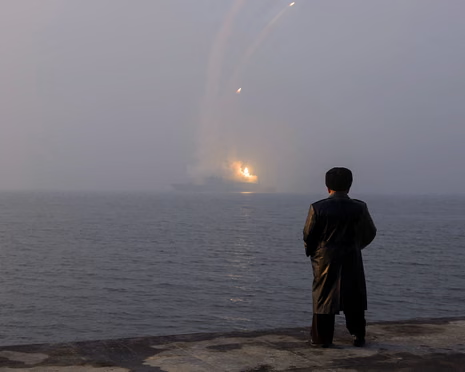
In recent days, North Korean leader Kim Jong‑un’s public commentary struck a tone that went beyond mere celebration of a naval missile test. His remarks linked military prowess with the broader context of the Iran conflict and served as a stark reminder that Pyongyang’s nuclear deterrence doctrine is now deeply woven into its survival strategy. Analysts say the devastation wrought by a US‑led campaign against Tehran reinforces the North Korean perception of vulnerability and validates its long‑standing belief that nuclear arms guarantee regime security.
The Iran war began when the United States and Israel launched a series of coordinated strikes against Iranian military and nuclear infrastructure, wrecking key installations and igniting a broader conflict that continues to draw international scrutiny. Attacks have devastated Iranian forces and killed prominent figures, and Tehran has responded with retaliatory missile and drone assaults targeting US bases and allied positions. The spectre of prolonged war has unsettled global markets and catalysed fears of energy disruptions as oil supply routes through critical chokepoints like the Strait of Hormuz remain threatened.

For decades, North Korea’s nuclear programme has been a focal point of international concern, with Pyongyang conducting its first nuclear test in 2006 and subsequent tests culminating in 2017. Despite stringent UN sanctions and diplomatic efforts to halt its weapons development, the regime has persisted, advancing both plutonium and uranium enrichment efforts. Globally respected research institutions estimate that North Korea has stockpiled around fifty warheads, with potential capabilities to manufacture dozens more given its accumulation of fissile materials.
Kim’s rhetoric following his military demonstration made clear that the nuclear issue remains central to his regime’s self‑perception. Speaking after a test launch from the destroyer Choe Hyon, he highlighted nuclear armament as evidence of “satisfactory progress,” signalling that his strategic posture is as much about political messaging as it is about military hardware. His words appear calibrated to project strength both domestically and internationally, underscoring the enduring belief within Pyongyang that nuclear deterrence is essential to forestall interventions from external powers.
North Korea’s foreign ministry has been vocal in its criticism of the US‑Israeli campaign in Iran, branding the strikes as illegal aggression and evidence of hegemonic intent. The tone of Pyongyang’s statements suggests a broader strategy of aligning rhetorically with states opposed to Washington’s military actions, while at the same time keeping diplomatic avenues open should conditions change. Pyongyang has hinted that resuming nuclear negotiations with the United States might be possible, but such talks would require a fundamental shift in Washington’s stance on recognising North Korea as a nuclear state.
This nuanced posture raises questions about whether North Korea will pursue diplomacy or further entrench itself behind its nuclear shield. Some Western analysts argue that President Trump’s willingness to use force as leverage makes Pyongyang even more cautious about engaging in negotiations. They contend that Kim may view Washington’s military actions as a signal that nuclear weapons are the only reliable guarantee against regime overthrow.
Yet there are contrasting views that Kim’s calculation might evolve if he perceives a personal rapport with Trump. Speculation has grown that the two leaders could meet when Trump visits China later this month, offering a rare diplomatic opening. Proponents of this view suggest that North Korea’s extensive network of nuclear sites makes complete denuclearisation unfeasible, but that mutual concessions — including security guarantees from Washington — could form the basis of renewed dialogue.
Despite these diplomatic musings, the reality remains that North Korea’s nuclear programme has become deeply institutionalised. Across the isolated state, a range of facilities support the development, testing, and refinement of nuclear warheads and delivery systems. This entrenched infrastructure means denuclearisation would require unprecedented transparency and trust — conditions that have eluded past negotiations and remain unlikely without a dramatic shift in incentives.
The looming Iran conflict has also impacted the broader security architecture in East Asia. South Korea and Japan have voiced deep concerns about the redeployment of US air defence assets to the Middle East, highlighting the potential gap in deterrence against North Korea and other regional threats. Seoul, which depends heavily on US military support, has protested such shifts even as Washington asserts that its commitments in Asia remain unchanged.

Closer to Pyongyang, the regime’s leadership has used these developments to justify intensifying its own military preparedness. Kim’s sister and senior political figure, Kim Yo‑jong, lambasted joint US‑South Korea drills as provocative and aggressive, casting them as evidence that Washington continues to pursue hostile intentions. Her statements decried what Pyongyang sees as rehearsals for invasion, further validating the regime’s narrative that only nuclear capability can deter existential threats.
The dynamic forged by the Iran war is therefore not isolated to Middle Eastern battlefields. It feeds directly into North Korea’s strategic calculus, validating the regime’s insistence on nuclear deterrence while complicating international efforts to negotiate an end to its weapons programme. For Kim and his inner circle, the lesson of the Iran war appears clear: nuclear weapons deter external intervention, even from powerful adversaries.
As diplomatic engines churn and global leaders assess next steps, the impact of the Iran conflict on the Korean peninsula will continue to shape security debates. Whether it leads to renewed talks or entrenches Pyongyang’s nuclear posture further, the resonance of war reverberates in capitals far beyond Tehran. The world watches closely as states adjust to a reality in which nuclear weapons remain at the centre of strategic survival narratives.
Related News:
 British skier killed in La Plagne avalanche tragedy
 Mandelson apologises over Epstein ties after public scrutiny
 Friedman Uninvited From 2024 Adelaide Writers’ Week
 Starmer Challenges US Over Controversial Greenland Deal
 Spoof “Make America Go Away” Caps Rally Denmark Over Greenland
 Starmer Resists Matching Trump Amid Greenland Tensions
 Silence and Unity Mark Bondi Terror Attack Memorial
 India-EU Free Trade Deal Marks Historic Economic Shift
 Thousands Protest ICE Operations in Nationwide US Day of Action
 Concerns rise for Canberra boy amid Iran detention fears
 Anthony Albanese Must Uphold Rights for All Australians
 UK suspends study visas for four nations to curb asylum
 New Zealand Covid Response Praised Despite Lingering Scars
 Abramovich Chelsea Sale Cash Faces Jersey Probe
 Starmer Praised for Stance on Trump and Iran Conflict
 UK Ministers Signal Strategic Independence From Trump Demands
 African World Cup Fans Face $15,000 Entry Bond Fee
 Police Seek Immunity in Indigenous Custody Death Case
 Farage Shuns Truss as US Right-Wing Roadshow Hits London
 Trump Slams Europe as Transatlantic Tensions Boil Over
 Spain Faces Backlash Over Xenophobic Chants in Egypt Draw
 Trump Facing Backlash Over Firing of Cabinet Women
 The Price of Hubris: Trump, Netanyahu, and the ‘Easy’ War
 Trump and Tehran Find Common Ground in Landmark Ceasefire
 Own an Entire Australian Town for the Price of a UK Flat
 Melania Trump Denies Ties to Epstein and Ghislaine Maxwell
 Reeves Slams Trump Over Iran War Lack Of Exit Plan
 Kyiv and Odesa Mourn After Deadly Wave of Russian Strikes
 Norway’s Telenor Faces Lawsuit Over Myanmar Data Breach
 Strait of Hormuz Status Uncertain Despite Iran’s Claims
 Trump’s Presidency: A House of Cards Collapsing?
 US Forces Seize Iranian Ship Near Hormuz Blockade
 Trump Starts $166bn Tariff Refund Process
 Israeli Soldiers Jailed Over Vandalism of Lebanese Statue
 Investigation: Offshore Loans and Sanctions
 Prominent Voices Challenge Palestine Action Ban
 Cross-Border Crisis Shatters Fragile Afghan Peace
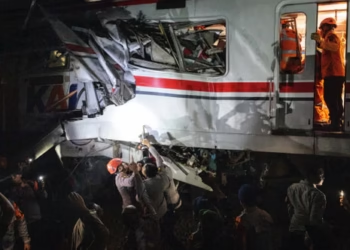 Tragedy Near Jakarta: Train Collision Leaves 14 Dead
 NSW Police Urged Victim to Abandon Antisemitic Case
 The Burning Lens: An Iranian Artist’s Visual Resistance
 FIFA Confirms Global Ban for Benfica Star Prestianni
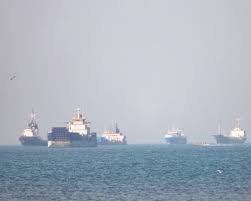 Tensions Surge in the Gulf as Ceasefire Wobbles
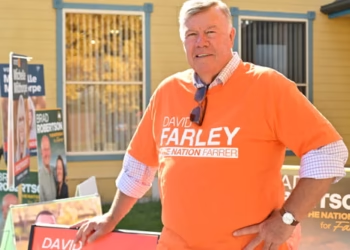 One Nation Candidate’s Surprising Ties to Independents
 New South Wales Wetland Rescue Legislation Passes
 US and Mexico Face Heatwave as Floods Batter South Africa
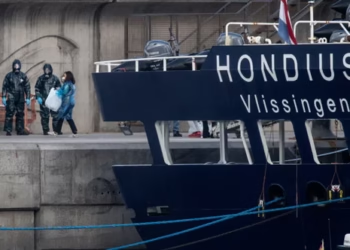 French Patient Told Hantavirus Was Just Anxiety
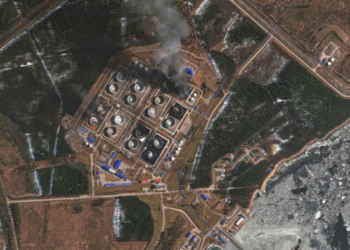 Putin Signals War End as Russian Momentum Stalls
 Romania’s Judicial Crisis: A System Under Siege
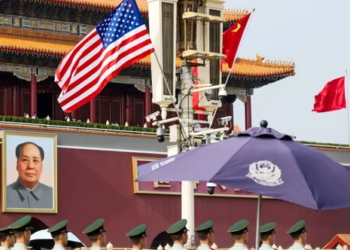 Scepticism and tight security as Beijing braces for Trump
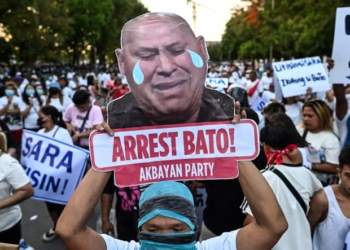 Philippine Senator Flees After Days Under Senate Siege
 Big Tobacco Under Fire Over Controversial New Ad Campaign
 Court Upholds Landmark Win for Transgender Rights
 Fragile Truce Shattered as Violence Escapes Diplomatic Control
 Secrecy Down Under: Albanese Faces FoI Scandal
 Tony Abbott Returns as New Liberal Party President
 Discontent grows around Putin amid war strain
 Trump Diplomacy Faces Hurdles from Tehran to Tbilisi
 Teaching Machines Right From Wrong in the Digital Age
 Oman Defies US Pressure Over Strategic Strait of Hormuz
 Ex-CIA Agent Accused of $40m Gold Theft and Fake Spy Unit
 Aukus Deal Facing Fierce Backing and Historic Criticism
 Thai Princess Bajrakitiyabha Passes Away at 47
 Tragic Loss of Australian Sprinter Jemma Stapleton
 Firearm Fine for Missing Boy’s Grandmother
 Trump Urged to Condemn UFC Fighter Over Obama Slurs
 US Democratic Crisis Deepens as Trump Limits Mail Voting
 Russian Tanker Captain Remanded in UK Court After Channel Seizure
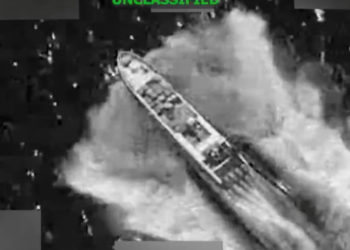 US Military Pacific Boat Strike Kills Three People
 US Battles Auction of Titanic Artifacts
 Scouts Introduce Badges For AI And Digital Skills
 France Dominate Sweden as Deschamps’ New Era Takes Shape
 Trump’s Mount Rushmore Speech: A Divisive Anniversary
 Trump Swaps Planes Amid Iran Tensions
 Rotterdam Museum Honours Artist With Peanut Butter Floor
 Bangkok Nightclub Blaze Claims 30 Lives Amid Negligence Probe
 Yemen Accuses Iran of Violating National Sovereignty
 Japan Bear Hunt: Serial Fridge Raider Sparks Panic
 Houthis Strike Saudi Arabia as Middle East Tensions Rise
 Former Diplomats Urge UK and France to Act on Palestine
 Trump Hardens Canada Trade Stance as Talks Stall