Published: 13 March 2026. The English Chronicle Desk. The English Chronicle Online.
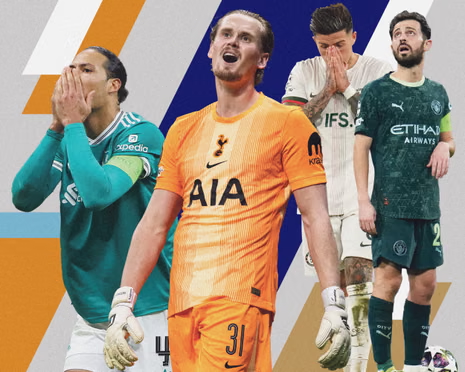
The European football landscape shifted dramatically this week as the Premier League faced a staggering Champions League crisis during the knockout stages. Fans across the United Kingdom watched in disbelief as their favorite teams struggled against continental giants. Six English clubs entered the last-sixteen ties with high hopes and even higher valuations. By Wednesday night, the collective result was four painful defeats and two tense draws. Three of those losses were semi-thrashings that saw English nets ripple three times. Only Newcastle United showed genuine grit against top-tier opponents despite their difficult result. Arsenal and Liverpool now remain the only sides favored to reach the quarters. This collapse has triggered a wave of mockery across social media platforms today. Pundits are already questioning if the English top flight is truly elite. Some headlines suggest a “Euro Meltdown” has finally exposed a massive systemic rot. Even the most loyal supporters are starting to feel a sense of dread. The coefficient points are currently safe, but the pride of England is hurting.
There is an obvious counterpoint to this gloom as we reach half-time. Manchester City and Chelsea are both capable of scoring three goals at home. Newcastle could still pull off a shock result at the Camp Nou soon. Even Tottenham might find a way to exploit the flaws of their rivals. Football is increasingly prone to wild swings that defy any logical pre-match analysis. The Premier League will likely still see two teams in the final eight. This outcome seems objectively reasonable given the scale of the entire competition. The Champions League features fifty-five member nations fighting for the same trophy. Having six English teams in the quarter-finals would honestly feel quite boring. Robust competition is what makes these midweek nights under the lights so special. The current sense of failure springs solely from the vast world of finance. The Premier League generates roughly £6.5bn in annual revenue every single year. This figure is almost twice the total revenue seen in La Liga. Six of the world’s ten richest football clubs reside in England currently.

This wealth is often used to aggressively diminish other European domestic leagues. Winning against the very best teams remains a difficult task for anyone. Real Madrid, Barcelona, and Bayern Munich still top the global rich list. Structurally, English clubs should expect to dominate the later knockout rounds easily. They usually walk the UEFA coefficient race and secure more tournament seats. However, this specific iteration of the Premier League feels somewhat middling today. The general standard remains high because so much global talent is assembled. Even a poorly built team of stars is still a dangerous opponent. Yet, the league lacks the exhilarating peaks seen in previous golden eras. There are no self-evidently elite or generational acts of team-building currently. No shadows of true greatness seem to be born in these stadiums. This issue is deeply structural and reflects how these clubs are managed. Very few English sides give the impression of running at full capacity. The league is defined by unregulated ownership and incoherent spending sprees lately.
A basic lack of patience has harmed the native coaching culture significantly. Teams are often built like a sandwich made by hurling random ingredients. You might see truffle shavings and elite baguettes flying across the kitchen. Discarded Iberico ham and aged sheep cheese end up on the floor. Chelsea serves as the perfect example of this chaotic and expensive approach. They look laden with talent one minute and laughably brittle the next. There is a basic creepiness about how this version of Chelsea functions. They have the same colors and songs but feel like a carousel. It is a real-time experiment in splurging billions on human talent units. It is hardly surprising when these constructs fall short against organized rivals. European neighbors will celebrate this English struggle with a great deal of passion. To many outsiders, the Premier League is essentially a meaningless marketing machine. It represents effective salesmanship rather than a deep-rooted sporting culture lately. A conglomeration of shell companies cannot replace a genuine footballing soul.
Buying talented people and divvying out laundry is not a true culture. No identifiable Premier League tactics exist beyond a borrowed model of Pep-ball. There is only a fading folk memory of traditional power and pace. The league is a fine piece of staging for a global audience. But who does this spectacle actually satisfy or vindicate in the end? How much is English football contributing beyond stadiums and heritage brands today? Very little is being offered in terms of homegrown stars or expertise. In matches played this week, English-reared players were a clear minority. Only Newcastle started ten Englishmen to match Barcelona’s eleven Spanish-born starters. This reality is where the World Cup starts to cast a shadow. The idea of a “golden generation” of English talent is often overblown. England struggles in tournaments because the structure fails to nurture elite players. When it does produce talent, it happens haphazardly without a clear template. There is still no definitive English way of playing the beautiful game.

The Premier League simply buys what it needs rather than building it. Nations that actually win trophies express something about their underlying structures. Even the most chaotic Spanish clubs stick to a defined playing culture. They produce a backbone for a coherent national team every single cycle. It is objectively good for football that other leagues can compete. Perhaps the English sides are not the “good guys” in this story. The real crisis would be if money alone guaranteed every single victory. If the league falls short, it might be forced to improve. It could insist on stable ownership and sensible spending for once. It might even try to nurse its own unique footballing culture. Of course, that is likely a joke for the distant future. The league will probably just buy more players and lure coaches. Drink in the chaos while you can before the money returns. The Premier League will be coming for the rest of Europe soon. This Champions League crisis might just be a very brief moment.
Statistical reality highlights the gap between financial power and on-field national success. Over the last decade, England has produced fewer top-tier domestic coaches. Only about 28% of starting players in the league are English-qualified. In contrast, La Liga maintains a domestic player rate of nearly 60%. This disparity explains why the national team often feels like a stranger. The wealth of the league has created a gilded cage for talent. Players earn more staying at home than testing themselves in foreign leagues. This isolationism breeds a tactical stagnation that Europe is currently exploiting well. The current Champions League crisis is a mirror held to these flaws. If the trend continues, the dominance of English football may truly fade. Fans are demanding a return to tactical innovation and grassroots development. Whether the billionaires in charge are listening remains a very open question. For now, the continent enjoys the sight of the giant stumbling. The next week of fixtures will determine if this is a blip. Or, it could be the start of a long decline.
Related News:
 Granit Xhaka Rescue Earns Everton Draw at Sunderland
 Bellingham has ‘the edge’ among England No 10s
 Man City Masterclass on Guardiola’s Milestone Day Exposes Liverpool Woes
 VAR Must Rein Its Neck In to Save Football’s Spirit
 Mary Earps’s Manchester United Return Faces Mixed Reception
 UK and Ireland Announce Venues for Euro 2028 Tournament
 Saka Solidifies Role as Tuchel’s Key England Lieutenant
 Former Lion Heskey Warns of Shortage of England Strikers
 Tiny Curacao Makes History as Smallest Nation to Reach World Cup
 Haiti Qualifies for World Cup Despite Coach Never Visiting Country
 Australia Face Big Changes as Cummins and Lyon Ruled Out of Ashes
 Van de Ven Tackle Leaves Isak with Fractured Leg
 ECB powerless to halt England’s recurring Ashes failures
 Stokes urges empathy for England players amid Ashes struggles
 Aston Villa Remain Arsenal’s Key Obstacle in Title Pursuit
 Salah Shines as Egypt Knock Out Ivory Coast at Afcon
 Raphinha doubles up as Barcelona beat Real Madrid in Super Cup
 Xabi Alonso leaves Real Madrid, Arbeloa Takes Over
 Maya Joint stunned by Valentová in Australian Open upset
 Chelsea warn fans of danger in Naples after hospital incidents
 Liverpool Chase Champions Glory With Stunning Qarabag Victory
 Carlos Alcaraz Triumphs Over Zverev in Five-Set Australian Open Epic
 Ben Stokes injury joke after brutal ball strike
 Wrestler at 60: A Powerful New Start in the Ring
 Arsenal blow lead as Arteta rues Wolves draw
 England v Ireland: Scrum Battle Takes Centre Stage
 BBC World Cup Presenting Duties Shared Among Trio
 Craig Tiley Leaves Australian Open Legacy
 English Cricket Faces Moral Crisis Over Indian Investment
 Hudson-Odoi Sends Nottingham Forest Into Europa Last 16
 Buttler Eyes Vital Run Surge as England Face New Zealand
 World Cup Drinks Breaks Could Bring ITV Ad Debate
 Saka criticism response: Arsenal star dismisses outside noise
 Spurs Coach Defends Early Kinsky Substitution at Atlético
 Abramovich Chelsea Sale Cash Faces Jersey Probe
 African World Cup Fans Face $15,000 Entry Bond Fee
 Roy Hodgson Returns to Bristol City in Sensational Move
 Eddie Howe Faces Seven Game Test to Secure Newcastle Future
 ECB Faces Backlash Over Disability Premier League Inclusion
 Brighton Stun Arsenal as Liverpool Edge Past Charlton
 Maguire Commits Future to Manchester United with New Deal
 Can De Zerbi Restore Belief to Save Spurs From the Drop?
 Robots Outpace Humans in Beijing Half-Marathon
 Gianluigi Buffon: Reflections on a Legendary Career
 Ashley Cole: Finding His Voice and Vision in Italy
 A Nine-Goal Thriller Redefines European Football Brilliance
 George North Announces Retirement From Rugby
 $13bn World Cup Set to Break All Revenue Records
 Disney+ Wins Champions League Rights in Key Markets
 FIFA Confirms Global Ban for Benfica Star Prestianni
 The Global Battle for Control Over the Women’s Game
 Fernandes Equals Assist Record as United Secure Third
 Bracing for the Cherries: Guardiola Likens Vital Bournemouth Trip to the Dentist
 De Zerbi Rallies Spurs To Fight Relegation Threat
 The Battle for Wembley Sparking Unprecedented Legal Warfare
 Chasing Glory: The Quest for a New World Cup Champion
 Tuchel Defends Tough England Squad Decisions
 Farewell to an Icon: Pep Guardiola to Exit Manchester City
 Chasing Paris Glory Amid Familiar Echoes
 Tom Pidcock On Chasing Tadej Pogacar And His Future Ambitions
 Is Ollie Robinson the Chaos English Cricket Needs Today?
 Saka Playing Through Pain As England World Cup Campaign Looms
 Iran Files Official Fifa Complaint Over World Cup Travel
 Women’s T20 World Cup Breaks Records But Gaps Remain
 Serena Williams Returns to Wimbledon Centre Court
 Martinelli Strikes Late as Brazil Edge Past Brave Japan
 Paraguay Shock Germany in Historic Penalty Shootout
 France Dominate Sweden as Deschamps’ New Era Takes Shape
 Mexico World Cup Joy Turns to Tragedy as Two Die in Crowds
 US Advance Past Bosnia in World Cup Thriller
 Kane Saves Tuchel as England Survive Dramatic Exit
 The Stokes Departure: A New Era or a Tactical Mistake?
 Taylor Swift and Travis Kelce Marry at Madison Square Garden
 Trump’s Red-Card Intervention Hurts the US World Cup
 Trump Intervenes in Fifa World Cup Balogun Ban
 NCAA Rules Unchanged After Supreme Court Transgender Ruling
 USA World Cup Heartbreak: Belgium Ends Their Dream
 Mbappé Brilliance Leads France Into Semi-Finals
 Spain’s Superstar Fan: Keyne Yamal Steals the Spotlight
 Lamine Yamal’s Birthday: Football, Fame, and France