Published: 13 March 2026. The English Chronicle Desk. The English Chronicle Online.
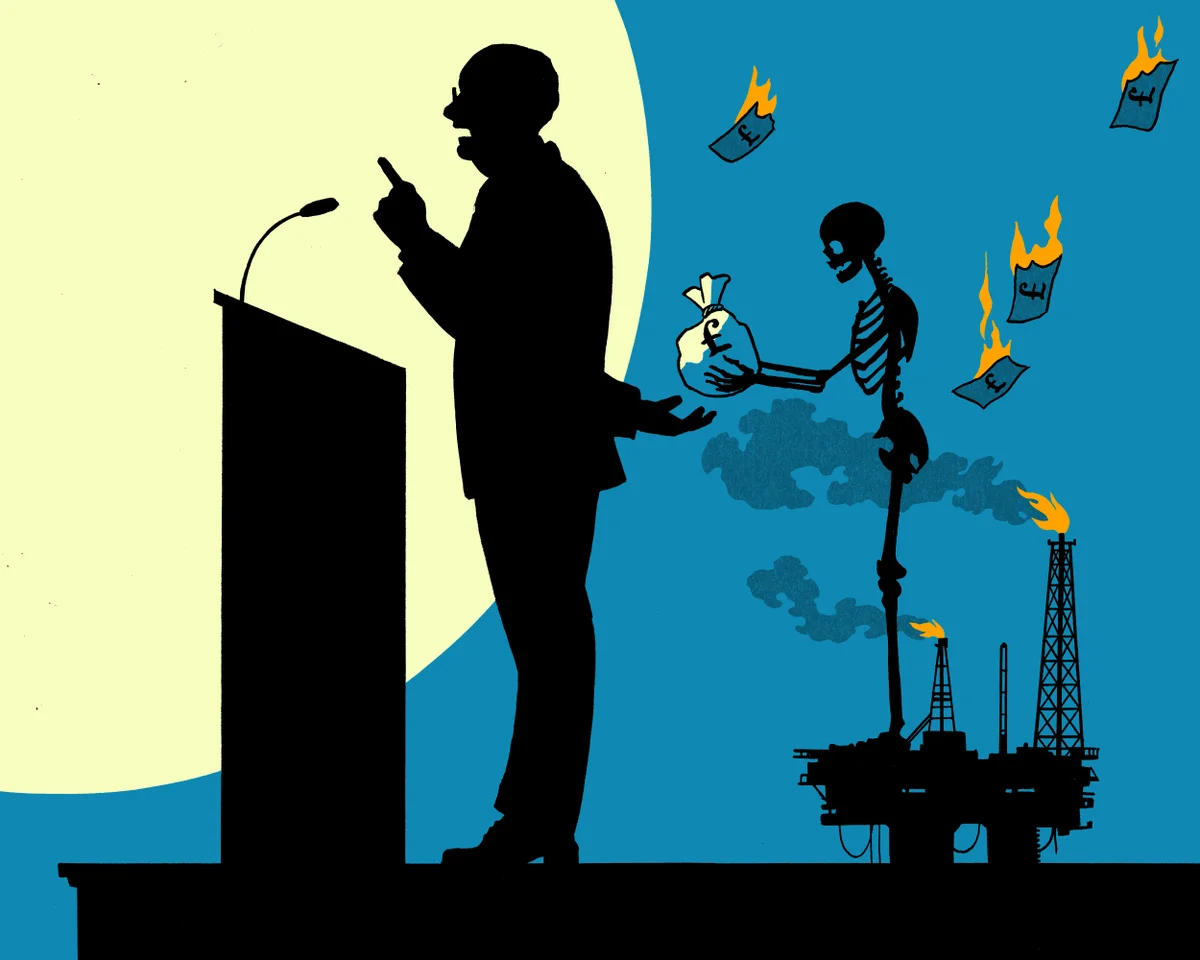
The current atmosphere regarding the British economy is thick with the metaphorical smoke of burning lies and misinformation. As global oil and gas prices reach new heights due to international conflicts, a familiar chorus of voices has emerged. These critics of climate policy have become increasingly loud and aggressive in their assertions. Right-wing politicians and various think tanks claim that energy security will improve if we abandon our green goals. They suggest that our monthly bills will fall if the nation reinvests in North Sea gas. These claims are not merely slightly inaccurate or poorly researched by the authors. They represent the exact opposite of the historical and economic truth of our situation.
Two distinct trends have defined the energy landscape over the past few decades in Britain. The price of electricity has soared recently and contributed heavily to the rising cost of living. Simultaneously, the proportion of electricity we receive from renewable sources has grown quite significantly. Renewables accounted for only three percent in 2000 but have reached forty-seven percent today. Critics point to these two facts and claim one must have caused the other. They argue that more renewable energy leads directly to higher prices for the average consumer. This narrative is frequently pushed by those who wish to maintain the old status quo.

The reality of the situation is that renewables are actually the cheapest power sources available. Electricity produced by wind and solar power costs far less than traditional fossil fuel methods. This trend is not unique to the United Kingdom as it reflects the global market. However, the price of electricity does not simply reflect the mix of its various sources. Instead, the market price is set by the most expensive component needed at that time. That expensive component is almost always fossil gas which remains a very volatile resource. Even before the latest international conflicts, gas prices were reaching astronomical levels for many households.
This pricing paradox happens because of a specific system known as marginal cost pricing. Most of the power coming through our wires is supplied by renewables and nuclear. However, electricity is sold on the wholesale market based on the power source of last resort. This source fills the remaining gaps in supply and is usually expensive fossil gas. While the use of fossil fuels for electricity has fallen significantly, gas still dictates prices. In the United Kingdom, gas sets the price ninety-eight percent of the time for consumers. This figure is much higher than the European average of around thirty-nine percent today.
Other European nations rely on different backup sources like hydroelectricity or nuclear power systems. Better electricity storage would provide our nation with a cheaper and more secure energy source. The government is currently developing these storage solutions despite facing significant fury from the media. Ironically, Norway supplies seventy-six percent of our gas imports but rarely uses it for power. Norway generates most of its electricity through hydropower and wind instead of burning its gas. They treat their fossil fuel trade like a commodity to be sold elsewhere for profit. This allows them to maintain low domestic prices while exporting expensive gas to us.
The Institute of Economic Affairs recently made a claim that highlighted their own logical inconsistencies. They argued that because gas costs the same everywhere, it cannot be driving electricity prices. They noted that industrial electricity in Norway costs less than half of what we pay. The reason for this price gap is simply that Norway scarcely uses gas themselves. It is always wise to check the facts before making such bold public statements. Such inaccuracies abound in the modern political landscape and on various social media platforms. Former officials have claimed that our resilience depends on maximizing extraction from the North Sea.
This claim ignores the fact that the government spent billions protecting the economy recently. That massive expenditure was required specifically because of a spike in global gas prices. True energy resilience would mean moving away from these volatile and expensive international markets entirely. We are often told that extracting more gas at home would make electricity cheaper. This ignores basic economics and how the international energy market actually functions today. The price of gas is set globally and influenced by major suppliers like Iran. Local extraction levels in the North Sea are too small to shift global prices.
The remaining gas reserves in our waters are also very difficult and expensive to extract. The industry depends on a generous tax regime to remain profitable for private companies. These companies do not offer the gas to British customers at any special discounted rates. They sell it on the international market at the highest possible price they can get. Extracting every last bit of gas would not lower the price by a penny. Furthermore, the UK has already used the majority of its accessible North Sea reserves. We cannot rely on a depleting resource to solve a long-term economic pricing crisis.
The money from past extraction could have funded a massive sovereign wealth fund for us. Norway used their profits to fund social care, railways, and other vital public services. Instead, private companies walked away with most of the profits during the era of liberalization. This represents a significant missed opportunity for the British public and our national infrastructure. Similar nonsense was spread last year when the steel industry faced a very difficult period. The press insisted that net zero policies were the primary cause of the industry’s struggles. If they had spoken to industry leaders, they would have heard a different story.
Steel production is actually exempt from most of the environmental levies currently in place. Their problem is the same one that every household in the country faces today. High wholesale prices are responsible for the price disparity between us and our neighbors. While we do pay some green charges, they are a small part of our bills. These charges account for only a tiny fraction of the recent rise in energy costs. Most of the increase is driven by wholesale prices which are dictated by gas. These green levies are actually investments into a future carbon-free and much cheaper grid.

It is important to distinguish between current spending and capital investment for our shared future. Many who obsess over money seem unable or unwilling to make this simple distinction. The reason for this epidemic of misinformation is actually quite simple to understand. Newspaper owners and politicians often belong to a class that wants to control resources. You can control fossil fuels because their reserves are concentrated in specific geographic areas. You cannot easily control or monopolize the wind and the sun in that way. These renewable sources are everywhere and represent a more democratic form of energy production.
Renewables are highly competitive and therefore offer lower profit margins for big energy corporations. Fossil fuels remain uncompetitive but provide incredibly high profits for those who own the resources. Media owners often have significant investments in these traditional and dirty energy sectors today. It is often hard to distinguish between fossil fuel lobbyists and some media outlets. This is because their interests are perfectly aligned against the transition to cleaner power. For the sake of the ultra-rich, the public is being misled about energy. We must demand a system that prioritizes the people over the profits of billionaires.
Related News:
 Trump to Deploy “God Squad” Over Gulf Wildlife Protections
 Capitalism ‘Suicidal’, Warns Petro at Climate Summit
 UPS Cargo Plane Crash in Kentucky Kills Seven
 US private equity set to acquire UK online retailer Very Group
 Switzerland Rolls Out Charm Offensive to Cut Trump’s 39% Tariffs
 Canada Passes Carney’s First Budget in Tight Parliamentary Vote
 India’s Labour Law Overhaul Sparks Fierce Debate
 Carney’s Alberta Pipeline Deal Sparks Immediate Pushback
 ‘Extinct’ Antelope Returns to Sahara, Bringing Hope
 Mark Carney Walks Diplomatic Tightrope on China Visit
 Japan Prepares for Kashiwazaki Restart After Fukushima Legacy
 Wall Street shaken by Trump tariff shock as markets tumble
 Half the World’s Largest Cities Face Rising Water Stress
 The Sound of Mayhem’: Terror and Loss at Mount Maunganui
 ‘Black Tax’: Burden, Pride and Survival for African Workers
 Reindeer Deaths Rise as Finnish Herders Blame Border Wolves
 UK New Car Discounts Near £6,000 as Prices Are Slashed
 Norway’s Petrol Car Sales Hit Record Low Amid EV Surge
 Coles Discounts Under Fire in Federal Court
 Trump Tower Gold Coast to Redefine Skyline
 Rory Amon Trial: Alleged Victim Speaks in Court
 Greenpeace $345m Ruling Sparks Appeal Battle
 Oil Prices Surge as Iran War Jolts Markets
 Gulf shipping crisis as war risk cover pulled
 Global markets face turmoil as Hormuz crisis deepens
 Gulf shipping crisis sparks food price fears
 Oil Prices Surge Above $100 Amid Iran War
 G7 Weighs Emergency Oil Reserves as Prices Surge
 Yorkshire Water Funding Sparks Debate Amid Fines and Pay Row
 Musk’s xAI Permit Sparks Fury Over Power Plant Expansion
 Asia Scrambles to Confront Energy Crisis Amid Iran War
 New £10bn rescue plan offered for Thames Water
 UniCredit’s Bold Move to Reshape European Banking
 RBA rate hike sparks fears amid global crisis
 Oil Slides, Stocks Jump on Trump Peace Signals
 ABC Staff Strike Over Pay and AI Concerns
 Middle East Conflict to Hit UK Economy Hardest
 Australian Growth Slows as Global Inflation Spike Looms
 The Strategic Failure of Trump’s Conflict With Iran
 Trump Threatens Iran With Total Infrastructure Destruction
 Iran Drone Strike Hits Kuwaiti Oil Tanker in Dubai Port
 Russia: The Unforeseen Winner of the Iran Conflict
 Albanese to Address Nation as War Sparks Economic Crisis
 US Senators Slam Ticketmaster Over Sneaky New Fee Hikes
 Apple at 50: Three Products That Changed How We Live
 Tragic End to Outback Search as Floods Claim a Life
 UK Fossil Fuel Expansion Risks Global Climate Collapse
 California fireworks blast: murder charges filed in case
 IMF Warns Iran War Could Spark Deep Global Recession
 Trump Slams UK Ties and Threatens To Rewrite Trade Deal
 Southeast Asia Turns to Russia Amid Energy Crisis
 Ukraine Urges UK to Seize Russian Oil Tankers
 US Calls Australia Media Law “Foreign Extortion”
 Escobar’s Hippos May Be Moved to India Zoo
 UK Firm Faces Backlash Over US Oil Advertising Deals
 $13bn World Cup Set to Break All Revenue Records
 Ukraine strikes Tuapse as oil disaster worsens
 US to Escort Trapped Ships Through the Strait of Hormuz
 Trump approval plunges amid Iran war fears
 Trump Threatens UN Budget Cuts as US Pushes ‘Trade Over Aid’ Agenda
 Norway Doubles Down on Oil and Gas for Europe Energy Security
 US Awaits Iran Reply on New Ceasefire Proposal
 UN Faces Crucial Vote on Landmark ICJ Climate Ruling
 Trump: Preventing Nuclear Iran Is ‘The Only Thing That Matters’
 High Street Crisis: Fears Grow Over Post Office Closures
 Beijing Becomes Centerstage for Global Diplomatic Ballet
 Oil Markets Face ‘Red Zone’ Threat Amid Iran Crisis
 Hormuz Talks Near Critical Stage
 UK Pushes for New EU Goods Trade Deal
 Reeves Fights to Keep Treasury Role Amid Labour Turmoil
 China mine blast death toll rises to 90
 Man killed in shark attack on Great Barrier Reef
 Japan Suffers Plastic Shortage Due to Middle East Crisis
 UK Economy Suffers a Sharp Downturn as Iran Conflict Bites
 Whitehall Steps In: The Battle Over Thames Water Deepens
 China Storms Claim Fifteen Lives in Tragic Surge
 The Carbon Capture Con: Wasted Billions for Taxpayers
 Europe Weighs Hormuz Navigation Fee Plan
 Ukraine Creates Long-Range Strike Command
 Thames Water Future Remains Uncertain Amid Funding Crunch