Published: 16 March 2026. The English Chronicle Desk. The English Chronicle Online.
The US attack on IRIS Dena has ignited serious diplomatic tensions across the Indian Ocean region. Military analysts and regional officials say the strike has unsettled longstanding security assumptions. The incident unfolded in waters far from the Persian Gulf’s active conflict zone.
Just after dawn, Sri Lanka’s maritime rescue coordination centre received a distress signal from sea. Officers quickly confirmed the vessel in trouble lay roughly nineteen nautical miles south of Galle. This position placed the emergency squarely within Sri Lanka’s maritime rescue responsibility zone.
Within minutes, naval authorities launched a search and rescue operation toward the reported location. Two rescue vessels left port quickly, navigating through thick morning mist and heavy waves. Sailors expected to locate a damaged ship calling desperately for urgent assistance.
Instead they encountered an alarming scene drifting across the early morning ocean surface. Oil spread across the water while survivors clung tightly to scattered life rafts. Several bodies floated silently nearby, yet the stricken vessel itself had completely vanished.

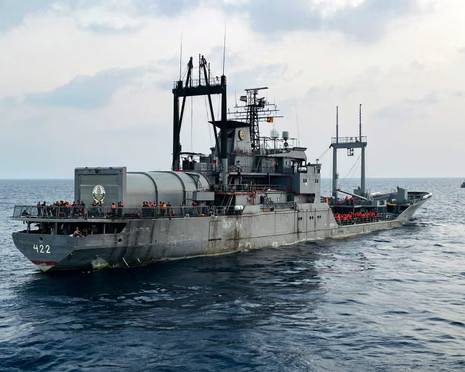
The missing ship was IRIS Dena, an Iranian naval destroyer returning from a regional visit. The vessel had already sunk deep beneath the Indian Ocean seabed before rescuers arrived. Survivors later revealed that the US attack on IRIS Dena occurred suddenly and without warning.
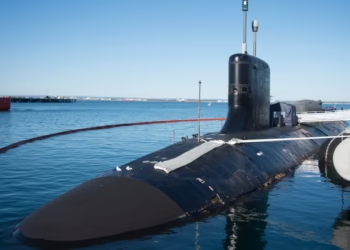
According to military sources, the warship sank in less than three minutes. A Mark 48 torpedo, widely considered the world’s most powerful submarine-launched weapon, struck directly. The torpedo was reportedly fired by the American nuclear submarine USS Charlotte operating nearby.
The devastating strike killed at least eighty-four sailors and naval personnel aboard the vessel. Their remains were repatriated to Iran earlier this week following rescue efforts. The tragedy has intensified debate over wartime rules and the ethics of naval warfare.
The US attack on IRIS Dena occurred over three thousand kilometres from the Persian Gulf. At the time, the Iranian vessel was not engaged in combat operations. Instead it was sailing through international waters after attending a ceremonial naval gathering.
That event was the international fleet review hosted in India’s eastern port city of Visakhapatnam. The maritime gathering brought together naval forces from more than seventy countries. Participating fleets included ships from the United States, Russia, Australia, and Iran.
Fleet reviews are generally celebratory events intended to encourage naval cooperation and dialogue. Officers attend training exercises and cultural exchanges while showcasing national warships. Iran’s presence was considered part of this diplomatic tradition.
However, the strategic environment changed dramatically soon after the fleet review ended. American and Israeli forces launched major airstrikes targeting Iranian military facilities. This escalation marked the beginning of a new and intense regional conflict.
Just days later, the US attack on IRIS Dena brought that conflict into the Indian Ocean. The unexpected strike shocked regional commanders and defence analysts. Many believe the event risks expanding hostilities far beyond the Middle East.
Iran quickly condemned the incident, calling it a grave atrocity and unlawful attack. Tehran insisted the vessel was travelling peacefully toward a friendly port visit. Officials said the ship had no operational role in ongoing military activities.
The United States rejected that interpretation and defended its actions firmly. American defence officials argued the vessel remained a legitimate military target under wartime conditions. Washington claimed Iranian naval assets were being systematically neutralised across the conflict zone.
During a press briefing, defence secretary Pete Hegseth described the attack with stark language. He suggested the Iranian ship believed it was safe until the torpedo strike arrived. His remarks triggered widespread criticism among international observers.
Meanwhile, former Indian naval chief Arun Prakash expressed deep concern over the episode. He acknowledged the strike occurred legally within international waters. Yet he said the circumstances surrounding the attack were deeply troubling.
Prakash argued the United States could have chosen many other opportunities to strike the vessel. The ship’s journey back toward the Persian Gulf provided numerous possible interception points. Instead the attack happened close to South Asian waters.
For India, the US attack on IRIS Dena has raised uncomfortable diplomatic questions. New Delhi has steadily strengthened defence ties with Washington over recent years. These partnerships include joint naval exercises and intelligence sharing arrangements.
Despite this cooperation, Indian officials received no prior warning about the submarine’s operation. Analysts say this lack of communication embarrassed the Indian government significantly. It also undermined perceptions of India’s influence across the Indian Ocean.
Defence analyst Sushant Singh described the incident as humiliating for New Delhi’s leadership. He argued the strike signalled Washington did not consider Indian sensitivities. That perception could weaken regional confidence in India’s security role.
Another critical question concerns the presence of an American submarine so near Indian territory. Some experts believe such activity should have triggered regional surveillance detection systems. The failure to detect the submarine has raised security concerns.
Retired vice admiral Shekhar Sinha admitted the incident deeply unsettled him. He had personally attended the Visakhapatnam fleet review where Iranian sailors participated proudly. Only days later many of those same sailors were dead.
Beyond strategic debates, humanitarian questions have also emerged following the tragedy. Some naval experts say the attacking submarine should have assisted survivors after the strike. International conventions generally encourage rescuing sailors whenever possible.
However, submarines conducting covert missions face unique operational limitations after launching weapons. Surfacing could expose them to enemy detection and potential retaliation. Even so, critics argue that moral obligations should still guide wartime conduct.
Sri Lanka’s government has emphasised that its response prioritised humanitarian assistance. Naval forces recovered survivors and transported injured sailors to safety. Officials insisted the island nation had no involvement in the attack itself.
Nevertheless, controversy surrounds delays involving docking permission for the Iranian flotilla. Iran had requested a routine port visit in Sri Lanka after the fleet review concluded. Administrative hesitation left the warships waiting offshore for several hours.
During that period, the ships remained exposed in international waters south of the island. Some critics believe the delay indirectly created vulnerability before the torpedo strike occurred. Sri Lankan authorities have denied responsibility for the outcome.

Regional observers say the US attack on IRIS Dena has broader geopolitical implications. The Indian Ocean remains one of the world’s most strategically important maritime corridors. Major powers increasingly compete for influence across these waters.
India has attempted to position itself as the principal security guardian of this vast region. China’s expanding naval presence has already intensified strategic competition. Now the latest crisis may challenge India’s claim to regional leadership.
For many analysts, the episode represents a harsh reminder of modern naval warfare realities. Submarines can operate silently across enormous distances without detection. When conflict erupts, even distant seas may suddenly become battlegrounds.
The tragic sinking of IRIS Dena therefore resonates far beyond a single military incident. It highlights fragile alliances, shifting geopolitical balances, and uncertain maritime rules. Above all, it underscores the human cost carried by sailors caught within global rivalries.
As investigations and diplomatic discussions continue, the world watches developments carefully. The consequences of the US attack on IRIS Dena may shape regional security policies for years ahead.
Related News:
 BBC to Apologise Over Edited Trump Speech Amid Backlash
 Britain deploys RAF specialists to assist Belgium with drone threats
 Greene Pushes Epstein Files Amid Trump Fallout
 December Run-Off in Chile as Election Produces No Winner
 Zelenskyy Signs Fighter Jet Deal Amid Russian Drone Attacks
 Canada Passes Carney’s First Budget in Tight Parliamentary Vote
 Shadow Fleet at Sea: Europe’s Battle Against Illicit Oil Shipping
 Tiny Curacao Makes History as Smallest Nation to Reach World Cup
 Deadly Russian Strikes Hit Western Ukraine, 20 Killed in Ternopil
 Ukraine Peace Plan: Zelensky Ready for Dialogue
 Royal Navy Shadows Russian Warships Entering the Channel
 US Suspends Afghan Immigration After White House Shooting
 Georgians Defy Government Crackdown After Year of Protests
 Tokyo court rules Japan’s same-sex marriage ban constitutional
 ‘Extinct’ Antelope Returns to Sahara, Bringing Hope
 American Mother Extradited From UK to U.S. on Murder Charges
 Irish Beach Tragedy: Irish Drown at Whitehaven Beach in Australia
 Sanctioned oil tankers sail Channel amid Russia scrutiny
 US and UK Withdraw Personnel as Middle East Tensions Rise
 Half the World’s Largest Cities Face Rising Water Stress
 Pentagon Signals Reduced Role in Deterring North Korea
 UK and US Drop in Global Corruption Index Rankings
 SA Police Intensify Search in Gus Lamont Case
 Canberra Poster Seizure Sparks Free Speech Row
 Evo Morales Returns After Mysterious Absence
 El Mencho Killed as Mexico Faces Violence
 Australian children in Syria deserve safe return
 Greenpeace $345m Ruling Sparks Appeal Battle
 Jacinda Ardern Moves To Australia Following Her US Fellowships
 Jacinda Ardern Move Sparks Kiwi Reflection
 Middle East Airspace Crisis Strands Thousands
 Nick Greiner Warns Over Election Review Fallout
 Kelly Wilkinson Inquest Reveals Bail Failure
 Tehran Strikes Mark War’s Most Devastating Night
 Injured Mojtaba Khamenei Elevated as Iran Leader
 Gordon Brown urges court for crimes against children
 Gaza Detainee Abuse: Israel Drops Charges Against Soldiers
 The Kill Line: A Shifting Vision of the American Dream
 Oil Prices Jump After Trump Claims Iran Oil Hub Destroyed
 Australian Petrol Crisis Deepens as Local Stations Run Dry
 Gulf Tensions Rise as Iran Alleges Covert Support
 Oil Slides, Stocks Jump on Trump Peace Signals
 Danish Election Deadlock Shakes Frederiksen’s Grip
 Bondi terror attack linked to global rise in IS plots
 Pope Rebukes Leaders for War as Middle East Tensions Rise
 Army Probes Apache Flyover at Kid Rock’s Nashville Estate
 Iran Drone Strike Hits Kuwaiti Oil Tanker in Dubai Port
 Artemis II: Humanity Returns to the Moon After Decades
 Nuns of Schloss Goldenstein Move Closer to Staying Home
 Italian Town Buys Mussolini Villa to Keep Away Fascist Fans
 Report Says Pezzullo Acted ‘Recklessly’ in Dealings
 Trump and Tehran Find Common Ground in Landmark Ceasefire
 Trump Employs Nixon’s Madman Theory Amid Iran Crisis
 Suspected Plot Targets Pipeline Before Hungary Vote
 Reeves Slams Trump Over Iran War Lack Of Exit Plan
 Learner Driver Charged After Expo Tragedy
 Coalition pushes fossil fuel phaseout plan
 Trump approval plunges amid Iran war fears
 US ‘Narco Boat’ Strikes Draw Global Outcry
 FIFA Confirms Global Ban for Benfica Star Prestianni
 US and Mexico Face Heatwave as Floods Batter South Africa
 Putin Signals War End as Russian Momentum Stalls
 Australia Welcomes the Iconic Michelin Guide
 Scepticism and tight security as Beijing braces for Trump
 Philippine Senator Flees After Days Under Senate Siege
 Tensions Flare as Israeli Nationalists March in Jerusalem
 High Street Crisis: Fears Grow Over Post Office Closures
 Xi Hosts Putin for Talks Right After Trump Visit
 Fragile Truce Shattered as Violence Escapes Diplomatic Control
 Oil Markets Face ‘Red Zone’ Threat Amid Iran Crisis
 Pope Meets Families in Italy Toxic Waste Zone
 Discontent grows around Putin amid war strain
 US Strikes Iranian Sites Amid Shaky Ceasefire Talks
 Starmer Leadership Under Pressure After Setbacks
 Papal Visit Offers Political Lifeline to Spanish Premier
 Aukus Deal Facing Fierce Backing and Historic Criticism
 Thai Princess Bajrakitiyabha Passes Away at 47
 Le Pen to Run for President Despite Embezzlement Conviction
 Ukraine Creates Long-Range Strike Command
 Houthis Strike Saudi Arabia as Middle East Tensions Rise