Published: 16 March 2026. The English Chronicle Desk. The English Chronicle Online.
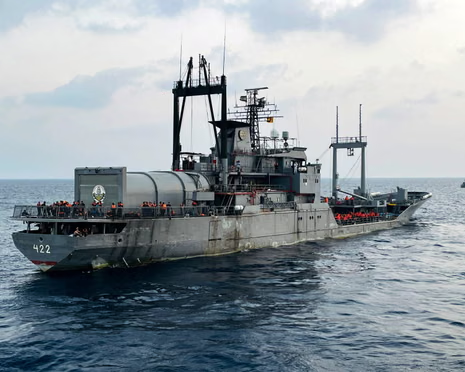
The morning mist hung heavy over the southern coast of Sri Lanka when the first distress signals reached the maritime rescue coordination centre. It was just after five in the morning on a quiet Wednesday when the call for help broke the silence of the dawn. Officials quickly identified the vessel in trouble as being within their rescue jurisdiction, located roughly nineteen nautical miles from the historic city of Galle. The local navy responded with urgency, launching search boats by six o’clock to find the ship before it succumbed to the waves. Officers scanned the grey horizon with intensity, hoping to find a hull still afloat amidst the choppy waters of the Indian Ocean. They did not find a ship but instead discovered a massive, spreading slick of oil that coated the surface like a dark shroud. Dozens of survivors were clinging to life rafts while bodies drifted nearby, signaling a tragedy of immense proportions. The IRIS Dena, an Iranian warship scheduled for a friendly port visit, had already vanished beneath the surface.

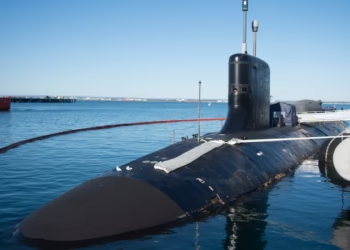
This sudden sinking occurred with terrifying speed, taking less than three minutes after a high-powered torpedo struck the hull of the vessel. The weapon was a Mark 48, deployed by the USS Charlotte, a nuclear-powered submarine belonging to the United States Navy. This silent predator had been lurking nearby, waiting for the precise moment to strike the Iranian ship as it moved through open waters. The attack claimed the lives of at least eighty-four crew members whose remains were only recently repatriated to their home country. By bringing the active conflict between Washington and Tehran into these neutral waters, the strike has caused a significant tremor in regional stability. The IRIS Dena was thousands of miles away from the Persian Gulf when the torpedo found its mark. Many observers have already begun comparing the incident to the controversial sinking of the Belgrano during the Falklands War decades ago.
Before the tragedy, the IRIS Dena had been a guest of honor at an international fleet review hosted by India. The prestigious event in Visakhapatnam featured navies from over seventy countries, including the United States, Russia, and Australia. It was a time of maritime pageantry and diplomatic bridge-building intended to foster a sense of shared security across the vast ocean. Cadets from different nations shared meals and stories, unaware that a state of war would soon be declared. Just three days after the festivities concluded, the geopolitical landscape shifted violently as the United States and Israel initiated a bombing campaign against Iran. The transition from ceremonial camaraderie to lethal engagement was so swift that it left many senior military analysts in a state of total disbelief. This sudden escalation suggests that the regional conflict will have long-lasting effects on the sensitive Indian security architecture.
The Trump administration has remained firm in its stance, asserting that the IRIS Dena was a legitimate target in an active war zone. US Defence Secretary Pete Hegseth spoke openly about the operation, noting that the ship met a quiet end while believing it was safe. President Trump even joked about the preference for sinking Iranian vessels rather than attempting to capture them during his recent press briefings. However, the sentiment among Indian military veterans is one of profound disappointment and a sense of betrayal. Former Chief of Naval Staff Admiral Arun Prakash noted that while the strike may be legal in international waters, it was a shocking act. He expressed that bringing a hot war to the doorstep of a partner nation was a perverse decision. The decision to strike a ship that had just participated in a peaceful function hosted by Delhi is viewed as a breach of trust.
The ethical implications of the attack are being debated fiercely within the halls of power in both Colombo and New Delhi. The IRIS Dena carried more than one hundred and thirty people and was not engaged in any hostile maneuvers at the time. To many, the timing of the strike appears to be a bit of treachery given the recent shared hospitality. There is a feeling that the United States could have easily waited until the ship was further away from the South Asian coast. Such a delay would have spared India the significant diplomatic embarrassment of seeing a guest destroyed so close to its territory. While some American sources suggest the ship was a threat, Indian and Sri Lankan officials believe it was simply following standard transit protocols. Every warship carries ammunition for self-defense, but carrying weapons does not necessarily imply an immediate intent to strike.
The failure to provide assistance to survivors has also become a point of intense international scrutiny and legal debate. Under the Geneva Convention, there is a clear expectation that mariners should assist those in distress following a naval engagement. While a nuclear submarine relies on stealth and cannot easily surface to rescue survivors, critics argue the US had a moral obligation. The Sri Lankan navy did what it could with limited resources, but the delay in granting the ship permission to dock proved fatal. The IRIS Dena had been waiting for over eleven hours for official clearance to enter the safety of a territorial port. During those long hours of waiting, the ship remained a sitting duck for the submarine tracking its every move. This bureaucratic hesitation in Colombo effectively left the Iranian crew exposed to the lethal capabilities of the American military.

For India, the presence of an American nuclear submarine operating undetected so close to its coast is a major wake-up call. Delhi has spent years trying to establish itself as the primary provider of safety and stability within the region. The fact that a major military operation took place without any prior notification to Indian authorities undermines this perceived authority. Some analysts have gone as far as to call the incident a humiliation for the current administration in New Delhi. It sends a message to the world that Washington may not view its partnership with India as a relationship of equals. If a foreign power can sink a ship at the backdoor of a regional superpower without warning, it challenges the very concept of Indian security leadership.
The human element of the tragedy remains the most poignant aspect for those who interacted with the Iranian crew during the fleet review. Vice Admiral Shekhar Sinha recalled meeting the proud cadets who were enjoying their visit to the Indian coast just a week prior. The shift from friendly conversation to a mass casualty event in such a short timeframe is difficult for many to process. It highlights the brutal reality of modern warfare where technology can erase lives in a matter of seconds from miles away. The demise of the IRIS Dena serves as a grim reminder that the Indian Ocean is no longer a sanctuary from global rivalries.
In the aftermath of the sinking, there are growing calls for a complete overhaul of underwater surveillance and maritime monitoring. If a high-stakes naval engagement can happen so close to home without detection, then existing systems are clearly insufficient. The geopolitical fallout is likely to influence how regional powers manage their relationships with the United States moving forward. There is a newfound realization that being a strategic partner does not always guarantee transparency or respect for local sensitivities. As the oil slick fades and the wreckage of the IRIS Dena settles into the silt, the ripples of this attack will continue to disturb the waters of diplomacy. The challenge now lies in rebuilding the trust that was lost in the cold depths of the ocean.
Related News:
 British skier killed in La Plagne avalanche tragedy
 Mandelson apologises over Epstein ties after public scrutiny
 Friedman Uninvited From 2024 Adelaide Writers’ Week
 Starmer Challenges US Over Controversial Greenland Deal
 Spoof “Make America Go Away” Caps Rally Denmark Over Greenland
 Starmer Resists Matching Trump Amid Greenland Tensions
 Silence and Unity Mark Bondi Terror Attack Memorial
 India-EU Free Trade Deal Marks Historic Economic Shift
 Thousands Protest ICE Operations in Nationwide US Day of Action
 Concerns rise for Canberra boy amid Iran detention fears
 Anthony Albanese Must Uphold Rights for All Australians
 UK suspends study visas for four nations to curb asylum
 New Zealand Covid Response Praised Despite Lingering Scars
 UK Ministers Signal Strategic Independence From Trump Demands
 African World Cup Fans Face $15,000 Entry Bond Fee
 Police Seek Immunity in Indigenous Custody Death Case
 Farage Shuns Truss as US Right-Wing Roadshow Hits London
 Trump Slams Europe as Transatlantic Tensions Boil Over
 Spain Faces Backlash Over Xenophobic Chants in Egypt Draw
 Trump Facing Backlash Over Firing of Cabinet Women
 The Price of Hubris: Trump, Netanyahu, and the ‘Easy’ War
 Trump and Tehran Find Common Ground in Landmark Ceasefire
 Own an Entire Australian Town for the Price of a UK Flat
 Cyclone Maila Intensifies to Category Five Strength
 Melania Trump Denies Ties to Epstein and Ghislaine Maxwell
 Reeves Slams Trump Over Iran War Lack Of Exit Plan
 Kyiv and Odesa Mourn After Deadly Wave of Russian Strikes
 Norway’s Telenor Faces Lawsuit Over Myanmar Data Breach
 Strait of Hormuz Status Uncertain Despite Iran’s Claims
 Trump’s Presidency: A House of Cards Collapsing?
 US Forces Seize Iranian Ship Near Hormuz Blockade
 Trump Starts $166bn Tariff Refund Process
 Israeli Soldiers Jailed Over Vandalism of Lebanese Statue
 Investigation: Offshore Loans and Sanctions
 Prominent Voices Challenge Palestine Action Ban
 Cross-Border Crisis Shatters Fragile Afghan Peace
 Tragedy Near Jakarta: Train Collision Leaves 14 Dead
 NSW Police Urged Victim to Abandon Antisemitic Case
 The Burning Lens: An Iranian Artist’s Visual Resistance
 FIFA Confirms Global Ban for Benfica Star Prestianni
 The Global Battle for Control Over the Women’s Game
 Tensions Surge in the Gulf as Ceasefire Wobbles
 One Nation Candidate’s Surprising Ties to Independents
 New South Wales Wetland Rescue Legislation Passes
 US and Mexico Face Heatwave as Floods Batter South Africa
 French Patient Told Hantavirus Was Just Anxiety
 Putin Signals War End as Russian Momentum Stalls
 Romania’s Judicial Crisis: A System Under Siege
 Scepticism and tight security as Beijing braces for Trump
 Philippine Senator Flees After Days Under Senate Siege
 Alberta Separatist Bid Blocked by Canadian Court
 Big Tobacco Under Fire Over Controversial New Ad Campaign
 Court Upholds Landmark Win for Transgender Rights
 Fragile Truce Shattered as Violence Escapes Diplomatic Control
 Secrecy Down Under: Albanese Faces FoI Scandal
 Taliban Codifies Strict New Marriage and Divorce Legislation
 Tony Abbott Returns as New Liberal Party President
 Discontent grows around Putin amid war strain
 Trump Diplomacy Faces Hurdles from Tehran to Tbilisi
 Teaching Machines Right From Wrong in the Digital Age
 Oman Defies US Pressure Over Strategic Strait of Hormuz
 Ex-CIA Agent Accused of $40m Gold Theft and Fake Spy Unit
 Aukus Deal Facing Fierce Backing and Historic Criticism
 Thai Princess Bajrakitiyabha Passes Away at 47
 Tragic Loss of Australian Sprinter Jemma Stapleton
 Firearm Fine for Missing Boy’s Grandmother
 Trump Urged to Condemn UFC Fighter Over Obama Slurs
 US Democratic Crisis Deepens as Trump Limits Mail Voting
 Russian Tanker Captain Remanded in UK Court After Channel Seizure
 US Military Pacific Boat Strike Kills Three People
 US Battles Auction of Titanic Artifacts
 Scouts Introduce Badges For AI And Digital Skills
 France Dominate Sweden as Deschamps’ New Era Takes Shape
 Trump’s Mount Rushmore Speech: A Divisive Anniversary
 Trump Swaps Planes Amid Iran Tensions
 Rotterdam Museum Honours Artist With Peanut Butter Floor
 Bangkok Nightclub Blaze Claims 30 Lives Amid Negligence Probe
 Yemen Accuses Iran of Violating National Sovereignty
 Japan Bear Hunt: Serial Fridge Raider Sparks Panic
 Houthis Strike Saudi Arabia as Middle East Tensions Rise