Published: 27 March 2026. The English Chronicle Desk. The English Chronicle Online.
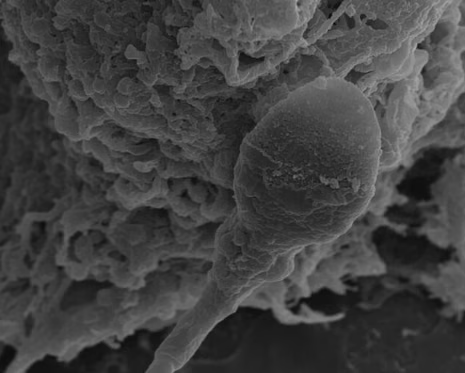
Humanity has always looked toward the stars with a sense of profound curiosity and boundless ambition. We now stand on the precipice of a new era where living beyond Earth is a goal. Projects like the Artemis mission and private ventures by SpaceX aim to establish permanent human lunar bases. These ambitious plans for Mars settlements and moon mining operations require us to understand every biological detail. One of the most critical questions involves how we might eventually reproduce in such harsh environments. Recent findings suggest that basic biological functions like conception may face some very significant physical hurdles. A pioneering study from Australia indicates that sperm in space often become hopelessly lost and disoriented. This research highlights the unexpected ways that microgravity impacts the very beginning of the human lifecycle.
The researchers at Adelaide University have spent years investigating the complex mechanics of reproductive health. They recently turned their focus toward the specific challenges posed by the vacuum of outer space. Using a specialized machine to mimic microgravity, they observed how sperm cells react without a pull. These cells normally rely on subtle environmental cues to navigate the complex female reproductive tract effectively. In the absence of earthbound gravity, the cells began to tumble and flip around quite aimlessly. Dr. Nicole McPherson explained that the cells lose their fundamental sense of what is up or down. This disorientation prevents them from moving in a straight and purposeful line toward their intended target. Such findings raise important questions about the long-term viability of self-sustaining colonies on other distant planets.

To conduct the study, the team utilized a 3D clinostat to negate the standard effects of gravity. This device creates a state of weightlessness similar to what astronauts experience on the Space Station. They tested samples from humans, mice, and pigs to see if the reaction was truly universal. The researchers then placed these samples into a simulation of the female reproductive tract maze. This maze was designed to mimic the physical obstacles that sperm must overcome to reach an egg. While no human eggs were used for ethical reasons, the navigational data was extremely revealing. The results showed a forty percent reduction in human sperm successfully reaching the end of the maze. This suggests that the journey toward fertilization is significantly more difficult in a weightless environment.
Beyond the movement of the cells, the study also examined the development of animal embryos. Microgravity appeared to have a measurable impact on how mouse and pig embryos grew over time. Despite these challenges, the researchers noted that healthy embryos were still able to form in the lab. This provides a glimmer of hope for the future of extraterrestrial human and animal reproduction. Dr. McPherson stated that while gravity is a key factor, it is not an absolute barrier. Understanding these mechanisms allows scientists to develop potential solutions for future space travelers and settlers. The goal is to ensure that space settlements do not need to rely solely on Earth. We must find ways to maintain a population using the resources available on the lunar surface.
One potential solution involves the use of hormones to help guide the disoriented sperm in space. The researchers discovered that adding progesterone helped the cells find their way through the simulated maze. Progesterone is naturally released by eggs and acts as a chemical beacon for the swimming sperm cells. By enhancing this signal, scientists might be able to overcome the physical confusion caused by microgravity. This discovery is a significant step toward developing medical protocols for future space-based fertility treatments. It also provides fundamental knowledge that could benefit reproductive science back here on our home planet. Studying how cells navigate in extreme conditions often reveals hidden biological truths about our own bodies.
The history of studying reproduction in space is actually much longer than many people might realize. As far back as 1987, investigations on the Cosmos mission looked at how rats were affected. Those early studies found that space exposure led to a reduction in testicular mass in the subjects. In 1998, experiments on the Columbia space shuttle focused on the early development of mouse embryos. NASA has also been very active in this field through its dedicated biological and evolutionary programs. In 2018, the Micro-11 mission specifically sent human samples to the International Space Station for testing. These various efforts show a consistent international interest in the survival of our species beyond Earth. Every new study adds a small piece to the giant puzzle of long-term space habitation.
The director of the Andy Thomas Centre for Space Resources, John Culton, emphasized the current urgency. He believes that understanding reproduction is critical as we progress toward becoming a truly multi-planetary species. It is not just about human babies but also about creating viable food sources for colonies. Breeding livestock on the moon or Mars would be essential for a sustainable and independent food supply. Without successful animal reproduction, space settlers would remain entirely dependent on expensive and risky cargo shipments. Therefore, the behavior of sperm in space is a matter of both biology and logistics. Every successful fertilization event brings us closer to a future where humans thrive across the galaxy.

In addition to the lack of gravity, space radiation remains a very serious concern for scientists. Radiation bombards astronauts once they leave the protective atmosphere and magnetic field of the Earth’s surface. This exposure can damage the delicate genetic material carried within both sperm and egg cells over time. The Adelaide study acknowledges that radiation and microgravity likely work together to create a difficult environment. Future research will need to address how to shield reproductive cells from these high-energy cosmic rays. International collaboration is now being called for to close these significant gaps in our current knowledge. Establishing clear ethical guidelines for extraterrestrial reproduction is also a major priority for the scientific community.
The cultural conversation around this topic has also seen some quite colorful and strange rumors recently. Reports circulated that high-profile figures like Elon Musk had offered to help seed a Mars colony. While these claims were denied, they reflect the growing public fascination with the idea of space families. We are moving away from the era of short visits and toward the era of settlement. This shift requires a deep dive into the most intimate aspects of our human biological existence. The work being done in Adelaide is a vital part of making these sci-fi dreams a reality. It ensures that when we do reach Mars, we are fully prepared for the journey.
Ultimately, the study of sperm in space is about much more than just navigation and movement. it is about the resilience of life and our ability to adapt to new frontiers. We are learning that while space is a hostile environment, it is not an impossible one. With the right scientific interventions, we can overcome the disorientation caused by the lack of gravity. This research paves the way for a future where the stars are truly our home. As we continue to explore, we will undoubtedly find more ways to protect and nurture life. The journey is long, but the progress we are making today is incredibly promising and bold.
Related News:
 How Bringing Forests Into Preschools Boosts Children’s Health
 UK Water Firms Ordered to Act Over ‘Forever Chemicals’ Threat
 Experts Urge Legal Right to Timely Cancer Care
 Patients to Test Health at Home to Ease NHS Winter Pressure
 North Sea oil workers must lose weight or face job loss
 No link found between paracetamol in pregnancy and autism
 NHS frontline staff forced to cover gaps as managers remain scarce
 New Research Explains Severe Diabetes in Children
 Working-Class Men with Prostate Cancer Left Behind by NHS
 New AI tool could cut wasted efforts in organ transplants
 From Baby Teeth to Bioengineering: The Future of Self-Healing Teeth
 Healthy Habits in Your 30s That Boost Life in Your 70s
 Coffins Now Too Large to Cremate Amid Rising Obesity Crisis
 Thinktank Urges Smaller Hospitals to End NHS ‘Permacrisis’
 NHS paediatric leave parents waiting months for answers
 Google Removes Some AI Health Summaries Over Safety Concerns
 AI Transforms Lung Cancer Detection in NHS Trial
 Genes May Hold the Secret to Long Life, Scientists Find
 AI breast screening cuts later cancer diagnoses by 12%, study finds
 Autistic Girls Often Missed in Childhood Diagnoses, Study Finds
 Baby rhythm sense found in newborn brains
 Most Statin Side-Effects Are Not Caused by Drugs, Study Confirms
 Reading Habits Linked to 40% Lower Dementia Risk
 Mind AI inquiry sparks mental health safety debate
 Ayahuasca Psychedelic DMT Shows Potential as Depression Therapy
 Zorevunersen Breakthrough for Dravet Syndrome
 Cancer Death Rate in Britain Falls by Nearly a Third
 Taking Multivitamins Daily Could Slightly Slow Ageing, Study Finds
 Social Media Giant Trial Reaches Final Jury Decision
 ‘Drinking from a Fetid Pond’: Superbug Genes in Lough Neagh
 Gene Therapy Wins Major Prize for Restoring Vision
 New Bacteria Discovery Offers Hope Against Noma
 WHO approves first malaria drug for babies
 FDA Chaos Deepens as Trump Eyes Makary Exit
 Ebola outbreak in DRC overwhelms health system as cases surge
 Study Launches Into Brain Injury Risks in Women’s Rugby
 UK to Expand Prostate Cancer Trials for Black Men
 NHS Approves Landmark Ovarian Cancer Drug
 The Mystery Behind Why Humans Prefer Walking Anticlockwise
 Failing Systems: The UK Stem Cell Crisis Exposed
 Oura Ring 5 Review: A Massive Leap for Smart Rings
 Deadly H5 Bird Flu Reaches Australia’s East Coast
 Weight-Loss Drugs Offer Food Savings Mainly to High Earners
 British Pilot Joins Crew Training for Year-Long Mars Simulation Mission
 Virgin Trains Moves Closer to Challenging Eurostar Monopoly
 UK Bans Fake Numbers: Scammers Lose Their Trick
 Vibe coding’ named Collins dictionary’s word of the year
 Britain deploys RAF specialists to assist Belgium with drone threats
 Shouting Works Best to Deter Gulls, UK Study Finds
 Reeves rejects £1bn plea for NHS redundancy payouts
 Northern Lights may illuminate UK skies this week
 Stroke Patient Mistaken for Drunk, Care Delayed
 Sundar Pichai Cautions on AI Hype and Market Risks
 Five-Year-Old Dies After Rare Tonsil Surgery Complication
 EU launches Grok AI probe into X over explicit images
 ABC Facebook Page Briefly Hacked, Adult Photos Posted
 Meta trial over child exploitation claims begins
 Streeting moves on doctor pay to end strike dispute
 UK reports baby formula toxin poisoning cases across the country
 BT Names New Openreach Chief Amid Major Fibre Expansion
 Tech Trends Set to Transform Life in 2026
 Placenta Accreta Warning as Hunt Urges Action
 Stewart Brand on Musk, Bezos and a Life of Long Thinking
 New Zealand Covid Response Praised Despite Lingering Scars
 The Kill Line: A Shifting Vision of the American Dream
 Artemis II: Humanity Returns to the Moon After Decades
 Blue Badge Surge Prompts Calls for Urgent Fraud Crackdown
 Private Profits From NHS Contracts Spark Urgent National Debate
 Robots Outpace Humans in Beijing Half-Marathon
 UK Faces Growing Threat of Scale Hacktivist Attacks
 New AI Tool To Target Obesity Risk And Transform NHS Care
 UK Experts Urge Four-Day Week to Combat National Obesity
 Pope Meets Families in Italy Toxic Waste Zone
 Record Spending Highlights Growing Crisis In National Health Service
 Stolen Mobiles Could Soon Become Useless Bricks
 Clean Air Initiatives Spark Major Fall in London Hospital Admissions
 NHS Urges Investigation For Irregular Periods
 Sydney Records Hottest June Since 1859 as Expert Warns New High a ‘Signature’ of Global Warming
 Telstra Software Fault Triggers Massive Nationwide Outage
 UK Schools Struggle as Classrooms Top 40C