Published: March 30, 2026. The English Chronicle Desk.
The English Chronicle Online
The United States has reached a somber constitutional milestone today as the partial shutdown of the Department of Homeland Security (DHS) officially entered its 44th day, making it the longest partial government shutdown in American history. The current impasse, which began on February 14, 2026, has now surpassed the 43-day record set just last autumn during a separate funding battle. While the rest of the federal government remains open and funded, the targeted “freeze” of the nation’s fourth-largest agency has left nearly 200,000 employees—including TSA officers, Border Patrol agents, and the Coast Guard—working without pay for over six weeks.

The standoff is rooted in a fierce legislative deadlock over proposed reforms to Immigration and Customs Enforcement (ICE) and Customs and Border Protection (CBP). Following the high-profile killing of an individual by CBP agents in Minnesota earlier this year, Senate Democrats have refused to approve any DHS funding bill that does not include strict new “guardrails” on enforcement operations. Conversely, House Republicans have twice passed funding measures that prioritize border security and deportation efforts, both of which have stalled in the Senate. The result is a “political kick-around with no time-keeping,” as one observer noted, leaving essential security personnel caught in the middle.
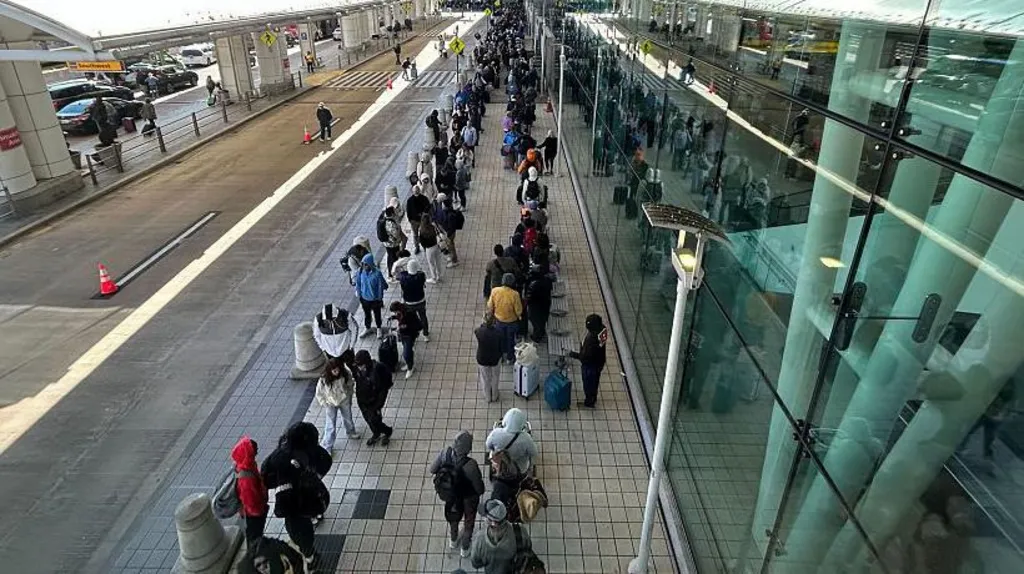
The human and operational cost of the shutdown is becoming increasingly visible at the nation’s travel hubs. On Friday, the Transportation Security Administration (TSA) recorded its highest rate of staff absences since the shutdown began, with over 12% of the workforce calling out. Hundreds of officers have resigned altogether, citing the inability to pay for basic necessities like rent and childcare after missing two consecutive paychecks. While major airports like New York’s JFK and Houston have seen hours-long security lines, the “ripple of fear” is also being felt at the borders and in cybersecurity, where the Cybersecurity and Infrastructure Security Agency (CISA) is reportedly operating at limited capacity.
In a late-night move on Friday, President Donald Trump signed a presidential memorandum directing DHS Secretary Markwayne Mullin to restore pay to TSA employees using existing funds with a “logical nexus” to aviation operations. However, legal experts have questioned the constitutionality of the move, noting that only Congress has the “power of the purse” to authorize such spending. White House “Border Czar” Tom Homan defended the action on Sunday, calling it a “necessary start” to prevent a total collapse of the aviation sector, though he admitted that a full legislative resolution remains the only permanent fix.
The economic impact is also mounting. The Congressional Budget Office (CBO) estimates that the 44-day freeze has already cost the US economy approximately $2.5 billion in lost productivity and reduced consumer spending. When combined with the 43-day total shutdown from late 2025, the US government has now been in some state of closure for nearly three of the last six months. For the 193,867 DHS employees still showing up to work, the “longest shutdown” title is a badge of frustration rather than honor.

As the “spring awakening” brings warmer weather to the capital, the political climate remains frigid. With the House and Senate leadership seemingly no closer to a compromise on ICE reforms, the 2026 DHS shutdown is no longer just a legislative delay—it is a record-breaking test of the federal government’s ability to function.
Related News:
 Global Crisis: Marco Rubio Convenes Emergency G7 Meeting as Iran Conflict Escalates
 ‘Eye in the Sky’ Blinded: Photos Reveal Destroyed US Radar Jet at Saudi Base
 Last‑ditch Call to Save Police Front Counters in London
 Inside Kyiv’s resolve as conflict nears five‑year mark
 US Partially Evacuates Beirut Embassy Amid Rising Iran Tensions
 Ecuador Deploys 75,000 Forces in Anti-Gang Drive
 UK Poverty Hits 13.4 Million Amid Major Data Revisions
 Met Police Resume Arrests for Palestine Action Supporters
 Holyrood Campaign ‘In Meltdown’ as Fifth Reform UK Candidate Quits
 US Lawmaker Demands Testimony Over Sarah Ferguson’s ‘Close Epstein Ties’
 The Last of the Lords: Two Hereditary Peers to Retain Ceremonial Roles Amid Historic Ousting
 Trust in Turmoil: Just Eat and Autotrader Among Firms Probed Over Fake Reviews
 ‘My Daughter is Under the Rubble’: The Human Cost of the Tehran Strikes
 ‘No Surprise’: Ramaphosa Downplays South Africa’s Exclusion from Emergency G7 Summit
 Market Shockwave: Oil Surges Past $115 as Iran War Enters Fifth Week
 ‘An Evil Man is Dead’: Australian Fugitive Dezi Freeman Shot Dead After 216 Days
 ‘Full and Immediate Access’: Netanyahu Reverses Palm Sunday Ban on Latin Patriarch
 Trump Administration Dismisses 17 Immigration Judges, Sparking Debate Over Judicial Independence
 Tasers Introduced in UK Prisons to Combat Rising Violence and Protect Staff
 Tanni Grey-Thompson Faces Abuse Over Opposition to Assisted Dying Bill
 Mahmood Pledges Reform of Modern Slavery Laws After Court Blocks Deportation Appeal
 Migrants in UK May Need to Contribute or Face Removal, Home Secretary Signals
 Jailed Georgian Opposition Leaders Warn UK of Iranian Links to Ruling Party
 Digital ID Plans Ignite Debate Over £600m Treasury Tax Boost and Privacy Concerns
 Nigel Farage’s partner linked to Brussels fraud probe
 Johnson Approved China’s London ‘Super-Embassy’ in 2018
 French Taxi Driver Cleared in David Lammy Theft Case After Fare Dispute
 WASPI Women May Get Second Chance at Pension Redress
 Trump Urges Herzog to Grant Netanyahu Full Pardon
 Major Rent Reform Ends No-Fault Evictions in England
 Peers Flood Assisted Dying Bill with 942 Amendments
 US Justice Department Files Lawsuit Against California Over Partisan Voting Maps
 Trump Deploys DHS to Charlotte in Major Arrest Operation
 UK Asylum Overhaul Sparks Debate Over Human Rights and Deportations
 Peers Get Extra Time to Debate Assisted Dying Bill
 US National Guard Member Killed in DC Shooting
 ICC to Rule on Duterte’s Provisional Release
 Plans to Limit Jury Trials Face Retreat After Mounting Opposition
 Starmer tariffs stance rejects US trade retaliation
 American democracy faces crisis after Trump’s return
 NSW Inquiry Targets “Globalise the Intifada” in Public Spaces
 Starmer to Release Mandelson Files
 Australia’s Opposition Coalition Reunites After Rift
 Motorists Could Face ‘Mandatory’ Driving Ban for Road Offences Under Tougher Laws
 US Civil Rights Leader Jesse Jackson Dies Aged 84
 Disability and LGBT Hate Crimes Set to Become Aggravated Offences
 Nine Arrested in France Over Death of Far‑Right Student
 Civil Service Pay: Union Urges Ministers to End ‘Barking Mad’ Limits
 How Much Could Andrew’s Arrest Hurt the Royal Family?
 Epstein Eyed Record Label Investment to Access Women, Files Suggest
 Schools in England to Get Budget for Children with Special Needs as Part of SEND Overhaul
 Sadistic Pair Jailed for Blowing Up Sheep
 MPs Backed by Phillipson as She Defends Student Loan Change; Average Repayments to Rise by £8 a Month
 Hillary Clinton Tells House Panel She Had No Idea of Epstein’s Crimes
 Grave of Murdered Toddler James Bulger Vandalised
 US Trade Court Orders Tariff Refunds in Setback for Trump Administration
 US Senate Vote Fails to Rein in Trump War Powers on Iran
 Labour MP’s Partner Arrested on Suspicion of Spying for China
 Police Scotland Pays £8m Compensation to Staff
 Proposed Law Leaves Gap for Children of Convicted Paedophiles
 Gran Vows to Shield Huntley’s Daughter From Soham Killer’s Funeral
 Labour Faces Backlash Over Conscription Warning
 Iran War Puts Trump at Political Risk Amid Rising Prices
 SNP Health Secretary Criticised Over NHS Failures Locally
 Mother of Child Cancer Survivor Fears UK Visa Changes
 Queensland Protest Laws Spark Free Speech Backlash
 Rapist Caught After Victim Calls Police Mid-Attack

 Nepal to swear in ex-rapper as new prime minister
 Missing Cuba-Bound Aid Ships Spark Urgent Search
 Belarus Leader Gifts Rifle to Kim Jong Un
 Mandelson’s Phone Messages Requested in Files Release
 UK Forecast to See Biggest Growth Hit from Iran War
 UK Forces Ready to Seize Russian Shadow Fleet Vessels
 Families Tortured by Authorities During Investigations Inquiry Told
 Watchdog Probes Police Handling of Andrew Tate Abuse Claims
 ‘Teenage Me Could Not Have Imagined This’ Says First Female Archbishop
 The High Cost of Survival: How the 2026 Fiscal Outlook is Redefining British Life
 Dawn Raids in Scotland and Spain: Eight Arrested in Major Organised Crime Sting
 Fuel Famine: How African Nations are Rationing Power and ‘Diluting’ Petrol to Survive