Published: March 31, 2026. The English Chronicle Desk.
The English Chronicle Online—Providing trusted news and professional analysis for the UK and Business & Economy.
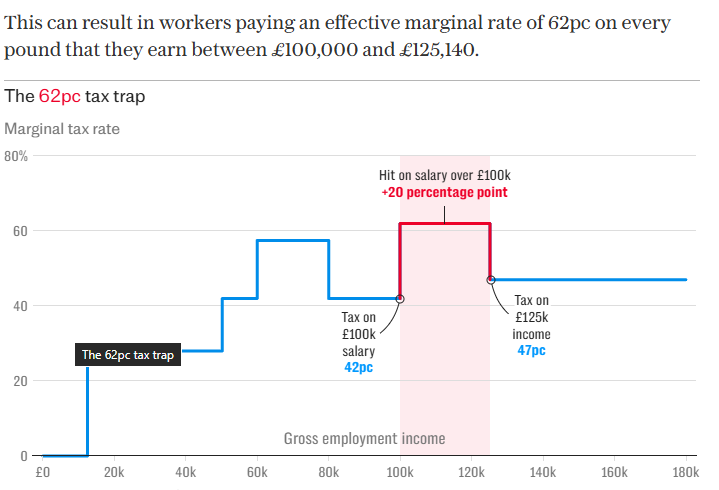
A scathing new report from Rathbones has revealed a growing crisis of ambition among the UK’s professional class, with one in five high earners claiming the “£100,000 tax trap” is actively ruining their careers. As the number of six-figure earners in the UK is set to surpass 2 million for the first time in the 2026/27 tax year, the study warns of a “productivity strike,” where senior managers, doctors, and tech leads are turning down promotions or reducing their hours to avoid a punishing 60% effective marginal tax rate.

The “trap” is a byproduct of the tapering of the Personal Allowance. For every £2 earned above £100,000, a worker loses £1 of their tax-free allowance. When combined with the 40% higher rate of income tax and the 2% National Insurance contribution, the result is a “danger zone” between £100,000 and £125,140 where the state takes 62p of every extra pound earned. For many, this isn’t just a financial sting—it’s a career-ending disincentive. “I was offered a director role with a £15,000 raise,” one respondent told researchers. “After tax and the loss of childcare hours, I would have been ‘working’ for less than £3 an hour. I said no.”
The financial pain is compounded for parents. At exactly £100,000, eligibility for Tax-Free Childcare (worth up to £2,000 per child) and the 30 hours of free childcare for three- and four-year-olds vanishes completely. This “cliff edge” means that an earner moving from £99,999 to £100,001 can actually see their disposable income drop by over £20,000 in a single day.
-
The ‘HENRY’ Struggle: High Earners, Not Rich Yet. Wealth managers warn that inflation has eroded the value of £100,000, which was worth significantly more when the threshold was first frozen in 2021.
-
The Promotion Paradox: HR departments report a surge in “salary sacrifice” requests, where employees ask for extra pension contributions or more holidays instead of pay rises to keep their “Adjusted Net Income” below the £100k mark.
The Institute for Fiscal Studies (IFS) has warned that the continued freeze on tax thresholds until 2031 is creating a “mobility crisis.” As the oil price hits $116 and the cost of living remains high, the UK’s most productive workers are increasingly looking at “geo-arbitrage”—moving to lower-tax jurisdictions like Dubai or Singapore. “A 1% increase in the top marginal rate can increase out-migration by up to 3%,” the IFS noted. “We are effectively telling our most skilled people that working harder is a mistake.”

As the Easter bank holiday approaches, the Treasury is facing mounting pressure to reform the “60% zone” in the upcoming Autumn Statement. However, with the government grappling with the costs of the Iran war and the “8 Million Dilemma,” a tax cut for those earning over £100,000 is a difficult political sell. For now, the “£100k Ceiling” remains firmly in place, leaving a fifth of the UK’s top talent wondering if the next step up the ladder is actually a step into a financial hole.
Related News:
 Shein UK Faces Allegations of Shifting Majority of Profits to Singapore to Reduce UK Tax
 British AI Startup Outshines Human Forecasters in Global Prediction Contest
 China warns UK over delayed London mega embassy decision
 Rachel Reeves to lead UK trade push in Saudi Arabia amid rights debate
 UPS Cargo Plane Crash in Kentucky Kills Seven
 UK New Car Discounts Near £6,000 as Prices Are Slashed
 US Will Not Back Out of Tariff Deals with UK and Others, Says Trump Trade Representative
 Gulf shipping crisis sparks food price fears
 UK Wage Growth Slows as Jobs Market Holds Firm
 Middle East Conflict to Hit UK Economy Hardest
 ‘Horror on the Street’ and ‘Fears Grow over Shortages’
 ‘Better Off Not Planting’: UK Farmers Face 36% Fertiliser Spike as Gulf Crisis Bites
 UK Must Act with Courage and Clarity on Israel-Palestine Conflict, Says Foreign Affairs Committee Report
 Radioactive Leak at UK’s Nuclear Warhead Base Sparks Outcry Over Safety and Secrecy
 Mutual Inconvenience: Why Alaska Was Chosen for the Trump-Putin Summit on Ukraine
 China’s crackdown on civil servant perks sparks economic concerns
 Terence Stamp, ’60s British Film Legend and Star of Superman, Dies at 87
 Where Is Prince William and Kate Middleton’s New House? Inside the Historic Lodge Set to Become Their ‘Forever Home’
 Chancellor Rachel Reeves Pushes for Sweeping Changes to Environmental Protections to Accelerate Development
 Inflation Latest: Cost of Living Expected to Rise Again in Key Figures Released Today
 Is the UK Ready to Put Boots on the Ground in Ukraine? Assessing Military Capacity and Challenges
Retail Sales See Uptick Amid Errors and Delays as ONS Faces Scrutiny
Is the UK Ready to Put Boots on the Ground in Ukraine? Assessing Military Capacity and Challenges
Retail Sales See Uptick Amid Errors and Delays as ONS Faces Scrutiny
 Jaguar Land Rover Extends Production Halt Following Cyber-Attack
 Thousands Gather in London to Protest Donald Trump’s Second UK State Visit
 Great Britain’s Energy Operator Commits to Strengthening Grid to Prevent Blackouts
 UK Government Backs Return of International Rail Travel to Kent Stations
 Wetherspoon vows to keep prices low amid soaring energy and tax costs
 UK House Price Growth Slows as Buyers Exercise Caution Ahead of Autumn Budget
 Kemi Badenoch Unveils ‘Golden Rule’ to Halve Spending Cuts for Deficit Reduction at Tory Conference
 Public Trust in SNP Hits Historic Low Amid NHS Concerns
 Johnson Suggests Mandelson Linked to China Spy Controversy
 Rachel Reeves signals welfare reform ahead of key budget
 New V-Level qualification to transform post-16 education
 Real living wage set to rise nearly 7% for UK workers in 2026
Reeves Faces Setback as Labour May Miss Homes Target
Real living wage set to rise nearly 7% for UK workers in 2026
Reeves Faces Setback as Labour May Miss Homes Target
 Trump’s UK Ambassador Urges North Sea Drilling to Strengthen US Ties
 M&S Profits More Than Halve After Cyber-Attack
 I’m a Celebrity 2025 line-up revealed: Osbourne joins
 Palace May Restore Hyphen to Andrew Mountbatten-Windsor’s Name
 Millionaires group urge Reeves to introduce wealth tax to ‘lift kids out of poverty’
 Canada Passes Carney’s First Budget in Tight Parliamentary Vote
 Royal Navy Shadows Russian Warships Entering the Channel
 Starmer Says Labour’s Economic Plan Needs Years to Deliver
 Virgin Media Fined £23.8m Over Telecare Safety Failures
 Historic £100-Weekly Pension Boost Brings Relief for UK Mineworkers
 Pound Sinks and Borrowing Costs Rise as Starmer Fights for Job
 Major UK Clothing Firm Collapses into Administration — 109 Jobs at Risk
 Could Manchester Lead the UK’s Economic Revival?
 Starmer Weighs Fast-Tracking Defence Boost
 Snow and Rain Warnings as Cold Snap Continues in the UK
 Lloyds Boss Accepts Concern Over Use of Staff Data in Pay Talks
 Dual Nationals Face Scramble for UK Passports as New Rules Come Into Force
 Trump and Chagos Deal Rift Over Iran Strikes
 Live Nation Sees Strong Ticket Sales as Monopoly Lawsuit Looms
 Australian PM Says Former Prince Andrew Has Suffered ‘Extraordinary Fall’ but That Won’t Prompt Republic Referendum
 Farage Chagos Islands Row Sparks Fury
 UK Job Vacancies Hit Five-Year Pandemic Low
Storm Hernando: Edinburgh Airport Flights Cancelled in US Travel Chaos
UK Job Vacancies Hit Five-Year Pandemic Low
Storm Hernando: Edinburgh Airport Flights Cancelled in US Travel Chaos
 ‘We’ve been paying for happy endings for Andrew for years’: inside the royal disgrace, biographer says
 UK Youth Unemployment Surges Amid Tax Changes
 Strong Rebound for UK Housing Market Sees 6% More Homes
 Bill Gates ‘Took Responsibility’ Over Epstein Ties in Staff Meeting, Foundation Says
 Switching Energy Deal Can Save £200 as Price Cap Falls
 Brit ‘in Good Spirits’ Amid Dubai Missile Attacks, Stranded but Safe
 Trump rebukes Starmer over Iran strikes
 Minister Meets Crews Who Will ‘Take Out’ Iranian Drones
 Oil Prices Surge Above $100 Amid Iran War
 UK–US Tensions Ease as Starmer and Trump Hold First Call Since Iran Row
 Sarah Ferguson Loses Another £1.5m Amid Financial Struggles
 Oil Price Jumps Despite Deal to Release Record Amount of Reserves
 ‘Heating Oil Suppliers Are Holding Us to Ransom’ as Prices and Cancellations Surge
 Yvette Cooper: UK Must Follow Principles, Not US Pressure
 Iran War Warning: Starmer Backs Ukraine Visit
 Charity Watchdog Takes Control of Learning Disability Care Home
 Australia Imposes Sudden Travel Ban on Iranian Visitors
 UK Forces Ready to Seize Russian Shadow Fleet Vessels
 English Football’s Managerial Merry-Go-Round Has Become a Circus
 The 8 Million Dilemma: Why Britain’s Disability Safety Net is Facing a ‘2026 Reckoning’
 Net Closes on Lyons Clan: Partner Arrested in Dubai as Crime Boss Snared in Bali
 The ‘Peterborough Windfall’: Council Calculator Finds £84,800 in Unclaimed Support