Published: April 1, 2026. The English Chronicle Desk.
The English Chronicle Online—Providing trusted news and professional analysis for the UK and International Affairs.
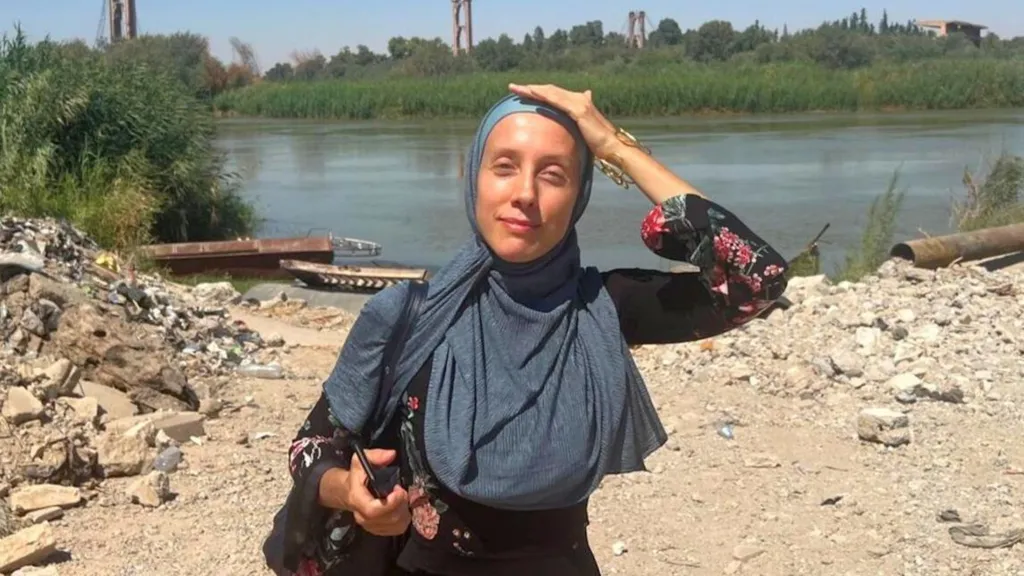
The U.S. State Department and Iraqi authorities have launched an urgent, multi-agency search operation following the kidnapping of award-winning American freelance journalist Shelly Kittleson in Baghdad. Kittleson, a seasoned conflict reporter known for her deep-cover analysis of Iran-backed militias and regional stability, was reportedly snatched from Al-Saadoun Street near the Baghdad Hotel on Tuesday evening. Eyewitness accounts and CCTV footage circulated online show the moment Kittleson was intercepted by unidentified gunmen and forcibly dragged into a vehicle in broad daylight, marking a chilling escalation in the risks faced by Western media during the ongoing U.S.-Israel-Iran war.

Iraqi Interior Ministry officials confirmed that a high-speed pursuit ensued shortly after the abduction. Security forces tracked a suspect vehicle toward Babil province, southwest of the capital, where the car reportedly overturned near the town of Al-Haswa during the chase. While one suspect was apprehended and a vehicle seized, authorities believe Kittleson was transferred to a second getaway car that successfully evaded the cordon. “We are acting on precise intelligence and through intensive field operations,” an Interior Ministry spokesperson stated. “The pursuit of the remaining kidnappers and the safe recovery of the journalist remain our absolute priority.”
A Reporter on the Frontlines
Shelly Kittleson is a prominent figure in Middle Eastern journalism, contributing extensively to Al-Monitor, Foreign Policy, and the BBC. Her work has frequently placed her in the crosshairs of regional power players; in September 2025, she was briefly held and released by the Iran-aligned militia Kataib Hezbollah.
-
The Assignment: Kittleson was in Baghdad reporting on the humanitarian impact of the regional conflict and the shifting influence of militia networks.
-
The Suspects: While no group has claimed responsibility, the U.S. State Department indicated that the arrested suspect has ties to Kataib Hezbollah, fueling concerns that the kidnapping is a strategic move to leverage “journalist-hostages” against the Trump administration’s “maximalist” military pressure.
-
The Precedent: The case draws haunting parallels to the 2023 abduction of researcher Elizabeth Tsurkov, highlighting a persistent “danger zone” for Western intellectuals and reporters in the Iraqi capital.
Washington’s ‘No Higher Priority’
The White House has issued a stern warning, with a spokesperson stating that the Trump Administration is “tracking these reports” and coordinating closely with the FBI and Iraqi counter-terrorism units. The timing is particularly volatile: as the oil price hits $116 and the U.S. continues its bunker-buster strikes on Iranian depots, Baghdad has become a secondary theater for the broader war.

-
Media Freedom: The Committee to Protect Journalists (CPJ) has called for Kittleson’s “immediate and safe release,” describing her as a “courageous voice” whose reporting is vital for global understanding of the region.
-
The ‘Duty to Warn’: Assistant Secretary of State Dylan Johnson noted that the U.S. had previously “fulfilled its duty to warn” Kittleson of specific threats against her, underscoring the extreme peril of operating as an independent journalist in Baghdad in 2026.
As the hunt for the second getaway vehicle continues, the “Kittleson Crisis” has become a diplomatic flashpoint. For the Iraqi government, the ability to recover her safely is a litmus test for its control over the capital’s paramilitary factions. For the international press corps, it is a grim reminder that in the shadow of a regional war, the truth is often the first thing to be taken.
Related News:
 Trump Says US Will Act on Greenland ‘Whether They Like It or Not’
 Trump Receives Machado’s Nobel Medal in White House Meeting
 Thousands Protest ICE Operations in Nationwide US Day of Action
 Epstein Files Reveal Trump Officials’ Emails with Financier
 Thousands Protest ICE in New York Against Trump Deportation Campaign
 US Must Be Prudent When Supplying Arms to Taiwan, Xi Tells Trump
 Fears of New Arms Race as US-Russia Nuclear Weapons Treaty Expires
 US Military Says Two Killed in Strike on Alleged Drug Boat in Eastern Pacific
 Trump Endorses Japan’s Takaichi Ahead of Snap Election
 Venezuela’s Opposition Says Party Leader Kidnapped Hours After Being Freed
 Trump Bizarrely Claims China Will ‘Terminate All Ice Hockey in Canada’ in Threat to Block New Border Bridge
 US Says It “Supports” UK Chagos Islands Deal
 Iran Says ‘Guiding Principles’ Agreed With US at Nuclear Talks
 As Trump Retreats from Climate Goals, China Is Becoming a Green Superpower
 US ‘Suitcase Murderer’ Deported From Bali After 11 Years in Jail
 Trump’s Iran Endgame Unclear After Mixed Messaging on War Aims
 Trump Seeks to Delay Meeting With Xi
 Chain of Fire: US Bunker Busters Strike Major Iranian Ammo Depot in Isfahan
 ‘Not a Gas Station’: Meloni Blocks US Bombers from Sicily Amid Iran War Escalation
 Two National Guard Soldiers Critically Injured Near White House
 American Mother Extradited From UK to U.S. on Murder Charges
 Russia losses Ukraine war peace talks intensify amid rising deaths
 Trump Taiwan China drills: US President Downplays Tensions
 US Cities Erupt in Protests Against Trump’s Venezuela Military Action
 Trump Escalates Minnesota Immigration Surge Amid Rising Tensions
 Capitol Attack Anniversary Sparks Deep Political Divide
 Trump Weighs Response to Iran Crackdown as Tehran Says Communication Open With US
 Trump targets Iran trade with 25% tariff warning
 US Clears Nvidia AI Chip Sales to China in Policy Shift
 Trump Threatens Strong Action If Iran Executes Protesters
 Gulf states warn Trump Iran strikes risk wider Middle East war
 Machado Trump medal gesture reshapes Venezuela power struggle
 Greenland defence seen as shared Nato duty amid troop arrivals
 Syria President Declares Victory as Ceasefire Reached with SDF
 US Considers Asylum for British Jews Amid Rising Antisemitism
 Trump Aide Sparks Fury as Greenland Dispute Intensifies
 EU Says US Ties Have Suffered ‘Big Blow’ After Greenland Crisis
 Arizona border shooting leaves suspect hospitalised after agent pursuit
 Videos reveal earlier clash before Alex Pretti shooting
 Trump Praises ‘Terrific’ Petro After White House Talks
 Trump Says Iran Regime Change Is “Best Thing That Could Happen”
 Obama Slams Trump’s Racist ‘Ape’ Video Amid Backlash
 ‘He Did It for Us’: US Soldier Recalls Jesse Jackson’s Efforts to Free Him and Two Other POWs
 Stephen Colbert Says CBS Spiked Interview With Democrat Over FCC Fears
 Indian University Kicked Out of AI Summit for Claiming Chinese Robot Dog as Its Own Invention
 Eight Skiers Found Dead After California Avalanche
 US Urges Iran to Make Deal as Military Presence Rises
 US Will Not Back Out of Tariff Deals with UK and Others, Says Trump Trade Representative
 Who Was El Mencho, Mexico’s Most Wanted Man?
 Inside Atlanta’s Soul Food Revolution
 Drugs, Denial, Stigma: Fiji’s HIV Crisis Hits Children
 Trump’s new tariff takes effect at lower than expected rate
 Threat of Further Violence Looms After Mexican Cartel Rampage
 Bill Gates ‘Took Responsibility’ Over Epstein Ties in Staff Meeting, Foundation Says
 American Citizen Killed in Cuba Boat Shooting, U.S. Officials Say
 Why Asian Firms Are Not Cheering Trump Tariff Ruling
 Hopes and Fears as US Iranians Take to Streets After Toppling of Supreme Leader
 Iran, the US, and a World Cup That Starts in Three Months
 Trump Faces Questions Over Iran Conflict Plan
 Months of Planning Behind US‑Israeli Mission to Target Iran’s Supreme Leader
 UK Will Allow US to Use Bases to Strike Iranian Missile Sites, PM Says
 Israel Launches Fresh Strikes on Tehran & Beirut; US Warns “Hardest Hits” Ahead
 Carney to Push His Middle Power Strategy During Australia Visit
 The US Now Has the Medicine for Cheap Swarming Drone Attacks
 Trump Underestimated the Iranian Regime’s Will to Survive
 US Senate Backs Trump War Powers Amid Iran Missile Barrage
 US Senate Vote Fails to Rein in Trump War Powers on Iran
 Azerbaijan Promises Retaliation After Iranian Drone Hits Airport
 UK Prepares Aircraft Carrier for Middle East Crisis
 Pete Hegseth Iran War Remarks Spark Alarm
 Real Estate Brothers Convicted in Sex Trafficking Trial
 Trump Threatens Iran With ‘Twenty Times Harder’ Oil Strike
 Iran War Puts Trump at Political Risk Amid Rising Prices
 Iran Rejects Ceasefire, Warns Trump With Chilling Message
 Yvette Cooper: UK Must Follow Principles, Not US Pressure
 Trump’s Confidence Undimmed — But Every Iran Option Carries Risk
 Wary Allies Signal No Easy Path in Iran Crisis
 Saudi Arabia Urging US to Keep Up Iran Attacks
 Tragedy in Lebanon: Two Indonesian UN Peacekeepers Killed in Border Explosion
 ‘In Our Backyard’: FBI Labels Michigan Synagogue Attack as Hezbollah-Inspired Terrorism