Published: 09 April 2026. The English Chronicle Desk. The English Chronicle Online.
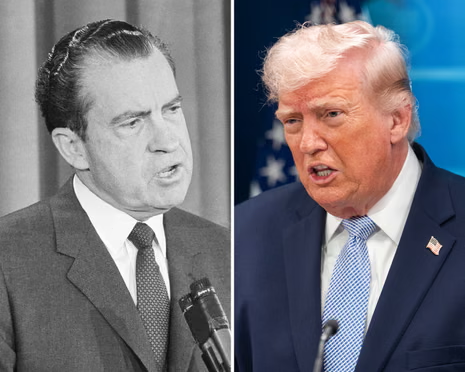
Donald Trump has never hidden the deep admiration he feels for the legacy of Richard Nixon. This affinity remains unshaken even when considering the dark clouds of Watergate or the historical stain of a disgraced resignation. Recently, the current president appears to have elevated his tribute to an entirely new and dangerous level of brinkmanship. He has publicly threatened to erase the entirety of Iranian civilization from the face of the map. This chilling rhetoric served as a prelude to a sudden de-escalation of the current military standoff. The shift occurred only after the Tehran regime agreed to reopen the economically vital Strait of Hormuz. This sequence of events suggests a calculated revival of a very specific and controversial diplomatic strategy. This tactic is famously known as the madman theory of international engagement and political posturing.
The madman theory essentially functions as a form of high-stakes psychological warfare on the world stage. It involves convincing global adversaries that the American leader has lost all sense of rational restraint. By projecting an image of mental instability, the president hopes to intimidate rivals into making concessions. The logic dictates that an opponent will yield if they fear a leader might actually use nuclear weapons. Richard Nixon first introduced this concept to his chief of staff, Bob Haldeman, during the year 1968. They were walking along a beach when Nixon explained his plan to end the Vietnam War. He wanted the North Vietnamese to believe that he had reached a point of absolute obsession. He believed that fear of his personal anger would force Ho Chi Minh to sue for peace.

Nixon instructed his top aides to spread rumors that he was capable of the most brutal violence. He wanted the Soviet Union to believe he was somewhat crazy and essentially lacked any internal filter. Some of his contemporaries noted that very little invention was actually required to sell this specific image. In the year 1972, Nixon famously told Henry Kissinger that he wished to use nuclear weapons. He expressed a desire to destroy the country of North Vietnam entirely to end the long conflict. Kissinger reportedly pushed back against the idea, stating that such an action would simply be far too much. Nixon responded by accusing his national security adviser of being overly concerned with the lives of civilians. This exchange highlighted the terrifying reality of a leader willing to gamble with the lives of millions.
The actual effectiveness of such insane posturing as a diplomatic tool remains a subject of intense debate. It is true that Nixon managed to achieve a period of detente with the powerful Soviet Union. This era of cooperation eventually led to the signing of two significant and historic arms control treaties. However, the application of the madman theory to the Vietnam War led to a different outcome. It culminated in the ferocious Christmas bombing of Hanoi and other major targets during the year 1972. The goal was to destroy infrastructure and force the North Vietnamese back to the table for talks. When a peace treaty was finally signed, critics noted the terms were nearly identical to previous versions. The massive loss of life and destruction had not yielded a significantly better deal for America.
History shows that Nixon’s dalliance with the perception of madness may have been more than just performance. Biographers have recorded that his personal psychiatrist expressed deep concerns about his mental state for many years. There was a genuine fear that Nixon was not the right man to hold nuclear power. This historical context provides a sobering lens through which we must view the current actions of Trump. He recently agreed to a ceasefire with Iran after threatening to send them to the stone age. He spoke of destroying civilian power plants and bridges as if they were mere pieces on a board. This sudden climbdown from the brink of total war has left many observers feeling deeply unsettled. The immediate reward for this retreat was the reopening of the strategic and vital Strait of Hormuz.
The Strait of Hormuz serves as a primary chokepoint through which twenty percent of global oil passes. It had been closed since the United States and Israel began military strikes on February 28. While the passage is now open, the Iranian regime has successfully extracted a very steep financial price. They are reportedly charging two million dollars for every single ship that passes through the strategic waters. This means that Tehran is now profiting from the global energy market in a truly unprecedented way. Many analysts argue that this supposed victory for the Trump administration is actually a very pyrrhic one. It mirrors the hollow results that Nixon achieved after his aggressive bombing campaigns in Southeast Asia. Trump needed a way to avoid looking weak while the conflict dragged on without end.
The Iranian regime showed no signs of folding even after six weeks of intense aerial bombardment. This lack of progress put the American president in a very difficult and politically sensitive position. He desperately needed a master stroke to allow him to declare a victory to his base. Apocalyptic threats served as the perfect vehicle to create a narrative of dominance and personal strength. By using bloodcurdling language, he attempted to bulldoze the Iranian leadership into providing him a way out. This strategy allows him to claim he achieved his goals without resorting to a ground invasion. Avoiding the presence of boots on the ground is a key priority for his current administration. An invasion to seize nuclear material would be an extremely costly and time-consuming military operation.
However, the cost of this psychological game is measured in the reputation of the United States. The country has long sought to be seen as a standard-bearer for civilized and democratic values. Utilizing the language of genocide and total destruction severely undermines this longstanding international and moral standing. Furthermore, these tactics have renewed a chorus of public doubts regarding the sanity of the president. Many are questioning his fitness for office after such a displays of erratic and violent rhetoric. It is hardly surprising that Trump has reached for the old playbook of his political idol. He and Nixon became pen pals in the 1980s when Trump was a rising tycoon. Nixon even wrote to Trump in 1990 to offer support against attacks from the media.

The connections between the two men are further cemented by advisors like the notorious strategist Roger Stone. Stone actually has a tattoo of Richard Nixon on his back as a mark of devotion. This shared political DNA suggests that the current administration views the Nixon era as a template. Yet, Trump should perhaps consider the long-term damage that this specific style of leadership causes. A leader can only pretend to be a madman so many times before the mask sticks. If the world believes the president is truly unstable, the risk of accidental war increases exponentially. Allies may begin to distance themselves from a partner they can no longer trust or predict. This isolation could leave the United States in a much more vulnerable global position.
In his effort to extricate himself from a looming quagmire, Trump has prioritized his own image. He wants to feel a sense of virility and power on the international stage at all costs. But he must eventually reflect on how often these tactics can be used before they fail. Once an adversary sees through the performance, the threat of madness loses all of its persuasive power. At that point, the leader is left with only two options: retreat or total destruction. Neither of these outcomes serves the best interests of the American people or the world. Nixon’s fate serves as a dark warning for any leader who walks this particular path. His identity became so bound up with the madman persona that he lost his grip.
The infamy that eventually swallowed the Nixon presidency is a ghost that should haunt the current White House. Playing the role of an unstable leader may yield short-term concessions, but it destroys long-term credibility. As the world watches the situation in the Middle East, the tension remains incredibly high and thin. The opening of the strait is a relief, but the price paid was far too high. Iran remains a powerful regional player that has not been truly deterred by the angry words. The cycle of threats and retreats creates a dangerous precedent for future interactions with other nations. If madness is the new standard for American diplomacy, then the global order is entering a dark era. The lessons of history are clear, yet they are being ignored by those currently in power.
Related News:
 British Woman in Iran ‘Losing Hope’ Amid Ongoing Detention
 BBC to Apologise Over Edited Trump Speech Amid Backlash
 Britain deploys RAF specialists to assist Belgium with drone threats
 US Justice Department Files Lawsuit Against California Over Partisan Voting Maps
 Greene Pushes Epstein Files Amid Trump Fallout
 Trump Deploys DHS to Charlotte in Major Arrest Operation
 December Run-Off in Chile as Election Produces No Winner
 Canada Passes Carney’s First Budget in Tight Parliamentary Vote
 Shadow Fleet at Sea: Europe’s Battle Against Illicit Oil Shipping
 Pentagon Officials in Ukraine to Discuss War End
 Venezuela Threatens Nobel Winner Machado with Fugitive Status
 Georgians Defy Government Crackdown After Year of Protests
 EU plans $105bn Ukraine aid using frozen Russian assets
 Global campaign launched to free Palestinian leader Barghouti
 Trump Policies Boost China’s Global Rise, Survey Finds
 Iran unrest slows under brutal crackdown and global tensions
 Pentagon Signals Reduced Role in Deterring North Korea
 Thousands Protest ICE Operations in Nationwide US Day of Action
 Epstein Files Reveal Trump Officials’ Emails with Financier
 Starmer Condemns ‘Depraved’ Russian Strikes on Ukraine
 Herzog visit sparks protests across Australian cities
 UK and US Drop in Global Corruption Index Rankings
 Sydney Protest Escalates and Elderly Woman Suffers Severe Injury
 Tarique Rahman’s Rise Toward Bangladesh’s Top Job
 Glass Cliff Debate After Ley’s Ouster
 Canberra Poster Seizure Sparks Free Speech Row
 Evo Morales Returns After Mysterious Absence
 AFP Reviews Pauline Hanson Comments
 Duterte ICC Hearing Begins Amid Defiance
 Trump Tariffs Threat Spark UK and EU Alarm
 The Dangerous Rise of Remigration Across Modern Europe
 Trump’s Marathon Speech Fails to Mask a Growing National Disconnect
 Jacinda Ardern Moves To Australia Following Her US Fellowships
 US to offer passport services in West Bank settlements
 Jacinda Ardern Move Sparks Kiwi Reflection
 Health Funding Row Rocks US‑Africa Relations
 Nick Greiner Warns Over Election Review Fallout
 New UK-EU Reset Faces Criticism from Parliament
 Cuba charges six exiles for terrorism after speedboat raid
 Iran Defiance Grows Amid US-Israel War Pressure
 US Strikes on Iran Set for Most Intense Day Yet
 Injured Mojtaba Khamenei Elevated as Iran Leader
 Gordon Brown urges court for crimes against children
 Moscow Internet Blackouts Raise Censorship Fears
 Oil Prices Jump After Trump Claims Iran Oil Hub Destroyed
 Republicans Rebuke FCC Threat Over Iran War Coverage
 Pakistan Targets Militant Hideouts in Afghanistan
 Oil Prices Surge as IEA Weighs Emergency Release
 Danish Election Deadlock Shakes Frederiksen’s Grip
 Air Canada CEO Faces Outcry Over Recent Language Misstep
 Trump to Visit China in May After Iran War Delay
 Pope Rebukes Leaders for War as Middle East Tensions Rise
 Trump to Deploy “God Squad” Over Gulf Wildlife Protections
 Army Probes Apache Flyover at Kid Rock’s Nashville Estate
 Relationship with Trump may be beyond repair, Starmer warned
 Italian Town Buys Mussolini Villa to Keep Away Fascist Fans
 Report Says Pezzullo Acted ‘Recklessly’ in Dealings
 Trump Voices Frustration Over Nato Role in Iran Conflict
 Hungary election: Orbán faces biggest test amid scandal
 Suspected Plot Targets Pipeline Before Hungary Vote
 Trump Slams UK Ties and Threatens To Rewrite Trade Deal
 Southeast Asia Turns to Russia Amid Energy Crisis
 Capitalism ‘Suicidal’, Warns Petro at Climate Summit
 Judge halts deportation of Yemeni refugees in US
 Activists allege abuse after Gaza flotilla seizure
 Trump approval plunges amid Iran war fears
 Ohio’s Battle for Trust: Democrats Vying to Flip the Buckeye State
 US ‘Narco Boat’ Strikes Draw Global Outcry
 Afghan Families Left in Limbo Face Risk of Deportation
 Tensions Emerge in Netanyahu-Trump Alliance
 US Awaits Iran Reply on New Ceasefire Proposal
 Discontent grows around Putin amid war strain
 Starmer Leadership Under Pressure After Setbacks
 House Curbs Trump’s War Powers in Rare Rebellion
 Germany Summons Chinese Envoy Over Russian Troop Training
 New South Wales Premier Chris Minns Signals Tough Road Ahead for Labor
 Le Pen to Run for President Despite Embezzlement Conviction
 Ukraine Creates Long-Range Strike Command
 Le Pen’s Popularity Holds Despite Conviction
 Houthis Strike Saudi Arabia as Middle East Tensions Rise