Published: 10 April 2026. The English Chronicle Desk. The English Chronicle Online.
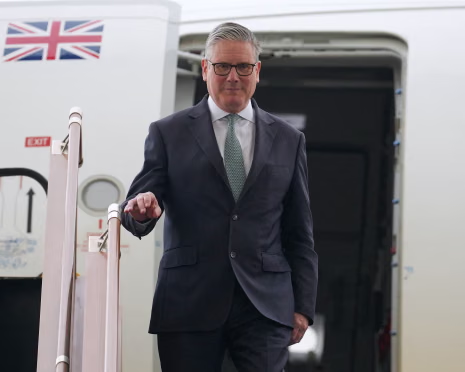
Prime Minister Keir Starmer has delivered a firm message regarding the escalating violence in Lebanon. He stated that the continued attacks by Israel simply should not be happening at all. This declaration came during his high-profile diplomatic visit across the busy Middle East region today. Starmer believes the current Iran conflict must serve as a major turning point for Britain. He argued that the United Kingdom needs to find a new path for future security. The Prime Minister shared these views in a detailed article written for The Guardian newspaper. He explained that the British response must focus on a fundamental reset of national policy. This strategy involves making the country more resilient against various global threats and economic shocks. He proposed boosting national defence and forging much closer links with our partners in Europe. These comments highlight a growing diplomatic gap between London and the current administration in Washington.
The Prime Minister’s recent remarks echo the criticisms made by Foreign Secretary Yvette Cooper today. Defence Secretary John Healey has also expressed similar concerns about the direction of the conflict. Their unified stance suggests a widening divide between the UK and Donald Trump’s American government. This tension centers on the aftermath of the Iran conflict and its regional consequences. Starmer and his senior ministers remain adamant that the Strait of Hormuz must stay open. They believe that international waters must be free of any tolls or arbitrary new levies. This position directly challenges a recent proposal suggested by the American President earlier this week. Donald Trump had mooted the idea of a joint venture between America and Iran. This venture would potentially charge ships for passing through that vital global shipping lane now.
During his visit to Bahrain, Starmer held important talks with several key regional power players. He met with leaders in Saudi Arabia and the United Arab Emirates to discuss peace. The talks focused on shoring up the tentative ceasefire between Iran, America, and Israel today. Another major goal is fully reopening the Strait of Hormuz to all commercial shipping vessels. While abroad, Starmer criticized the intensified bombing campaigns that Israel has carried out in Lebanon. These attacks have tragically killed more than two hundred and fifty people in recent days. Starmer told ITV News that such violence is wrong and should stop immediately and completely. He emphasized that this is his very strong and unwavering view on the matter now. His words reflect a deep concern for the humanitarian situation unfolding across the Lebanese border.
Israel has announced it will eventually begin formal talks with the government of Lebanon soon. However, both Israel and the United States have questioned the terms of the current ceasefire. They are unsure if ending attacks on Lebanon was ever part of the original deal. JD Vance, the American Vice-President, argued that Lebanon was not included in the peace agreement. He suggested there had been a legitimate misunderstanding between the various parties involved in talks. Starmer has firmly dismissed this technical argument during his interviews with the British press today. He stated that the issue is not merely a technical breach of a written agreement. To him, this is a vital matter of human principles and basic international law. He believes that peace must extend to all neighbors to be truly effective and lasting.

UK ministers have generally refused to directly condemn Donald Trump’s recent aggressive rhetoric on Iran. The American President shocked many world leaders with his recent comments about the Iranian people. He suggested that their whole civilization might die if demands were not met very quickly. In his ITV interview, Starmer was only obliquely critical of this harsh and polarizing language. He stated clearly that those are not words he would ever choose to use himself. He noted that he approaches these global issues with traditional British values and fair principles. Starmer wants to maintain a professional relationship with the US while holding his own ground. This delicate balancing act is a central part of his current foreign policy strategy today. He seeks to protect British interests without causing a total breakdown in transatlantic relations now.
In his Guardian article, Starmer detailed the separate path the UK has taken recently. He wrote that Britain would not be drawn into any offensive military action this time. He took pride in the fact that the UK stayed out of the fighting. The Prime Minister presented these difficult choices as being best for long-term British national interests. He argued that staying out of the conflict allowed Britain to focus on domestic strength. This approach involves rebuilding European alliances that were strained in previous years of political turmoil. He also highlighted the biggest sustained investment in British defence since the Cold War ended. These measures are not just about responding to one single crisis in total isolation today. They represent a new way of thinking about the long-term future of the country.
Starmer argued that successive shocks have damaged the UK over the last several years recently. He pointed to Brexit, the pandemic, and the war in Ukraine as major damaging events. He claimed that previous governments often used sticking plaster responses to solve these complex problems. This time, he promised that the government’s approach will be very different and more robust. He believes the war in Iran must become a clear line in the sand now. The way Britain emerges from this crisis will define the nation for an entire generation. He wants to ensure that the country is never again left vulnerable to global instability. This vision requires a bold shift in how the UK interacts with the wider world. He is calling for a sense of national purpose and renewed international cooperation today.
In his television interview, Starmer was even more explicit about repairing ties with European neighbors. He said he is clear in his mind that Britain must be closer. This includes cooperation on matters of defence and security across the entire European continent. He also wants closer ties regarding trade and energy to help the British economy grow. Strengthening the economy will make it more resilient to the fluctuations of the global market. Starmer believes that isolation is not a viable path for a modern and prosperous Britain. He wants to leverage the power of proximity to ensure national stability and future wealth. This shift in tone marks a significant departure from the rhetoric of previous UK administrations. It signals a desire for a more integrated and cooperative relationship with the European Union.
When asked about the Strait of Hormuz, Starmer was very clear about his specific expectations. He stated that the UK views the lane as a zone for toll-free navigation. Safe passage for all merchant ships is a non-negotiable requirement for global trade to function. Earlier on Thursday, John Healey also warned against the idea of introducing any new tolls. He spoke at a press conference in Westminster to clarify the government’s official security position. Healey argued that pay-for-passage tolls would create a dangerous principle for other international waterways too. Such a system could be easily used and abused by other nations elsewhere in future. The UK government wants to protect the freedom of the seas for every trading nation. This policy is essential for maintaining the flow of goods and keeping prices stable.
Healey also called for the current ceasefire to extend to the nation of Lebanon immediately. He condemned the recent escalation of violence and the loss of innocent civilian lives there. The UK wants to see the Israel-Lebanon conflict brought within the official ceasefire terms. This would help bring greater stability to a region that has suffered far too much. Stability in the Middle East is seen as vital for the security of the UK. Later on Thursday, Yvette Cooper was scheduled to speak at an event in London today. She planned to tell the audience that there must be no return to conflict. Her speech emphasized that there is still considerable work to do to secure peace. She supported the ongoing negotiations but insisted that they must show real and visible progress.

The Foreign Secretary’s speech also highlighted the need for Lebanon to be included in peace. She argued that there must be no further threat from Iran to its neighbors. Crucially, she reiterated that the Strait of Hormuz must be fully reopened to all traffic. The UK government is working hard to ensure that this happens as soon as possible. Their diplomatic efforts are focused on creating a comprehensive and lasting peace for the entire region. This involves engaging with all parties to find a common ground for future security. The road ahead is difficult, but the UK remains committed to its stated principles. Starmer’s leadership on this issue is a defining moment for his government’s foreign policy. He is determined to steer the country through these turbulent times with clarity and resolve.
The British public is watching these developments with a mix of concern and hopeful anticipation. There is a strong desire for peace and a return to international order and stability. Starmer’s focus on resilience and European cooperation resonates with many who seek a secure future. As the situation evolves, the UK will continue to play a leading role in diplomacy. The government believes that a principled approach is the best way to achieve lasting results. By standing firm on international law, Britain hopes to influence the global stage for good. The coming weeks will be critical for the success of these various peace initiatives. World leaders must now decide if they will choose cooperation over continued and destructive conflict. For Keir Starmer, the choice is clear and the path forward is already being built.
Related News:
 Middle East Flights Halted After Iran Strikes
 Thousands Protest Iran Strikes Outside US Embassy London
 US Bombers Arrive at RAF Base Amid Rising Iran Tensions
 UK Prepares Aircraft Carrier for Middle East Crisis
 Mojtaba Khamenei Chosen as Iran’s New Supreme Leader
 Tehran Oil Depot Strikes Darken City With Toxic Smoke
 Mojtaba Khamenei Supporters Rally as Iranians Fear Repression
 Iran Defiance Grows Amid US-Israel War Pressure
 Hormuz Crisis Sparks Global Oil Market Fears
 Iranian Exile Factions Seek US Backing for Iran’s Future
 Injured Mojtaba Khamenei Elevated as Iran Leader
 Trump Iran War Stance Hardens as Conflict Widens
 Ghalibaf Iran: Survivor Emerges in Shifting Power Game
 Iran Crisis Tests Trump’s Global Leadership
 Trump likens US Navy actions to ‘pirates’
 Global order shifts amid Trump-era turmoil
 Middle East Crisis Escalates as Oil Routes Shake Markets
 Tensions Emerge in Netanyahu-Trump Alliance
 Former ICC prosecutor condemns US sanctions
 Trump Claims Iran Peace Deal Near Completion
 Iran Prepares for Massive Six-Day Funeral for Khamenei
 Iran Mourns: Millions at Khamenei’s Final Procession
 Houthis Strike Saudi Arabia as Middle East Tensions Rise
 Trump Calls Strait of Hormuz ‘American Territory’
 Trump Faces Iran War Crisis Before Midterm Vote
 Former Diplomats Urge UK and France to Act on Palestine
 Army Officers Orders to Cut Ties with Men-Only Clubs
 Trump’s UK Ambassador Urges North Sea Drilling to Strengthen US Ties
BBC to Apologise Over Edited Trump Speech Amid Backlash
Trump’s UK Ambassador Urges North Sea Drilling to Strengthen US Ties
BBC to Apologise Over Edited Trump Speech Amid Backlash
 Britain deploys RAF specialists to assist Belgium with drone threats
 Millionaires group urge Reeves to introduce wealth tax to ‘lift kids out of poverty’
 Reeves rejects £1bn plea for NHS redundancy payouts
 PM Condemns Leaks, Vows Loyalty to Ministers and Stability
 Major Rent Reform Ends No-Fault Evictions in England
 Greene Pushes Epstein Files Amid Trump Fallout
 December Run-Off in Chile as Election Produces No Winner
 Shadow Fleet at Sea: Europe’s Battle Against Illicit Oil Shipping
 Georgians Defy Government Crackdown After Year of Protests
 ICC to Rule on Duterte’s Provisional Release
 Starmer Says Labour’s Economic Plan Needs Years to Deliver
 Australia grants Asio powers to designate hate groups under new laws
 Trump press secretary attacks reporter over ICE question
 Artificial intelligence will cost jobs, admits Liz Kendall
 UK and US Drop in Global Corruption Index Rankings
 Canberra Poster Seizure Sparks Free Speech Row
 Wales Approves Assisted Dying Bill Consent
 Jacinda Ardern Move Sparks Kiwi Reflection
 Asylum Seekers to Work After Year-Long Wait
 New Zealand Covid Response Praised Despite Lingering Scars
 Inquiry into HMRC child benefit errors launched by NAO
 Pakistan Targets Militant Hideouts in Afghanistan
 Farage Faces Backlash Over Crypto Cameo Endorsements
 Air Canada CEO Faces Outcry Over Recent Language Misstep
 Diplomacy on the Brink: Pakistan’s Risky Peace Mission
 Relationship with Trump may be beyond repair, Starmer warned
 Unions Raise Concerns Over Doctors’ Pay Dispute
 Trump’s Six-Week Iranian War: The High Cost of Ignorance
 Reform UK Pledges To Halt Visas Over Reparations Demands
 Israel Defies Ceasefire as Lebanon Operations Persist
 Islamabad Hosts Historic Peace Talks Between Iran and USA
 Suspected Plot Targets Pipeline Before Hungary Vote
 Trump Defiant After Washington Hotel Shooting
 Starmer Survives Mandelson Rebellion
 Trump approval plunges amid Iran war fears
 Tough Fiscal Realities Await Next Scottish Government
 US ‘Narco Boat’ Strikes Draw Global Outcry
 One Nation Candidate’s Surprising Ties to Independents
 Labour Members Doubt Starmer Future as Burnham Leads Poll
 Reform UK Faces Crisis as Newly Elected Councillors Resign
 Tensions Flare as Israeli Nationalists March in Jerusalem
 Tony Abbott Returns as New Liberal Party President
 Discontent grows around Putin amid war strain
 Secret Role of UK Security Services in Troubles Amnesty Law
 The Hidden Crisis Eroding Trust in British Communities
 Deepfake Abuse on X Sparks Safety Concerns for Dissidents
 Trump’s Mount Rushmore Speech: A Divisive Anniversary
 Trump’s Red-Card Intervention Hurts the US World Cup
 Trump Swaps Planes Amid Iran Tensions
 Ann Widdecombe, Formidable Political Figure, Dies at 78
 Yemen Accuses Iran of Violating National Sovereignty