Published: 17 April 2026. The English Chronicle Desk. The English Chronicle Online
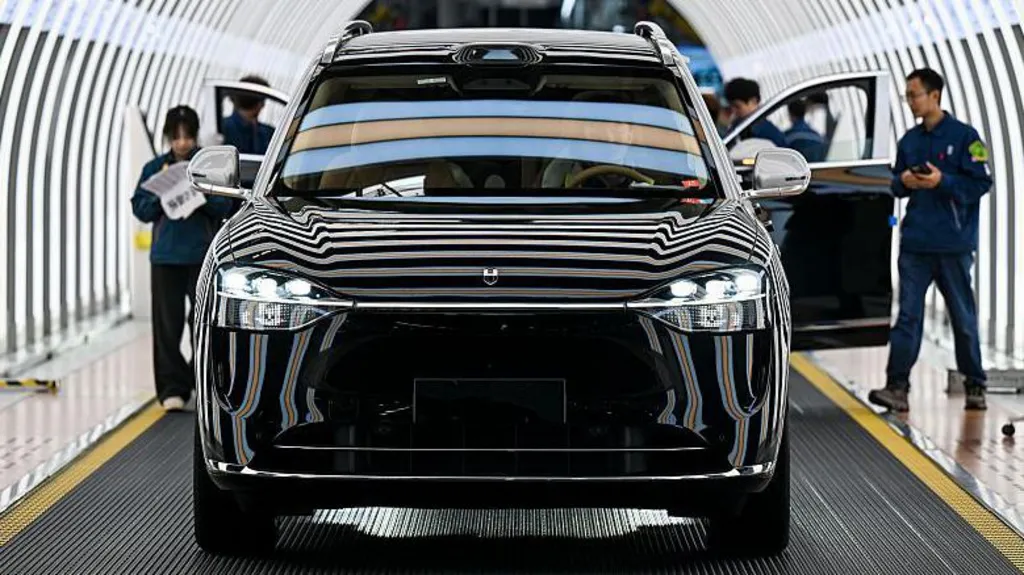
In the increasingly eccentric arms race of the Chinese electric vehicle (EV) market, automaker Seres has officially upped the ante by securing a patent for a voice-controlled, in-vehicle toilet. Approved by the Chinese government earlier this month, the patent (CN224104011U) describes a “mobile latrine” hidden beneath a sliding passenger seat, designed to solve the age-old problem of being caught short during long-distance travel, camping, or the grueling multi-hour traffic jams typical of megacities like Beijing and Shanghai. While western manufacturers focus on range and safety, Seres—the manufacturing partner behind Huawei’s AITO brand—is betting that the ultimate luxury is never having to pull over for a rest stop again.

The technical specifications of the “in-car commode” are surprisingly rigorous for a concept that has already sparked a wave of “potty humor” across social media. The unit sits on a specialized sliding rail assembly tucked under the front passenger seat. To access it, a user can either manually shift the seat or simply issue the voice command, “Start up toilet function,” which triggers an automated sequence to reveal the basin. To combat the obvious hygiene concerns of performing personal tasks in a confined, carpeted space, the patent details a built-in fan mechanism and exhaust pipe to funnel odors directly outside the vehicle. Perhaps most ambitiously, it includes a rotating heating element designed to evaporate liquids and dry solid waste, significantly reducing the volume of the onboard storage tank.
The announcement comes at a time when China’s EV sector is struggling with extreme oversaturation, leading companies to introduce increasingly “outlandish” accessories to distinguish their brands. From Nio’s “hot stone massage” seats to BYD’s built-in drones and XPeng’s “Land Aircraft Carrier” flying cars, the car is being reimagined as a comprehensive living space. Seres engineers noted in the filing that the goal is to “optimize the utility of the car’s interior” for the growing number of people “living in their cars” or engaging in off-grid van life. However, industry experts point out that the engineering hurdles—such as routing drainage pipes through a chassis already packed with lithium-ion batteries—make mass production a daunting prospect.
Public reaction has been a mix of amusement and skepticism. While some frequent travelers have hailed the idea as a potential lifesaver for those with medical conditions or small children, others have raised the “awkwardness factor” of using such a device in the presence of other passengers. “Using a toilet inside a silent, luxury EV brings a whole new level of social anxiety,” noted one viral post on Weibo. There are also significant regulatory questions regarding the safety of using such a device while the vehicle is in motion, and whether such a feature would even be legal in international markets with strict sanitary and automotive safety standards.

For now, Seres has not announced which, if any, of its upcoming models will feature the “voice-toilet.” Analysts suggest it is more likely to appear as a high-end, personalized option for flagship SUVs like the AITO M9, rather than a standard feature for the masses. Whether this patent represents a genuine breakthrough in automotive convenience or simply a “marketing stunt” to capture headlines in a crowded market remains to be seen. Regardless, the message from the Chinese automotive industry is clear: in the race to build the car of the future, no human need—no matter how private—is off-limits.
Related News:
 Hot in the City: Energy Crisis Tests Singapore’s Air-Con ‘Addiction’
 The Silent Lifeline: Why the 2026 Digital Switchover has Millions Saying, ‘I Didn’t Realise How Much I Needed My Landline’
 The Green Mile: Country Lane Solar Farm Set to Power 13,000 Homes
 The Sustainable Departure: Crematorium Completes £5m ‘Green’ Transformation
 The Pouch Peril: Dental Experts Probe the ‘Seismic’ Impact of Nicotine Pouches on Oral Health
 Powering the Future: Green Light for ‘Seismic’ Nuclear Project Promising 8,000 Jobs
 How to Exit Your Broadband Contract Without Paying Exit Fees
 Ed Davey Urges Government to Block Elon Musk’s Tesla from Supplying UK Home Energy
 Apple Unveils Ultra-Thin $999 iPhone Air at “Awe-Dropping” Annual Event
 Merck Abandons £1bn London Research Hub and Cuts 125 Jobs in Blow to UK Life Sciences
 UK and US Forge Landmark Deals to Build Modular Nuclear Reactors Across Britain
 Big Pharma Investment Freeze Puts UK Life Sciences Sector Under Strain
 UK Could Generate Nearly £2bn Annually by Taxing SUVs, New Study Reveals
 Jaguar Land Rover Extends Production Halt Following Cyber-Attack
 British AI Startup Outshines Human Forecasters in Global Prediction Contest
 Royal Mail Owner Acquires Stake in Collect+ and Launches High Street Rebrand
 Virgin Trains Moves Closer to Challenging Eurostar Monopoly
 New laws to bolster UK’s defences against cyber attacks on NHS, transport and energy
 UK Taskforce Unveils Plan to Streamline Nuclear Reactor Rules
 MPs warn AI financial risks threaten UK stability
 MPs warn AI financial risks threaten UK stability
 Amazon mistakenly signals new global layoffs to employees
 UK New Car Discounts Near £6,000 as Prices Are Slashed
 BT Names New Openreach Chief Amid Major Fibre Expansion
 AI fears hit UK wealth and comparison sites
 Royal Mail Blames Poor Weather and Sickness for Delayed Deliveries
 The Chinese AI App Sending Hollywood Into a Panic
 Store at Famous Shopping Village to Close After 18 Years Due to Rising Costs
 AI Coding Firm’s ‘Pride’ at Business Award Win
 ‘A Disgrace’ — Patient Blasts Neurology Report
 Man discovers £18k trading card stash in his loft
 Vegetarian Diet Linked to Lower Risk of Several Cancers
 How Aston Martin Must Adapt to Meet Changing Needs
 Water Cremation Introduced in UK First

 Revealed: UK AI Push Faces Phantom Investment Claims
 Sarah Ferguson Loses Another £1.5m Amid Financial Struggles
 Courier Firm Bust After 14 Years as Evri Deliveries Face ‘Temporary Disruption’
 Bank of Scotland App Glitch Lets Customers See Other Users’ Transactions
 ‘Heating Oil Suppliers Are Holding Us to Ransom’ as Prices and Cancellations Surge
 Tesla Enters British Energy Market Following Ofgem Approval
 India’s $300bn Outsourcing Industry Faces AI Test
 Rising Costs Force Families to Rethink Days Out
 UK Watchdog Probes Five Firms Over Fake Review Failings
 Fire Crews Battle Major Blaze at Coventry Car Dealership
 Spring Awakening: Temperatures to Hit 17°C as Britain Bathes in Sunshine
 Jim Ratcliffe’s £3.5bn Chemical Plant Delayed with Parts Stranded in the Gulf
 John Bengtson: The ‘Silent Film Sleuth’ Who Found History in the Background
 Michel Rolland: The ‘Spielberg of Wine’ Who Directed the Global Palate
 Gridlock Britain: Easter 2026 Set for Busiest Roads in Four Years
 ‘Empty Tanks’: UK Drivers Cry Foul as Petrol Prices Surge Amid $120 Oil Threat
 British Businesses Braced as National Living Wage Hits £12.71 Published: 1 April 2026
 The “Trap” Is Closing: New Global Laws Target Subscription Loops
 The $11k Ticket: High Stakes and Dynamic Pricing in FIFA’s First Open Sale
 National Treasure: Raja Ravi Varma Masterpiece Smashes Indian Art Record with $17.9m Sale
 The “Citrus” Shift: Marmalade to be Legally Rebranded in Post-Brexit Food Realignment
 New Gmail Feature Ends Era of Embarrassing Email Names
 “Homo Sapiens are All of Us”: Artemis II Crew Sends Emotional Message of Unity from Deep Space
 Apple at 50: Three Products That Changed How We Live
 Silver Linings: Why Global Tourism is Finding “Positives” Amidst Iran War Uncertainty
 China and the US: The Divergent Fronts of the Global AI Superpower Race
 Electric Shock: Australians Buy Record Number of New EVs as Fuel Crisis Bites
 War, Windfalls, and the Carbon Trap: The Iran Conflict’s Brutal Energy Math
 Debt Relief or Drop in the Ocean? UK Caps Student Loan Interest at 6%
 The $100 Billion Peace: Trump’s ‘Grand Bargain’ Ends Iran Conflict at a Staggering Cost
 ‘The Best Decision I Ever Made’: A Mother’s Viral Plea After a Near-Miss with Lung Disease
 ‘No Gas, No Food’: LPG Shortage Triggers Reverse Migration in Indian Metros
 The Great Chokehold: Why the Strait of Hormuz is the Epicenter of the 2026 Crisis
 The Silicon Emerald: How Irish Engineers are Cashing In on the AI Boom
 The Pre-School Lottery: Families Left in ‘Holding Pattern’ as Local Places Vanish
 The Friendship Friction: Would You Call Out Your Friend’s Toxic Behaviour?
 Moldova River Crisis Exposes War’s Hidden Cost
 Heavier SUVs Accelerate Britain’s Pothole Crisis
 Relief at the Pump: Irish PM Unveils €505m Package to Stem Fuel Crisis
 The Price of Help: Fuel Surge Threatens Charitable ‘Power Plant’
 The Outback Squeeze: ‘Out of Control’ Diesel Prices Threaten Australia’s Freight Arteries
 The Freedom Hub: Can a Former Women’s Jail Unlock This City’s Potential?
 Digital Shield: Met Police Trial AI to Fast-Track Child Abuse Investigations
 The Wheels of Hope: Charity Delivers ‘Seismic’ Joy Through Specialized Bikes for Children with Cancer
 The Waiting Ward: ‘Month of Worry’ as Doctor Strikes Trigger Seismic Surgery Delays