Published: 21 April 2026. The English Chronicle Desk. The English Chronicle Online.
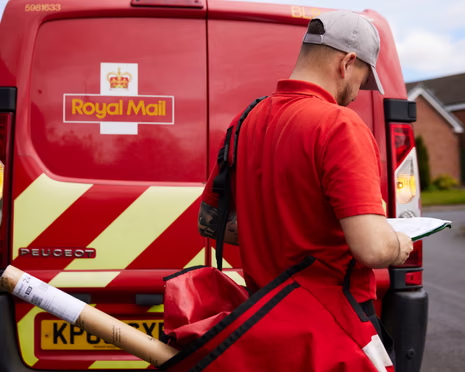
Royal Mail is currently launching a massive strategy to restore its failing delivery standards. The company will invest five hundred million pounds over the next five years for improvements. This ambitious financial commitment aims to tackle persistent problems with late mail across Britain. A central part of this strategy involves changing how second-class mail is delivered nationwide. Starting next month, second-class post will only arrive on alternating weekdays for most homes. Furthermore, the company will completely scrap second-class deliveries on Saturdays as part of this. These changes follow successful trials that the delivery firm conducted starting back in July. National rollout of this revised delivery pattern will officially begin throughout May this year. This decision followed intense negotiations between the company and two major trade unions recently. Both the Communication Workers Union and Unite reached a critical agreement just last week. That agreement finally ended a long and bitter dispute over this service overhaul plan. The Communication Workers Union will now hold a formal ballot for its members soon. Members will have the final say on whether to accept these significant service changes. Meanwhile, the company promises that first-class post will remain entirely unaffected by this plan. First-class letters will continue to reach doorsteps daily from Monday through until every Saturday. Furthermore, parcel delivery services will remain completely unchanged and continue up to seven days. Royal Mail has promised to meet strict new targets set by regulator Ofcom soon. The company aims to satisfy these demanding performance requirements by next May at latest. This pressure comes after Ofcom issued a record fine of twenty-one million pounds last. That massive fine was triggered by the company missing its delivery targets during last year. Data showed that the firm delivered only seventy-seven percent of its first-class post punctually. Its second-class performance was also lackluster, reaching only ninety-two percent of its internal goals.

The investment will help fund operational improvements to ensure that mail reaches homes faster. Part of this funding will allow six thousand part-time workers to increase their hours. Royal Mail intends to fund this significant investment through savings from the service changes. These savings are expected to emerge from the new, more efficient second-class delivery structure. The company recently faced criticism after increasing the price of its various postage stamps. First-class stamps now cost one pound and eighty pence for all individual senders today. Second-class stamps are now priced at ninety-one pence despite recent service complaints from citizens. Citizens Advice notably criticised the company for providing what it called a failing service. In February, management blamed stormy weather for significant disruption to its daily delivery rounds. They also cited unusually high levels of staff sickness for the recent local delays. Dave Ward, the general secretary for the union, offered a cautious but hopeful response. He welcomed any serious proposal that aims to reverse these persistent customer service failings. However, he stressed that actual results on the ground are what truly matter today. He noted that postal workers need clear answers regarding how they are being resourced. Workers want to know if they will be properly retained during this difficult transition. He also questioned whether staff will have a real say in operational change deployment. Managing workloads remains a top priority for union officials representing the frontline postal staff. He argued that the current top-down management style has caused significant internal friction lately. The company must stop prioritising financial returns over its own staff and service quality. He remarked that Royal Mail’s history of keeping promises has not been great recently. Consequently, the union has asked the government to hold the company fully to account.
Management remains optimistic that these changes will yield better performance for all UK customers. The company expects to improve first-class next-day delivery to eighty-five percent within nine months. This improvement should occur shortly after these new operational changes are officially brought in. They then expect to reach the ninety percent target set by Ofcom within year. Additionally, the firm pledged to deliver ninety-three percent of second-class letters within three days. This goal should also be met within nine months of the new strategy launch. The company aims to hit the ninety-five percent target by May of next year. Ofcom has already adjusted its expectations to better reflect the changing postal delivery landscape. The regulator lowered its first-class target from ninety-three percent down to ninety percent recently. It also reduced the second-class target from ninety-eight percent down to ninety-five percent now. These adjusted targets officially became effective on the first day of this past April. Ofcom also introduced a new enforceable backstop target to protect consumers from extreme delays. This new rule stipulates that ninety-nine percent of mail must arrive within two days. Alistair Cochrane, the Royal Mail chief executive, expressed confidence in this new strategic direction. He stated that these plans would lead to a genuine step change in performance. He acknowledged that the service has not always met expected standards for our customers. He remains determined to do better as the company navigates this very challenging period. The entire shake-up occurs just one year after a major corporate takeover of ownership. Czech billionaire Daniel Křetínský’s EP Group completed a massive takeover of the parent company. That deal was valued at three point six billion pounds for the entire organisation. As this transition unfolds, millions of British citizens wait to see if things improve. Reliability remains the most important factor for those depending on the national mail service. The coming months will be crucial for both the company and its many customers. Only time will tell if these bold investments can truly restore the royal service.
Related News:
 Reeves Faces Setback as Labour May Miss Homes Target
 Trump’s UK Ambassador Urges North Sea Drilling to Strengthen US Ties
 ABF May Split Primark from Food Division Amid Tough Market
 M&S Profits More Than Halve After Cyber-Attack
 Tony Blair think tank warns Rachel Reeves must cut taxes if manifesto broken
 Oprah enjoys Meghan’s jam on English muffins
 Millionaires group urge Reeves to introduce wealth tax to ‘lift kids out of poverty’
 UK toy market enjoys bumper year as ‘kidults’ fuel demand
 Global markets drop amid tech sell-off and China slowdown
 PM Highlights UK Business at G20 in South Africa
 Mossmorran Plant Closure Hits Cowdenbeath Hard
 UK Taskforce Unveils Plan to Streamline Nuclear Reactor Rules
 Steel billionaire Lakshmi Mittal reportedly leaves UK
 Starmer Says Labour’s Economic Plan Needs Years to Deliver
 Virgin Media Fined £23.8m Over Telecare Safety Failures
 Rising Water Bills Lift Troubled Thames Back to Profit
 Sainsbury’s CEO leads business honours in New Year list
 Starmer Faces Parliamentary Battles Over UK-EU ‘Reset’ Plan
 Phoenixism Costs UK Taxpayers Millions in Recruitment Sector
 ScottishPower Tops List of Worst UK Energy Suppliers
 City & Guilds pay surge sparks backlash amid £22m cuts
 UK Government Borrowing Drops to £11.6bn in December
 AI job losses UK: Britain faces sharper employment shock
 Most young adults in UK fear uncertain jobs and economic future
 Royal Mail delivery delays affect 16 million during Christmas
 UK Housing Market Shows Early Recovery Signs
 UK economy struggles as growth stalls at 0.1% in late 2025
 Bank of England Urged to Cut Rates to Spur Growth
 UK Unemployment Rate Climbs to 5.2% Peak
 UK shelves £110m border project amid trade strain
 UK Inflation Surprise Sparks Early Rate Cut Hopes
 Progress on gender equality at top UK firms ‘achingly slow’
 Reeves Must Back Defence Plan or Face Dismissal, Says Unite Chief
 Switching Energy Deal Can Save £200 as Price Cap Falls
 OBR Reform Row Deepens Before Spring Forecast
 UK Hotel Data Sharing Probe Shakes Global Chains
 Rachel Reeves Faces Middle East Conflict Test
 Grocery Inflation Rises Amid War Fears
 Peak Greggs fears as profits tumble sharply
 BrewDog sold Highland estate for knockdown price after abandoning reforestation plans
 Yorkshire Water Funding Sparks Debate Amid Fines and Pay Row
 New £10bn rescue plan offered for Thames Water
 UK Energy Reform Could Cut Bills by £200
 Rising Costs Force Families to Rethink Days Out
 Hospitality Sector Teeters on Brink as Costs Surge
 Iceland Boss Offers Role to Sacked Waitrose Employee
 Student Loan Interest May Rise Despite 6% Cap
 Aegon Sells Historic UK Arm to Standard Life for £2bn
 Major Housebuilder Cuts Land Buying Amid Global Unrest
 UK Staycations Rise as Travel Fears Grow
 City & Guilds Sale Sparks Fees and Pay Uproar
 Heathrow Chair Seeks Peace to Save Third Runway
Carillion Executives Banned After Reckless Misconduct
Heathrow Chair Seeks Peace to Save Third Runway
Carillion Executives Banned After Reckless Misconduct
 Labour Faces Internal Pressure for Bold Economic Shift
 Millionaires Back Higher Taxes to Save UK Public Services
 Crypto Tycoon Enters UK Rich List at Number Six
 UK Firms Freeze Spending as Iran Conflict Bites
 Summer Shock: British Energy Bills Set for Grim July Hike
 Reeves to Fast-Track Clean Energy Amid Iran Crisis
 M&S Boss Slates Food Price Caps as ‘Preposterous’
 UK Pushes for New EU Goods Trade Deal
 UK Urged to Build EU Rejoin Consensus, Says Miliband
 Tube Strike Brings Capital to a Standstill Over Shift Disputes
 BP Stands Firm on Amanda Blanc Amid Boardroom Storm
 Steel Tensions Rise Between United Kingdom and European Union
 UK House Prices Drop For Third Month Due To War Fears
 Top Chefs Back Andy Burnham to Save UK Hospitality Sector
 UK Steel Crisis: Jingye Demands Payout After Takeover
 Flutter to Cancel London Stock Exchange Share Listing
 AI Scams Push UK Investment Fraud Past £220m
 Whitehall Steps In: The Battle Over Thames Water Deepens
 Thames Water Nationalisation Pushes Closer After Rescue Objected
 John Lewis Invests £20m in Glasgow Store Upgrade
 Andy Burnham Enlists Economic Heavyweights for Leadership Bid
 Tories Clinch Shock Victory in Aberdeen South Byelection
 Rethinking the Blueprint for Youth Employment in Britain
 Sainsbury’s Boss Optimistic As Grocery Inflation Eases
 UK Households Suffer Squeeze As Disposable Incomes Drop
 Bank of England Eases Rules Despite Rising AI Risks
 BBC Faces Real Jeopardy as Licence Fee Income Declines