Published: 13 May 2026. The English Chronicle Desk. The English Chronicle Online.
Prime Minister Keir Starmer has placed long-promised changes at the heart of his legislative agenda. He aims to transform education, health, and the courts over the next parliamentary year. The embattled leader looks to prove he can enact the scale of change demanded. Both Labour lawmakers and the British public are calling for significant and rapid national improvements. Starmer unveiled his ambitious programme during the King’s Speech on a very busy Wednesday morning. He hopes this moment will persuade wavering MPs that he should remain in his office. This speech included several bills designed to abolish the current structure of NHS England today. It also seeks to overhaul the provision of special educational needs teaching for many students. The government proposes limiting trials by jury and introducing a new system for digital IDs. Ministers also plan to finally end the leasehold system across England and Wales very soon.
The agenda includes measures to make it harder for migrants to gain settled status here. These changes lie at the centre of the Home Secretary’s controversial new immigration policy plans. However, these specific measures could trigger a significant backlash from many concerned Labour party members. There were few major surprises during the speech delivered to the House of Lords today. The event took place against the backdrop of a bitter battle within the Labour party. Critics and allies are debating whether Starmer should be allowed to stay in Downing Street. The Prime Minister’s allies say the changes will allow the party to win again soon. They believe these reforms fulfill the promise to fix Britain’s struggling and tired public services. Starmer wrote that the country has been buffeted by crisis after crisis for two decades. He cited the financial crash, austerity, Brexit, the pandemic, and the war in Ukraine.
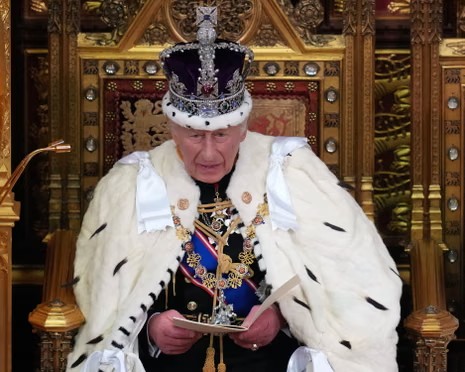
The Prime Minister argued that previous responses always tried to return to the status quo. He claimed that the old status quo made working people pay a very high price. Starmer insisted that this time must be different for the sake of the whole nation. This King’s Speech shows a plan to make the country much stronger and fairer now. He sent a firm message to fractious Labour MPs about the choices they face today. Starmer said the party can sink into the politics of grievance and internal division now. Alternatively, they can choose to deliver on the change promised to the British people. King Charles stated that economic security depends on raising living standards in every single region. His ministers will support measures that maintain stability and control the rising cost of living. The speech included several measures that ministers hope will boost national economic growth quite significantly.
One bill will lay the ground to adopt various European regulations in the near future. This move is part of the Prime Minister’s plan to move closer to Europe. Another bill will force regulators to consider growth when making rules for modern business. Starmer is promising two major changes to housing across England and Wales this coming year. One bill will make it harder for people to buy their own council houses now. Another measure aims to all but end the controversial leasehold system for many local homeowners. The leasehold bill will ban new flats from being sold as leasehold properties very soon. However, the housing minister said the ban would not start until after the next election. On public services, the package will bring in several bills aimed at repairing major problems. These issues include long NHS waiting lists and major backlogs in the UK court system.
The government also wants to tackle the escalating costs of providing special educational needs support. Wes Streeting is due to follow through with his pledge to abolish NHS England soon. The Health Secretary promised this last year and the process has already begun in earnest. Bridget Phillipson will enact changes to special educational needs provision she outlined earlier this year. Under these changes, fewer people will be eligible for education, health, and care plans now. Schools will have more responsibility for deciding how pupils with special needs are taught daily. Ministers will also legislate to bring in a digital ID for the first time ever. This will be used to check immigration status when people start a new job today. The ID will not be mandatory after the Prime Minister backed down on key plans. This compromise follows significant pressure from civil liberties groups and some of his own MPs.
The Prime Minister believes these reforms will define the legacy of his current Labour government. He knows that the public is losing patience with the slow pace of national change. By focusing on health and education, he targets the issues that matter most to families. The abolition of NHS England represents a massive shift in how healthcare is managed locally. Critics worry that such a large reorganization might cause further delays for many waiting patients. However, the government insists that cutting bureaucracy will free up vital funds for frontline care. The changes to the justice system are also expected to spark a very heated debate. Limiting jury trials is a move that many legal professionals view with deep-seated professional concern. They argue that the right to a trial by peers is a fundamental British right. The government claims this is necessary to clear the massive backlog of criminal court cases.
In the classroom, the new approach to special educational needs remains a very sensitive topic. Parents are worried that tighter eligibility for support plans will leave their children without help. Bridget Phillipson argues that giving schools more autonomy will lead to better and faster outcomes. She believes teachers are best placed to understand the specific needs of their own pupils. The immigration proposals are perhaps the most politically sensitive part of the entire legislative package. Shabana Mahmood is under pressure to show that Labour can be firm on border control. Making it harder to gain settled status is a clear signal to more conservative voters. Yet, many in the Labour party feel this contradicts the core values of their movement. This internal tension will likely dominate the political headlines for the next several weeks. Starmer must balance these competing interests to keep his party united behind his leadership.
The promise to move closer to European regulations is a significant shift in post-Brexit policy. It suggests a pragmatic approach to trade that prioritises economic growth over total regulatory divergence. Business leaders have generally welcomed the move to reduce trade barriers with our closest neighbours. They hope it will lead to more investment and higher productivity across the UK economy. The housing reforms are also intended to provide more security for young people and renters. Ending the leasehold system has been a long-standing demand from campaigners for many years now. It is seen as an outdated and unfair way to manage property ownership in England. The restriction on buying council houses is designed to protect the dwindling stock of social housing. This should ensure that affordable homes remain available for those who need them the most. Starmer is betting that these policies will resonate with the concerns of working-class voters.
The Prime Minister’s rhetoric focuses heavily on moving past the crises of the last twenty years. He wants to frame his government as the one that finally breaks the cycle of failure. The emphasis on stability and the cost of living is a direct response to inflation. Families across the country are still feeling the squeeze of high prices and stagnant wages. The King’s Speech is a traditional moment of pomp and ceremony in the British calendar. This year, it carries the extra weight of a government fighting for its political survival. Every word and every bill will be scrutinised by the media and the opposition parties. The Conservatives are likely to argue that these plans represent a return to big government. They will claim that Labour’s reforms will increase the burden on taxpayers and hurt business. Starmer will need to be a very effective communicator to win the public argument.
The success of this agenda depends on the government’s ability to deliver results very quickly. If waiting lists do not fall, the public will likely view the reforms as failures. If the economy does not grow, the promise of higher living standards will ring hollow. The Prime Minister is well aware of the high stakes involved in this legislative session. He has tied his personal reputation to the success of these education and health reforms. The introduction of digital IDs remains a point of contention for many privacy advocates nationwide. Even though it is not mandatory, some fear it is a step toward more surveillance. The government insists it is a modern solution to a complex and growing administrative problem. As the debate begins in Parliament, the eyes of the nation will be on Starmer. He must lead his party through a period of intense scrutiny and political pressure. This King’s Speech is his best chance to define the future of his premiership.
Related News:
 Reeves Faces Setback as Labour May Miss Homes Target
 Kate Winslet to Narrate Film Highlighting King’s Environmental Mission
 Trump’s UK Ambassador Urges North Sea Drilling to Strengthen US Ties
 UK Bans Fake Numbers: Scammers Lose Their Trick
 M&S Profits More Than Halve After Cyber-Attack
 Patients to Test Health at Home to Ease NHS Winter Pressure
 Millionaires group urge Reeves to introduce wealth tax to ‘lift kids out of poverty’
 Reeves rejects £1bn plea for NHS redundancy payouts
 Northern Lights may illuminate UK skies this week
 PM Condemns Leaks, Vows Loyalty to Ministers and Stability
 Major Rent Reform Ends No-Fault Evictions in England
 Stroke Patient Mistaken for Drunk, Care Delayed
 Inside the Helpline Protecting Missing Children in the UK
 Boots Showstopper Beauty Bundle Outshines Many Advent Calendars This Holiday Season
 PlayStation PS5 Deals Hit Lowest Prices Ahead of Black Friday
 Five-Year-Old Dies After Rare Tonsil Surgery Complication
 Starmer Says Labour’s Economic Plan Needs Years to Deliver
 UK unemployment rises to four-year high of 5.1% before budget
 Wiltshire Police Use Lasso to Catch Rampaging Village Goat
 Coasting Drinks: The Trend Redefining Alcohol Enjoyment This New Year
 Rising Hate Crimes Threaten Safety on UK Public Transport
 Starmer Faces Parliamentary Battles Over UK-EU ‘Reset’ Plan
 Met Police Vetting Failures Let Serial Rapists Remain
 Google Employee Claims Redundancy After Harassment Report
 Fatal Bolton Taxi Crash Claims Three Teens and Driver
 ScottishPower Tops List of Worst UK Energy Suppliers
 Judi Dench Champions Fight to Save London’s Green Spaces
 Crowborough Camp Welcomes First Asylum Seekers
 BBC Funding Crisis: Tim Davie Warns of Jeopardy Ahead
 Artificial intelligence will cost jobs, admits Liz Kendall
 Older Women Vanish from BBC Screens, Review Confirms Bias
 Streeting moves on doctor pay to end strike dispute
 Send spending gap leaves deprived areas behind
 Hidden Crisis: Domestic Abuse Suicide Toll in UK
 UK Unemployment Rate Climbs to 5.2% Peak
 BBC World Cup Presenting Duties Shared Among Trio
 Wales Approves Assisted Dying Bill Consent
 CPS Updates Guidance on Honour-Based and Dowry Abuse
 Asylum Seekers to Work After Year-Long Wait
 Inquiry into HMRC child benefit errors launched by NAO
 Rising Costs Force Families to Rethink Days Out
 Scott Mills Sacked by BBC Over Personal Conduct Claims
 Palantir Boss Defends NHS Deal Amid Government Break Clause
 Relationship with Trump may be beyond repair, Starmer warned
 UK Government Poised to Revive Stalled Hillsborough Law
 UK Staycations Rise as Travel Fears Grow
 Home Office Faces Legal Risks Over Asylum Hotel Living
 Official Admits Debate Over Mandelson Vetting Records
 Crisis in NHS Surgery Scheduling Hits Patients Hard
 Welsh Labour Faces Potential Historic Election Defeat
 Blue Badge Abuse: The Rising Tide of Public Hostility
 UK Faces Future Where Deaths Outnumber Births Yearly
 Scott Parker Leaves Burnley After Premier League Drop
 Silent Tracks: Rail Line Without Passengers
 RFU Backs Borthwick Despite England’s Poor Six Nations
 Major test for Labour as polls open in Great Britain
 Keir Starmer Struggles to Secure His Grip on Downing Street
 Fear and Betrayal: The Chilling Case of Kouri Richins
 UK Firms Freeze Spending as Iran Conflict Bites
 Rugby Legend Scott Hastings Dies Aged 61
 Reeves to Fast-Track Clean Energy Amid Iran Crisis
 The Battle for Wembley Sparking Unprecedented Legal Warfare
 Record Spending Highlights Growing Crisis In National Health Service
 Secret Role of UK Security Services in Troubles Amnesty Law
 Tube Strike Brings Capital to a Standstill Over Shift Disputes
 BP Stands Firm on Amanda Blanc Amid Boardroom Storm
 Teaching Machines Right From Wrong in the Digital Age
 UK House Prices Drop For Third Month Due To War Fears
 The Hidden Crisis Eroding Trust in British Communities
 Deepfake Abuse on X Sparks Safety Concerns for Dissidents
 Stolen Mobiles Could Soon Become Useless Bricks
 Clean Air Initiatives Spark Major Fall in London Hospital Admissions
 United Kingdom Politics Worse Now Than Before Brexit, Warns MP
 Russian Tanker Captain Remanded in UK Court After Channel Seizure
 Shocking Zoo Incident Sparks Attempted Murder Probe
 UK Care Crisis: Row Explodes Over New Visa Settlement Rules
 Sainsbury’s Boss Optimistic As Grocery Inflation Eases
 US Airman Avoids British Court in Indecent Exposure Case
 Ann Widdecombe, Formidable Political Figure, Dies at 78
 UK Schools Struggle as Classrooms Top 40C