Published: 14 May 2026. The English Chronicle Desk. The English Chronicle Online.
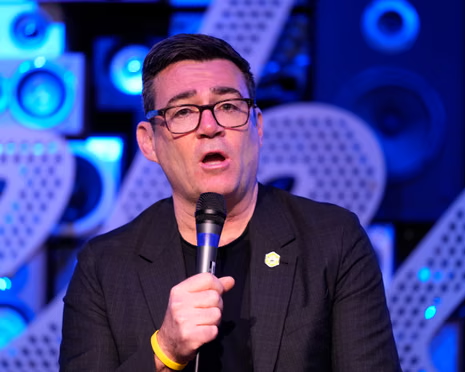
The internal corridors of the Labour Party are currently vibrating with intense political friction today. A prominent member of the National Executive Committee has issued a very stern public warning. This warning specifically targets those hoping to alter leadership rules for the Mayor of Manchester. Luke Akehurst has stated clearly that party procedures should never be tweaked for one person. His comments come as Health Secretary Wes Streeting prepares for a potential leadership challenge soon. The political stakes have reached a boiling point within the current governing party of Britain. Supporters of Andy Burnham are now desperately lobbying for a much longer election timetable today. They want enough time for the popular Mayor to win a seat in Parliament. This would involve a complex by-election process during a period of immense national uncertainty.
The prospect of a three month contest is seen by many as pure chaos. Akehurst mentioned that it is simply not physically possible for Burnham to participate now. He pointed out that every Prime Minister since 1963 has been in the Commons. Allowing a non-MP to run could open the floodgates for many other former politicians. Names like David Miliband or Ed Balls were mentioned as examples of potential chaos. The NEC member believes the rules must remain firm to protect the party integrity. He spoke passionately to the media about maintaining the established constitutional norms of the party. The health of the British democracy relies on clear and consistent rules for leaders. Streeting remains a frontrunner for the role if Keir Starmer eventually decides to step down.
However, the internal battle is not just about rules but about the party soul. Allies of Andy Burnham are worried about a coronation for the current Health Secretary. They believe the party needs a wider choice of candidates to ensure true representation. The Mayor of Manchester has built a massive following outside of the London bubble. His supporters feel the NEC is unfairly blocking his path back into national politics. This tension has been simmering since January when his initial return bid was rejected. The party leadership at the time wanted to avoid a direct challenge to Starmer. That decision caused significant anger among various trade unions and many grassroots Labour members. The 10-strong officers group had previously voted overwhelmingly to reject Burnham’s recent requests.
Deputy Prime Minister Angela Rayner has now added her influential voice to this growing debate. She recently suggested that the party should not be blocking talented people from helping out. Rayner has been cleared of any wrongdoing regarding her past personal tax affairs recently. She believes that the party cannot afford to let egos get in the way. Her comments suggest a shift away from the rigid factionalism of the recent years. She denied making any specific deals with the Manchester Mayor for his future support. However, her stance provides a significant boost to those wanting a more open contest. Rayner remains a vital figure for the working class voters across the North today. Her call for unity and openness is a direct challenge to the party establishment.
Another NEC member, Abdi Duale, suggested that officials are starting to back away now. He noted that the influence of the Prime Minister is naturally diminishing after recent events. Many colleagues are now reassessing their old loyalties before the next major party election. The results of the recent local elections have forced a rethink of the strategy. It is clear that the party is no longer as united as it was. The rules for leadership can technically be varied with the consent of the NEC. This discretion gives the ruling body an enormous amount of power over the future. They will ultimately decide if the contest is short or if it is long. A shorter contest would almost certainly exclude Burnham from the ballot paper entirely.
Luke Akehurst remains deeply concerned about a potential shift to the political left wings. He believes that moving away from the center would be a massive strategic mistake. His constituency in County Durham has seen a rise in support for Reform UK. He argues that the party must focus on delivery rather than internal leadership battles. The country does not need the car crash of a long leadership election now. Akehurst firmly believes that Labour members generally prefer to keep their existing party leaders. He intends to back Keir Starmer if a formal contest is actually triggered today. He warns that the alternative could be a leader further left than Streeting. This ideological divide is at the heart of the current Labour Party power struggle.
Chancellor Rachel Reeves has also entered the fray with a very stark economic warning. She believes that a leadership battle would plunge the entire United Kingdom into chaos. The national economic recovery is currently at a very delicate and sensitive stage today. Despite the global instability caused by the Iran war, the UK economy grew recently. The services industry has provided a much needed boost to the total national output. Current figures show a growth of point six percent in the first quarter alone. This makes the UK the fastest growing economy in the G7 nations right now. Reeves argues that this proves the government has the right plan for growth. Any political instability could threaten these hard won gains for the British people.
The Chancellor is urging her colleagues to focus on the promising economic fruit growing. She wants the party to remain disciplined and focused on the job of governing. The conflict in the Middle East has already caused enough economic damage to nations. Britain has managed to defy the expectations of many leading global economists this year. While some predicted a contraction, the country has seen steady and reliable positive growth. This economic success is being used as a shield by the current party leadership. They argue that changing leaders now would be a reckless gamble for the country. The public appetite for another political drama in Westminster is likely very low. Voters are mostly concerned with the cost of living and the public services.
The debate over the leadership rules will likely continue for several more days. The NEC is expected to meet soon to discuss the official contest timetable. Burnham’s supporters will continue to push for a long and inclusive nomination period. They argue that the members deserve to have the best possible candidates available. Meanwhile, the loyalists will fight to keep the process short and highly predictable. The tension between the regional power of mayors and Westminster is very clear. This situation highlights the growing importance of regional leaders in modern British politics. Whether Burnham can bridge the gap back to Parliament remains a very open question. The next forty eight hours will be crucial for the future of Labour.
Keir Starmer faces the most significant challenge to his authority since becoming the Prime Minister. The shadow of the Manchester Mayor looms large over the entire Labour Party today. Streeting and Burnham represent two very different paths for the future of the movement. One offers continuity and a focus on the center ground of British politics. The other promises a more populist and regionally focused approach to national leadership. The party must now decide which direction will best serve the British public. The world is watching how the UK handles this internal political transition carefully. Stability remains the most valuable currency in the modern global political economy today. Labour must find a way to resolve this without damaging the national interest.
As the sun sets over Westminster, the briefing wars are only just beginning now. Every faction is trying to influence the narrative in the national press today. The English Chronicle will continue to monitor these developments as they happen live. For now, the party remains deeply divided over its future path and leadership. The decision of the NEC will be a turning point for the government. If Burnham is allowed to run, the contest will be long and fierce. If he is blocked, the party may face a significant internal backlash soon. The stakes for the Labour Party and the country have never been higher. Everyone is waiting to see who will emerge as the next leader. The future of the United Kingdom hangs in the balance this very evening.
Related News:
 Reeves Faces Setback as Labour May Miss Homes Target
 Kate Winslet to Narrate Film Highlighting King’s Environmental Mission
 Trump’s UK Ambassador Urges North Sea Drilling to Strengthen US Ties
 UK Bans Fake Numbers: Scammers Lose Their Trick
 Millionaires group urge Reeves to introduce wealth tax to ‘lift kids out of poverty’
 Reeves rejects £1bn plea for NHS redundancy payouts
 PM Condemns Leaks, Vows Loyalty to Ministers and Stability
 Inside the Helpline Protecting Missing Children in the UK
 PlayStation PS5 Deals Hit Lowest Prices Ahead of Black Friday
 Five-Year-Old Dies After Rare Tonsil Surgery Complication
 Starmer Says Labour’s Economic Plan Needs Years to Deliver
 Starmer Faces Parliamentary Battles Over UK-EU ‘Reset’ Plan
 Met Police Vetting Failures Let Serial Rapists Remain
 Google Employee Claims Redundancy After Harassment Report
 Fatal Bolton Taxi Crash Claims Three Teens and Driver
 ScottishPower Tops List of Worst UK Energy Suppliers
 Judi Dench Champions Fight to Save London’s Green Spaces
 Crowborough Camp Welcomes First Asylum Seekers
 BBC Funding Crisis: Tim Davie Warns of Jeopardy Ahead
 Storm Chandra floods Somerset, triggers major incident declaration
 Artificial intelligence will cost jobs, admits Liz Kendall
 Older Women Vanish from BBC Screens, Review Confirms Bias
 Mandelson Faces Police Inquiry Over Epstein Leak
 Streeting moves on doctor pay to end strike dispute
 UK reports baby formula toxin poisoning cases across the country
 Morgan McSweeney downfall shocks Labour leadership
 Send spending gap leaves deprived areas behind
 Hidden Crisis: Domestic Abuse Suicide Toll in UK
 UK Unemployment Rate Climbs to 5.2% Peak
 Farage Unveils Reform UK Frontbench Team
 BBC World Cup Presenting Duties Shared Among Trio
 Placenta Accreta Warning as Hunt Urges Action
 Wales Approves Assisted Dying Bill Consent
 CPS Updates Guidance on Honour-Based and Dowry Abuse
 Rolling Hills and Heritage: A Car-Free Break in Leicestershire
 Corbyn Leads Your Party in Coordinated Left-Flank Strategy
 Asylum Seekers to Work After Year-Long Wait
 Starmer Row as Greens Demand Apology
 Major Fire Causes Chaos at Glasgow Central Station
 Gordon Brown urges court for crimes against children
 Inquiry into HMRC child benefit errors launched by NAO
 Farage Faces Backlash Over Crypto Cameo Endorsements
 Rising Costs Force Families to Rethink Days Out
 Sarah Mullally: The Solid Choice for Canterbury
 Scott Mills Sacked by BBC Over Personal Conduct Claims
 Palantir Boss Defends NHS Deal Amid Government Break Clause
 Police Chiefs Under Fire for Failing to Address Racism
 Relationship with Trump may be beyond repair, Starmer warned
 Unions Raise Concerns Over Doctors’ Pay Dispute
 UK Government Poised to Revive Stalled Hillsborough Law
 UK Staycations Rise as Travel Fears Grow
 Home Office Faces Legal Risks Over Asylum Hotel Living
 Official Admits Debate Over Mandelson Vetting Records
 Crisis in NHS Surgery Scheduling Hits Patients Hard
 Blue Badge Abuse: The Rising Tide of Public Hostility
 Scott Parker Leaves Burnley After Premier League Drop
 Silent Tracks: Rail Line Without Passengers
 RFU Backs Borthwick Despite England’s Poor Six Nations
 Major test for Labour as polls open in Great Britain
 Keir Starmer Struggles to Secure His Grip on Downing Street
 UK Firms Freeze Spending as Iran Conflict Bites
 Reeves to Fast-Track Clean Energy Amid Iran Crisis
 The Battle for Wembley Sparking Unprecedented Legal Warfare
 Secret Role of UK Security Services in Troubles Amnesty Law
 Tube Strike Brings Capital to a Standstill Over Shift Disputes
 Teaching Machines Right From Wrong in the Digital Age
 The Hidden Crisis Eroding Trust in British Communities
 Stolen Mobiles Could Soon Become Useless Bricks
 Clean Air Initiatives Spark Major Fall in London Hospital Admissions
 Shocking Zoo Incident Sparks Attempted Murder Probe
 The Hybrid School Revolution Defying the Social Media Ban
 UK Care Crisis: Row Explodes Over New Visa Settlement Rules
 Sainsbury’s Boss Optimistic As Grocery Inflation Eases
 NHS Urges Investigation For Irregular Periods
 US Airman Avoids British Court in Indecent Exposure Case
 Farage Warns Sky News Following Financial Inquiry
 Ann Widdecombe, Formidable Political Figure, Dies at 78
 UK Schools Struggle as Classrooms Top 40C
 Westminster Council Threatens Charing Cross Soup Kitchen
 Former Diplomats Urge UK and France to Act on Palestine