Published: 14 September ‘2025. The English Chronicle Desk, English Chronicle Online
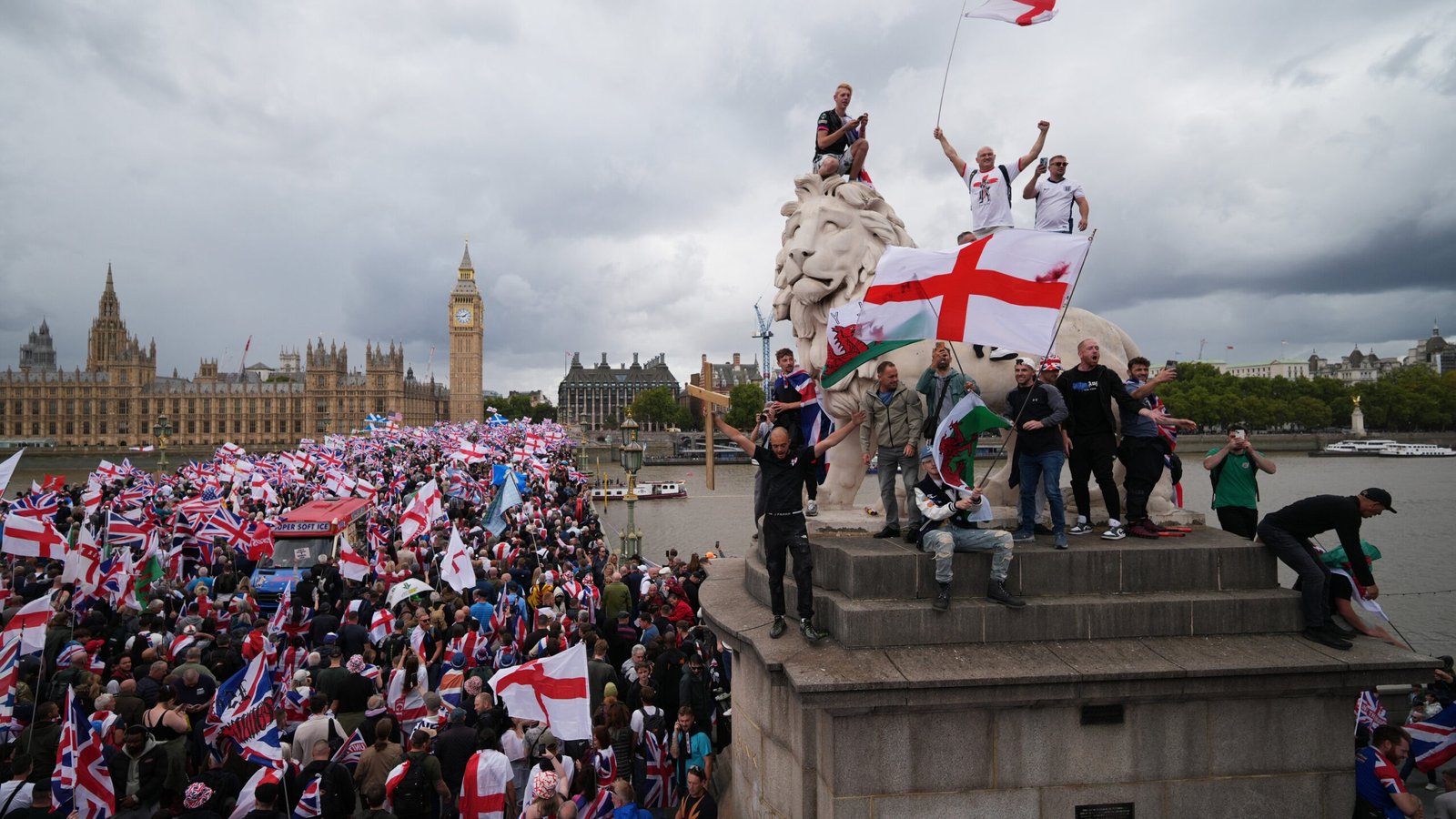
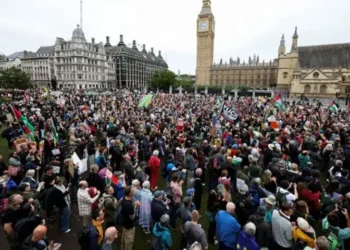
London witnessed an unprecedented far-right rally over the weekend, drawing more than 110,000 participants to a protest organized by activist Stephen Yaxley-Lennon, widely known as Tommy Robinson. Touted as a “festival of free speech,” the demonstration, which stretched across Whitehall, quickly escalated into a scene marked by the amplification of anti-Muslim rhetoric, racial conspiracy theories, and violent clashes with law enforcement. Observers have described the event as the largest nationalist gathering in decades.
Crowds traveled from across the UK, arriving by trains and coaches in central London. Organizers had anticipated significant turnout, yet the sheer scale of the gathering vastly exceeded police estimates, resulting in heightened tensions. The Metropolitan Police reported at least 25 arrests for offenses ranging from affray and violent disorder to assaults and criminal damage. Twenty-six officers sustained injuries, including four considered serious, with incidents involving projectiles such as bottles and flares thrown at officers.

The rally featured high-profile speakers who addressed the assembled crowd both in person and via video link. Elon Musk, connecting remotely, warned of a “rapidly increasing erosion of Britain” and called for the dissolution of Parliament. French far-right politician Éric Zemmour, a prominent figure in European nationalist politics, addressed attendees, claiming that European nations were being “colonized” by migrants from southern regions and Muslim-majority countries.
As the demonstration progressed, the density of attendees around Whitehall became unmanageable. Many marchers were left confined to Westminster Bridge and Parliament Square due to the overflow. Counter-protests by approximately 5,000 participants from trade unions and anti-fascist organizations occurred along separate routes in central London, underscoring the polarized atmosphere of the day.
Participants displayed a range of nationalist symbols, including Union Jack and St George’s Cross flags, and chanted slogans targeting political figures. Merchandising tables sold books authored or co-authored by Robinson, reflecting the ideological messaging central to the rally. Among the attendees were families and individuals from various regions of the UK, some describing their participation as a patriotic act rather than a far-right demonstration, emphasizing concerns over perceived government policies and migration levels.
The Whitehall rally featured theatrical performances, including a traditional haka by members of New Zealand’s Destiny Church, followed by symbolic destruction of flags representing Islamic organizations, which elicited cheers from the crowd. Robinson addressed the audience directly, asserting that British citizens’ rights were being superseded by those of migrants and portraying the state as failing to protect its populace. Musk and Zemmour reinforced these narratives, warning of cultural and political erosion.

Meanwhile, anti-fascist demonstrators, including prominent figures such as MP Diane Abbott, condemned the rally’s organizers as promoting misogyny and authoritarian ideologies. Abbott highlighted that the movement opposed gender equality and efforts to combat discrimination, framing the protest as a threat to societal values.
Metropolitan Police officials emphasized the challenges faced by officers attempting to manage the unprecedented crowd. Assistant Commissioner Matt Twist described the level of violence encountered as “wholly unacceptable” and noted that investigations were underway to identify those responsible. While acknowledging that many participants exercised their lawful right to protest, Twist stressed that a significant number were intent on confrontation, targeting officers and attempting to breach safety cordons.
The far-right rally in London has reignited debates about public demonstrations, freedom of speech, and the management of large-scale protests in urban environments. It also raises broader questions about the rise of nationalist movements in Europe and the societal tensions they generate.
Related News:
 UK Must Act with Courage and Clarity on Israel-Palestine Conflict, Says Foreign Affairs Committee Report
 Starmer and Trump to Meet in Scotland Amid Growing Gaza Ceasefire Pressure
 Minister Dismisses Legal Concerns Over UK’s Pledge to Recognise Palestinian State
 MPs Call on UK Government to Delay Biometric Visa Checks for Gaza Students Amid Humanitarian Crisis
 Radioactive Leak at UK’s Nuclear Warhead Base Sparks Outcry Over Safety and Secrecy
 ‘I’m collateral damage’: ex-minister Tulip Siddiq on her Bangladesh corruption trial
 Mutual Inconvenience: Why Alaska Was Chosen for the Trump-Putin Summit on Ukraine
 “I Don’t Expect to Live a Normal Life”: How a Leeds Teenager Became the Target of a Chinese Bounty
 Ministers Accused of Defamation Over Palestine Action Ban and Mass Arrests
 UK Defence Secretary Says Allied Troops ‘Ready to Act from Day One’ if Ukraine Ceasefire Agreed
 Is the UK Ready to Put Boots on the Ground in Ukraine? Assessing Military Capacity and Challenges
 Protests Expected as Israeli Arms Firms Join Global Defence Trade Fair in London
 UK Home Office to Launch French Beach Signage to Warn Asylum Seekers of Risks
 Charlie Kirk Killing Used to Mobilise UK’s Largest Far-Right Rally in Decades
 UK Immigration Figures: Separating Facts from Perceptions
 Thousands Gather in London to Protest Donald Trump’s Second UK State Visit
 UK and Ireland Set to Unveil New Proposals to Address Northern Ireland’s Troubles Legacy
 Trump Urges UK to “Call Out the Military” to Secure Borders Amid State Visit
Tulip Siddiq Raises Concerns Over Alleged ‘Fake’ Documents in Bangladesh Corruption Trial
Trump Urges UK to “Call Out the Military” to Secure Borders Amid State Visit
Tulip Siddiq Raises Concerns Over Alleged ‘Fake’ Documents in Bangladesh Corruption Trial
 UK Recognises State of Palestine in Push to Preserve Hope for Peace
 UK’s Recognition of Palestine: Symbolic Step or Real Change?
Trump’s UN Speech Criticises London and UK Policies, Draws Far-Right Attention
UK’s Recognition of Palestine: Symbolic Step or Real Change?
Trump’s UN Speech Criticises London and UK Policies, Draws Far-Right Attention
 UK Fighter Jet Purchase Could Breach Nuclear Treaty, Warns CND
 A Third of EU Citizens in UK Report Discrimination by Public Bodies Post-Brexit
 Jailed Georgian Opposition Leaders Warn UK of Iranian Links to Ruling Party
 Russia repeatedly targets UK military satellites, warns Space Command chief
 Pro-Palestine March to Proceed in London Despite Calls to Cancel After Manchester Attack
 UK Universities Warn Students Ahead of 7 October Pro-Palestine Protests
Starmer Considers Stricter Measures on Pro-Palestinian Protest Chants
UK Universities Warn Students Ahead of 7 October Pro-Palestine Protests
Starmer Considers Stricter Measures on Pro-Palestinian Protest Chants
 Public Trust in SNP Hits Historic Low Amid NHS Concerns
 Tony Blair Met Jeffrey Epstein at Downing Street in 2002
 China’s Mega Embassy in London Faces Further Delay
 Johnson Suggests Mandelson Linked to China Spy Controversy
 Minister Blames Deputy for Collapse of China Spy Case
 Shabana Mahmood Warns Border Failings Are Eroding Trust in States
 Witness statements reveal the CPS China spy row collapse in the UK
 Large scale Chinese spying in UK sparks political storm
 Nigel Farage Calls Vladimir Putin ‘A Very Bad Dude’
 Rachel Reeves signals welfare reform ahead of key budget
 Prince Andrew met alleged Chinese spies during Pitch@Palace China trips
 Kosovo agrees to host Britain’s refused asylum seekers
 Plaid Cymru Triumphs in Caerphilly, Ending Labour Century-Long Hold
 Rachel Reeves to lead UK trade push in Saudi Arabia amid rights debate
 British Woman in Iran ‘Losing Hope’ Amid Ongoing Detention
 Johnson Approved China’s London ‘Super-Embassy’ in 2018
 BBC Journalist Held and Interrogated in Vietnam
 Zohran Mamdani becomes New York City’s first Muslim mayor
Zohran Mamdani names all-female transition team for NYC mayoralty
Zohran Mamdani becomes New York City’s first Muslim mayor
Zohran Mamdani names all-female transition team for NYC mayoralty
 Second world war veterans honoured as King leads Remembrance Sunday
 BBC director-general and news chief resign amid bias row
 New review urges UK to repatriate Shamima Begum, others from Syria
 Rama Rebukes Mahmood for Targeting Albanian Families
 Russian Vessel Used Lasers on RAF Pilots, UK Claims
 Ireland Boosts Ukraine Aid as Zelensky Visits Dublin
 Terence Stamp, ’60s British Film Legend and Star of Superman, Dies at 87
 Hong Kong Summons UK and Australian Envoys Following Asylum Grants to Democracy Activists
 Police Scotland Spends £500,000 Compensating Officers Over Trump Visit
 Urgent Action Needed on Windrush Compensation as Survivors Speak of “Waiting to Die”
 Tanni Grey-Thompson Faces Abuse Over Opposition to Assisted Dying Bill
 TfL Invites RMT to Resume Talks as London Tube Strikes End
 ‘Unite the Kingdom’ Rally Sparks Fears of Far-Right Normalisation Among Minority Britons
 Zarah Sultana Seeks Legal Action After Bitter Clash with Jeremy Corbyn Over Party Membership Funds
 Top Andy Burnham Ally Launches Fierce Critique of Starmer Ahead of Labour Conference
 Mahmood Pledges Reform of Modern Slavery Laws After Court Blocks Deportation Appeal
 Ed Miliband Urges Labour to Confront Billionaire-Backed Opposition to Net Zero Goals
 Digital ID Plans Ignite Debate Over £600m Treasury Tax Boost and Privacy Concerns
 Yvette Cooper Backs Digital ID Plan for UK Teens
 Ministry of Justice fails to file £11bn in spending receipts
 Reform UK candidate fined £19,000 after using AI-generated cases to challenge election
 William Steps Up Over Prince Andrew Palace Response
 Ireland Votes as Two Women Compete for Presidency
 Experts Warn Russia’s Burevestnik Missile Could Destabilise Arms Control
 Green Party Surges Past Labour in Latest UK Poll
 Zarah Sultana Launches Party to Change Politics
 Just Stop Oil Protesters Convicted Amid Climate Defence Row
 Starmer Faces Growing Dissent as Labour MPs Weigh Leadership Challenge
 Peers Flood Assisted Dying Bill with 942 Amendments
 Trump Deploys DHS to Charlotte in Major Arrest Operation
 Pentagon Officials in Ukraine to Discuss War End
 Most Tories Expect to Support a Farage-Led Government