Published: 18 September ‘2025. The English Chronicle Desk, English Chronicle Online
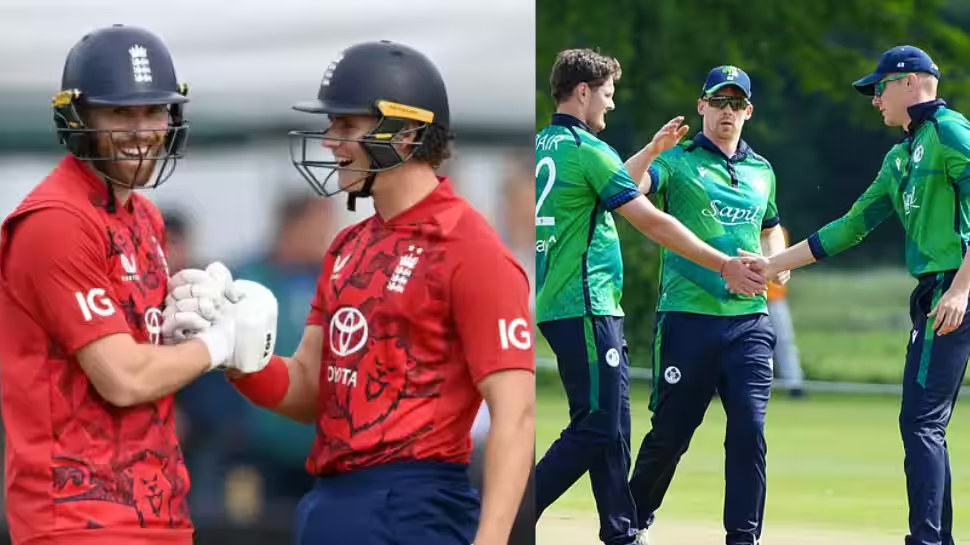
England began their T20I series against Ireland on a triumphant note as Jacob Bethell, standing in as captain in the absence of Harry Brook, orchestrated a remarkable four-wicket win at the Malahide Cricket Ground. The match, which showcased a combination of explosive batting and tense tactical play, marked a significant milestone for the 21-year-old Bethell, who not only captained the side but also guided his team to a victory in a closely contested encounter. The win secures a 1-0 lead for England in the three-match series, setting the tone for the remaining T20Is scheduled on September 19 and 21.
Bethell, entrusted with the captaincy in Brook’s absence, won the toss and chose to field first, a decision that reflected his confidence in England’s bowling attack and the conditions at Malahide. Ireland, however, seized the opportunity with the bat, posting a competitive total of 196 for 3 in their allotted 20 overs. Despite England’s disciplined bowling efforts, the hosts’ top order fired with consistency and aggression, setting up what appeared to be a challenging chase. Ireland’s innings was anchored by a brilliant partnership between Lorcan Tucker and Harry Tector, who combined to add 123 runs for the third wicket after openers Paul Stirling and Ross Adair had put on a solid 57-run opening stand.

Tucker’s measured 55 and Tector’s unbeaten 61* displayed a blend of timing, composure, and power-hitting, ensuring that Ireland remained in contention throughout the innings. The Irish pair capitalized on loose deliveries and gaps in the field, particularly during the middle overs when England’s bowlers struggled to maintain a tight line and length. Liam Dawson and Adil Rashid, England’s spin duo, eventually broke the partnership, but not before the Irish batsmen had established a substantial platform for a competitive total. By the end of 20 overs, Ireland’s 196-3 had set a target of 197, a figure that promised a tense and high-scoring chase for the visiting side.
England’s response began with a flurry of runs from Phil Salt and Jos Buttler, whose first-wicket stand of 74 off 28 balls immediately put Ireland on the back foot. Salt, in particular, continued his scintillating form, striking 89 off 46 balls, displaying a combination of calculated aggression and innovative shot-making. Buttler’s quickfire contribution of 28 off just 10 balls complemented Salt’s innings, ensuring that England maintained a healthy run rate from the outset. The duo’s aggressive approach effectively neutralized Ireland’s early momentum and laid the foundation for a successful chase.
Jacob Bethell, while not at his peak with the bat, made a crucial contribution of 24 runs that helped anchor England’s innings at pivotal moments. His presence in the middle order provided stability and guidance for the younger players, while his captaincy decisions influenced field placements and bowling changes that kept Ireland under pressure. Bethell’s calm and composed demeanor on the field belied his age, highlighting the maturity and leadership qualities that have rapidly earned him recognition within the England setup.
As the innings progressed, Salt remained the dominant force, although he narrowly missed out on a fifth T20I century following his heroic 141 against South Africa. His innings was characterized by precise placement, powerful drives, and intelligent running between the wickets, keeping Ireland’s fielding side under constant pressure. Buttler’s supporting role allowed Salt to maintain momentum while England’s lower-middle order prepared for the final assault.
The climax of the chase arrived in the final overs, with Jamie Overton stepping up to deliver the finishing blow. Overton’s composed hitting and clinical execution ensured that England reached the target with just enough wickets and overs to spare, sealing a four-wicket victory that reflected both resilience and collective effort. The win not only highlighted England’s depth in batting but also underscored the team’s ability to recover from challenging situations under a stand-in captain.
Ireland’s innings had initially appeared promising, with Paul Stirling and Ross Adair setting a steady platform through their 57-run opening partnership. The pair exhibited technical proficiency and situational awareness, rotating strike efficiently and finding gaps to keep the scoreboard ticking. However, their dismissal opened the door for the prolific third-wicket partnership between Tucker and Tector, whose 123-run stand showcased their skill and temperament under pressure. Both batsmen played with a blend of elegance and power, exploiting fielding lapses and executing boundary shots with precision.
Despite the valiant efforts of Tucker and Tector, England’s bowlers displayed persistence and tactical acumen to limit the overall damage. Dawson and Rashid’s breakthroughs, combined with strategic changes in field placements by Bethell, helped curtail further scoring opportunities and set the stage for England’s chase. The match illustrated the fine margins that often define T20 cricket, where small tactical decisions and individual brilliance can dramatically influence outcomes.
England’s victory, led by Bethell’s leadership, carries significant implications for the remainder of the series. The young captain’s approach reflected a keen understanding of match dynamics, effective communication with players, and the ability to remain composed under pressure. The performance also reinforced the importance of depth in England’s squad, with players like Salt, Buttler, and Overton delivering match-defining contributions alongside emerging talents like Bethell himself.
The first T20I in Malahide will be remembered for its thrilling twists, explosive batting, and strategic captaining. Bethell’s debut as stand-in captain was marked by composure, decision-making prowess, and the ability to inspire his teammates, earning plaudits from commentators, former players, and fans alike. His performance, both as a leader and a contributor with the bat, highlights his growing influence in England’s cricketing setup and signals a promising future for the young all-rounder.

Looking ahead, England will aim to capitalize on the momentum gained from this opening victory as they prepare for the second T20I on September 19 and the series-deciding third T20 on September 21. The Irish side, meanwhile, will look to regroup and address the lapses in the closing stages of the match that allowed England to snatch victory from their grasp. Analysts have noted that Ireland’s top-order performance remains a strength, but improvements in the death overs and strategic execution will be critical in leveling the series.
This encounter also reflects broader trends in modern T20 cricket, where explosive starts, strategic rotations, and all-round contributions increasingly determine match outcomes. England’s ability to blend youth and experience, aggressive batting with calculated bowling, and leadership under a new captain demonstrates the evolving nature of the team and the tactical depth required to succeed in international T20 competitions.
In summary, Jacob Bethell’s leadership, combined with key performances from Phil Salt, Jos Buttler, and Jamie Overton, propelled England to a thrilling four-wicket win over Ireland in the first T20I at Malahide. The match was defined by high-scoring contests, strategic captaincy, and moments of individual brilliance that exemplify the excitement and unpredictability of T20 cricket. As the series progresses, fans and analysts alike will be watching closely to see how Bethell and his young England side continue to navigate the challenges of international competition and build on the positive foundation laid in this memorable opening encounter.
Related News:
 Predicted Leicester Line-ups Reflect Cifuentes’ Tactical Plans Ahead of New Season
 Lionesses Return in Glory with an Open-Top Parade, Spark National Pride and Rewrite the Future of Women’s Football
 Central London Gears Up for Lionesses’ Victory Parade as Thousands Prepare to Celebrate Historic Women’s Euros Win
 London Set to Honour Euro 2025 Champions as Lionesses Take Victory Parade Through the Capital
 Rangers Boss Russell Martin Launches Blistering Critique After Disappointing Draw with Motherwell
 Ngumoha Shines Bright as Liverpool’s Future Looks Fiercely Promising
 Minute’s Silence for Diogo Jota Abruptly Ended After Wembley Tribute Disrupted
 Premier League Supercomputer Predicts Tough Season for Man Utd Amid Three-Team Title Battle
 Diogo Jota’s Empty Seat at Liverpool: A Symbol of Grief, Inspiration, and Duty
 Aston Villa Under Pressure as Newcastle Take on Hosts in Premier League Opener
 Isaac Price Shines as West Brom Clinch 3-2 Victory at Wrexham’s Championship Return
 Tottenham Make Three Changes as Spurs Prepare to Host Burnley in Premier League Opener
 FIFA Eyes Biennial Club World Cup from 2029, Plans Possible Expansion
 European Football: Atlético Madrid Stumble at Espanyol as Vitinha Secures PSG Win
 Leeds Mark Premier League Return with Gritty Win Over Everton
 Arsenal Move to Secure Eberechi Eze, Outpacing Tottenham
 Mateta’s Strike Gives Crystal Palace First-Leg Edge in Conference Playoff
 British Paralympians Accused of Disrespect After Turning Backs During Israeli Anthem
 Ruby Tui Emerges as the BBC Rugby Pundit Fans Never Knew They Needed
 Grimsby Stun Manchester United in Dramatic Penalty Shootout
 Club Brugge Crush Ten-Man Rangers to Deepen Russell Martin’s Crisis
 Guardiola Admits City ‘Forgot to Play’ After Shock Defeat to Brighton
 Morgan MacRae: From 17 Minutes Dead to Returning to Rugby in Six Weeks
 Serbia Humiliated 0-5 by England in World Cup Qualifier
 Fábio Carvalho’s Last-Minute Heroics Deny Chelsea Victory at Brentford
 Tottenham Cruise to 3-0 Victory Over 10-Man West Ham in London Derby
 Terence Crawford Shocks Canelo Álvarez to Claim Undisputed Super-Middleweight Crown
 Guardiola Faces Criticism for Defensive Approach in Manchester City’s Clash with Arsenal
 England Must Stay True to Their Style Ahead of Women’s Rugby World Cup Final: Lessons from 1991
Liverpool Vs outhampton Set for Carabao Cup Clash at Anfield
England Must Stay True to Their Style Ahead of Women’s Rugby World Cup Final: Lessons from 1991
Liverpool Vs outhampton Set for Carabao Cup Clash at Anfield
 Chelsea Survive Lincoln City Scare to Advance in Carabao Cup
 Dickie Bird: Cricket’s Beloved Umpire Who Won Hearts with Wit and Integrity
 Aston Villa Edge Bologna as Europa League Campaign Kicks Off
 Tottenham Salvage Point with Stoppage-Time Palhinha Strike Against Wolves
 Manchester City Dominate Burnley 5-1 as Haaland’s Brace Secures Vital Win
 Arsenal VS Newcastle Hearts with Dramatic Late Turnaround at St James’ Park
 Aston Villa Fight Back to End Winless Run with Convincing Victory over Fulham
 Tragic Death Strikes Half-Marathon in Stoke-on-Trent: Runner Dies Shortly After Crossing Finish Line
 Postecoglou Stands Firm Amid Mounting Forest Fan Frustration
 Tuchel Criticises ‘Silent Wembley’ After England Win
 Kane’s Double Seals England’s World Cup Qualification
 Ronaldo’s Record Not Enough as Hungary Hold Portugal
 Fulham vs Arsenal Trossard Strike Sends Gunners Three Points Clear
 Ange Postecoglou’s Naivety Premier League Misadventure Ends
 Arsenal vs Atlético Madrid,Gyökeres Double Secures 4-0 Champions League Victory
 Barnes Inspires Newcastle to Champions League Triumph Over Benfica
 Gibbs-White Inspires Forest to Thrilling Win Over Porto
 Go Ahead Eagles Shock Aston Villa as Buendía Misses Late Penalty
 Aaronson and Rodon Punish West Ham as Leeds Claim Victory
 Manchester United triumph as Mbeumo brace seals thrilling win
 Fabio Wardley stuns Joseph Parker to earn Usyk title shot
 Tottenham shine at Everton but Frank wary of title push
 Brentford Dominate Grimsby in Carabao Cup, Collins Seals 5-0 Triumph
 Lecomte Shines as Fulham Edge Wycombe in Nervy Carabao Cup Win
 Sarr Double Sinks Young Liverpool in Carabao Cup
 Nwaneri and Saka Secure Arsenal Win Over Brighton
 Woltemade Hot Streak Fires Newcastle Past Spurs
 Salah & Gravenberch Lead Liverpool to Win Against Villa
 Dyche Criticises Corner Decision as Forest Draw with United
Caicedo Shines as Chelsea Edge Spurs in Chaotic Derby
Dyche Criticises Corner Decision as Forest Draw with United
Caicedo Shines as Chelsea Edge Spurs in Chaotic Derby
 Granit Xhaka Rescue Earns Everton Draw at Sunderland
 Burn and Joelinton Head Newcastle to Victory Over Bilbao
 Foden shines as Man City dismantle Dortmund in dominant display
 Garnacho Spares Chelsea From Shock Champions League Loss in Baku
 Tension and Turmoil at Aston Villa v Maccabi Match
 Bellingham has ‘the edge’ among England No 10s
Man City Masterclass on Guardiola’s Milestone Day Exposes Liverpool Woes
Bellingham has ‘the edge’ among England No 10s
Man City Masterclass on Guardiola’s Milestone Day Exposes Liverpool Woes
 Lando Norris Dominates Brazil GP to Strengthen F1 Title Bid
 England cannot afford to be in awe of the All Blacks, warns Jamie George
 VAR Must Rein Its Neck In to Save Football’s Spirit
 Trescothick Hints Pope Will Keep Number Three Spot
 Ronaldo Confirms Final World Cup and Plans Retirement
 Mary Earps’s Manchester United Return Faces Mixed Reception
 Sam Kerr Stars in Chelsea Return with Champions League Double
 This kid is something else: Alex Scott’s rise to England call-up
 Former Lion Heskey Warns of Shortage of England Strikers
 Moyes Defends Gueye After Dramatic Everton Bust-Up
 Jac Morgan to Miss Six Nations Start After Surgery
 Alexander Isak ends drought as Liverpool stop rot with win at West Ham
 Mbappe rescues Real Madrid with a penalty at Girona