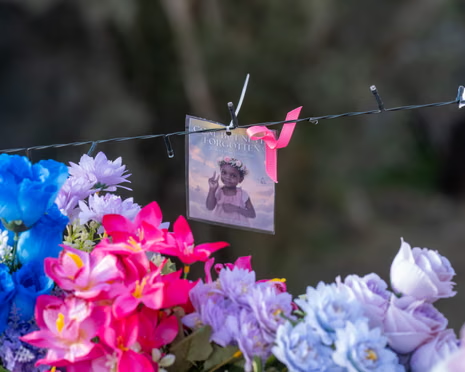
Published: 08 May 2026. The English Chronicle Desk. The English Chronicle Online.
The Northern Territory government currently finds itself at the centre of a growing political storm. This follows the tragic death of a five year old girl in the Alice Springs region. Minister Robyn Cahill announced a major review into the child protection system early this past Friday. However, the move has sparked immediate criticism from several key First Nations advocacy groups today. These advocates are now calling for a much broader investigation into the current failing systems. They argue that a narrow focus will not address the deep roots of this tragedy. The death of Kumanjayi Little Baby has shocked the entire nation of Australia this week. A forty-seven year old man has been charged with murder following this very sad event. He is not related to the child and has not yet entered any legal plea. Minister Cahill told the national broadcaster that the current status quo is simply not acceptable. She promised to reveal the full scope of an independent review early next week instead. Every child in the Territory deserves to be safe according to the minister’s recent statement. She believes the review must examine culture, resources, and the existing laws of the land. Protecting children remains central to the plan for a stronger and much safer Northern Territory.
However, the Children’s Commissioner has raised serious concerns about the lack of proper government consultation. Shahleena Musk stated she was not contacted by any government officials before the public announcement. No members of the cabinet sought to engage her office regarding this sensitive child matter. She expressed surprise that the government did not use existing legal channels for this inquiry. Musk noted her office is still waiting for full information from the child protection department. She remains deeply concerned by the growing politicisation of this tragic and very personal death. Her primary focus has been on respecting the sorry business rituals of the grieving family. The commissioner feels that formal legal notices have been largely ignored by the relevant authorities. This perceived lack of transparency has created a rift between the government and independent monitors. Critics suggest that ignoring the commissioner undermines the integrity of any planned independent system review. The situation highlights a significant breakdown in communication between the minister and the statutory watchdog. Many feel that the voices of those protecting children should have been heard much earlier. This dispute adds another layer of complexity to an already delicate and highly emotional situation.

The political climate has become even more tense following the suspension of three departmental workers. Minister Cahill confirmed these staff members were stood down pending a full and thorough investigation. This investigation will look closely at actions taken or not taken during the specific case. Meanwhile, the Territory parliament is preparing to debate controversial new child protection reforms next week. These reforms reportedly include plans to overturn the vital Aboriginal child placement principle in law. This principle ensures that removed children remain connected to their own family and unique culture. It was originally introduced as a direct response to the horrors of the Stolen Generation. A coalition of eight legal services has issued a joint statement against these proposed changes. They urge the government to focus on supporting families rather than making kneejerk legislative shifts. Such changes risk creating another Stolen Generation and harming a new generation of Aboriginal children. These legal experts are also worried about the public circulation of confidential and sensitive allegations. They reminded the public that publishing identifying information in child protection matters is a crime. The legal services believe that the government is moving too fast without enough careful thought. They advocate for long term solutions that prioritise the safety and cultural identity of children.
Catherine Liddle, the leader of SNAICC, believes a narrow review will surely fail Aboriginal children. She argues that looking only at child protection ignores the wider failures of the system. Liddle accused the minister of using political opportunism to push through these controversial new policies. She suggests that multiple system failures contributed to the death of Kumanjayi Little Baby recently. A genuine whole of government approach is needed to address health, housing, and community safety. This sentiment was echoed by the opposition spokesperson for child protection, Member Chansey Paech today. He stated that any inquiry must look beyond just a simple child protection lens instead. The justice system, corrections, and rehabilitation services must all be held accountable for their roles. Territory residents deserve an inquiry that is credible and capable of delivering real, lasting solutions. Paech warned against seeking headlines rather than doing the hard work of genuine policy reform. He believes that ignoring the social determinants of safety will lead to more tragic outcomes. The call for a more holistic view is gaining momentum across the Australian political landscape. Advocates want to see investments in community led programs that prevent harm before it occurs. They argue that the current reactive approach is not keeping the most vulnerable children safe.
The national commissioner for Aboriginal children has also called for urgent and immediate federal action. Sue-Anne Hunter wants more funding for community controlled housing across all Australian states and territories. This call comes after two Aboriginal children died in separate incidents within just seven days. One infant was tragically born at a homeless camp located in Wagga Wagga, New South Wales. Hunter acknowledged the Northern Territory review but said it will not create enough structural change. She believes that housing security is a fundamental requirement for the safety of all children. Without safe homes, families struggle to provide the stability that young children desperately need today. The commissioner is pushing for a national response to these recurring and very systemic issues. She argues that local reviews are helpful but cannot replace a comprehensive national housing strategy. The deaths have highlighted the extreme poverty and lack of resources in many Indigenous communities. These issues are deeply connected to the overall performance of the child protection system itself. National leaders are being urged to step up and provide the necessary financial support now. The focus must remain on the human rights of every child regardless of their background. Hunter’s message is clear that the time for small adjustments has long since passed.

As the debate continues, the community in Alice Springs remains in a state of deep mourning. The loss of a young life has touched the hearts of people across the country. Many are hoping that the promised review will lead to genuine and positive systemic changes. However, the tension between the government and First Nations advocates shows no signs of fading. The upcoming parliamentary debate will likely be a turning point for child protection in the region. Observers will be watching closely to see if the government listens to the legal experts. The balance between immediate safety and long term cultural connection remains a very difficult challenge. All parties agree that the safety of Territory children must be the absolute highest priority. The path to achieving that safety is where the most significant disagreements currently lie today. Trust must be rebuilt between the government and the communities they are sworn to protect. This requires transparency, consultation, and a willingness to admit when existing systems are failing people. The memory of Kumanjayi Little Baby will undoubtedly hang heavy over the coming legislative sessions. Her story serves as a tragic reminder of what is at stake in this debate. The English Chronicle will continue to follow this developing story as more details emerge. The world is watching to see how the Northern Territory chooses to move forward now. Final decisions made next week will shape the lives of children for many years ahead. Clear and responsible leadership is required to navigate this sensitive and highly important public issue.
Related News:
 BBC to Apologise Over Edited Trump Speech Amid Backlash
 Britain deploys RAF specialists to assist Belgium with drone threats
 Palace May Restore Hyphen to Andrew Mountbatten-Windsor’s Name
 Greene Pushes Epstein Files Amid Trump Fallout
 December Run-Off in Chile as Election Produces No Winner
 Zelenskyy Signs Fighter Jet Deal Amid Russian Drone Attacks
 Canada Passes Carney’s First Budget in Tight Parliamentary Vote
 Shadow Fleet at Sea: Europe’s Battle Against Illicit Oil Shipping
 Tiny Curacao Makes History as Smallest Nation to Reach World Cup
 Deadly Russian Strikes Hit Western Ukraine, 20 Killed in Ternopil
 Ukraine Peace Plan: Zelensky Ready for Dialogue
 Royal Navy Shadows Russian Warships Entering the Channel
 US Suspends Afghan Immigration After White House Shooting
 Georgians Defy Government Crackdown After Year of Protests
 Tokyo court rules Japan’s same-sex marriage ban constitutional
 ‘Extinct’ Antelope Returns to Sahara, Bringing Hope
 American Mother Extradited From UK to U.S. on Murder Charges
 Irish Beach Tragedy: Irish Drown at Whitehaven Beach in Australia
 Sanctioned oil tankers sail Channel amid Russia scrutiny
 US and UK Withdraw Personnel as Middle East Tensions Rise
 Half the World’s Largest Cities Face Rising Water Stress
 Pentagon Signals Reduced Role in Deterring North Korea
 UK and US Drop in Global Corruption Index Rankings
 SA Police Intensify Search in Gus Lamont Case
 Canberra Poster Seizure Sparks Free Speech Row
 Evo Morales Returns After Mysterious Absence
 El Mencho Killed as Mexico Faces Violence
 Australian children in Syria deserve safe return
 Greenpeace $345m Ruling Sparks Appeal Battle
 Jacinda Ardern Moves To Australia Following Her US Fellowships
 Jacinda Ardern Move Sparks Kiwi Reflection
 Middle East Airspace Crisis Strands Thousands
 Nick Greiner Warns Over Election Review Fallout
 Kelly Wilkinson Inquest Reveals Bail Failure
 Tehran Strikes Mark War’s Most Devastating Night
 Injured Mojtaba Khamenei Elevated as Iran Leader
 Gordon Brown urges court for crimes against children
 Gaza Detainee Abuse: Israel Drops Charges Against Soldiers
 The Kill Line: A Shifting Vision of the American Dream
 Oil Prices Jump After Trump Claims Iran Oil Hub Destroyed
 Pakistan Targets Militant Hideouts in Afghanistan
 Lebanon Ground Campaign Raises Occupation Fears
 UK Condemns Reckless Iranian Missile Threats on Global Bases
 ICE detention warning sparks fear among immigrants
 Air Canada CEO Faces Outcry Over Recent Language Misstep
 Extreme Weather: Europe Shivers as Cyclone Narelle Hits
 Asia Turns Back to Coal Amid Middle East Energy Crisis
 Relationship with Trump may be beyond repair, Starmer warned
 Trump’s Six-Week Iranian War: The High Cost of Ignorance
 Artemis II Returns After Historic Moon Flyby
 Orbán Ousted: Péter Magyar’s Tisza Party Wins in Hungary
 Trump Brokers Landmark Lebanon Ceasefire Amid Regional Hopes
 Ben Roberts-Smith Denies War Crime Allegations in First Statement
 Oil Prices Surge Above $120 Amid Iran Blockade Fears
 Trump orders US troop pullout from Germany
 Japan Protests Erupt Over Plans to Revise Constitution
 Global Conflict Hits Home As Bullock Warns Of Economic Pain
 RFU Backs Borthwick Despite England’s Poor Six Nations
 Infantino Defends Soaring World Cup 2026 Ticket Costs
 US Awaits Iran Reply on New Ceasefire Proposal
 US and Mexico Face Heatwave as Floods Batter South Africa
 Putin Signals War End as Russian Momentum Stalls
 Australia Welcomes the Iconic Michelin Guide
 Scepticism and tight security as Beijing braces for Trump
 Philippine Senator Flees After Days Under Senate Siege
 Tensions Flare as Israeli Nationalists March in Jerusalem
 High Street Crisis: Fears Grow Over Post Office Closures
 Xi Hosts Putin for Talks Right After Trump Visit
 Fragile Truce Shattered as Violence Escapes Diplomatic Control
 Oil Markets Face ‘Red Zone’ Threat Amid Iran Crisis
 Pope Meets Families in Italy Toxic Waste Zone
 Discontent grows around Putin amid war strain
 US Strikes Iranian Sites Amid Shaky Ceasefire Talks
 Starmer Leadership Under Pressure After Setbacks
 Papal Visit Offers Political Lifeline to Spanish Premier
 Aukus Deal Facing Fierce Backing and Historic Criticism
 Thai Princess Bajrakitiyabha Passes Away at 47
 Le Pen to Run for President Despite Embezzlement Conviction
 Ukraine Creates Long-Range Strike Command
 Houthis Strike Saudi Arabia as Middle East Tensions Rise