Published: 03 October 2025. The English Chronicle Desk
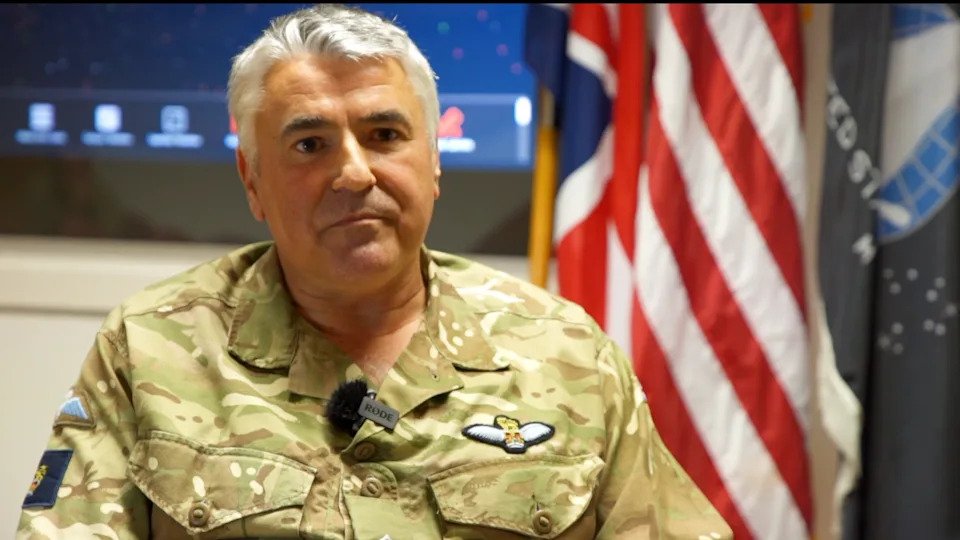
Russia is actively attempting to disrupt UK military satellites on a near-weekly basis, according to the head of the UK Space Command, highlighting a growing dimension of international tension in space operations. Speaking to the BBC, Maj Gen Paul Tedman said Russian forces are persistently jamming the country’s satellite communications and closely monitoring UK-based space assets.
“We’re seeing our satellites being jammed by the Russians on a reasonably persistent basis,” Tedman explained, adding that these efforts are part of a broader campaign to gather intelligence and potentially undermine military operations. The UK currently operates approximately six dedicated military satellites for communications and surveillance, all equipped with counter-jamming technology to mitigate interference.

Tedman noted that the Russian threat extends beyond simple disruption. “They’ve got payloads onboard that can see our satellites and are trying to collect information from them,” he said, underscoring the sophisticated nature of contemporary space-based threats. The concerns are not limited to the UK, with Germany recently reporting similar intrusions. In September, Germany’s defence minister Boris Pistorius revealed that Russian forces had been tracking two German military Intelsat satellites, raising alarms over the potential for jamming, blinding, or even physically manipulating satellites in orbit.
In response to the growing risk of interference, the UK and the US conducted their first coordinated satellite manoeuvre last month, described by officials as a landmark step in allied space defence. Between 4 and 12 September, a US satellite was repositioned in orbit to inspect a UK satellite and confirm its operational integrity. The operation, part of the joint military initiative Operation Olympic Defender, is designed to improve satellite resilience, strengthen cooperation among allies, and demonstrate readiness in space-based operations.
“Expertly executed with US Space Command, I could not be more pleased or proud of the rapid progress we are making with our allies,” Tedman said, highlighting the strategic importance of the collaboration.
The escalation in space activity comes amid rising tensions with Russia in multiple theatres. The UK foreign secretary, Yvette Cooper, recently warned that Britain is prepared to take action following provocative behaviour by Russian aircraft. This follows a call by the US president, Donald Trump, urging NATO allies to shoot down Russian planes intruding on allied airspace. Cooper, speaking to the United Nations in September, described Moscow’s violations of NATO airspace, including incidents over Estonia, Poland, and Romania, as “provocative and reckless.”
Experts note that the current situation underscores the growing importance of space as a domain of military operations. Satellites are critical not only for communications and surveillance but also for intelligence gathering, navigation, and missile guidance systems. Any disruption or interference could have far-reaching implications for national security and the operational capabilities of allied forces.

The UK Space Command is now focusing on strengthening defensive measures, upgrading counter-jamming capabilities, and deepening collaboration with allies to ensure the integrity of its satellites. Officials have emphasized that preparedness in space is essential to maintaining both national security and strategic deterrence against increasingly sophisticated adversaries.
As the geopolitical climate evolves, Maj Gen Tedman and other defence officials have highlighted the need for international rules governing space activity to prevent conflict escalation. While the UK and its allies continue to pursue diplomatic avenues, the persistent targeting of military satellites by Russia illustrates the increasing militarization of space and the high stakes of maintaining operational security beyond Earth’s atmosphere.
The UK government has reiterated its commitment to safeguarding space assets, emphasizing that threats in orbit are taken as seriously as threats on land, sea, or in the air. With coordinated exercises, technological upgrades, and close collaboration with international partners, British defence authorities aim to ensure that their satellite infrastructure remains secure in the face of ongoing adversarial activity.
Related News:
 UK Fighter Jet Purchase Could Breach Nuclear Treaty, Warns CND
 UK Must Act with Courage and Clarity on Israel-Palestine Conflict, Says Foreign Affairs Committee Report
 Starmer and Trump to Meet in Scotland Amid Growing Gaza Ceasefire Pressure
 Minister Dismisses Legal Concerns Over UK’s Pledge to Recognise Palestinian State
 MPs Call on UK Government to Delay Biometric Visa Checks for Gaza Students Amid Humanitarian Crisis
 Radioactive Leak at UK’s Nuclear Warhead Base Sparks Outcry Over Safety and Secrecy
 ‘I’m collateral damage’: ex-minister Tulip Siddiq on her Bangladesh corruption trial
 Mutual Inconvenience: Why Alaska Was Chosen for the Trump-Putin Summit on Ukraine
 “I Don’t Expect to Live a Normal Life”: How a Leeds Teenager Became the Target of a Chinese Bounty
 Ministers Accused of Defamation Over Palestine Action Ban and Mass Arrests
 UK Defence Secretary Says Allied Troops ‘Ready to Act from Day One’ if Ukraine Ceasefire Agreed
 Is the UK Ready to Put Boots on the Ground in Ukraine? Assessing Military Capacity and Challenges
 Protests Expected as Israeli Arms Firms Join Global Defence Trade Fair in London
 UK Home Office to Launch French Beach Signage to Warn Asylum Seekers of Risks
 Charlie Kirk Killing Used to Mobilise UK’s Largest Far-Right Rally in Decades
 UK Immigration Figures: Separating Facts from Perceptions
 Far-Right Rally in London Draws Record Crowds Amid Clashes with Police
 Donald Trump’s UK State Visit Kicks Off Amid Major Tech Investments and Business Engagements
 Thousands Gather in London to Protest Donald Trump’s Second UK State Visit
 UK and Ireland Set to Unveil New Proposals to Address Northern Ireland’s Troubles Legacy
 Trump Urges UK to “Call Out the Military” to Secure Borders Amid State Visit
 British AI Startup Outshines Human Forecasters in Global Prediction Contest
Tulip Siddiq Raises Concerns Over Alleged ‘Fake’ Documents in Bangladesh Corruption Trial
British AI Startup Outshines Human Forecasters in Global Prediction Contest
Tulip Siddiq Raises Concerns Over Alleged ‘Fake’ Documents in Bangladesh Corruption Trial
 UK Recognises State of Palestine in Push to Preserve Hope for Peace
 UK’s Recognition of Palestine: Symbolic Step or Real Change?
 Ed Davey Urges UK to Attract US Cancer Scientists Amid Funding Cuts Under Trump
Trump’s UN Speech Criticises London and UK Policies, Draws Far-Right Attention
Ed Davey Urges UK to Attract US Cancer Scientists Amid Funding Cuts Under Trump
Trump’s UN Speech Criticises London and UK Policies, Draws Far-Right Attention
 Digital ID Cards: A Useful Modern Tool or a Threat to Privacy and Security?
 History Will Remember Who Showed Up: Pressure Mounts on Keir Starmer to Attend Cop30 Summit
 A Third of EU Citizens in UK Report Discrimination by Public Bodies Post-Brexit
 Jailed Georgian Opposition Leaders Warn UK of Iranian Links to Ruling Party
 Pro-Palestine March to Proceed in London Despite Calls to Cancel After Manchester Attack
 UK Universities Warn Students Ahead of 7 October Pro-Palestine Protests
Starmer Considers Stricter Measures on Pro-Palestinian Protest Chants
UK Universities Warn Students Ahead of 7 October Pro-Palestine Protests
Starmer Considers Stricter Measures on Pro-Palestinian Protest Chants
 Teen and Man Arrested Over Nursery Cyber Attack Exposing 8,000 Children
 Public Trust in SNP Hits Historic Low Amid NHS Concerns
 Cooper Unveils £4m Cyber Plan Against Russian Hackers
 Yvette Cooper Backs Digital ID Plan for UK Teens
 Tony Blair Met Jeffrey Epstein at Downing Street in 2002
 China’s Mega Embassy in London Faces Further Delay
 Johnson Suggests Mandelson Linked to China Spy Controversy
 Minister Blames Deputy for Collapse of China Spy Case
 Shabana Mahmood Warns Border Failings Are Eroding Trust in States
 Witness statements reveal the CPS China spy row collapse in the UK
 Large scale Chinese spying in UK sparks political storm
 Nigel Farage Calls Vladimir Putin ‘A Very Bad Dude’
 UK to Test Digital ID Scheme with Veteran Card
 Rachel Reeves signals welfare reform ahead of key budget
 Reform UK candidate fined £19,000 after using AI-generated cases to challenge election
 Prince Andrew met alleged Chinese spies during Pitch@Palace China trips
 Kosovo agrees to host Britain’s refused asylum seekers
 Plaid Cymru Triumphs in Caerphilly, Ending Labour Century-Long Hold
 Starmer Defends Digital ID Plan Amid Growing Criticism
 Rachel Reeves to lead UK trade push in Saudi Arabia amid rights debate
 Experts Warn Russia’s Burevestnik Missile Could Destabilise Arms Control
 British Woman in Iran ‘Losing Hope’ Amid Ongoing Detention
 Johnson Approved China’s London ‘Super-Embassy’ in 2018
 BBC Journalist Held and Interrogated in Vietnam
 Zohran Mamdani becomes New York City’s first Muslim mayor
Zohran Mamdani names all-female transition team for NYC mayoralty
Zohran Mamdani becomes New York City’s first Muslim mayor
Zohran Mamdani names all-female transition team for NYC mayoralty
 Second world war veterans honoured as King leads Remembrance Sunday
 Britain deploys RAF specialists to assist Belgium with drone threats
 BBC director-general and news chief resign amid bias row
 Night after night, Belgium is on high alert.
 New review urges UK to repatriate Shamima Begum, others from Syria
 Ukraine to Get 100 French Rafale Jets in Historic Deal
 Rama Rebukes Mahmood for Targeting Albanian Families
 Russian Vessel Used Lasers on RAF Pilots, UK Claims
 Ireland Boosts Ukraine Aid as Zelensky Visits Dublin
 Terence Stamp, ’60s British Film Legend and Star of Superman, Dies at 87
 Tanni Grey-Thompson Faces Abuse Over Opposition to Assisted Dying Bill
 Nigel Farage Unveils Controversial Immigration and Welfare Plans at Reform UK Press Conference
 Yvette Cooper Signals Global Momentum Towards Gaza Peace Deal Amid Humanitarian Crisis
Digital ID Plans Ignite Debate Over £600m Treasury Tax Boost and Privacy Concerns
Yvette Cooper Signals Global Momentum Towards Gaza Peace Deal Amid Humanitarian Crisis
Digital ID Plans Ignite Debate Over £600m Treasury Tax Boost and Privacy Concerns
 Ministry of Justice fails to file £11bn in spending receipts
 William Steps Up Over Prince Andrew Palace Response
 Green Party Surges Past Labour in Latest UK Poll
 Starmer Faces Growing Dissent as Labour MPs Weigh Leadership Challenge
 Trump Deploys DHS to Charlotte in Major Arrest Operation
 Most Tories Expect to Support a Farage-Led Government