Published: 11 October 2025. The English Chronicle Desk. The English Chronicle Online.
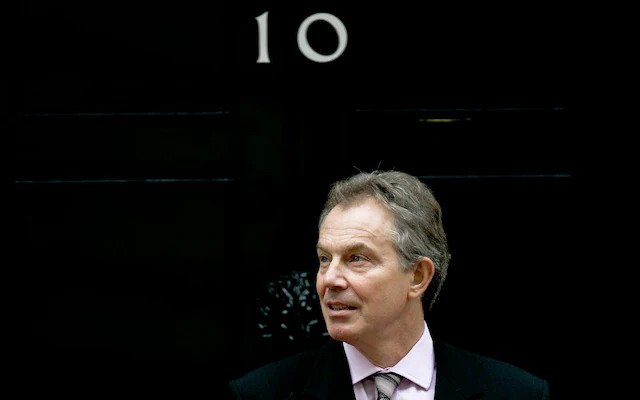
Newly released documents reveal that former UK Prime Minister Sir Tony Blair met the disgraced financier Jeffrey Epstein at Downing Street in 2002, six years before Epstein pleaded guilty to soliciting prostitution from a minor. The meeting, which lasted less than 30 minutes, was reportedly arranged at the urging of Lord Peter Mandelson, a close political ally of Blair.
The details emerged following the publication of a secret memo authored by senior civil servant Matthew Rycroft on 14 May 2002. The memo briefed Blair about Epstein, describing him as a “super-rich” individual with influence in international markets and politics. At the time, Blair was serving as prime minister, and the briefing outlined Epstein’s connections to prominent figures, including former US President Bill Clinton and members of the British establishment.
According to a BBC report, the meeting did indeed take place at 5pm on the day of the briefing. A spokesperson for Blair confirmed to The Telegraph that the conversation lasted “less than 30 minutes” and focused primarily on US and UK politics. They emphasised that Blair had no subsequent engagement with Epstein after the meeting.

Lord Mandelson, who later resigned as a US ambassador following scrutiny over his own links to Epstein, was instrumental in facilitating the encounter. At the time, Mandelson was a backbench MP, having resigned twice from Blair’s Cabinet, but he maintained significant influence behind the scenes. Emails released alongside the memo show Mandelson corresponding with Jonathan Powell, Blair’s chief of staff, describing Epstein as “safe” and a “friend of mine.”
In one email dated 7 May 2002, Mandelson wrote: “I think TB [Tony Blair] would be interested in meeting Jeffrey, who is also a friend of mine, because Jeffrey is an active scientific catalyst/entrepreneur as well as someone who has his finger on the pulse of many worldwide markets and currencies. He is young and vibrant. He is safe (whatever that means) and Clinton is now doing a lot of travelling with him.”
The email continued, noting the flexibility of Epstein’s schedule and suggesting that Blair could meet him at a convenient time that week. The document also contained several hand-written notes, including one questioning the need for the meeting: “Do you want to do this… Because you wanted to see Clinton by yourself… I know very little more about him.”
The release of these documents had been delayed for decades. Under standard rules, government papers are made public 20 years after their creation, but the memo was previously withheld due to concerns about potential embarrassment for Britain and its international relations. Following a Freedom of Information request, the National Archives has now released the memo along with a related schedule titled “Trade and Industry Meetings with Industry,” which also references the meeting.
Rycroft’s briefing to Blair, marked “R” for restricted, outlined Epstein’s background and connections in detail. It described him as a financial adviser to the super-rich, a property developer, and a friend of both Bill Clinton and Peter Mandelson. The document also noted that Epstein was “very rich and close to the Duke of York” and highlighted his role in international economic and scientific discussions. The memo emphasised that Clinton himself had requested Blair meet Epstein, suggesting the encounter was intended to provide valuable insights into economic and scientific developments.
The context of the meeting is significant given Epstein’s later criminal convictions and his notorious network of powerful associates. While Blair’s spokesperson maintains that the conversation was brief and limited to political discussion, the documents illustrate the extent of Epstein’s reach into international circles, including the highest levels of government in both the UK and US.
Lord Mandelson’s advocacy for the meeting reflects the influence certain individuals wielded within Blair’s political circle. Mandelson framed Epstein as a figure of interest due to his entrepreneurial activities and connections in finance and science, portraying the meeting as an opportunity to engage with a globally influential figure. The correspondence with Powell underscores Mandelson’s personal assurance of Epstein’s trustworthiness, a claim that, in hindsight, carries weight given Epstein’s later criminal convictions.
The memo’s release has prompted renewed scrutiny of the Blair administration’s interactions with Epstein. While there is no evidence that Blair engaged in any wrongdoing, the revelation of the meeting adds to the broader historical record of Epstein’s extensive network of contacts. Analysts note that, at the time, Epstein’s reputation as a financier and scientific enthusiast may have obscured the darker aspects of his activities, allowing him to gain access to prominent political figures.
The hand-written notes on the memo also provide insight into the cautious approach within Downing Street. Questions about the necessity and potential risks of the meeting indicate that senior officials were aware of the sensitivity of introducing Blair to Epstein. Nonetheless, the meeting proceeded as scheduled, highlighting the complex interplay of political judgment, personal recommendations, and the allure of global connections.
In addition to briefing Blair on Epstein’s wealth and influence, Rycroft’s notes emphasised Epstein’s alignment with global economic trends and scientific initiatives, suggesting that the discussion would touch on matters beyond conventional political diplomacy. The focus on scientific and economic topics aligns with Mandelson’s description of Epstein as a “scientific catalyst,” underscoring the strategic framing of the encounter as professional rather than personal.
The release of this memo coincides with broader historical examinations of Epstein’s network and the access he gained to powerful individuals over several decades. Researchers, journalists, and historians have been keen to map the connections between Epstein and political leaders worldwide, examining how his influence extended across governments, corporations, and social institutions. This meeting with Blair represents a previously unconfirmed link in that network.

Despite the sensitive nature of the disclosure, Blair’s office maintains that there was no further engagement with Epstein after the 2002 meeting. The encounter is framed as a one-off discussion rather than an ongoing relationship, with the conversation limited to politics and international affairs. Nevertheless, the publication of the memo offers valuable insight into the workings of Downing Street at the time and the role of personal recommendations in shaping the prime minister’s engagements.
The memo also provides a glimpse into Lord Mandelson’s role as a facilitator of high-profile introductions, reflecting his broader influence within the Blair administration. By personally endorsing Epstein and arranging the meeting, Mandelson positioned himself as a gatekeeper to influential networks, highlighting the interplay between political judgement and personal networks in the highest echelons of government.
In conclusion, the newly released National Archives documents confirm that Tony Blair met Jeffrey Epstein in Downing Street in May 2002, following encouragement from Lord Mandelson. While the meeting was brief and reportedly focused on political and economic discussions, the revelation adds to the historical record of Epstein’s extensive network and the access he gained to influential figures. The memo and accompanying correspondence underscore the complexities of political decision-making, the influence of personal recommendations, and the enduring interest in mapping Epstein’s connections across global political and social spheres.
Related News:
 UK Must Act with Courage and Clarity on Israel-Palestine Conflict, Says Foreign Affairs Committee Report
 Starmer and Trump to Meet in Scotland Amid Growing Gaza Ceasefire Pressure
 Minister Dismisses Legal Concerns Over UK’s Pledge to Recognise Palestinian State
 MPs Call on UK Government to Delay Biometric Visa Checks for Gaza Students Amid Humanitarian Crisis
 Radioactive Leak at UK’s Nuclear Warhead Base Sparks Outcry Over Safety and Secrecy
 ‘I’m collateral damage’: ex-minister Tulip Siddiq on her Bangladesh corruption trial
 Mutual Inconvenience: Why Alaska Was Chosen for the Trump-Putin Summit on Ukraine
 “I Don’t Expect to Live a Normal Life”: How a Leeds Teenager Became the Target of a Chinese Bounty
 Ministers Accused of Defamation Over Palestine Action Ban and Mass Arrests
 UK Defence Secretary Says Allied Troops ‘Ready to Act from Day One’ if Ukraine Ceasefire Agreed
 Is the UK Ready to Put Boots on the Ground in Ukraine? Assessing Military Capacity and Challenges
 Protests Expected as Israeli Arms Firms Join Global Defence Trade Fair in London
 UK Home Office to Launch French Beach Signage to Warn Asylum Seekers of Risks
 Charlie Kirk Killing Used to Mobilise UK’s Largest Far-Right Rally in Decades
 UK Immigration Figures: Separating Facts from Perceptions
 Far-Right Rally in London Draws Record Crowds Amid Clashes with Police
 Thousands Gather in London to Protest Donald Trump’s Second UK State Visit
 UK and Ireland Set to Unveil New Proposals to Address Northern Ireland’s Troubles Legacy
 Trump Urges UK to “Call Out the Military” to Secure Borders Amid State Visit
Tulip Siddiq Raises Concerns Over Alleged ‘Fake’ Documents in Bangladesh Corruption Trial
Trump Urges UK to “Call Out the Military” to Secure Borders Amid State Visit
Tulip Siddiq Raises Concerns Over Alleged ‘Fake’ Documents in Bangladesh Corruption Trial
 UK Recognises State of Palestine in Push to Preserve Hope for Peace
 UK’s Recognition of Palestine: Symbolic Step or Real Change?
Trump’s UN Speech Criticises London and UK Policies, Draws Far-Right Attention
UK’s Recognition of Palestine: Symbolic Step or Real Change?
Trump’s UN Speech Criticises London and UK Policies, Draws Far-Right Attention
 UK Fighter Jet Purchase Could Breach Nuclear Treaty, Warns CND
 A Third of EU Citizens in UK Report Discrimination by Public Bodies Post-Brexit
 Jailed Georgian Opposition Leaders Warn UK of Iranian Links to Ruling Party
 Russia repeatedly targets UK military satellites, warns Space Command chief
 Pro-Palestine March to Proceed in London Despite Calls to Cancel After Manchester Attack
 UK Universities Warn Students Ahead of 7 October Pro-Palestine Protests
Starmer Considers Stricter Measures on Pro-Palestinian Protest Chants
UK Universities Warn Students Ahead of 7 October Pro-Palestine Protests
Starmer Considers Stricter Measures on Pro-Palestinian Protest Chants
 Public Trust in SNP Hits Historic Low Amid NHS Concerns
 China’s Mega Embassy in London Faces Further Delay
 Johnson Suggests Mandelson Linked to China Spy Controversy
 Minister Blames Deputy for Collapse of China Spy Case
 Shabana Mahmood Warns Border Failings Are Eroding Trust in States
 Witness statements reveal the CPS China spy row collapse in the UK
 Large scale Chinese spying in UK sparks political storm
 Nigel Farage Calls Vladimir Putin ‘A Very Bad Dude’
 Rachel Reeves signals welfare reform ahead of key budget
 Prince Andrew met alleged Chinese spies during Pitch@Palace China trips
 Kosovo agrees to host Britain’s refused asylum seekers
 Plaid Cymru Triumphs in Caerphilly, Ending Labour Century-Long Hold
 Rachel Reeves to lead UK trade push in Saudi Arabia amid rights debate
 British Woman in Iran ‘Losing Hope’ Amid Ongoing Detention
 Johnson Approved China’s London ‘Super-Embassy’ in 2018
 BBC Journalist Held and Interrogated in Vietnam
 Zohran Mamdani becomes New York City’s first Muslim mayor
Zohran Mamdani names all-female transition team for NYC mayoralty
Zohran Mamdani becomes New York City’s first Muslim mayor
Zohran Mamdani names all-female transition team for NYC mayoralty
 Second world war veterans honoured as King leads Remembrance Sunday
 BBC director-general and news chief resign amid bias row
 New review urges UK to repatriate Shamima Begum, others from Syria
 Rama Rebukes Mahmood for Targeting Albanian Families
 Russian Vessel Used Lasers on RAF Pilots, UK Claims
 Ireland Boosts Ukraine Aid as Zelensky Visits Dublin
 Terence Stamp, ’60s British Film Legend and Star of Superman, Dies at 87
 Chancellor Rachel Reeves Pushes for Sweeping Changes to Environmental Protections to Accelerate Development
 Hong Kong Summons UK and Australian Envoys Following Asylum Grants to Democracy Activists
 Police Scotland Spends £500,000 Compensating Officers Over Trump Visit
 Urgent Action Needed on Windrush Compensation as Survivors Speak of “Waiting to Die”
 Tanni Grey-Thompson Faces Abuse Over Opposition to Assisted Dying Bill
 TfL Invites RMT to Resume Talks as London Tube Strikes End
Channel Crossings Surge: Over 1,000 People Arrive in the UK in Small Boats in a Single Day
TfL Invites RMT to Resume Talks as London Tube Strikes End
Channel Crossings Surge: Over 1,000 People Arrive in the UK in Small Boats in a Single Day
 Nigel Farage Unveils Controversial Immigration and Welfare Plans at Reform UK Press Conference
 Yvette Cooper Signals Global Momentum Towards Gaza Peace Deal Amid Humanitarian Crisis
 Ed Miliband Warns UK Government on X, Citing Elon Musk as a “Dangerous Influence”
 Kemi Badenoch Unveils ‘Golden Rule’ to Halve Spending Cuts for Deficit Reduction at Tory Conference
 Ministry of Justice fails to file £11bn in spending receipts
 Reform UK candidate fined £19,000 after using AI-generated cases to challenge election
 William Steps Up Over Prince Andrew Palace Response
 Ireland Votes as Two Women Compete for Presidency
 Experts Warn Russia’s Burevestnik Missile Could Destabilise Arms Control
 Green Party Surges Past Labour in Latest UK Poll
 Zarah Sultana Launches Party to Change Politics
 Just Stop Oil Protesters Convicted Amid Climate Defence Row
 Starmer Faces Growing Dissent as Labour MPs Weigh Leadership Challenge
 Peers Flood Assisted Dying Bill with 942 Amendments
 Trump Deploys DHS to Charlotte in Major Arrest Operation
 Pentagon Officials in Ukraine to Discuss War End
 Venezuela Threatens Nobel Winner Machado with Fugitive Status
 Most Tories Expect to Support a Farage-Led Government