Published: 19 November 2025 Wednesday . The English Chronicle Desk. The English Chronicle Online
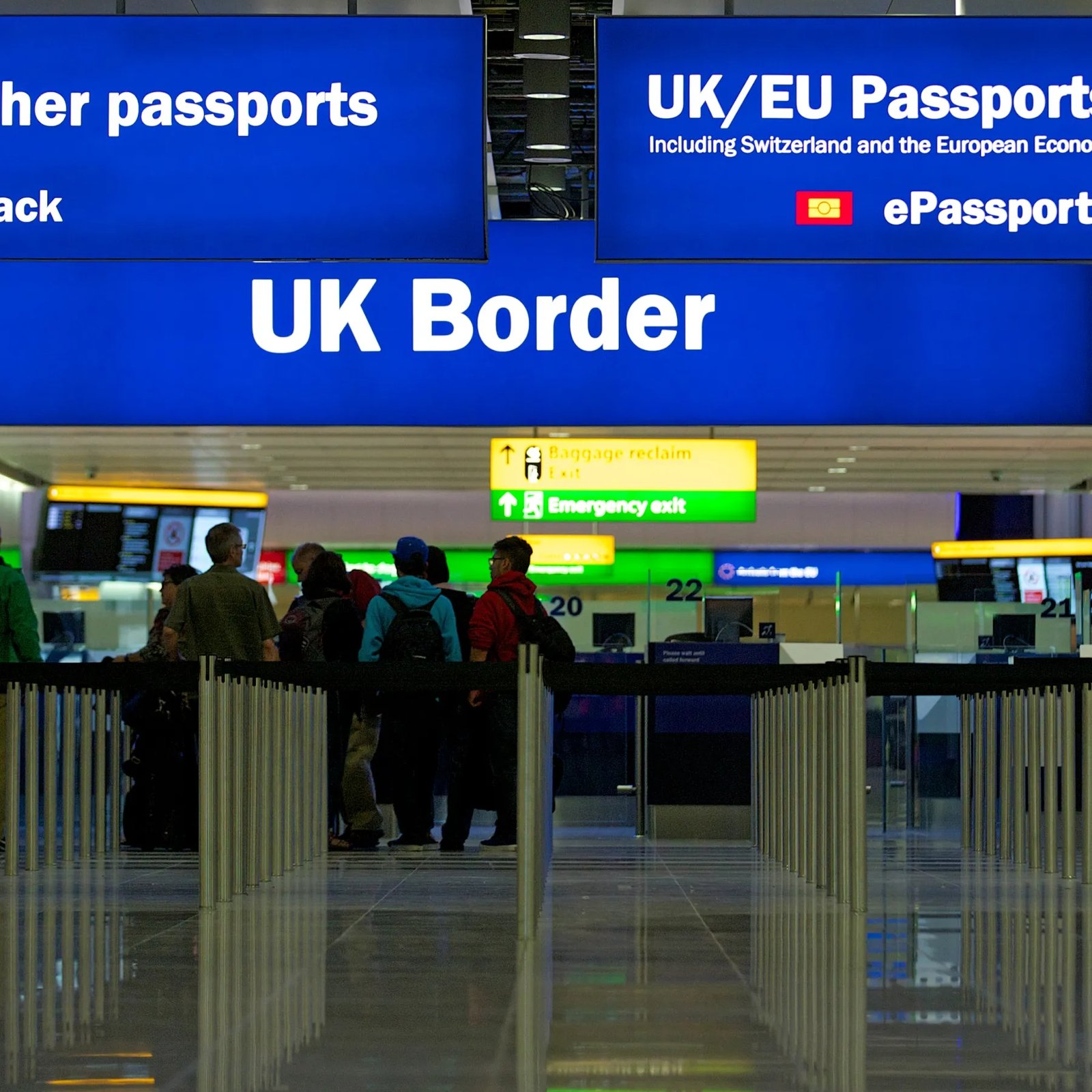
The shape of the UK’s migration landscape shifted once again this week as newly revised figures from the Office for National Statistics revealed that net migration in 2024 was substantially lower than previously believed. According to the updated analysis, the figure now stands at 345,000—a reduction of 86,000 from the initial estimate and a revision that underscores just how much the understanding of population movement has changed as the ONS continues to rebuild the methods it uses to track migration.
The reduction amounts to almost 20 percent, a recalibration that surprised many observers and has caused ripples across Westminster at a time when immigration is already dominating political debate. The revised figure is driven largely by changes in the estimated number of British nationals living abroad. While earlier estimates suggested a comparatively small number had emigrated, updated data now shows a much larger outflow. The ONS believes that 257,000 British nationals left the UK in 2024, while 143,000 returned from overseas, resulting in a net emigration figure of 114,000—far higher than the initial calculation of just 17,000.
The new data highlights the complex and evolving patterns of movement among British citizens themselves, a demographic whose migration has historically been more difficult to measure accurately. The updated method, which relies more heavily on tax and welfare records, suggests that previous estimates understated the scale of British emigration and overestimated the number remaining in the UK.
The revised net migration total for 2024 fits into a longer period of significant population shifts. Between 2021 and 2024, overall net migration is now believed to be around 2.5 million people—only slightly below the earlier estimate of 2.6 million. Yet the picture becomes more striking when looking at the peak of migration, which the ONS now places between April 2022 and March 2023. The updated estimate shows 944,000 more people entered the UK than left during that period, considerably higher than the previous peak estimate of 906,000.

This recalibration has prompted a fresh round of political debate, particularly as the peak occurred under Rishi Sunak’s Conservative government. Tory leader Kemi Badenoch addressed questions about the revised peak during a press conference ahead of next week’s budget. She said the newly understood migration high came before the Conservative Party introduced its latest efforts to reduce numbers. Badenoch argued that the figures reflected a system that had lost sight of the priorities voted for in the 2016 Brexit referendum, saying successive Conservative administrations “took their eye off the ball” by allowing bureaucratic mechanisms to dictate outcomes rather than honouring the public’s desire for more direct control of the border.
Badenoch reaffirmed her belief that immigration under the previous Conservative leadership had reached unsustainable levels. She also pointed to measures taken under Sunak, including restrictions on dependent visas for students and care workers, as steps that were beginning to reverse the trend.
Labour, now in government, has its own complicated relationship with the question. The party had repeatedly criticised the Conservatives for allowing net migration to soar to record levels. Labour’s 2024 manifesto argued that high migration could reduce incentives for British businesses to invest in training and skills, thereby affecting long-term productivity. Yet Labour is now under pressure to demonstrate that it can achieve meaningful reductions without compromising the sectors most dependent on foreign workers.
In May, Prime Minister Sir Keir Starmer announced a package of reforms aimed at ensuring net migration falls “significantly” over the next four years. His proposals included a ban on recruiting care workers directly from overseas, significant tightening of access to the skilled worker visa route, and increasing the costs employers must pay to sponsor foreign workers. The Starmer government framed these changes as necessary to reduce reliance on overseas labour while enhancing the domestic workforce.
The new ONS data does not fundamentally alter the long-term picture painted over the past few years but does reframe the immediate trends. It also exposes the challenges involved in capturing accurate migration data, as the national statistical system continues to transition away from its older methodology. Before the pandemic, estimates were derived from surveys conducted at ports and airports. These surveys relied heavily on a small sample of international travellers who were asked about their future intentions. According to Dr Madeleine Sumption, director of the Migration Observatory at Oxford University, this system produced figures that were “implausibly low” particularly for British nationals, whose mobility often differs markedly from that of other migrant groups.
The ONS has spent several years rebuilding its migration estimation system, and the revised 2024 figures are a product of this ongoing work. The agency has increasingly shifted toward using administrative data, including tax records and benefit claims, which provide a more detailed reflection of people’s presence and activity within the country. However, this approach is not without complications. Analysing data based on economic engagement risks misclassifying some individuals. For example, a person who has moved to the UK but is temporarily living off personal savings may not appear in tax or welfare data and could be incorrectly assumed to have left the country.
Because of these limitations, Dr Sumption cautions that even these revised numbers are not fully finalised. She noted that the ONS no longer uses the administrative method to estimate EU migration, instead relying on data shared by the Home Office such as visa records and border checks. Under the previous system, 96,000 fewer EU citizens were thought to be living in the UK at the end of 2024. The new system revises this estimate downward to 69,000, suggesting that EU emigration, while significant, may not have been as steep as previously calculated.
The latest figures also reignite debate over the drivers of recent rises in migration. Critics have consistently pointed to policy changes implemented under Boris Johnson’s government from early 2021 onwards, highlighting three main areas of growth: the expansion of work visas, especially within health and social care; a surge in student visas; and the establishment of humanitarian routes for people from Afghanistan, Ukraine and Hong Kong. These routes, created in response to international crises, have played a significant role in bringing people to the UK over the past three years. Alongside these humanitarian efforts, the number of small boat crossings in the Channel has continued to rise, with 39,075 people having crossed so far this year.

Both Conservative and Labour governments have attempted to address these rising figures, although often through sharply contrasting ideological perspectives. During his premiership, Rishi Sunak implemented restrictions limiting international students’ ability to bring dependants and restricting care workers from sponsoring family members. Labour’s Home Secretary Shabana Mahmood has gone further in focusing on asylum reform. On Monday, she outlined what she described as a long overdue overhaul of the system, calling it “out of control and unfair”. Mahmood argued that without decisive action, public sentiment could turn increasingly hostile, creating a political vacuum that extremist voices would exploit.
Speaking in the House of Commons, she warned that if the crisis was not addressed, the UK risked drawing more people “down a path that starts with anger and ends in hatred”. Her comments reflect the government’s broader strategy to stabilise public attitudes towards immigration by showing that the system can be both fair and firm.
The revised ONS data fuels an already simmering political environment in which migration is likely to remain one of the most consequential and divisive issues in British public life. As the country continues adapting to post-Brexit migration patterns, international crises and domestic labour shortages, the question of who comes to the UK—and on what terms—will continue to shape political narratives and electoral outcomes.
What the newest figures underscore most clearly is that the story of UK migration is neither simple nor static. It is a constantly evolving portrait shaped by policy, global events and demographic shifts. The ONS will continue refining its methods, and with each revision, the understanding of what migration looks like today—and what it will mean for tomorrow—will continue to develop.
Related News:
 UK Asylum Reforms: Temporary Refugee Status and Faster Deportations
 Minister Defends Tough New Asylum Reform Plan
 Peers Get Extra Time to Debate Assisted Dying Bill
 Commons Speaker Warns UK Parliament Vulnerable to Foreign Espionage After China-Linked Case Dropped
 UK Police to Gain New Powers to Manage Repeated Protests, Home Office Announces
 Tories Push to Dilute Labour’s Workers’ Rights Bill
 It’s time to come clean on the China spy case
 Rachel Reeves Admits Renting Home Without Required Licence
 Out of reach: stalled newbuilds leave Labour’s social housing targets in tatters
 Experts Question HMRC Over Possible Child Benefit Privacy Breach
 Phillipson urges careful review of gender recognition guidance
 French Taxi Driver Cleared in David Lammy Theft Case After Fare Dispute
 Who is Rama Duwaji? What Zohran Mamdani’s wife has said about Gaza and ICE as he’s elected NYC mayor
 Met Police Culture Makes Racial Harm ‘Inevitable’
 Remaining rebel Labour MPs have whip restored
 Tim Davie resigns as BBC director general amid bias claims
 Palace to reinstate hyphen in Andrew’s surname
 PM Condemns Leaks, Vows Loyalty to Ministers and Stability
 BBC Apologises to Trump but Rejects $1bn Compensation Claim
 Major Rent Reform Ends No-Fault Evictions in England
 Peers Flood Assisted Dying Bill with 942 Amendments
 US Justice Department Files Lawsuit Against California Over Partisan Voting Maps
 Your Party Turmoil Deepens Over Withheld Donations
 UK Unveils Fast-Track Deportation and Asylum Overhaul
 UK Asylum Overhaul Sparks Debate Over Human Rights and Deportations
 Mahmood Defends Tough Overhaul of UK Asylum System
 Mahmood Announces Temporary Refugee Status Plan
 Scottish Ministers Express Alarm Over UK Asylum Reforms
 South African Detained After Neo-Nazi Rally in Australia
 Westminster Advances Legacy Bill Amid Criticism
 Only One Republican Opposes Mass Release of Epstein Files
 Congress Approves Release of Epstein Files, Trump Expected to Sign
 UK Vulnerable to Attack, Defence Committee Finds
 Rama Rebukes Mahmood for Targeting Albanian Families
 Russian Vessel Used Lasers on RAF Pilots, UK Claims
 MP Offers Seat to Help Burnham Challenge Starmer
 Court to Hear Challenge to Wimbledon Expansion Plan
 Serial Rapist and Former Cop Found Guilty Again
 Senedd Suspends Politician Over Offensive Racial Slur
 Trump Slams Democrats With ‘Seditious’ Death Claim
 Texas Governor Faces Lawsuit From CAIR
 English Mayors Set to Introduce Tourist Taxes
 Ex-Classmate Accuses Farage of Dishonesty on Racism Claims
 Millions Face Higher Taxes Under Reeves New Budget
 Planned Palestinian Flag Raising at Belfast City Hall Faces Delay Amid Legal Concerns
 UK Military Chiefs Warn Funding Gap Threatens Defence
 US National Guard Member Killed in DC Shooting
 Ex-Brexit MEP Rejects Claim of Pro-Russia Payments
 Labour U-turn: Unfair Dismissal Rights Delayed Six Months
 Man Arrested Over Manchester Synagogue Terror Attack
 Government righting decades-old injustice for miners
 Second homes curbs quashed in Gwynedd legal ruling
 ICC to Rule on Duterte’s Provisional Release
 Trump to pause migration from ‘third-world countries’
 Chinese & Japanese Boats Clash Near Disputed Islands
 Putin Meets US Envoy Amid Key Ukraine Peace Talks
 Twelve Prisoners Released in Error, Two Still Missing
 Franklin Turtle, Sabrina Carpenter Slam US Social Media Use
 Trump Administration Dismisses 17 Immigration Judges, Sparking Debate Over Judicial Independence
 Tanni Grey-Thompson Faces Abuse Over Opposition to Assisted Dying Bill
 Mahmood Pledges Reform of Modern Slavery Laws After Court Blocks Deportation Appeal
 Digital ID Plans Ignite Debate Over £600m Treasury Tax Boost and Privacy Concerns
 Army Barracks to House Migrants as Hotels Phase Out
 Hospice Cuts Raise Alarm Across England Amid Funding Crisis
 Green Party Surges Past Labour in Latest UK Poll
 Trump’s UK Ambassador Urges North Sea Drilling to Strengthen US Ties
 King Charles to Lead Nation in Remembrance Sunday Service
 Britain deploys RAF specialists to assist Belgium with drone threats
 Millionaires group urge Reeves to introduce wealth tax to ‘lift kids out of poverty’
 Shouting Works Best to Deter Gulls, UK Study Finds
 Reeves rejects £1bn plea for NHS redundancy payouts
 December Run-Off in Chile as Election Produces No Winner
 Stroke Patient Mistaken for Drunk, Care Delayed
 Pentagon Officials in Ukraine to Discuss War End
 Venezuela Threatens Nobel Winner Machado with Fugitive Status
 Most Tories Expect to Support a Farage-Led Government
 Labour MP claims devolution bill is ‘blatant discrimination’ against Cornwall
 Jordan Bardella: France’s Young Presidential Contender
 Search underway for British man overboard off Tenerife
 Virgin Media Fined £23.8m Over Telecare Safety Failures