Published: 05 January 2026. The English Chronicle Desk. The English Chronicle Online.
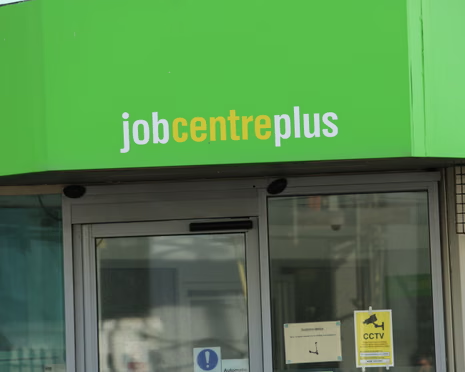
The UK’s economy faces increasing pressure in 2026 as the collapse of zombie firms is expected to push unemployment higher. Zombie firms, defined as companies barely covering their costs while staying operational, are struggling under rising energy prices, interest rates, and a higher minimum wage, according to new analysis from the Resolution Foundation. Economists warn that this pattern of zombie firms persisting in the market has suppressed productivity for years, delaying the reallocation of resources to more dynamic and innovative sectors. The focus on zombie firms highlights a growing concern for policymakers aiming to stabilize employment.

At the start of 2026, the thinktank emphasised that businesses face a “triple whammy” of cost pressures, which could accelerate the exit of unproductive zombie firms from the economy. Ruth Curtice, chief executive of the Resolution Foundation, noted that the year could mark a “turning point” for productivity, with struggling firms closing and allowing more efficient businesses to expand. However, she warned that the immediate consequence would likely be a rise in unemployment, as displaced workers navigate a challenging job market.
Unemployment has already climbed to levels not seen outside the pandemic decade, with official figures reporting a 5.1% rate in October 2025. Employers have delayed hiring decisions amid uncertainty over rising taxes, wage growth, and operating costs. The prevalence of zombie firms, particularly among small and medium enterprises, has compounded these challenges. Many of these companies survive only due to cheap debt accumulated during the post-2008 low-interest period, but now face unsustainable financial pressures.
The Bank of England’s sustained interest rate increases between December 2021 and August 2023, designed to tame inflation, have made operating conditions more difficult for these marginal firms. Despite recent reductions in the base rate from 5.25% to 3.75%, businesses still contend with costs significantly higher than pre-pandemic levels. In this climate, confidence among UK firms has dropped, with the British Chambers of Commerce reporting its lowest sentiment levels in three years during late 2025.
A survey of over 4,600 businesses conducted between November and December 2025 found that taxation and inflation were cited as the top concerns. Only 19% of firms had increased investment, while 27% scaled back expansion plans. Less than half expected higher turnover in the next year, and nearly a quarter anticipated a decline. David Bharier, head of research at the BCC, said that SMEs face a particularly unsettled outlook as zombie firms exit the market, disrupting supply chains and employment.
The Resolution Foundation highlighted that while the closure of zombie firms is painful, it could also stimulate “creative destruction,” enabling more efficient companies to replace older, unproductive ones. The adoption of artificial intelligence and modern technologies may further accelerate this process, driving long-term productivity growth. Nonetheless, Curtice stressed that the immediate fallout could be severe for workers, particularly in sectors dominated by marginal firms, and urged the government to focus on measures supporting living standards.

Economists have long cautioned that zombie firms constrain economic dynamism by occupying market space without contributing meaningfully to growth. The ongoing exit of these firms, though challenging, presents an opportunity for the UK to boost productivity and overall economic efficiency. Policymakers are encouraged to mitigate the short-term social impact by investing in retraining, job placement programs, and income support, ensuring that 2026 becomes a genuine turning point for both productivity and household living standards.
As the UK confronts the dual challenge of rising unemployment and economic restructuring, the spotlight on zombie firms underscores the urgent need for decisive action. Analysts suggest that the careful management of this transition will determine whether the economy can emerge stronger, with more resilient and productive businesses at its core, or face prolonged employment instability.
Related News:
 Tories Push to Dilute Labour’s Workers’ Rights Bill
 CMA Flags Concerns Over Greencore-Bakkavor Merger
 Derby Bounce Centre to Close Amid Car Park Dispute
 P.Louise Christmas Event Cancelled in Manchester
 Reeves Faces Setback as Labour May Miss Homes Target
 Aston Martin cuts £300m investment as Trump tariffs and weak China demand hit profits.
 Virgin Trains Moves Closer to Challenging Eurostar Monopoly
 Wales May Introduce Four-Day Work Week After Elections
 UK Small Business Owner to Challenge L’Oréal in Tribunal
 Trump’s UK Ambassador Urges North Sea Drilling to Strengthen US Ties
 150-Year-Old Arctic Beer to Be Reborn in Scotland
 Ryanair Chief UK Economy ‘Doomed’ Under Labour
 Court Hears Challenge Over Water Bills Funding Sewage Fixes
 London bagel shop tops Deliveroo’s global orders list
 ABF May Split Primark from Food Division Amid Tough Market
 Rachel Reeves Set to Break Labour Pledge and Raise Income Tax
 UPS Cargo Plane Crash in Kentucky Kills Seven
 Thinktanks Urge Rachel Reeves to Reform UK Tax System
 Gopichand Hinduja, UK’s Wealthiest Business Leader, Dies
 M&S Profits More Than Halve After Cyber-Attack
 Company linked to Michelle Mone owes £39m in tax
 Tony Blair think tank warns Rachel Reeves must cut taxes if manifesto broken
 Oprah enjoys Meghan’s jam on English muffins
MPs Press Rachel Reeves to Hike Gambling Taxes
Oprah enjoys Meghan’s jam on English muffins
MPs Press Rachel Reeves to Hike Gambling Taxes
 Earl of Yarmouth Faces £1.3m Legal Bill Over Family Estate
 NHS Takes Over Nuffield Hospital in ‘Windfall’ for London Care
 North Sea oil workers must lose weight or face job loss
 Cuts to home insulation funding threaten UK climate goals
 US private equity set to acquire UK online retailer Very Group
 Warning as Britons prepare to spend £4 billion this Black Friday
 Troubled drinks giant Diageo names former Tesco boss to lead turnaround push
 Millionaires group urge Reeves to introduce wealth tax to ‘lift kids out of poverty’
 From Lego to Pokémon: How Adults Are Driving UK Toy Market Growth
 Taylor Wimpey Sales Drop Amid Budget Uncertainty
 Borough Market Clash Sparks Influencer Backlash
 UK toy market enjoys bumper year as ‘kidults’ fuel demand
 New laws to bolster UK’s defences against cyber attacks on NHS, transport and energy
 Skims Eyes Global Expansion After Reaching $5 Billion Value
 US Strikes Last Penny After 230 Years of Production
 Switzerland Rolls Out Charm Offensive to Cut Trump’s 39% Tariffs
 Trump Moves to Cut Coffee and Banana Tariffs in Latin America Deals
 Reeves’s Tax U-Turn Triggers Fresh Jitters in UK Markets
 Global markets drop amid tech sell-off and China slowdown
 Canada Passes Carney’s First Budget in Tight Parliamentary Vote
 UK Rejects Funding to Save Mossmorran Plant
 Nvidia Soars as Blockbuster Earnings Silence AI Bubble Fears
 PM Highlights UK Business at G20 in South Africa
 Eurotunnel Investment Halted as UK Rates Soar
 Mossmorran Plant Closure Hits Cowdenbeath Hard
 UK Energy Bills to Rise Slightly in January
 UK Government Borrowing Higher Than Expected
 Netherlands Suspends Nexperia Takeover Amid China Talks
 UK Taskforce Unveils Plan to Streamline Nuclear Reactor Rules
 Steel billionaire Lakshmi Mittal reportedly leaves UK
 Minister Denies Budget Leaks Have Harmed UK Economy
Budget 2025: Reeves Drops Economic Growth Reference
Minister Denies Budget Leaks Have Harmed UK Economy
Budget 2025: Reeves Drops Economic Growth Reference
 Expanded Version – Black Friday Shoppers Warned Over ‘Dud Deals’
 English Mayors Set to Introduce Tourist Taxes
 India’s Labour Law Overhaul Sparks Fierce Debate
 Carney’s Alberta Pipeline Deal Sparks Immediate Pushback
 EU reviews Apple Ads and Maps under strict digital rules
 Black Friday Footfall Falls as UK Shoppers Hold Back Amid Economic Concerns
 Starmer Says Labour’s Economic Plan Needs Years to Deliver
 Virgin Media Fined £23.8m Over Telecare Safety Failures
 Rising Water Bills Lift Troubled Thames Back to Profit
 Tesla Warns UK That Weak EV Rules Could Threaten Sales
 Prada buys Versace for $1.38bn, expanding luxury fashion empire
BBC bosses ‘right to stick by their guns’ against Trump, says minister
Prada buys Versace for $1.38bn, expanding luxury fashion empire
BBC bosses ‘right to stick by their guns’ against Trump, says minister
 Closer EU Trade Ties ‘Strategic Necessity’ for UK Firms
 Bet365 Boss Nets £280m Despite Profit Drop
 BP agrees £7.4bn Castrol sale to US investment firm
 Sainsbury’s CEO leads business honours in New Year list
 Chinese Cars Set to Claim 10% of UK Market in 2025
 FTSE 100 Hits 10,000: UK Market Celebrates Record Year
 UK House Prices Fall Sharply at Year-End, Nationwide Reports
 Singapore Corruption Scandal: Details Emerge on Iswaran’s Luxury Flight and Ties to Tycoon Ong Beng Seng
UK House Price Growth Slows as Buyers Exercise Caution Ahead of Autumn Budget
Singapore Corruption Scandal: Details Emerge on Iswaran’s Luxury Flight and Ties to Tycoon Ong Beng Seng
UK House Price Growth Slows as Buyers Exercise Caution Ahead of Autumn Budget
 Kate Winslet to Narrate Film Highlighting King’s Environmental Mission
 UK Bans Fake Numbers: Scammers Lose Their Trick
 Vibe coding’ named Collins dictionary’s word of the year