Published: 10 January 2026. The English Chronicle Desk. The English Chronicle Online.
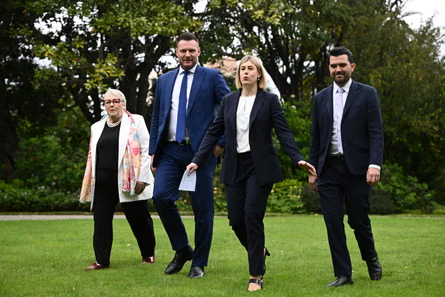
The Victorian Liberals face mounting challenges as the party struggles to present a united front under new leader Jess Wilson. Wilson, just 35, has vowed to reposition the Victorian Liberals at the centre of politics while reconnecting with voters lost over recent years. Optimism remains, but repeated self-inflicted wounds continue to raise doubts about whether the Victorian Liberals can claim victory in November’s crucial election. Wilson must manage resignations, preselection battles, and public scrutiny while demonstrating that the Victorian Liberals can act as a cohesive, modern alternative.
The latest setback emerged when Sam Groth, a rising star and former professional tennis player, announced he would leave politics due to internal infighting. While his departure removes a potential rival, it highlights divisions threatening the Victorian Liberals’ stability. Groth’s rapid ascent from first-term MP to deputy leader created resentment among colleagues who felt he had not earned his position. His exit underscores the challenge Wilson faces in projecting unity and professionalism to voters.
Groth’s resignation followed a defamation saga that drew the party into public controversy. Allegations concerning Groth and his wife, Brittany, were eventually settled, with the Herald Sun issuing a formal apology. However, the story revealed an unnamed Liberal MP had contributed to the scandal, illustrating how internal betrayal continues to undermine the Victorian Liberals’ public image. Wilson now faces the difficult task of managing the party’s internal tensions while retaining credibility with voters.

Meanwhile, multiple MPs confront preselection challenges that further threaten party cohesion. Moira Deeming and Ann-Marie Hermans face contests, while Renee Heath could also be targeted. While Heath is likely to retain her seat, Hermans and Deeming confront uncertain futures, with support and opposition within the party determining their political survival. The rank-and-file-driven preselection process limits Wilson’s influence, despite her efforts to endorse candidates seeking her backing, adding pressure to maintain party unity.
Deeming’s situation reflects broader factional tensions. She gained attention for successfully suing former leader John Pesutto for defamation, a legal battle with significant political consequences. Her determination, combined with ongoing internal manoeuvring, highlights the difficulty Wilson faces in managing a party defined by strong personalities and rivalries. Such internal struggles continue to challenge the party’s ability to focus on broader electoral strategy.
Complicating matters, a Supreme Court case in March will test the legality of a $1.5 million loan from the party executive to cover Deeming’s legal fees. Initiated by party members themselves, the case highlights continuing dissent and exposes the party to public criticism. Wilson must navigate these disputes carefully while maintaining the impression that the party is competent and united ahead of the election.
Financial concerns also weigh on voter perceptions. While the long-serving Labor government faces a projected debt of $192 billion by 2028–29, which should give the party leverage, internal conflicts risk undermining this advantage. Historically, no Victorian Labor government has won a fourth term, but the party’s own dysfunction may offset that opportunity. Wilson’s ability to stabilise the party and maintain public trust will be decisive for their electoral prospects.

Despite internal difficulties, Wilson’s leadership reflects a conscious effort to modernise the Victorian Liberals. Her strategy focuses on collaboration, inclusivity, and shifting to the political centre. Nevertheless, high-profile resignations, preselection disputes, and legal controversies illustrate how internal divisions can dominate media coverage, risking voter confidence. Analysts warn that if factional disputes persist, the Victorian Liberals may struggle to present a credible alternative to the Labor government.
Political observers note that unity—or the perception of it—could determine the party’s election outcome. Wilson must balance ambition with cohesion while appealing to centrist voters, mitigating the impact of ongoing internal scandals. The Victorian Liberals’ public image will be critical in the lead-up to November, with each dispute potentially overshadowing policy proposals and campaign messaging.
The coming months are crucial. Nominations close on 14 January, with voting in late March, marking a period of intense scrutiny for the Victorian Liberals. Any further controversies could reinforce perceptions of a divided party and weaken voter confidence. Wilson’s leadership is central to demonstrating that the Victorian Liberals can overcome internal conflict and focus on delivering a credible election campaign.
Ultimately, the Victorian Liberals’ ability to convert opportunity into success depends on both internal discipline and public perception. Wilson’s leadership offers hope for renewal, but ongoing factional tensions, legal challenges, and preselection battles pose a significant threat. Voters will closely watch whether the Victorian Liberals can present a united front or allow internal dysfunction to define their campaign.
Related News:
 British Woman in Iran ‘Losing Hope’ Amid Ongoing Detention
 BBC Journalist Held and Interrogated in Vietnam
 Green Party Surges Past Labour in Latest UK Poll
 Celebrities and Charities Demand UK Government Act on Child Poverty
 Army Officers Orders to Cut Ties with Men-Only Clubs
 Trump’s UK Ambassador Urges North Sea Drilling to Strengthen US Ties
 FBI Director Kash Patel Defends Girlfriend Amid Government Jet Claims
 UK University Suspends Human Rights Research Following Pressure from China
 French Taxi Driver Cleared in David Lammy Theft Case After Fare Dispute
 UK University Faces Counter-Terror Probe Over China Pressure
 Labour immigration crackdown could cost UK £4.4bn
 MPs Press Rachel Reeves to Hike Gambling Taxes
 Boris Johnson accused of undermining BBC leadership
BBC to Apologise Over Edited Trump Speech Amid Backlash
Boris Johnson accused of undermining BBC leadership
BBC to Apologise Over Edited Trump Speech Amid Backlash
 Britain deploys RAF specialists to assist Belgium with drone threats
 ‘Reckless’ cuts to victims’ services will cost more than they save
 Millionaires group urge Reeves to introduce wealth tax to ‘lift kids out of poverty’
 Starmer Faces Growing Dissent as Labour MPs Weigh Leadership Challenge
 Reeves rejects £1bn plea for NHS redundancy payouts
 Farage appointee to lead Reform youth accused of anti-British views
 Politics latest: Starmer ‘will fight any leadership coup’ as Streeting denies attempt to oust Labour PM
 Ukraine-Russia war latest: Putin’s troops exploit bad weather to force Kyiv withdrawal from multiple towns
 PM Condemns Leaks, Vows Loyalty to Ministers and Stability
 Major Rent Reform Ends No-Fault Evictions in England
 Peers Flood Assisted Dying Bill with 942 Amendments
 England’s Special Needs Support Faces Breaking Point
 Senator John Fetterman Hospitalized After Fall from Heart Flare-Up, Keeps Sense of Humor
 US Justice Department Files Lawsuit Against California Over Partisan Voting Maps
 MoD warned over Excel risks before Afghan data breach
 Greene Pushes Epstein Files Amid Trump Fallout
 Trump Deploys DHS to Charlotte in Major Arrest Operation
 December Run-Off in Chile as Election Produces No Winner
 UK Asylum Overhaul Sparks Debate Over Human Rights and Deportations
 UK Asylum Reforms: Temporary Refugee Status and Faster Deportations
 UK Candidate Moved to Safe House After Election Threats
 Mahmood Defends Tough Overhaul of UK Asylum System
 Canada Passes Carney’s First Budget in Tight Parliamentary Vote
 South African Detained After Neo-Nazi Rally in Australia
 Why India is Unlikely to Return Sheikh Hasina to Face Execution
 UK Warns China After MI5 Issues Espionage Alert
 Westminster Advances Legacy Bill Amid Criticism
 Federal Court Blocks Texas Republican Maps Over Racial Bias
 Shadow Fleet at Sea: Europe’s Battle Against Illicit Oil Shipping
 UK Vulnerable to Attack, Defence Committee Finds
 Bangladesh Families Call for Hasina’s Return and Execution
 Labour Faces Historic Decline in Wales
 Rama Rebukes Mahmood for Targeting Albanian Families
 Pentagon Officials in Ukraine to Discuss War End
 PM Highlights UK Business at G20 in South Africa
 Kate Forbes: Motherhood Harder Than Politics
 Welsh Government Christmas 2020 Lockdown Criticised
 Venezuela Threatens Nobel Winner Machado with Fugitive Status
 Most Tories Expect to Support a Farage-Led Government
 Labour MP claims devolution bill is ‘blatant discrimination’ against Cornwall
 Trump Envoy to Discuss Ukraine Peace at Kremlin
 Millions Face Higher Taxes Under Reeves New Budget
 Peers Get Extra Time to Debate Assisted Dying Bill
 Planned Palestinian Flag Raising at Belfast City Hall Faces Delay Amid Legal Concerns
 Georgians Defy Government Crackdown After Year of Protests
 US National Guard Member Killed in DC Shooting
 India’s Labour Law Overhaul Sparks Fierce Debate
 Video shows Israeli troops kill Palestinians after surrender
 Government righting decades-old injustice for miners
 ICC to Rule on Duterte’s Provisional Release
 Jordan Bardella: France’s Young Presidential Contender
 Starmer Says Labour’s Economic Plan Needs Years to Deliver
 Chinese & Japanese Boats Clash Near Disputed Islands
 UK delays ruling on China embassy plan until January
 EU plans $105bn Ukraine aid using frozen Russian assets
 Global campaign launched to free Palestinian leader Barghouti
 Culture secretary to review Telegraph takeover by Daily Mail owner
 Andy Burnham Apologises for Past LGBTQ+ Police Discrimination
 Khaleda Zia Death in Bangladesh: First Female PM Dies at 80
 Russia losses Ukraine war peace talks intensify amid rising deaths
 Zelenskyy Accuses Russia of Sabotaging Peace Talks
 Trump ‘Not Worried’ as China Conducts Massive Taiwan Wargame
 Khaleda Zia Laid to Rest with State Honour in Dhaka
 Maduro Faces Court in New York Over Drugs and Weapons Case
 Albanese Opens Door to Bondi Royal Commission Amid Rising Pressure
 Trump Escalates Minnesota Immigration Surge Amid Rising Tensions