Published: 15 January 2026. The English Chronicle Desk. The English Chronicle Online.
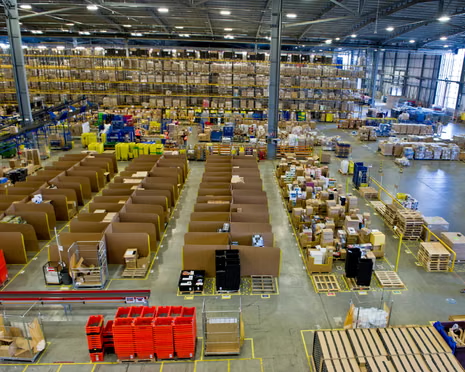
The announcement of the Amazon Milton Keynes closure has sent a wave of concern across the UK logistics sector and local community. Amazon confirmed it has begun a formal consultation to close its Milton Keynes fulfilment centre, placing 590 workers at risk. The decision affects a site that holds historic significance, as it was the company’s first UK warehouse when it opened in 1998. While Amazon has promised transfer opportunities, the news has raised broader questions about job security, automation, and the future shape of Britain’s distribution network.
The Amazon Milton Keynes closure was revealed after weeks of speculation on social media, later verified through company statements and union briefings. Employees were informed that the consultation process would explore closing the site permanently, with staff offered relocation to other facilities. Amazon said most affected workers could transfer to a new fulfilment centre in Northampton, which is scheduled to open later this year. The company stressed that supporting employees through the transition remains its top priority.

For many workers, the announcement came as a shock. The Milton Keynes site has long been regarded as a cornerstone of Amazon’s UK operations. Over nearly three decades, it has expanded alongside the rapid growth of online retail, surviving economic downturns and shifting consumer habits. Staff members have described the warehouse as more than just a workplace, but a stable source of income for hundreds of local families.
Amazon’s spokesperson explained that the proposed closure reflects a wider review of its logistics network. The company said it regularly evaluates its sites to ensure they meet business needs and deliver efficient service. According to Amazon, newer facilities are designed with advanced technology, improved layouts, and enhanced working conditions. The Northampton fulfilment centre, which has reportedly cost £500 million to develop, is described as a larger and more modern operation.
The new Northampton site is expected to employ up to 2,000 people when fully operational. Initially, around 1,400 staff will be in place from its opening in May. Amazon believes this expansion will strengthen its ability to handle increasing demand while creating long-term employment opportunities. However, for workers facing relocation, the benefits may feel uncertain, especially for those with family commitments or limited transport options.
Local leaders in Milton Keynes have expressed concern about the potential economic impact. The fulfilment centre has contributed significantly to the local economy through wages, supply contracts, and secondary spending. Its closure could affect nearby businesses, including cafes, transport providers, and small retailers that rely on warehouse staff. Councillors have called for close engagement with Amazon to minimise disruption and explore support for displaced workers.
Trade unions have also responded cautiously to the Amazon Milton Keynes closure. Worker representatives have welcomed the offer of transfers but warned that relocation is not a simple solution for everyone. They argue that some employees may struggle with longer commutes or be unable to move due to caring responsibilities. Unions have urged Amazon to consider redundancy packages, retraining support, and flexible options for those unable to transfer.
The situation highlights a wider trend within the logistics and retail sector. Across the UK, companies are consolidating operations into fewer, larger sites equipped with higher levels of automation. While this can improve efficiency and reduce costs, it often leads to the closure of older facilities. Industry analysts note that such changes can leave communities vulnerable if alternative employment is not readily available.
Amazon’s investment in Northampton reflects confidence in the long-term growth of e-commerce. Online shopping habits formed during the pandemic have continued, driving demand for faster delivery and expanded capacity. The company insists that modern fulfilment centres are safer and more comfortable for staff, featuring better lighting, improved break areas, and advanced safety systems. These claims are likely to be scrutinised as workers weigh their options.
For Milton Keynes employees, the consultation period will be critical. During this time, staff can ask questions, raise concerns, and explore available support. Amazon has stated it will work closely with individuals to understand their circumstances. Yet uncertainty remains, especially for long-serving employees who joined the company when the site first opened.
The closure also carries symbolic weight. The Milton Keynes centre represented Amazon’s early commitment to the UK market. Its proposed shutdown marks the end of an era, reflecting how dramatically the company has evolved since the late 1990s. What began as a single warehouse operation has grown into a vast network spanning the country, employing tens of thousands of people.

Economic experts suggest that while the Amazon Milton Keynes closure is a setback locally, it may not signal a reduction in Amazon’s UK presence. Instead, it points to a strategic shift toward newer hubs capable of handling higher volumes. The challenge for policymakers lies in ensuring that workers and communities are not left behind during such transitions.
As the consultation continues, attention will focus on how Amazon balances efficiency with responsibility. The company’s handling of the process could influence its reputation as a major employer. For affected workers, the coming months will involve difficult decisions about relocation, retraining, or seeking new opportunities.
Ultimately, the Amazon Milton Keynes closure serves as a reminder of the changing nature of work in the digital economy. While investment and innovation continue, they often come with human costs that require careful management. How those costs are addressed will shape trust between employers, employees, and the communities that host them.
Related News:
 How Bringing Forests Into Preschools Boosts Children’s Health
 Critically Endangered Spider Rediscovered in UK After 40 Years
 UK Bans Fake Numbers: Scammers Lose Their Trick
 England Curriculum Review Recommends Major Changes
 Mortgages and AI Set to Feature in English Schools
 Experts Urge Legal Right to Timely Cancer Care
 Patients to Test Health at Home to Ease NHS Winter Pressure
 One of world’s last dinosaurs on sale for £3m
 North Sea oil workers must lose weight or face job loss
 No link found between paracetamol in pregnancy and autism
 Government urges schools to ban phones to curb classroom disruption
 Northern Lights May Illuminate UK Skies Amid Strong Solar Storm
 Northern Lights may illuminate UK skies this week
 UK Greenlights First Small Nuclear Plant in North Wales
 Higgs Donates Nobel Medal to His Beloved University
 Coffins Now Too Large to Cremate Amid Rising Obesity Crisis
 UK Taskforce Unveils Plan to Streamline Nuclear Reactor Rules
 Thinktank Urges Smaller Hospitals to End NHS ‘Permacrisis’
 NHS paediatric leave parents waiting months for answers
 Ofcom urges platforms to limit abuse and curb online ‘pile-ons’
 Starmer’s communications chief to outline media strategy overhaul
 UK Car Sales Pass 2 Million as Chinese Brands Surge
 AI Grok Sparks Child Safety Alarm in the UK
 Lammy and Vance unite against AI abuse images on X
 UK Threatens Action Against X Over Sexualised AI Images
 Jaguar Land Rover Extends Production Halt Following Cyber-Attack
 Persistent Offenders Owe Over £700m in Ulez Fines as TfL Cracks Down on Evasion
 Reform UK candidate fined £19,000 after using AI-generated cases to challenge election
 UK Campaigners Launch Bill to Grant Legal Rights to Nature
 Peterborough Mosques Tighten Security After Attack
 Reeves Faces Setback as Labour May Miss Homes Target
 Hospice Cuts Raise Alarm Across England Amid Funding Crisis
 Virgin Trains Moves Closer to Challenging Eurostar Monopoly
 Kate Winslet to Narrate Film Highlighting King’s Environmental Mission
 Green Party Surges Past Labour in Latest UK Poll
 Trump’s UK Ambassador Urges North Sea Drilling to Strengthen US Ties
 Children to Learn Local History in Major Curriculum Overhaul
 French Taxi Driver Cleared in David Lammy Theft Case After Fare Dispute
 Prince William Plants Trees with Brazil’s Nature Heroes
 M&S Profits More Than Halve After Cyber-Attack
 Kent village told to remove flags before Christmas lights go up
 Vibe coding’ named Collins dictionary’s word of the year
 King Charles to Lead Nation in Remembrance Sunday Service
 Britain deploys RAF specialists to assist Belgium with drone threats
 Palace May Restore Hyphen to Andrew Mountbatten-Windsor’s Name
 Millionaires group urge Reeves to introduce wealth tax to ‘lift kids out of poverty’
 Starmer Faces Growing Dissent as Labour MPs Weigh Leadership Challenge
 Shouting Works Best to Deter Gulls, UK Study Finds
 Reeves rejects £1bn plea for NHS redundancy payouts
 Stop using ChatGPT to write speeches, AI minister tells MPs
 PM Condemns Leaks, Vows Loyalty to Ministers and Stability
 Son Reveals UK Couple in Iran Resort to Hunger Strike for Help
 Major Rent Reform Ends No-Fault Evictions in England
 Former Lion Heskey Warns of Shortage of England Strikers
 New AI tool could cut wasted efforts in organ transplants
 Criminal Gangs Pose as Truckers to Hijack UK Supply Chains
 Stroke Patient Mistaken for Drunk, Care Delayed
 Sundar Pichai Cautions on AI Hype and Market Risks
 Google Chief Urges Caution: Don’t Trust AI Blindly
 Van Dwellers Face Eviction After Park Misuse Sparks Outcry
 ‘Traumatic Wait’: Northern Ireland Women Face Breast Cancer Delays
 Serial Rapist and Former Cop Found Guilty Again
 Royal Navy Shadows Russian Warships Entering the Channel
 Inside the Helpline Protecting Missing Children in the UK
 Boots Showstopper Beauty Bundle Outshines Many Advent Calendars This Holiday Season
 Labour’s ‘blinkered’ drive to build risks pushing wildlife to point of no return, nature experts warn
 PlayStation PS5 Deals Hit Lowest Prices Ahead of Black Friday
 Five-Year-Old Dies After Rare Tonsil Surgery Complication
 Starmer Says Labour’s Economic Plan Needs Years to Deliver
 More Patients Now Contacting GPs Online, Data Shows
 UK unemployment rises to four-year high of 5.1% before budget
 Wiltshire Police Use Lasso to Catch Rampaging Village Goat
 Children to Receive Home Vaccines as England Acts
 Cambridge College Faces Backlash Over Private School Recruitment
 NHS Violence Crisis: Staff Face Daily Assaults
 Celebrity Campaign Highlights SMA Screening Failures
 Bereaved Fathers Gain New Paternity Leave Rights in UK
 Storm Goretti leaves Cornwall homes without power
 US Clears Nvidia AI Chip Sales to China in Policy Shift
 New Documentary Examines Teen’s Zombie Knife Murder