Published: 18 January 2026. The English Chronicle Desk. The English Chronicle Online
European leaders have issued a firm and coordinated rebuke to Donald Trump after the US president threatened sweeping tariffs against several European nations in an attempt to pressure them into supporting his controversial bid to purchase Greenland. The extraordinary warning, which included the possibility of imposing a 25% tariff on imports from Denmark, France, Germany and the United Kingdom, has sparked fresh tensions across the Atlantic and reignited debate over the future of transatlantic relations under Trump’s leadership.
The remarks, made on Saturday as part of a series of statements from the White House, marked a sharp escalation in Trump’s long-running interest in acquiring Greenland, the vast, mineral-rich Arctic territory that is an autonomous part of the Kingdom of Denmark. While Trump first floated the idea during his earlier presidency, the renewed threat of economic retaliation has taken many European capitals by surprise, particularly given the fragile state of global trade and geopolitics.

In Paris, French president Emmanuel Macron delivered one of the strongest responses, declaring that “no amount of intimidation” would force European nations to change their position on Greenland. Speaking to reporters, Macron stressed that Greenland’s future was not a bargaining chip in international trade negotiations and warned that using tariffs as a political weapon risked destabilising long-standing alliances. He described Trump’s comments as irresponsible and said Europe would not be coerced into abandoning its principles or its partners.
Denmark, which retains sovereignty over Greenland while granting it wide-ranging self-rule, has also reacted with visible frustration. Danish officials reiterated that Greenland is not for sale and that any discussion about its future must involve the people of Greenland themselves. Copenhagen emphasised that the idea of imposing tariffs to influence such a decision undermines international norms and disrespects the rights of Greenlanders, who have repeatedly expressed opposition to becoming part of the United States.
In London, Britain’s prime minister Keir Starmer labelled Trump’s threat “completely wrong” and warned that trade sanctions against close allies would only harm economic stability on both sides of the Atlantic. Starmer underscored the importance of dialogue and diplomacy, noting that the UK, like other European nations, views Greenland as a matter of sovereignty and self-determination rather than commercial negotiation. British officials also hinted that retaliatory measures could not be ruled out if US tariffs were implemented.
Germany echoed these concerns, with senior figures in Berlin cautioning that Trump’s proposal could trigger a damaging trade conflict at a time when cooperation is urgently needed on issues such as climate change, global security and economic recovery. German industry leaders expressed alarm at the prospect of new tariffs, warning that they could disrupt supply chains and further strain economies already facing inflationary pressures.
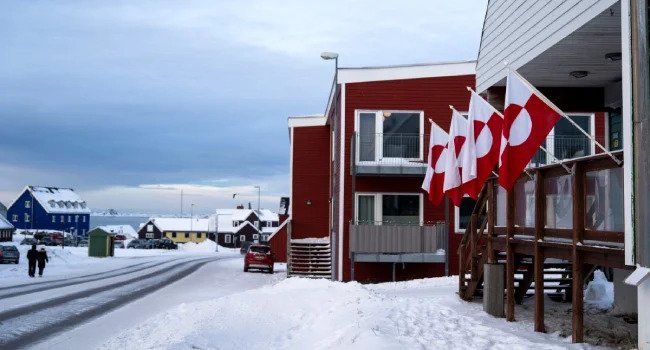
Beyond Europe’s political leadership, the controversy has sparked protests in Greenland itself. Demonstrators marched in the capital, Nuuk, carrying placards rejecting the idea of a US takeover and calling for respect for Greenlandic autonomy. Many protesters voiced fears that their island’s strategic value and natural resources were being prioritised over the rights and wishes of its people. Local leaders have repeatedly stated that Greenland is moving toward greater independence, not seeking to be absorbed by another power.
Trump, however, has continued to frame Greenland as a strategic necessity for the United States. He has argued that control of the territory would enhance US national security, particularly in the Arctic, where melting ice is opening new shipping routes and access to untapped resources. The president has also pointed to Greenland’s rare earth minerals, which are increasingly vital for modern technologies, as a reason the US should pursue ownership.
Critics say this rhetoric reflects a transactional approach to foreign policy that reduces complex political and cultural issues to economic leverage. Analysts warn that threatening tariffs over a territorial dispute sets a dangerous precedent and risks normalising economic coercion as a tool of diplomacy. Some have compared the situation to previous trade confrontations initiated by Trump, which often resulted in prolonged disputes and strained alliances.
The European Union has also weighed in, with senior EU officials cautioning that Trump’s comments could undermine the foundations of transatlantic cooperation. In a joint statement, EU leaders stressed that Greenland’s status is a matter of international law and democratic choice, not a subject for unilateral pressure. They warned that any attempt to impose punitive tariffs would be met with a united response from the bloc.
Economists have highlighted the potential fallout if Trump were to follow through on his threat. A 25% tariff on goods from major European economies could have far-reaching consequences, affecting industries from automotive manufacturing to agriculture and finance. Such measures could also provoke retaliatory tariffs, escalating into a broader trade war that would likely hurt consumers and businesses on both sides of the Atlantic.
Within the United States, reactions have been mixed. Some of Trump’s supporters have praised his hardline stance, viewing it as a demonstration of strength and a commitment to American strategic interests. Others, including members of Congress and foreign policy experts, have expressed concern that the approach could isolate the US and weaken its global standing. Several lawmakers have questioned whether the president has the legal authority to impose tariffs for such explicitly political purposes.
The Greenland issue also raises deeper questions about the future of US-European relations. Since the end of the Second World War, the transatlantic alliance has been built on shared values, mutual defence and economic cooperation. Trump’s repeated use of tariffs and threats against allies has challenged that framework, prompting European nations to consider greater strategic autonomy and reduced reliance on Washington.
For Greenlanders, the debate has underscored longstanding tensions between their island’s strategic importance and their desire for self-determination. While Greenland benefits from financial support from Denmark, many residents aspire to eventual independence. The idea of being traded or purchased by another country has been widely rejected across the political spectrum in Greenland, reinforcing a sense of national identity distinct from both Denmark and the United States.

Observers note that Trump’s renewed focus on Greenland comes amid a broader pattern of assertive rhetoric and unconventional diplomacy as he seeks to project strength on the global stage. Whether the tariff threat is intended as a serious policy proposal or a negotiating tactic remains unclear. However, European leaders have made it clear that they are unwilling to entertain the idea under any circumstances.
As tensions simmer, diplomats on both sides of the Atlantic are expected to engage in behind-the-scenes discussions aimed at defusing the situation. Yet the episode has already left a mark, reinforcing concerns about unpredictability in US foreign policy and the potential for sudden escalations that disrupt global stability.
For now, Europe’s message to Washington is unequivocal: Greenland is not for sale, and intimidation through economic pressure will not change that reality. Whether Trump chooses to escalate further or step back from the brink will shape the next chapter in an already strained transatlantic relationship.
Related News:
 Putin Intensifies Territorial Demands Before US Talks
 US National Guard Member Killed in DC Shooting
 Trump to Recheck Green Cards from 19 Nations After DC Attack
 Trump to pause migration from ‘third-world countries’
 Republicans Hold Tennessee Seat Despite Democratic Surge
 Franklin Turtle, Sabrina Carpenter Slam US Social Media Use
 Russia losses Ukraine war peace talks intensify amid rising deaths
 Trump Escalates Minnesota Immigration Surge Amid Rising Tensions
 Trump: US Stands Ready to Help Iran Find Freedom Amid Widespread Unrest
 US Conducts Large-Scale Strikes Against ISIS Targets Across Syria
 Trump Says US Will Act on Greenland ‘Whether They Like It or Not’
 Homeland security agents deployed amid Minneapolis protests
 Democrats Push Affordability to Challenge Trump Ahead of Votes
 Top Senate Republican Says Federal Probe of Powell Could Challenge Fed Nominees
 Trump Administration Probe of Fed’s Powell Draws Pushback
 US Senator Mark Kelly Sues Pentagon Chief Hegseth Over Demotion Threats
 Greenland Faces Pivotal Summit Over Arctic Power Struggle
 Trump Threatens Strong Action If Iran Executes Protesters
 Government Unveils Northern Powerhouse Rail Plans
 Trump press secretary attacks reporter over ICE question
 Kyrsten Sinema Faces High-Profile Lawsuit Over Marriage Interference
 Trump Receives Machado’s Nobel Medal in White House Meeting
 Greenland Crisis Forces Europe to Draw a Line With Trump
 UK Must Act with Courage and Clarity on Israel-Palestine Conflict, Says Foreign Affairs Committee Report
 The Fight for Trans Safety Is a Fight for Everyone’s Safety — MPs Must Debate This Crucial Issue
 Brian Cox Slams Donald Trump’s Remarks on Scottish Independence and Voices Support for Kevin Spacey’s Return to Acting
 Chancellor Faces Mounting Pressure Amid “Impossible Trilemma” Over Tax Rises
 Radioactive Leak at UK’s Nuclear Warhead Base Sparks Outcry Over Safety and Secrecy
 Mutual Inconvenience: Why Alaska Was Chosen for the Trump-Putin Summit on Ukraine
 Chancellor Rachel Reeves Pushes for Sweeping Changes to Environmental Protections to Accelerate Development
 Hong Kong Summons UK and Australian Envoys Following Asylum Grants to Democracy Activists
 Is the UK Ready to Put Boots on the Ground in Ukraine? Assessing Military Capacity and Challenges
 Police Scotland Spends £500,000 Compensating Officers Over Trump Visit
 Britain’s Migration Challenge: Rising Asylum Numbers and Hotel Pressures
 Elon Musk Sparks New Controversy by Backing Tommy Robinson Amid Farage Feud
 Rylan Clark Criticizes UK Immigration Policies on This Morning, Sparking Public Debate
 Farage Blasts Essex Council Over St George’s Flag Controversy, Calls Message ‘Unbelievable
 Urgent Action Needed on Windrush Compensation as Survivors Speak of “Waiting to Die”
 Tanni Grey-Thompson Faces Abuse Over Opposition to Assisted Dying Bill
 TfL Invites RMT to Resume Talks as London Tube Strikes End
 Channel Crossings Surge: Over 1,000 People Arrive in the UK in Small Boats in a Single Day
 Widow of Charlie Kirk Forgives Killer at Emotional Memorial Service
 Nigel Farage Unveils Controversial Immigration and Welfare Plans at Reform UK Press Conference
 Yvette Cooper Signals Global Momentum Towards Gaza Peace Deal Amid Humanitarian Crisis
 Ed Miliband Warns UK Government on X, Citing Elon Musk as a “Dangerous Influence”
 Digital ID Plans Ignite Debate Over £600m Treasury Tax Boost and Privacy Concerns
 Kemi Badenoch Unveils ‘Golden Rule’ to Halve Spending Cuts for Deficit Reduction at Tory Conference
 UK border officers deployed to Balkans to tackle migrant smuggling
 UK MPs warn of repeat riots over online misinformation
 Russia’s Latest Push to Win US Favors Shows Deep Desperation
 Army Barracks to House Migrants as Hotels Phase Out
 Army Officers Orders to Cut Ties with Men-Only Clubs
 Trump’s UK Ambassador Urges North Sea Drilling to Strengthen US Ties
 French Taxi Driver Cleared in David Lammy Theft Case After Fare Dispute
BBC to Apologise Over Edited Trump Speech Amid Backlash
French Taxi Driver Cleared in David Lammy Theft Case After Fare Dispute
BBC to Apologise Over Edited Trump Speech Amid Backlash
 Britain deploys RAF specialists to assist Belgium with drone threats
 Millionaires group urge Reeves to introduce wealth tax to ‘lift kids out of poverty’
 Reeves rejects £1bn plea for NHS redundancy payouts
 PM Condemns Leaks, Vows Loyalty to Ministers and Stability
 Trump Urges Herzog to Grant Netanyahu Full Pardon
 Major Rent Reform Ends No-Fault Evictions in England
 Senator John Fetterman Hospitalized After Fall from Heart Flare-Up, Keeps Sense of Humor
 Indian authorities demolish Kashmir home linked to Red Fort blast
 Greene Pushes Epstein Files Amid Trump Fallout
 December Run-Off in Chile as Election Produces No Winner
 Canada Passes Carney’s First Budget in Tight Parliamentary Vote
 Shadow Fleet at Sea: Europe’s Battle Against Illicit Oil Shipping
 India’s COP30 Delay Raises Global Climate Concerns
 Georgians Defy Government Crackdown After Year of Protests
 ICC to Rule on Duterte’s Provisional Release
 Starmer Says Labour’s Economic Plan Needs Years to Deliver
 England delays four mayoral elections amid criticism
 Tory Free Schools Waste £325m on Failed Projects
 American Mother Extradited From UK to U.S. on Murder Charges
 Khaleda Zia Death in Bangladesh: First Female PM Dies at 80
 Albanese Opens Door to Bondi Royal Commission Amid Rising Pressure
 Trump Weighs Response to Iran Crackdown as Tehran Says Communication Open With US
 Minnesota Sues Trump Administration Over ICE Surge
 US Clears Nvidia AI Chip Sales to China in Policy Shift
 US Senate rejects resolution limiting Trump military powers