Published: 19 January 2026. The English Chronicle Desk. The English Chronicle Online.
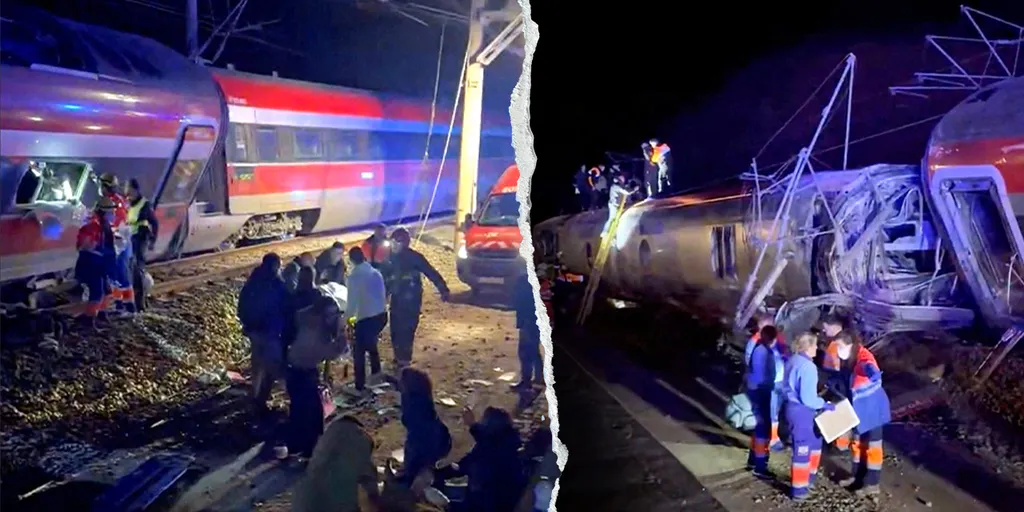
Southern Spain woke to grief after a devastating Spain train crash shattered lives and halted vital rail links. The tragedy unfolded on Sunday evening when two high-speed passenger trains collided near Adamuz, a rural municipality north of Córdoba. According to Spanish authorities, at least twenty-one people lost their lives, while thirty others sustained serious injuries. Emergency crews worked through the night, confronting twisted metal, overturned carriages, and desperate calls for help from trapped passengers.
The Spain train crash occurred shortly after 6.40pm local time, when an Iryo-operated high-speed service travelling from Málaga to Madrid derailed. Officials from Adif, Spain’s rail infrastructure manager, said the train unexpectedly crossed onto an adjacent track. Moments later, it struck an oncoming Madrid to Huelva service, causing both trains to derail violently. A third train on a parallel line was also affected, adding to the scale of the disaster.
Within minutes, emergency lines were overwhelmed by calls from passengers and nearby residents reporting injuries and people trapped inside damaged coaches. Andalusian emergency services confirmed that rescue teams, firefighters, and medical staff were dispatched immediately. Helicopters circled the crash site as ambulances lined narrow rural roads, turning the quiet countryside into a scene of urgency and shock.

Prime Minister Pedro Sánchez addressed the nation late on Sunday, describing the Spain train crash as a “night of deep pain” for the country. He expressed condolences to the families of those who died and promised a full investigation into the causes. Flags on government buildings were lowered, while messages of sympathy poured in from across Europe.
Witness accounts painted a harrowing picture of the moments following the impact. One passenger told state broadcaster RTVE that a carriage behind him completely overturned, throwing people and luggage violently. Another described the sensation as “an earthquake,” saying the force of the collision left many stunned and disoriented. Inside the darkened coaches, emergency lights flickered as smoke filled the air.
A journalist travelling on one of the trains for public radio RNE recalled passengers using emergency hammers to smash windows and escape. He said people helped one another climb down from damaged carriages, despite visible injuries and shock. Screams and cries for doctors echoed along the trackside as first responders arrived.
Social media quickly filled with firsthand accounts. Carmen, a passenger on the Málaga to Madrid train, wrote that the train began shaking intensely just ten minutes after leaving Córdoba. She said the derailment occurred several coaches behind her, followed by a sudden blackout. Her message, shared widely, captured the fear and confusion felt by hundreds onboard.
Video footage posted by another passenger showed an Iryo official wearing a fluorescent jacket calmly instructing people to remain seated. In the darkness, he urged those with first aid training to assist injured passengers. He explained that evacuation would begin once conditions were safe, advising everyone to conserve phone batteries to use torches when leaving the train.
The passenger who shared the footage wrote that their carriage appeared stable, but uncertainty loomed about others. Smoke was visible, and repeated calls for a doctor could be heard nearby. Spanish media later reported that around four hundred people were travelling across the two main trains involved, underlining the potential scale of the tragedy.
Hospitals across Andalucía were placed on emergency footing, with additional staff called in overnight. The president of the Madrid region, Isabel Díaz Ayuso, said hospitals in her region were ready to accept patients if needed. Several injured passengers were transferred to specialist trauma units in Córdoba and Seville for further treatment.
Transport Minister Óscar Puente confirmed early Monday that thirty people remained seriously injured. He praised the swift response of emergency services and hospital staff, while acknowledging the profound shock felt nationwide. Earlier reports from state media suggested up to one hundred people were injured, though officials later clarified the confirmed figures.
Adif announced the immediate suspension of all rail services between Madrid and Andalucía. Engineers and safety inspectors were sent to the site to assess damage to tracks and signalling systems. The disruption left thousands of travellers stranded, with major stations in Madrid and southern cities crowded as passengers sought information and alternative routes.
Attention quickly turned to the cause of the Spain train crash. Adif stated that the derailment occurred minutes after the Iryo train departed Málaga, but stopped short of speculating on technical failures or human error. Sources familiar with the investigation said black box data recorders from both trains would be analysed, alongside signalling logs and track conditions.
Iryo, the Italian-run private rail operator involved, said it was cooperating fully with authorities. While the company did not issue an immediate detailed statement, it expressed condolences to victims and their families. Questions have emerged about safety protocols, maintenance schedules, and communication systems on one of Spain’s busiest high-speed corridors.
Rail safety experts noted that Spain’s high-speed network has long been regarded as among Europe’s safest. However, they cautioned that even advanced systems are vulnerable to rare but catastrophic failures. Investigators are expected to examine whether a technical malfunction, signalling error, or unexpected obstacle caused the initial derailment.

Local communities near Adamuz opened schools and community centres to support stranded passengers and rescue workers. Volunteers provided blankets, food, and phone chargers through the cold night. Many residents described the sound of the collision as thunderous, followed by sirens that continued until dawn.
As daylight revealed the full extent of the wreckage, images of mangled carriages spread across international media. The Spain train crash prompted messages of solidarity from European leaders, including condolences from France, Italy, and the United Kingdom. Rail unions across Spain called for a thorough and transparent inquiry.
For families awaiting news, the hours following the crash were agonising. Authorities set up information centres in Córdoba and Madrid to assist relatives. Psychological support teams were deployed to help survivors cope with trauma, recognising the emotional toll of such a sudden disaster.
Spain now faces days of mourning and reflection. While investigators work to uncover what went wrong, the focus remains on caring for the injured and supporting grieving families. The Spain train crash has left a deep scar, reminding the nation of the fragility of life, even within modern transport systems designed for speed and safety.
Related News:
 British Woman in Iran ‘Losing Hope’ Amid Ongoing Detention
 BBC Journalist Held and Interrogated in Vietnam
 US Super-Rich Are Draining Planet’s Safe Climate Space
 UK University Suspends Human Rights Research Following Pressure from China
 UK University Faces Counter-Terror Probe Over China Pressure
 Top Christmas Books Reads: Classics to Cozy Romcoms
 World Whisky Tour: 9 Global Gems
 Just Stop Oil Protesters Convicted Amid Climate Defence Row
 Tension and Turmoil at Aston Villa v Maccabi Match
 BBC to Apologise Over Edited Trump Speech Amid Backlash
 Lando Norris Dominates Brazil GP to Strengthen F1 Title Bid
 Britain deploys RAF specialists to assist Belgium with drone threats
 Palace May Restore Hyphen to Andrew Mountbatten-Windsor’s Name
 US Senate Passes Funding Bill to End Historic Shutdown
 Suicide Bombing at Islamabad Court Kills 12, Injures Dozens
 BBC’s Tim Davie to Address Staff Amid Trump $1bn Threat
 Ukraine-Russia war latest: Putin’s troops exploit bad weather to force Kyiv withdrawal from multiple towns
 Algeria Pardons French-Algerian Novelist Sansal After Year in Jail
 Hitler’s DNA Confirms He Truly Had Only One Testicle
 US Justice Department Files Lawsuit Against California Over Partisan Voting Maps
 Oklahoma Governor Grants Last-Minute Clemency to Death Row Inmate
 US Pushes Global Effort to Stop Arms Flow to Sudan RSF Forces
 Israel Confirms Returned Hostage as Meny Godard
 Greene Pushes Epstein Files Amid Trump Fallout
 Trump Deploys DHS to Charlotte in Major Arrest Operation
 December Run-Off in Chile as Election Produces No Winner
 Zelenskyy Signs Fighter Jet Deal Amid Russian Drone Attacks
 Orban Says Ukraine Has ‘No Chance’ as EU Support Continues
 Irish Hero Parrott Says Goal Brought First Tears in Years
 Canada Passes Carney’s First Budget in Tight Parliamentary Vote
 Israeli Strike Kills 13 Near Palestinian Camp in Lebanon
 Zelensky Meets US Envoy in Turkey to Push Ukraine Peace Talks
 Shadow Fleet at Sea: Europe’s Battle Against Illicit Oil Shipping
 Tiny Curacao Makes History as Smallest Nation to Reach World Cup
 Haiti Qualifies for World Cup Despite Coach Never Visiting Country
 Deadly Russian Strikes Hit Western Ukraine, 20 Killed in Ternopil
 Rama Rebukes Mahmood for Targeting Albanian Families
 Pentagon Officials in Ukraine to Discuss War End
 Ukraine Peace Plan: Zelensky Ready for Dialogue
 Vietnam Battles Deadly Floods as Rains Continue
 Venezuela Threatens Nobel Winner Machado with Fugitive Status
 At Least Three Dead in Bangladesh Earthquake
 Barcelona Returns to Camp Nou vs Athletic Bilbao
 Royal Navy Shadows Russian Warships Entering the Channel
 Israel Confirms Hamas Returned Dror Or’s Body
 Trump Envoy to Discuss Ukraine Peace at Kremlin
 US Suspends Afghan Immigration After White House Shooting
 Two National Guard Soldiers Critically Injured Near White House
 Georgians Defy Government Crackdown After Year of Protests
 Southern Lebanon reels as Israeli strikes shatter communities
 Mbappe Scores 4 as Real Madrid Edge Olympiakos
 Man City Lose, Champions League Risk
 Sri Lanka Floods Leave 56 Dead, Dozens Missing
 India’s Labour Law Overhaul Sparks Fierce Debate
 Video shows Israeli troops kill Palestinians after surrender
 Tokyo court rules Japan’s same-sex marriage ban constitutional
 Indonesia to Repatriate Two Dutch Drug Convicts
 ‘Extinct’ Antelope Returns to Sahara, Bringing Hope
 EU plans $105bn Ukraine aid using frozen Russian assets
 Global campaign launched to free Palestinian leader Barghouti
 American Mother Extradited From UK to U.S. on Murder Charges
 Khaleda Zia, Bangladesh’s First Female Prime Minister, Dies at 80
 Russia losses Ukraine war peace talks intensify amid rising deaths
 Facebook Slow to Remove Bondi Attack Praise, Anti-Hate Group Claims
 Australian Cruise Ship Freed After Reef Grounding in Papua New Guinea
 Zelenskyy Accuses Russia of Sabotaging Peace Talks
 Khaleda Zia Laid to Rest with State Honour in Dhaka
 US Cities Erupt in Protests Against Trump’s Venezuela Military Action
 Albanese Opens Door to Bondi Royal Commission Amid Rising Pressure
 Trump Escalates Minnesota Immigration Surge Amid Rising Tensions
 Venezuela Oil Shift to US Could Disrupt China Supplies
 Iran Protesters Defy Crackdown as Violent Clashes Intensify
 Trump Says US Must ‘Own’ Greenland to Block Russia, China
 Trump Eyes Strong Military Options Amid Iran Protest Crackdown
 US Clears Nvidia AI Chip Sales to China in Policy Shift
 Trump Threatens Strong Action If Iran Executes Protesters
 Gulf states warn Trump Iran strikes risk wider Middle East war
 Machado Trump medal gesture reshapes Venezuela power struggle
 Greenland defence seen as shared Nato duty amid troop arrivals
 Trump Receives Machado’s Nobel Medal in White House Meeting